Every athletic department sends game updates—but few use them to build something that lasts. A score, a headline, and a schedule reminder serve this week’s fans. An athletic department newsletter built around a recurring recognition structure does something more valuable: it creates a running archive of achievements, athlete stories, records, and milestones that the school will draw on for years. The challenge for most athletic directors and communications staff is not finding content. It is organizing that content into repeating sections that are easy to produce, easy to read, and genuinely worth keeping.
This guide covers the most effective athletic department newsletter ideas for schools that want to turn weekly game coverage into permanent institutional recognition—and explains how each newsletter section connects to the broader recognition infrastructure of digital displays, archives, record boards, and hall of fame systems.
The best athletic department newsletters are not just read once and deleted. They are referenced, shared with families, forwarded to alumni, and eventually mined for content when the yearbook deadline approaches or a hall of fame nomination is being prepared. Structuring your newsletter around consistent recurring sections is what makes that possible.

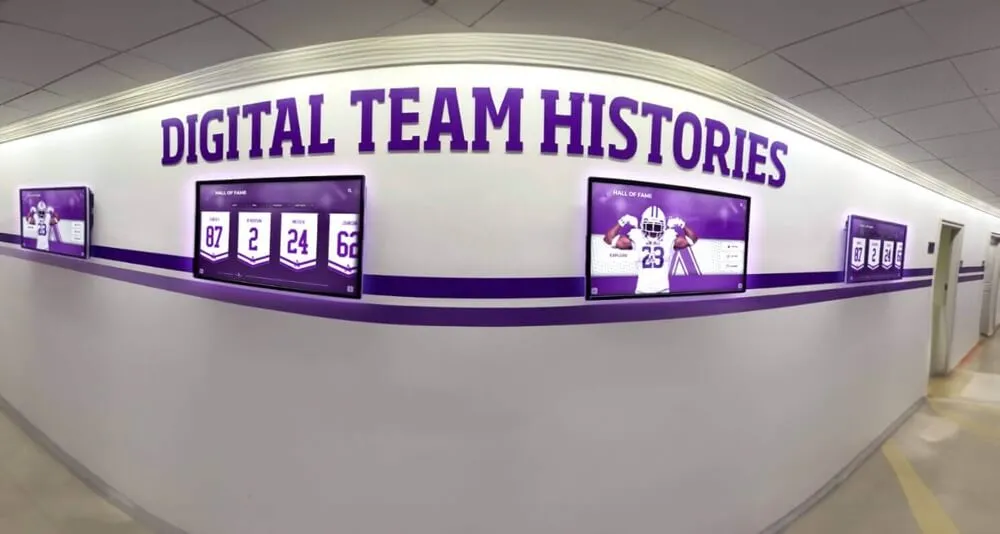
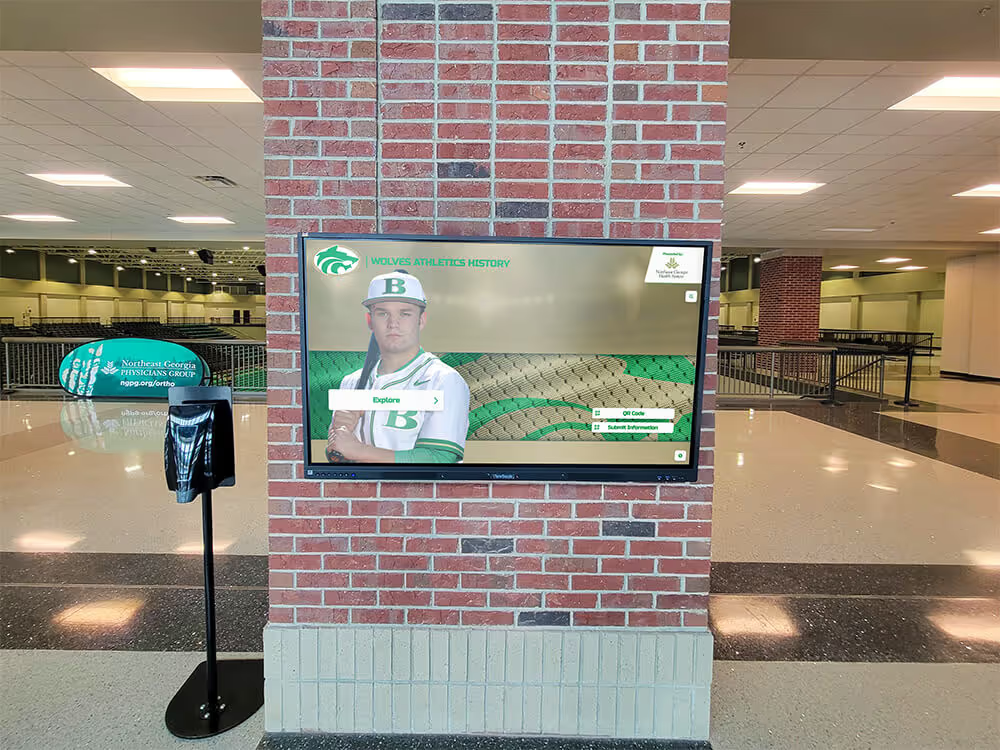
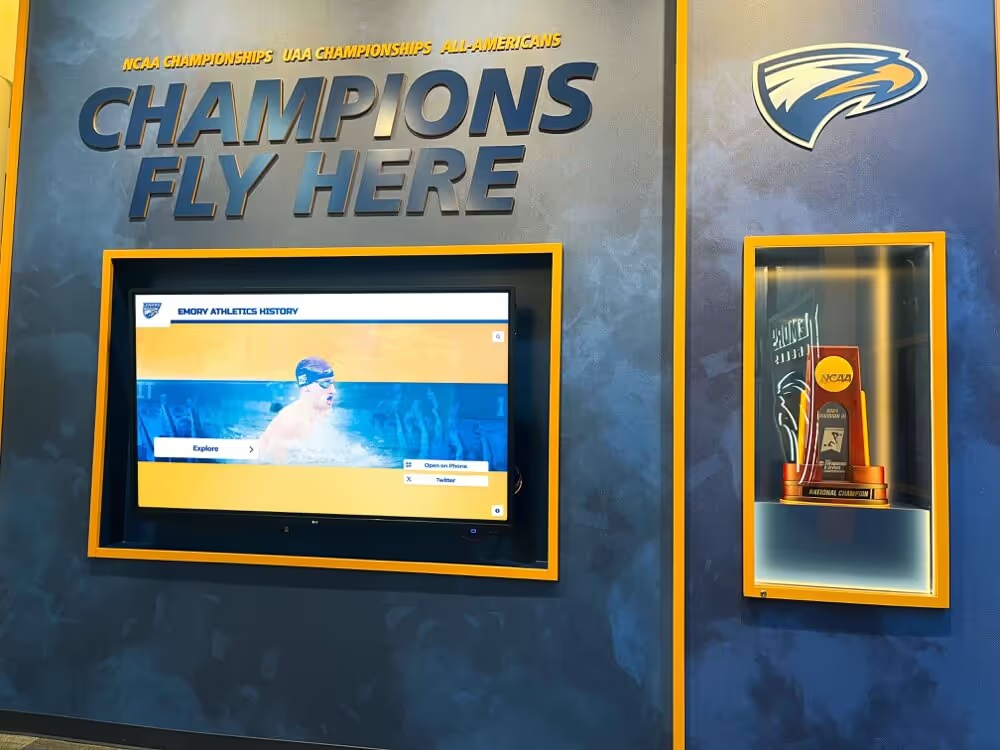
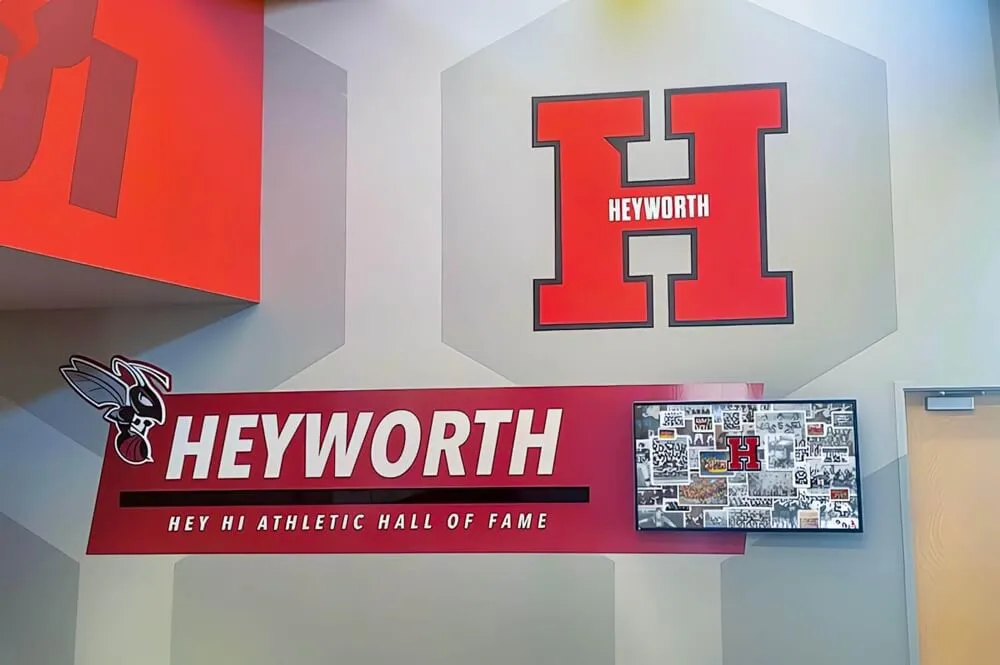
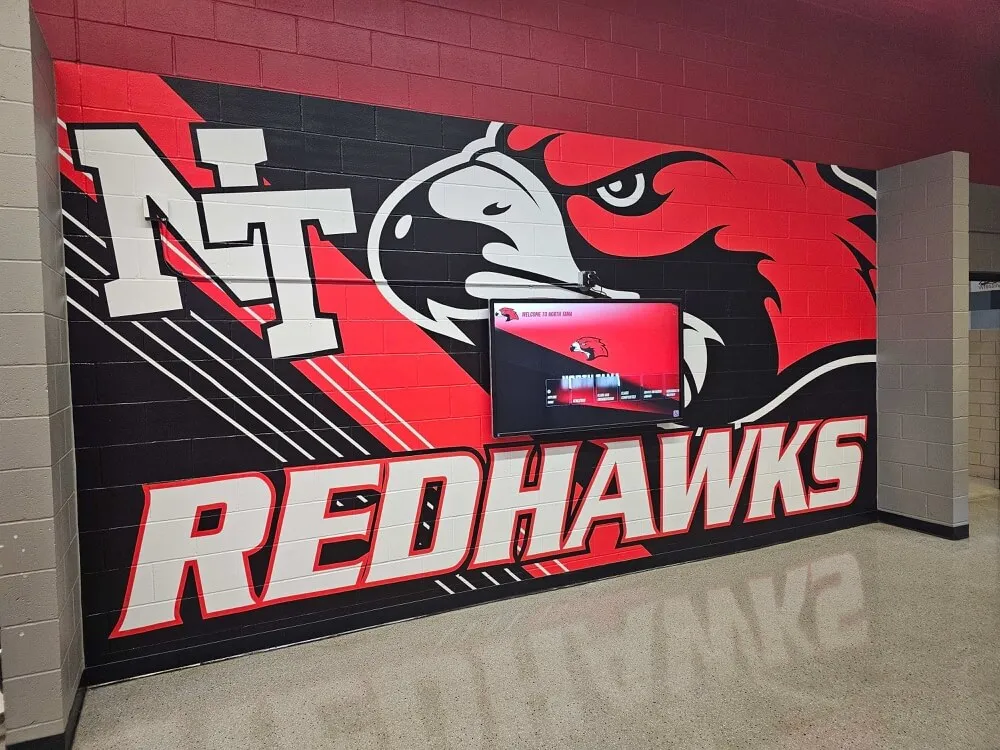
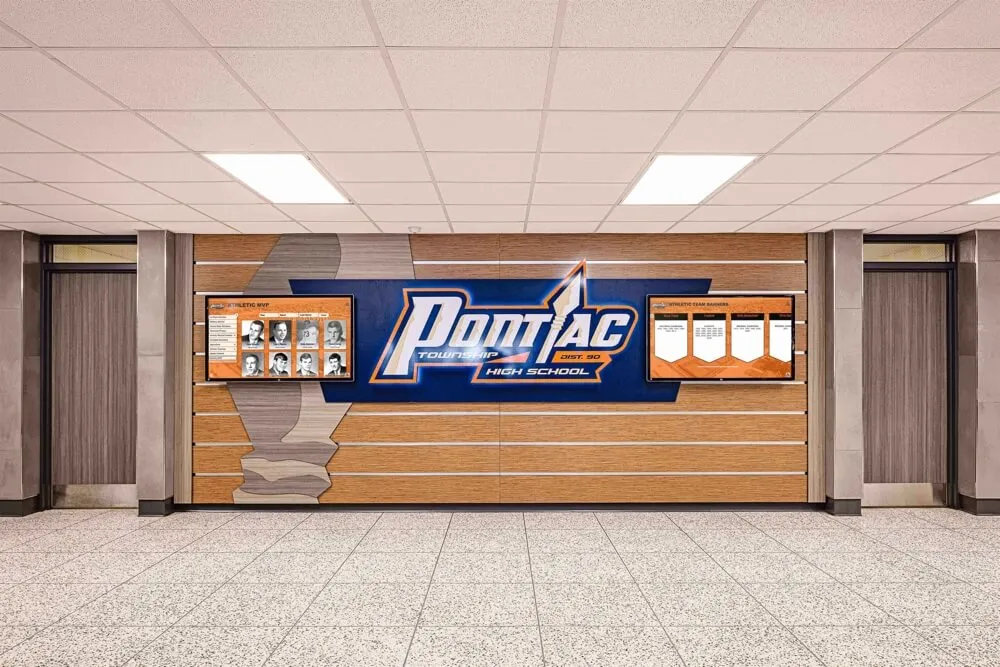
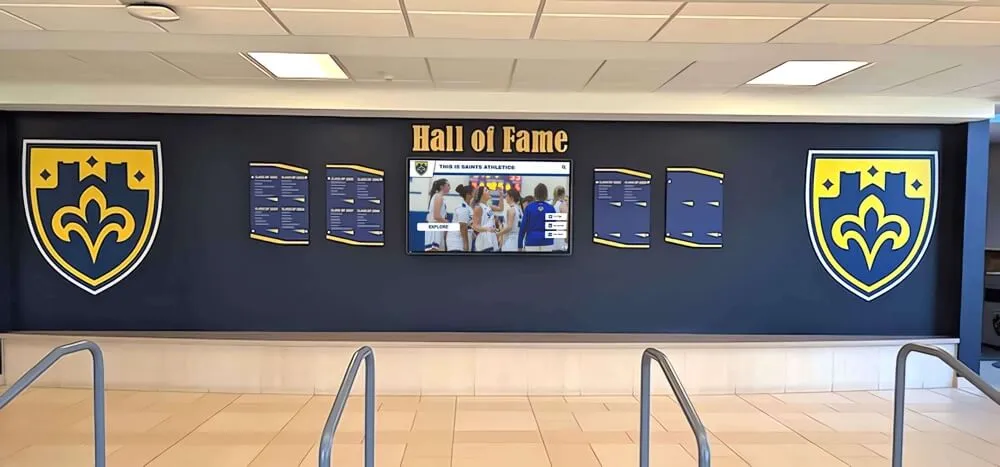
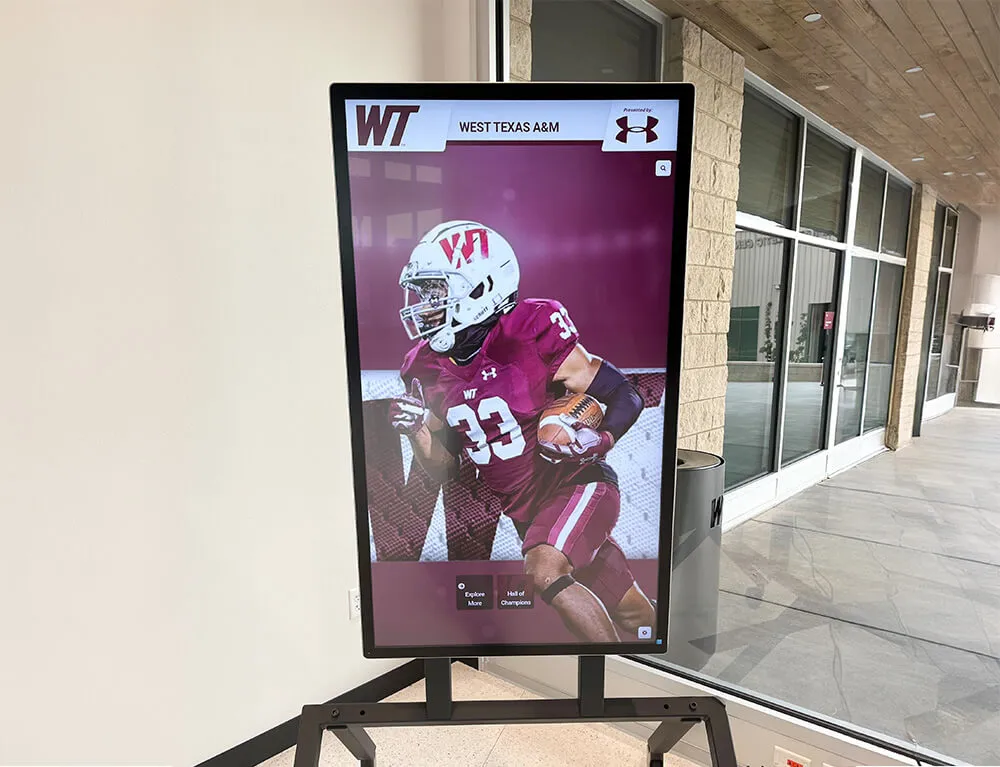
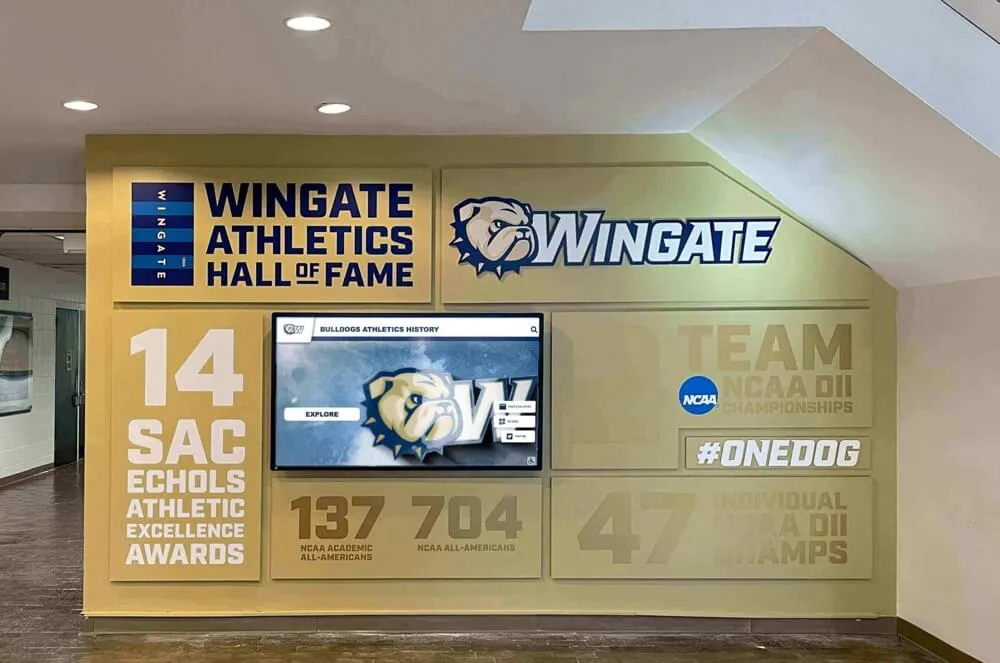
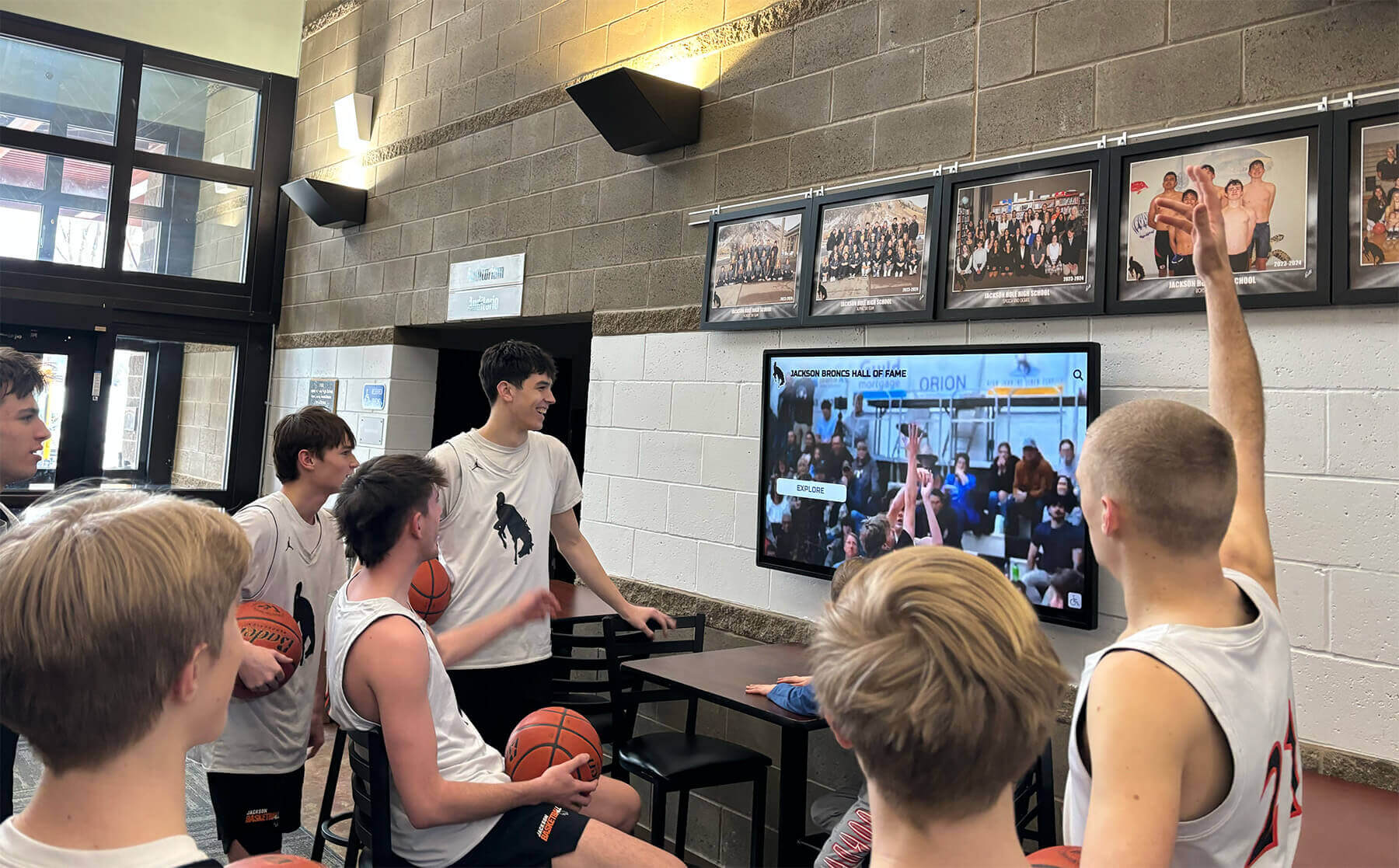
An athletic department newsletter that connects game highlights to lobby recognition displays gives every win double visibility — in the inbox and on the wall
Recurring Athletic Department Newsletter Sections at a Glance
Before the detailed breakdown, here is the core list of sections that make an athletic department newsletter both useful for current readers and valuable as a long-term archive. Use this as a starting checklist when building your team newsletter template:
- Game Recap and Results — scores, opponents, key plays, and team records
- Athlete Spotlight of the Week — one featured student-athlete with full profile details
- Records and Milestones — new school records set, career marks reached, and firsts
- Upcoming Schedule and Events — next games, senior nights, banquets, and award ceremonies
- Photo Feature — game action photos, team celebrations, and archive-worthy images
- Alumni Update — former athletes competing in college, pursuing careers, or returning to campus
- Awards and Honors — all-conference selections, academic all-state, coach of the week
- From the Archive — a historical game, team photo, or record from the same week in past seasons
- On the Display — what is currently featured on the school’s digital trophy case or lobby screen
- Volunteer and Booster Spotlight — coaches, parent volunteers, and support staff recognition
Each section serves a dual purpose: it informs current subscribers, and it generates content that feeds digital displays, archives, and year-end recognition programs.
Section 1: Game Recaps That Go Beyond the Score
The game recap is the most expected section of any athletic department newsletter, but it is often the least used for long-term value. A recap that says “Boys basketball defeated Riverside 54–42 on Tuesday” is useful this week. A recap that names the leading scorer, notes the team’s season record, and flags that Tuesday’s win was the program’s 200th all-time victory is useful for years.
When writing game recaps for your newsletter, build in the details that will matter later:
- Who scored, performed, or set the pace — individual names tied to specific achievements
- The team’s running season and all-time records — context that turns a game result into a milestone marker
- Any records approached or broken — even if a record was not broken this week, noting that a player is three points away from the career scoring record generates narrative momentum
- Coach commentary — a direct quote from the head coach, even one sentence, humanizes the recap and becomes archival documentation
Schools that treat game recaps as mini-features rather than score summaries produce newsletters that read like a documentary in progress. Over a full season, that newsletter becomes a rich account of the team’s story—one that feeds directly into year-end publications, lobby displays, and future hall of fame content.
Athletic director checklists for recognition, records, and display updates provide a complementary framework for ensuring that game-level milestones get captured systematically rather than only when they are obvious.
Section 2: The Athlete Spotlight — Your Newsletter’s Recognition Engine
The athlete spotlight is the section that most directly connects your newsletter to lasting recognition. A weekly feature profile — rotating across sports, grade levels, and achievement types — creates a running archive of the school’s student-athletes that serves the yearbook, the hall of fame program, the school website, and the digital lobby display.
An effective athlete spotlight in your newsletter should include:
- Full name, sport, position, and graduation year
- Recent performance highlights — specific numbers, specific moments
- Career context — how this season fits their overall record
- A brief personal element — what they love about the sport, what this season has meant
- A photo — portrait or action shot
The spotlight does not need to be long. Four to six short paragraphs is sufficient for a newsletter. The value is not length — it is consistency. A school that publishes an athlete spotlight every week for four years accumulates a library of hundreds of profiles that would otherwise never exist.
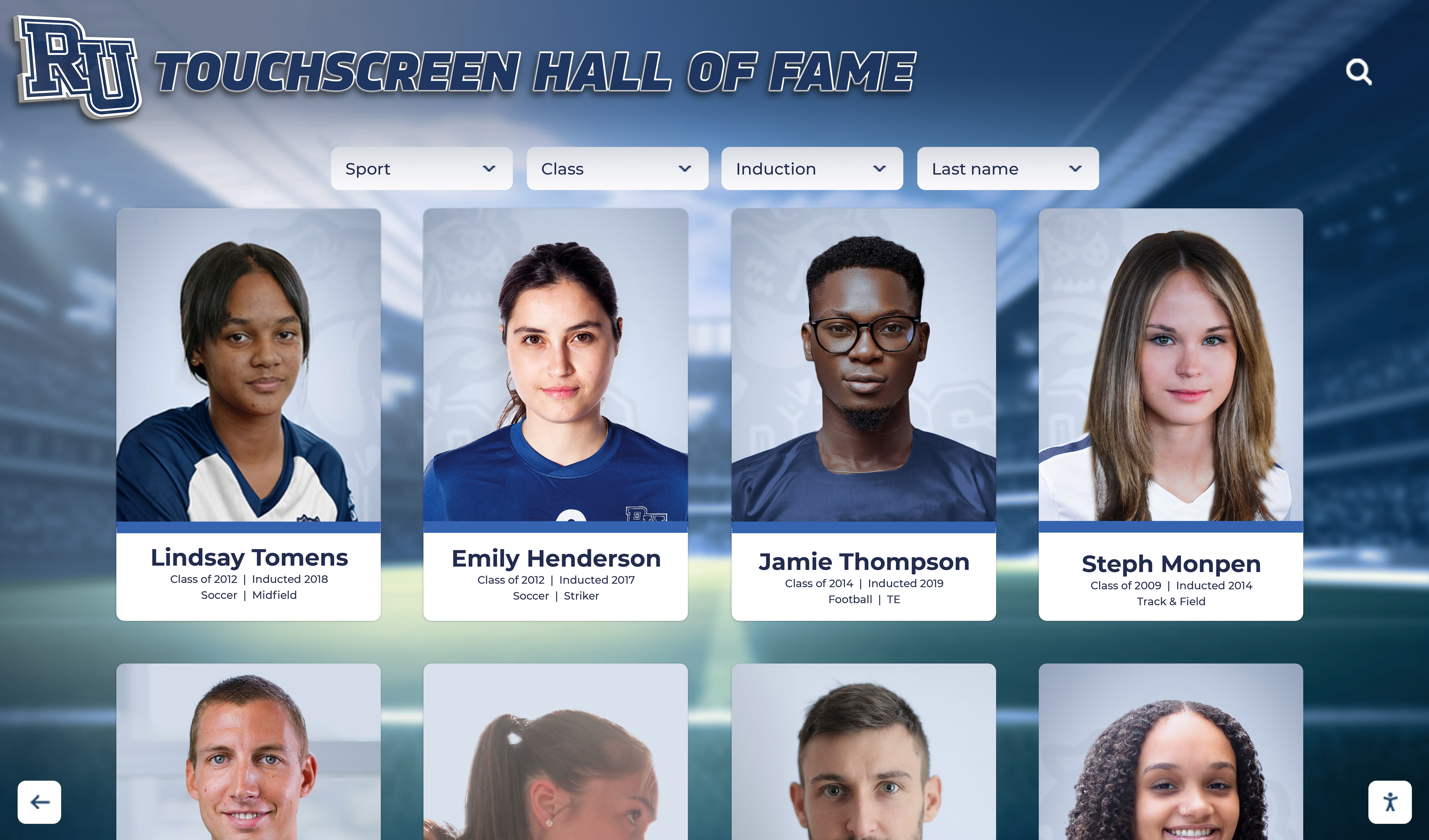
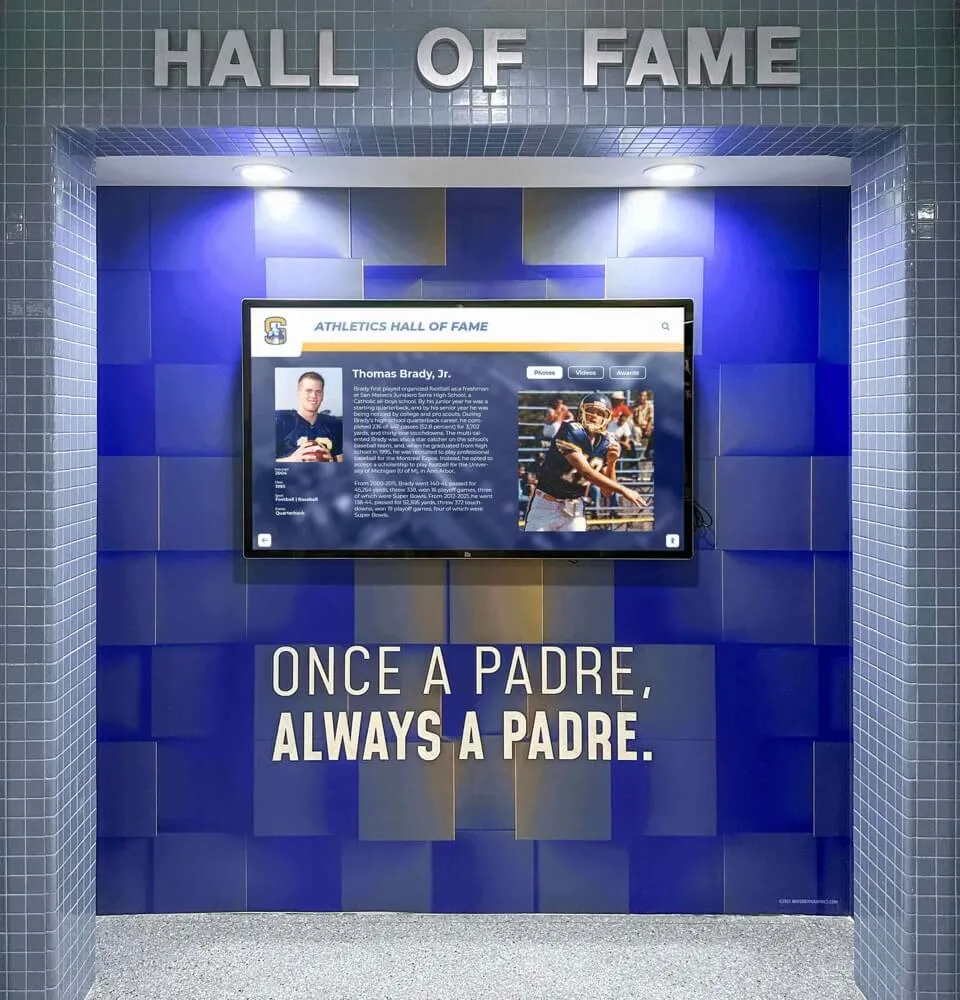
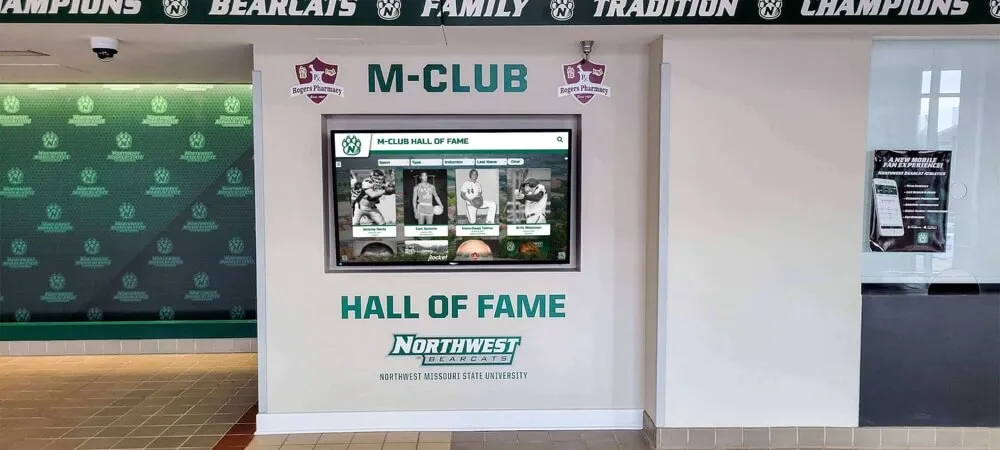
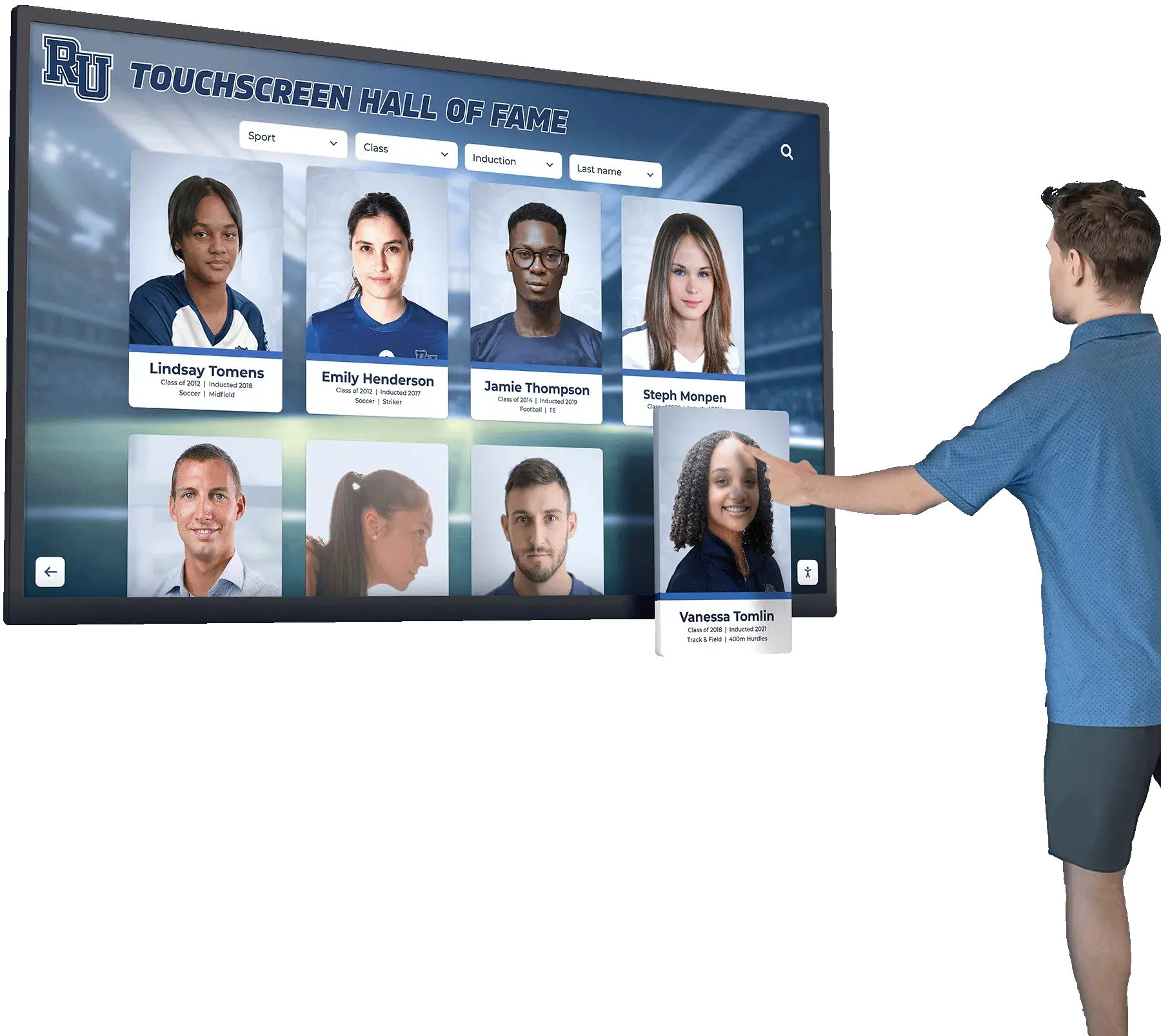
Weekly newsletter athlete spotlights feed directly into touchscreen hall of fame profiles — the same information structured once serves both channels
When the yearbook team needs content at deadline, those newsletter spotlights are already written. When the hall of fame nomination committee reviews candidates five years from now, those profiles document exactly what each athlete accomplished and who they were as a student. That compounding value is what separates a recognition-focused newsletter from one that only tells people the final score.
For game-by-game touchscreen recognition that connects to these profiles, JV hockey game recognition guides on touchscreen displays show how digital systems use the same profile data that newsletter spotlights generate.
Section 3: Records and Milestones — The Most Underused Newsletter Section
Most athletic department newsletters report records when they happen: a player breaks the school’s career scoring record and the newsletter covers it. That is appropriate and important. But a recognition-focused newsletter goes further.
Approaching milestones generate anticipation and engagement before a record is broken. Noting that a player needs twelve more points to set the career scoring record — two or three newsletters before it happens — turns a single-game event into a multi-week story that brings readers back each week.
Context for records makes them meaningful. A school record set fifty years ago that still stands tells a different story than a record set two seasons ago. Note when a record was originally set, by whom, and how long it stood. This context honors both athletes simultaneously and deepens the newsletter’s role as a living archive.
Team records are often overlooked in favor of individual ones. A team’s longest winning streak, most wins in a single season, or first championship in a sport are institutional milestones worth documenting with the same care as individual records.
For schools building a formal record-tracking system to complement the newsletter, basketball game touchscreen recognition guides show how digital displays and recognition workflows connect sport-by-sport milestones to lobby displays visible to the whole school community.
Section 4: Photo Features That Double as Archive Material
A weekly photo feature is one of the simplest ways to elevate an athletic department newsletter from functional to memorable. Images carry emotional weight that text cannot replicate, and a newsletter that consistently includes quality game photography creates a visual archive that serves multiple downstream uses.
For each photo included in the newsletter, capture the following information at the time of publication:
- Photographer name and date
- Player names and sport
- Game context — opponent, final score, season significance
- Caption describing the action — not just names, but what is happening and why it matters
This metadata is what transforms a newsletter photo into archival documentation. Photos without captions and names become difficult to use after even a short period; photos with complete documentation can be pulled years later for anniversary features, hall of fame slideshows, alumni publications, and lobby display rotations.
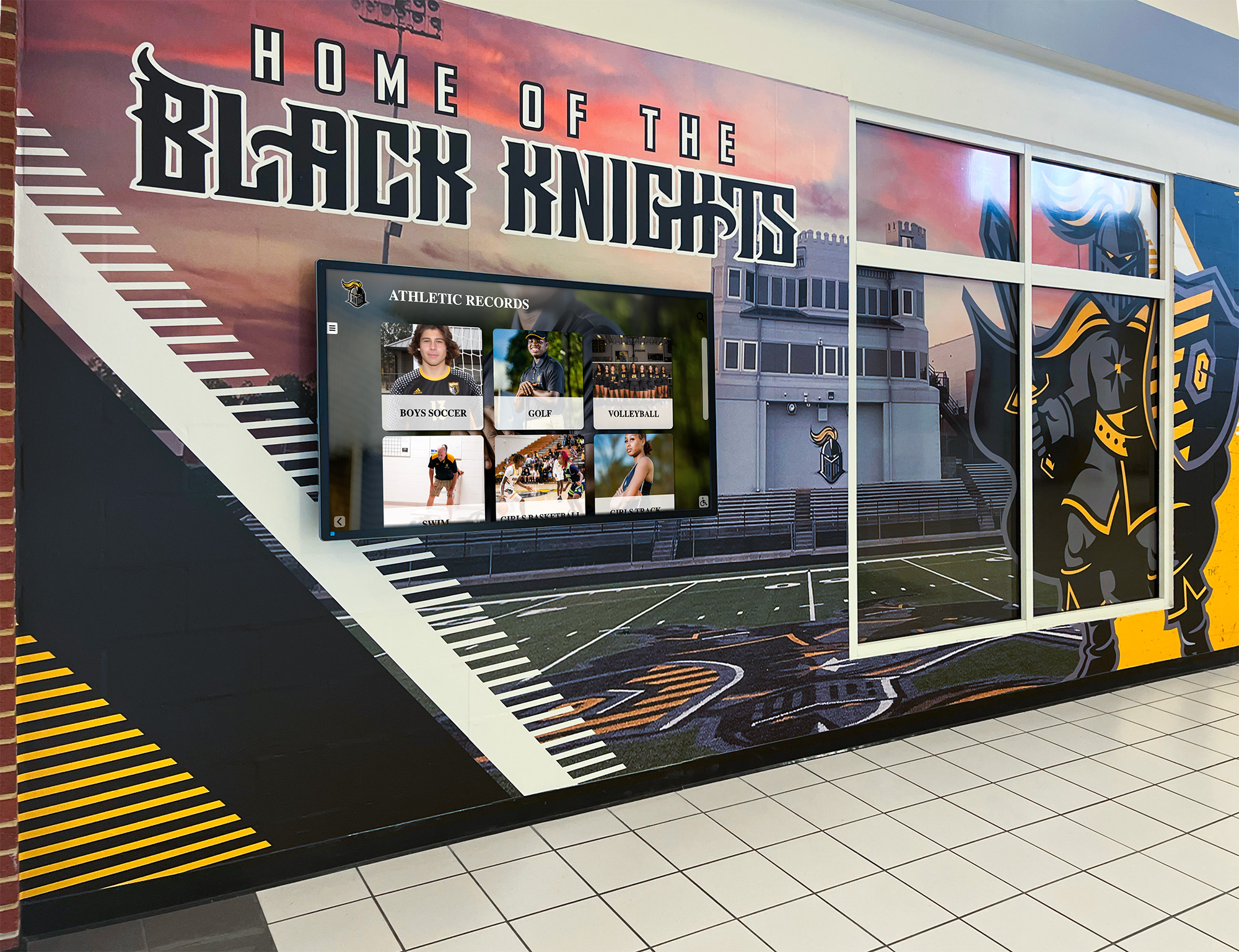
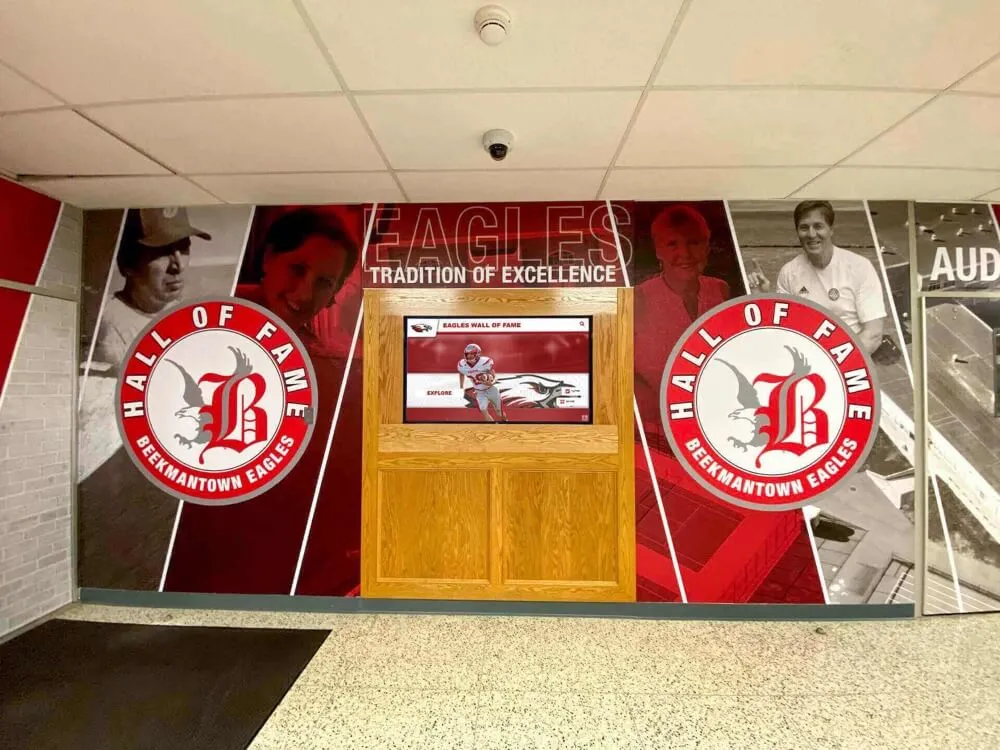
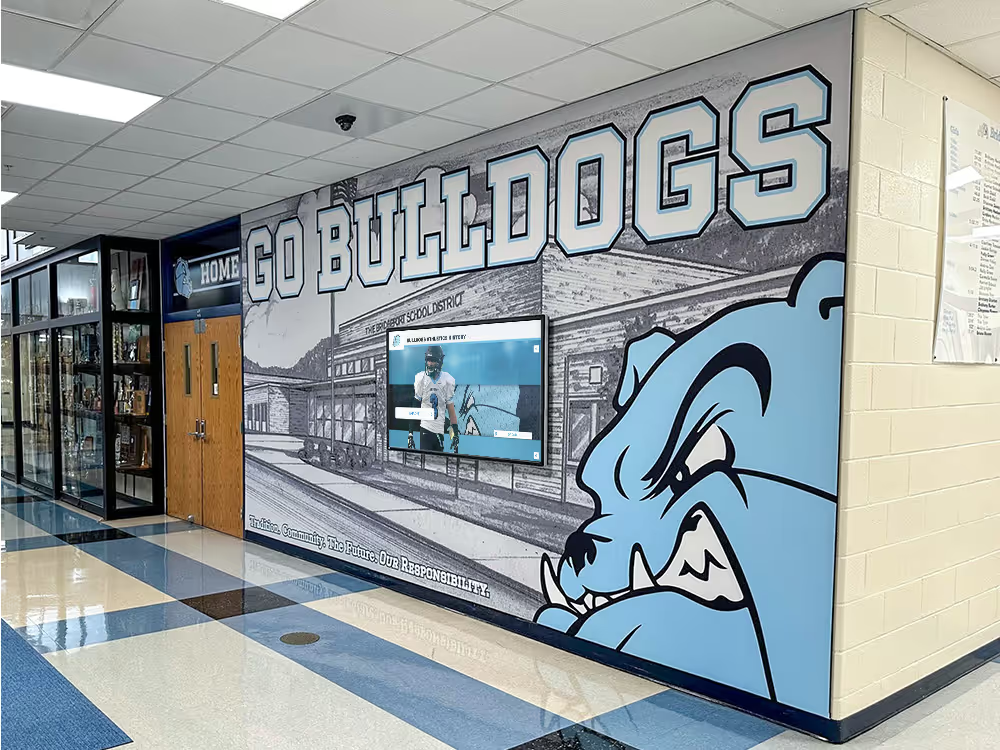
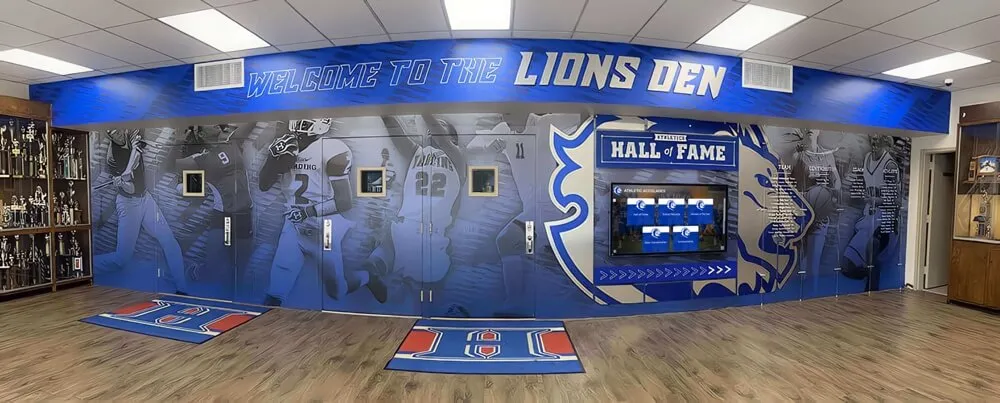
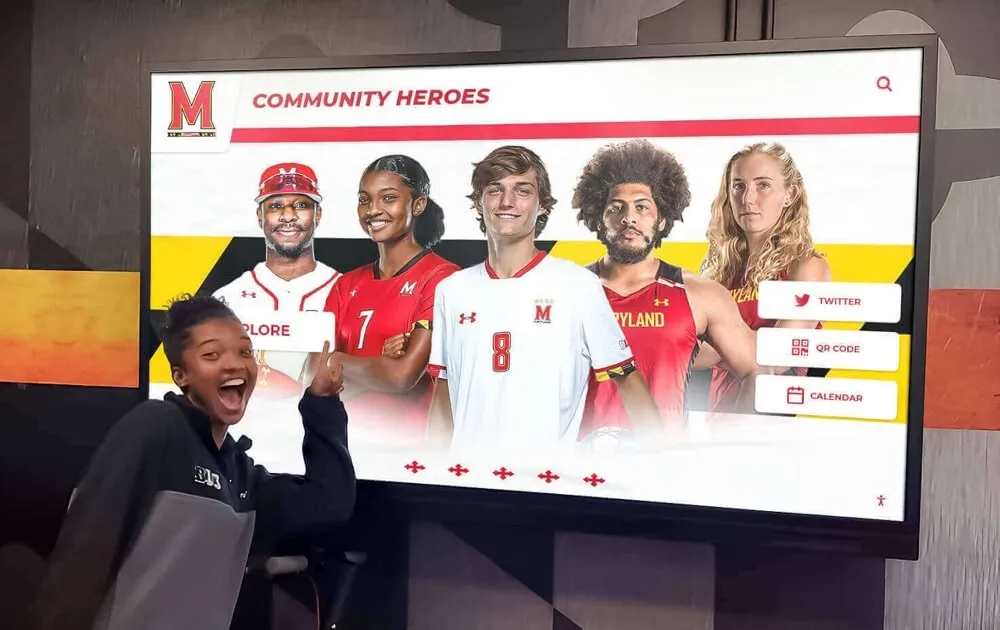
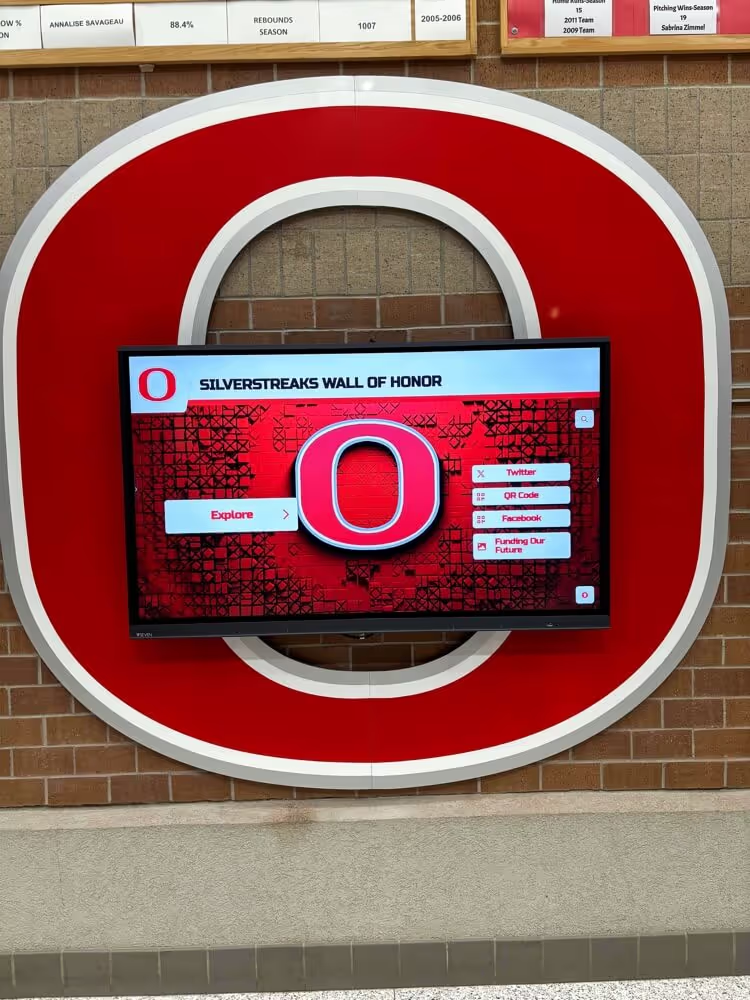
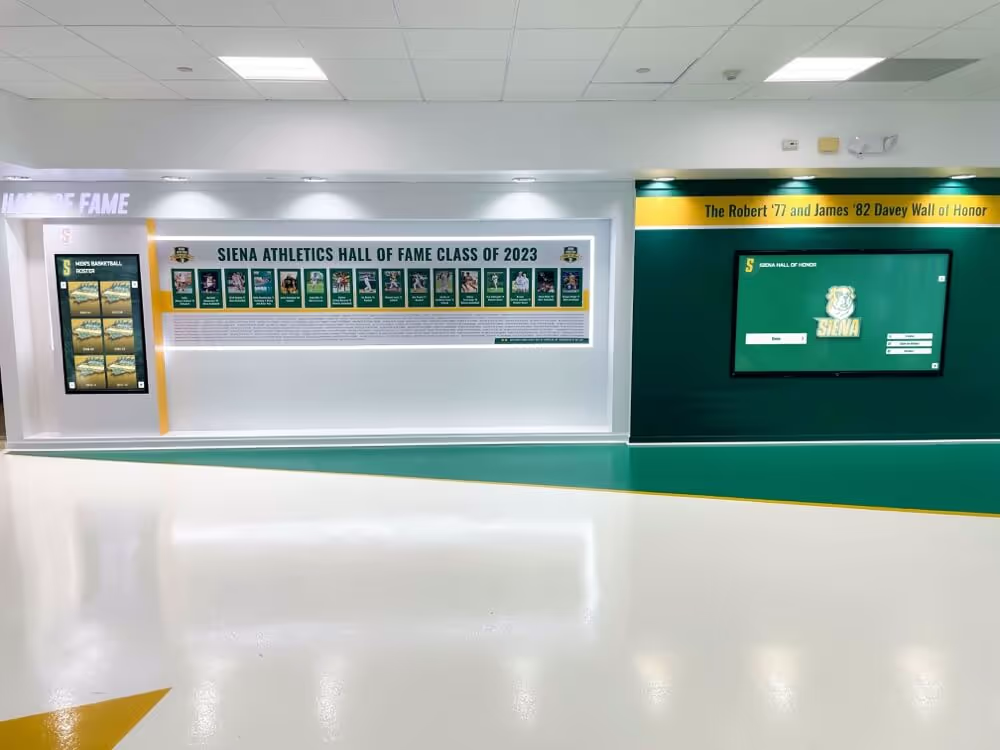
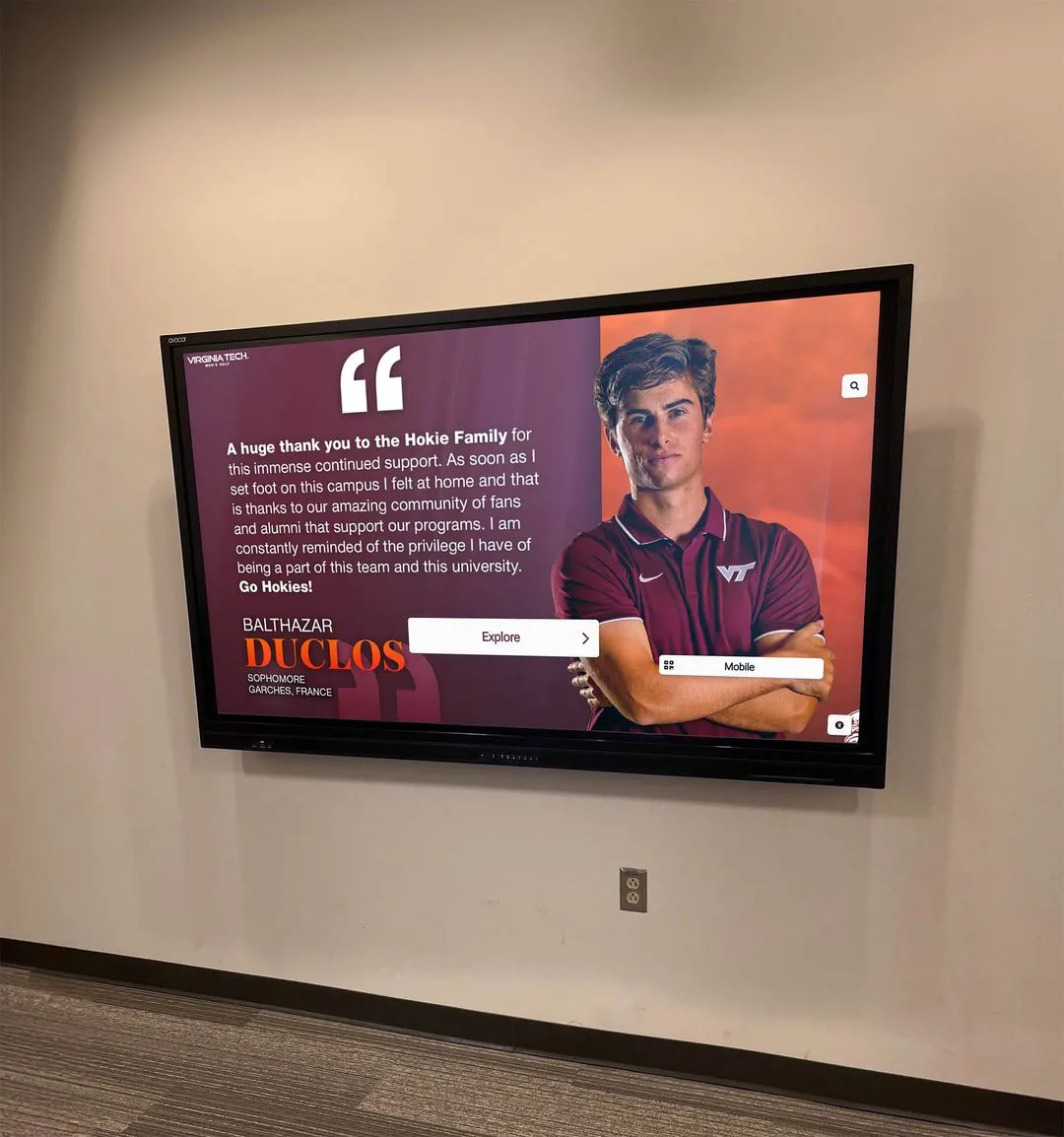
Photos captured in newsletter archives can migrate to hallway murals, digital record boards, and lobby displays — documentation at publication time determines whether that migration is possible
Soccer alumni game photo archives and recognition is an example of how systematically archived newsletter photos become a usable historical record for alumni recognition programs — not just a collection of unorganized image files.
Section 5: Alumni Updates That Reconnect the Community
An alumni update section adds a dimension to the athletic department newsletter that no other publication provides: proof that the program’s investment in student-athletes continues to pay off after graduation. Alumni updates transform the newsletter from a current-events document into a statement about the long-term value of athletic participation.
Effective alumni update content includes:
- College athletic participation — former athletes competing at the collegiate level, with their college and sport
- Career and professional highlights — alumni who have gone on to coaching, sports medicine, athletic administration, or other careers
- Return visits and events — alumni attending homecoming games, speaking to current teams, or participating in alumni recognition events
- Hall of fame eligibility — flagging when former athletes are approaching the typical eligibility window for hall of fame nomination creates pipeline awareness in the alumni community
Alumni who appear in the newsletter’s update section are more likely to engage with the school’s athletics program going forward. The update section also creates a natural feedback loop: alumni who are named in the newsletter often reach out to share more detail or connect others, organically building the archive.
Alumni recognition event planning guides explain how newsletter alumni content connects to formal recognition events — homecoming banquets, hall of fame ceremonies, and alumni game days that bring former athletes back to campus.
Section 6: Awards and Honors — Formalizing Recognition in Writing
Awards and honors coverage in the newsletter provides a written record of recognitions that might otherwise exist only as a verbal announcement or a social media post. When all-conference selections, academic all-state honors, player of the week awards, and scholar-athlete designations are documented consistently in the newsletter, the department builds an authoritative reference that coaches, parents, and administrators can rely on.
The awards section should be structured consistently:
- Award name and conferring organization
- Recipient name, sport, and grade level
- What the award recognizes — brief context for readers unfamiliar with the distinction
- Selection criteria or competitive field — how many were nominated, how the winner is chosen
This structure serves two functions simultaneously: it informs current readers and it creates documentation detailed enough to support future recognition contexts including hall of fame nominations, senior profile writeups, and year-end award ceremonies.
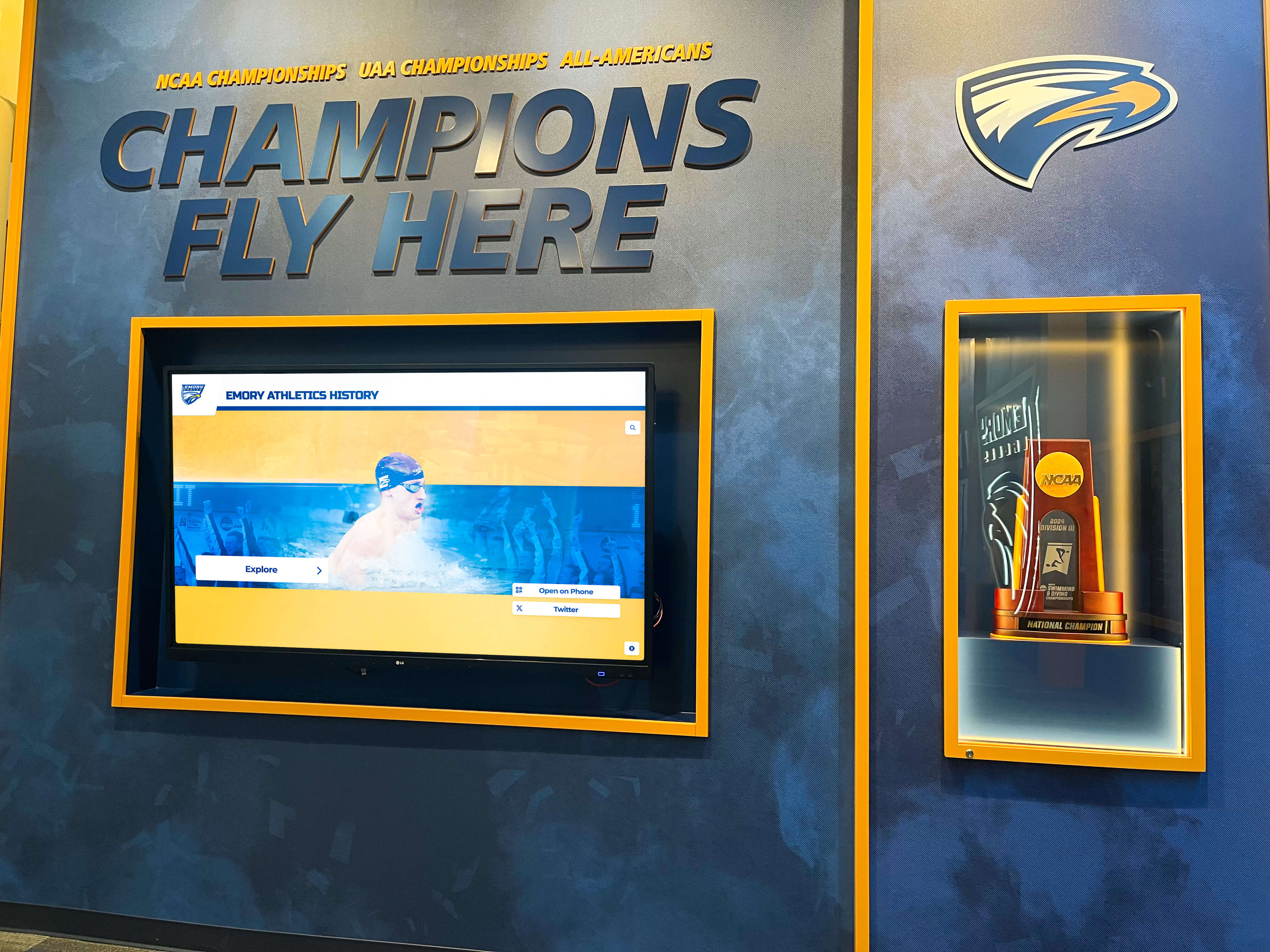
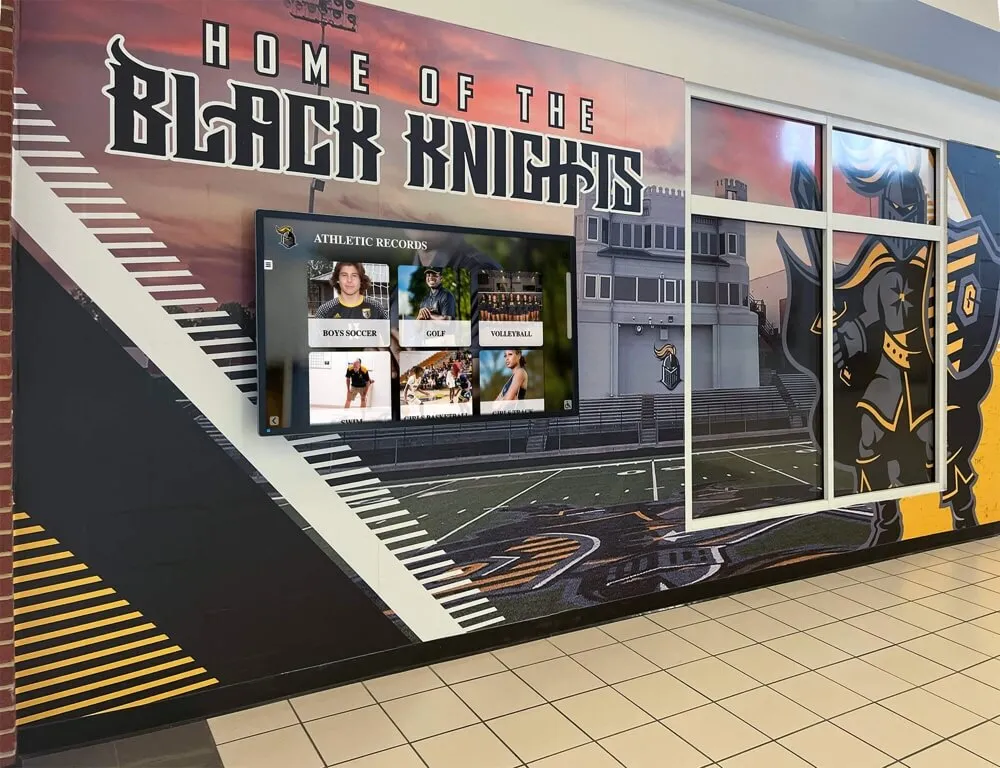
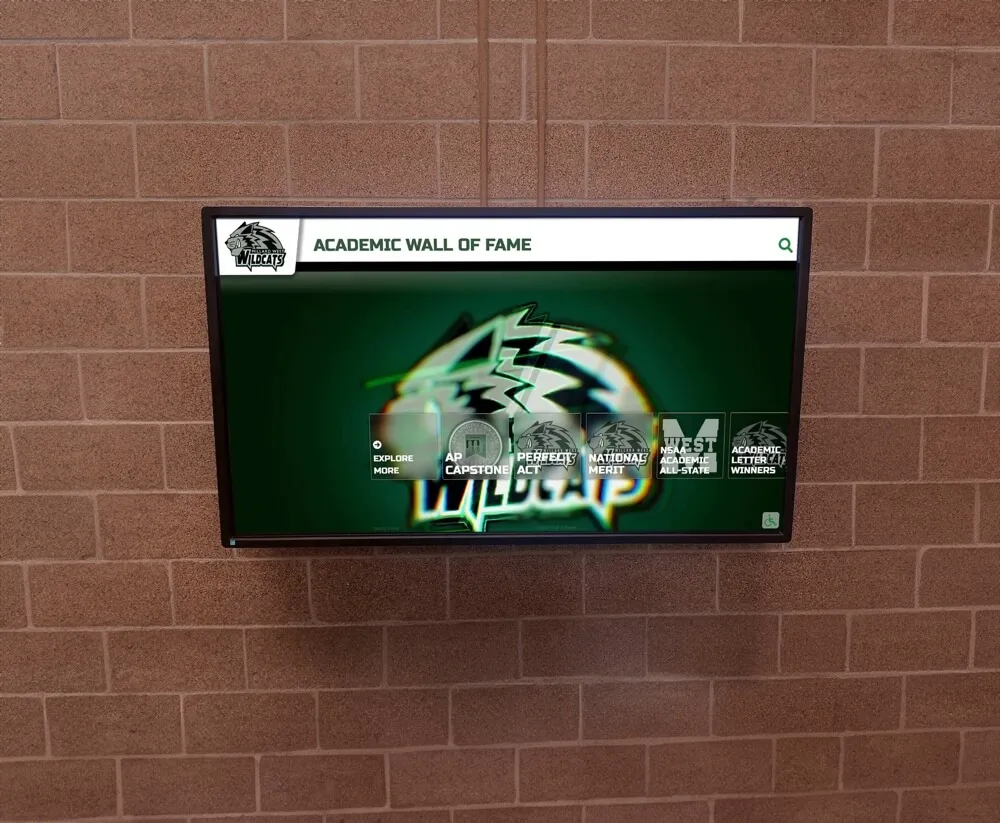
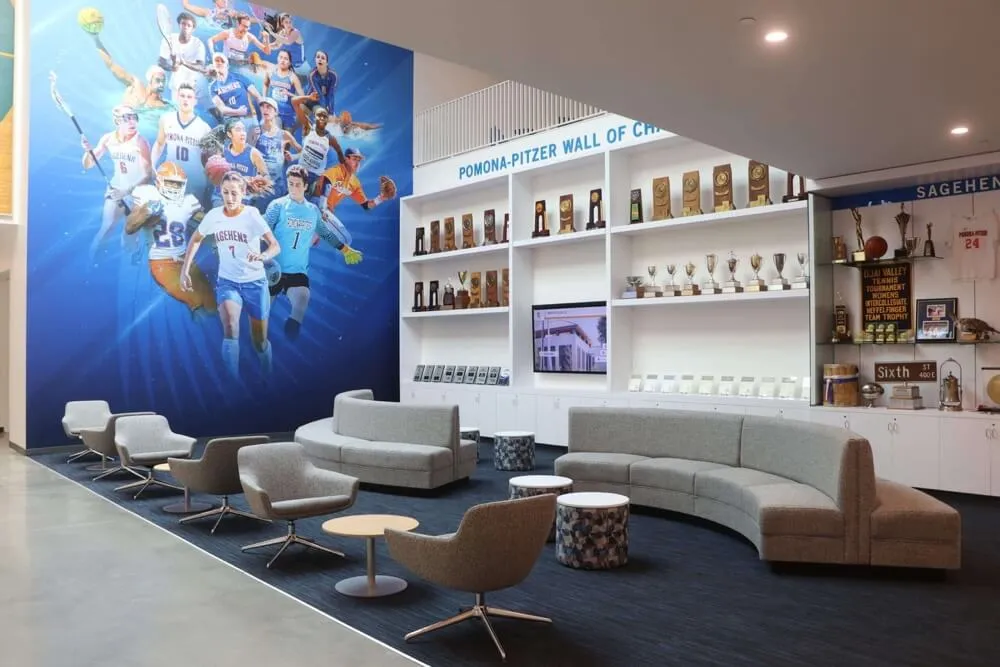
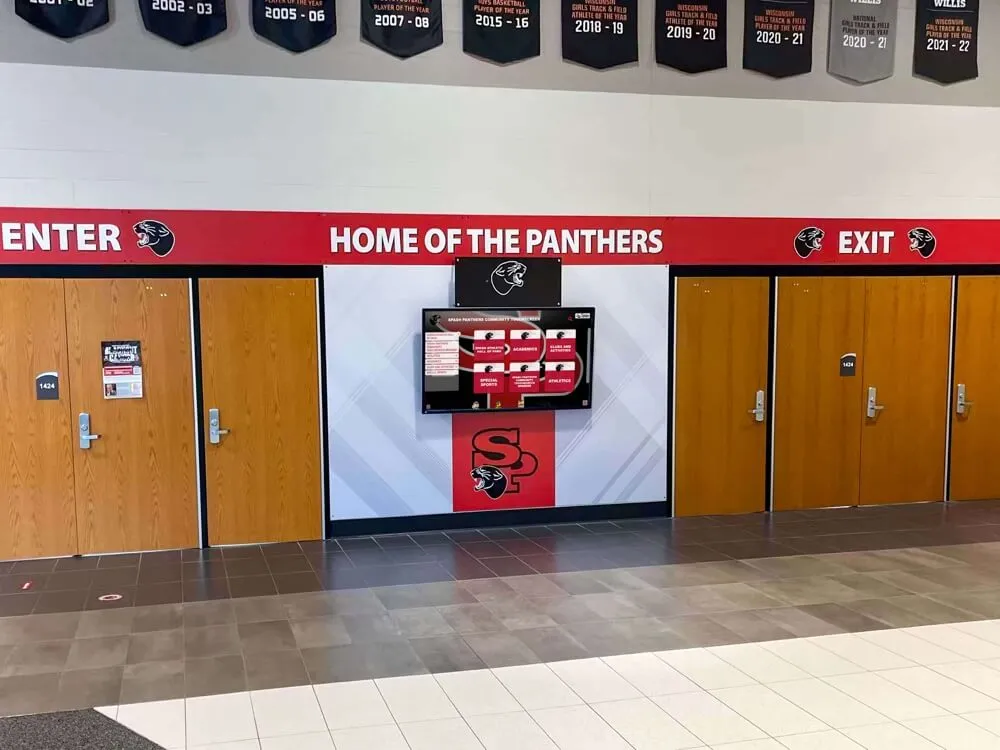
Awards documented in the newsletter create the written record that backs every trophy on the wall — making future recognition programs faster and more accurate to produce
Section 7: From the Archive — Historical Content That Deepens Identity
The “From the Archive” section is the newsletter feature that most explicitly connects present-day athletics to institutional history. A brief note about a game that happened ten or twenty years ago this week — a championship run, a record-breaking performance, a team that overcame adversity — gives current athletes context for the tradition they are part of.
This section requires minimal production effort when the school has maintained even a basic record of past seasons. Newsletter archives themselves become source material: a game recap published five years ago can be republished as an archive feature with a brief update noting what the featured athletes accomplished afterward.
For schools that want to make this section visually dynamic, school digital announcement boards for recognition, events, and daily updates show how rotating historical content can live on lobby screens alongside current-season highlights — creating an always-visible connection between past and present.
Section 8: Connecting the Newsletter to Digital Displays
The most forward-thinking athletic department newsletters include a section that explicitly connects written content to the school’s physical recognition environment. A note like “This week’s athlete spotlight is now featured on the lobby touchscreen through the end of the month” or “The new season record board has been updated to reflect Tuesday’s milestone” makes the newsletter a bridge between inbox and hallway.
This connection serves two audiences. Current students who do not read the newsletter will encounter the recognition on the display. Current readers who do follow the newsletter will seek out the display to see the recognition in physical form.
The athletic department management software stack that supports this integration — connecting data from newsletters, records, and rosters to display systems — is explored in detail at athletic department management software stacks for records, rosters, and recognition. Building a workflow where newsletter content flows into display content automatically saves production time and ensures recognition reaches every audience.
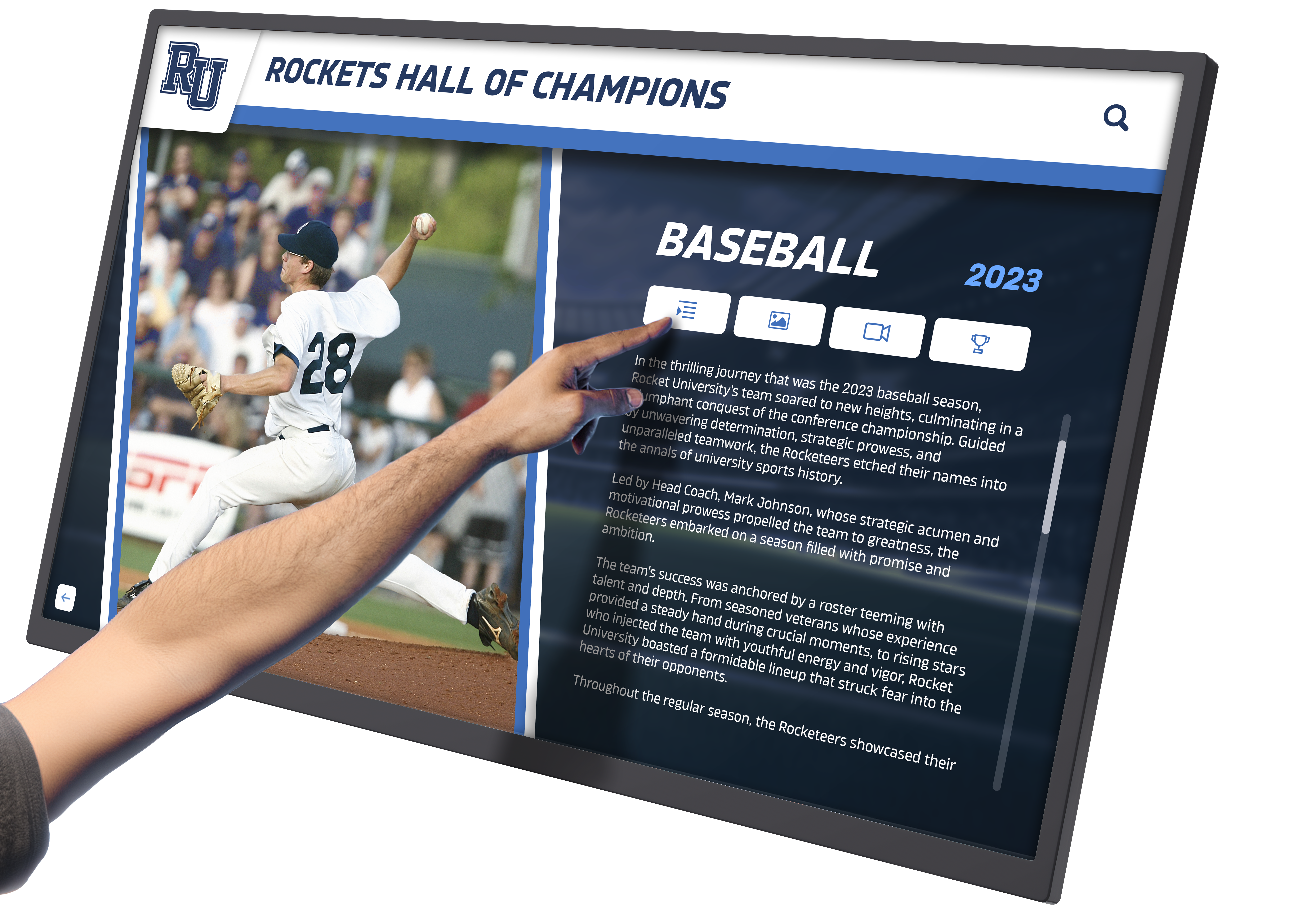
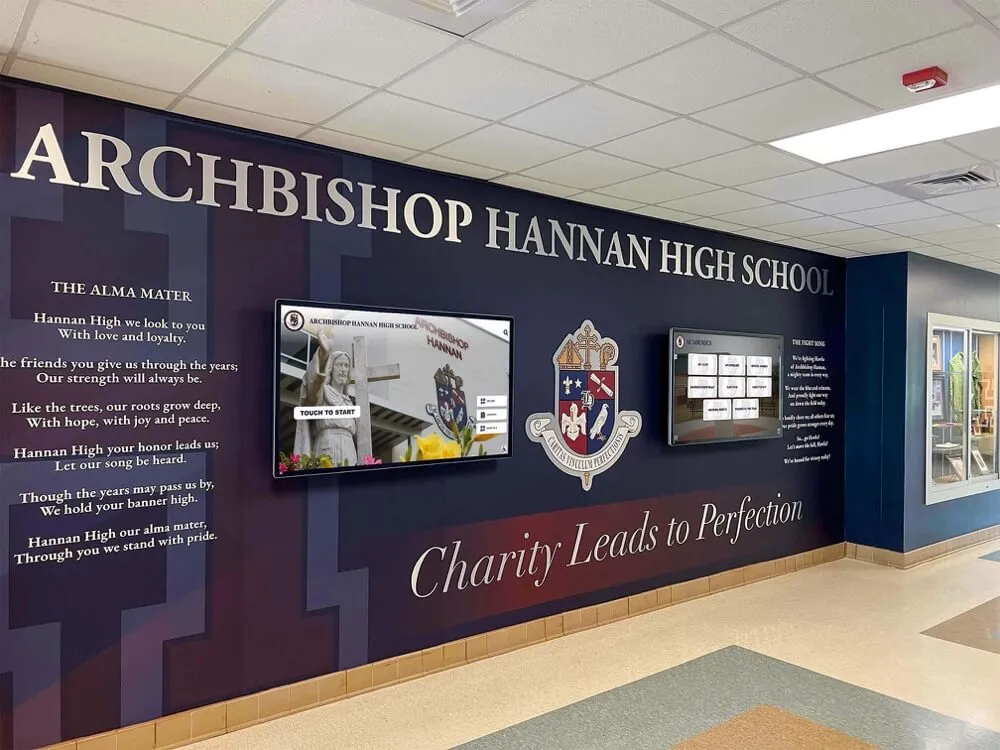
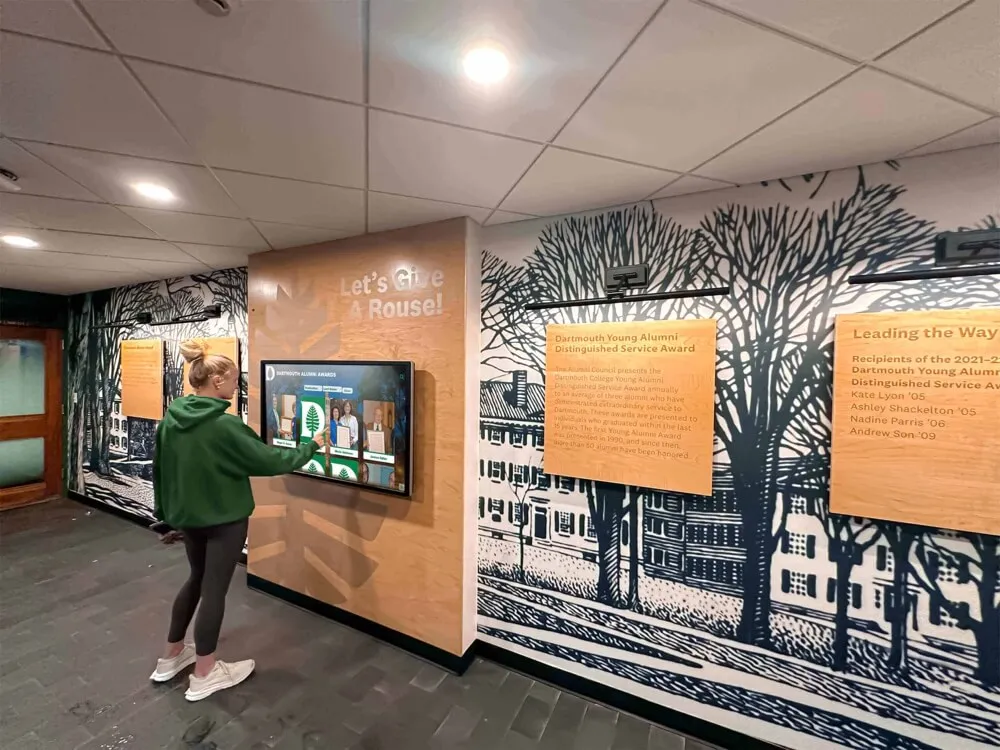
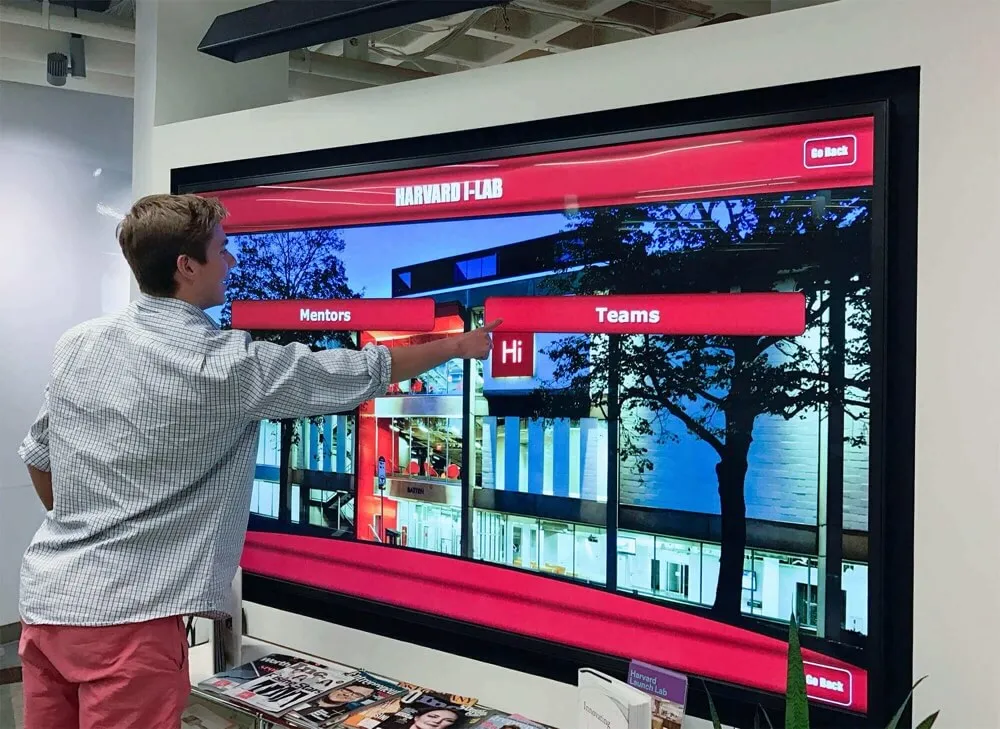
Connecting newsletter athlete spotlights to touchscreen hall of fame displays means the same recognition story reaches both the inbox audience and the hallway audience
Building a Team Newsletter Template That Scales
A team newsletter template solves the production problem that prevents most schools from publishing consistently. Without a template, every issue requires building from scratch — decisions about which sections to include, how long each should be, and what content to prioritize consume time that should be spent on content itself.
An effective team newsletter template for athletic departments should specify:
Issue header — school name, athletic department branding, issue date, and volume/number. Consistent header information is what makes individual issues recognizable as part of a series and makes the archive searchable by date.
Section order — establish a fixed sequence for recurring sections. Readers who return week after week develop expectations, and meeting those expectations reduces cognitive load and increases reading completion.
Target word counts per section — game recaps: 150–250 words; athlete spotlight: 300–500 words; records and milestones: 100–150 words; awards: 50–100 words per award. These targets keep the newsletter scannable without cutting depth from the sections that deserve it.
Photo specifications — minimum resolution, preferred dimensions, and caption format. Consistent photo standards make the archive usable for future design projects.
Deadline structure — who submits what, by when. Coaches submit game recaps by Thursday; the athletic director approves the records section by Friday; photos are submitted with captions attached. A documented deadline structure is what makes consistent publication sustainable across staff transitions.
School marquee messaging for recognition, events, and daily updates provides parallel guidance for the school’s external messaging channels — ensuring that newsletter recognition content carries through to the full communications environment.
From Newsletter to Hall of Fame: The Long Game
The most compelling reason to invest in athletic department newsletter ideas is not what the newsletter does this week. It is what the newsletter archive makes possible five, ten, or twenty years from now.
Every athlete spotlight published this season is a potential hall of fame profile. Every game recap that documents a record is evidence for a future nomination committee. Every alumni update is a connection point for future outreach. Schools that publish structured, well-archived newsletters are not just communicating with today’s community — they are building the documentation infrastructure that tomorrow’s recognition programs will depend on.
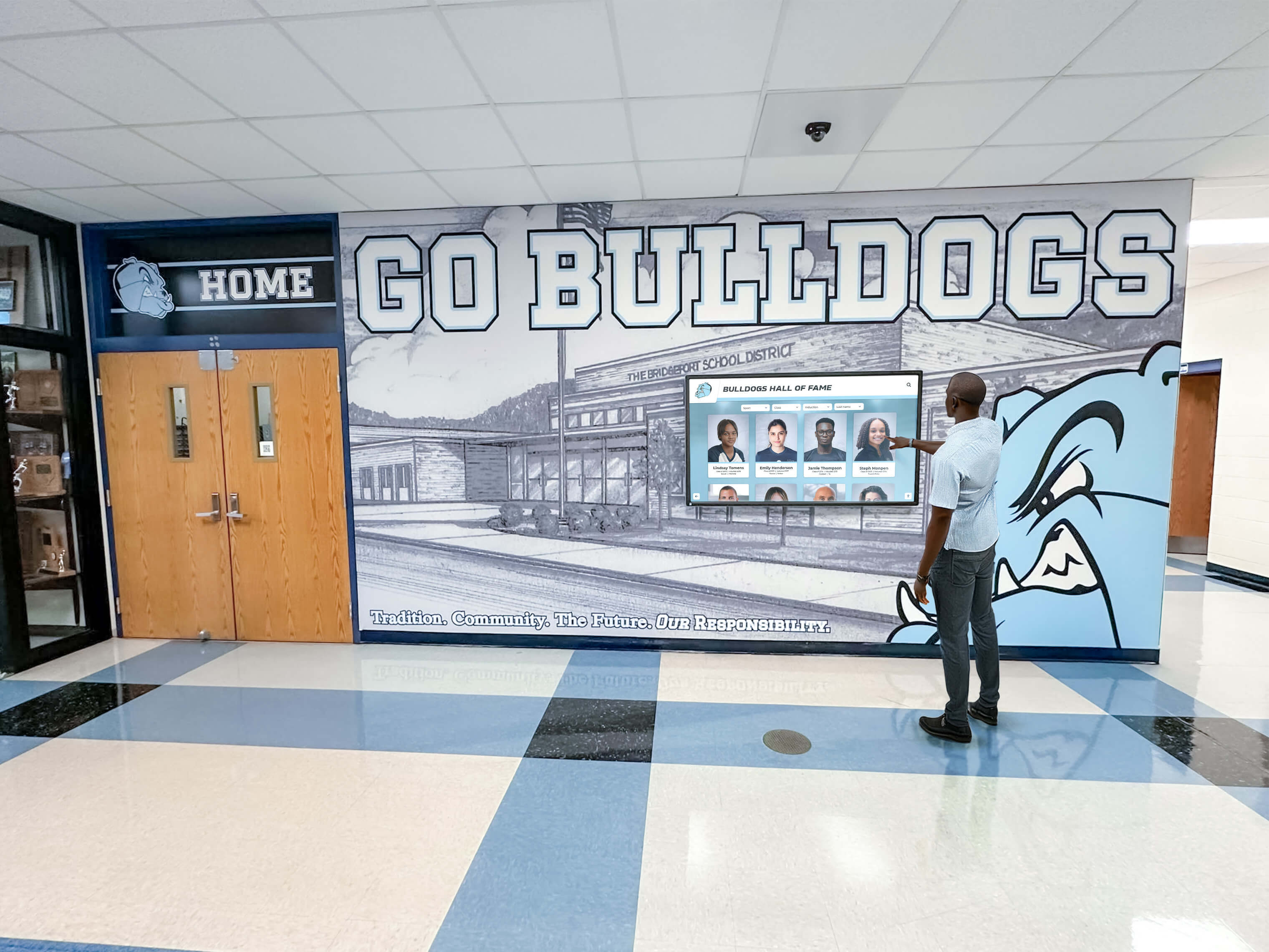
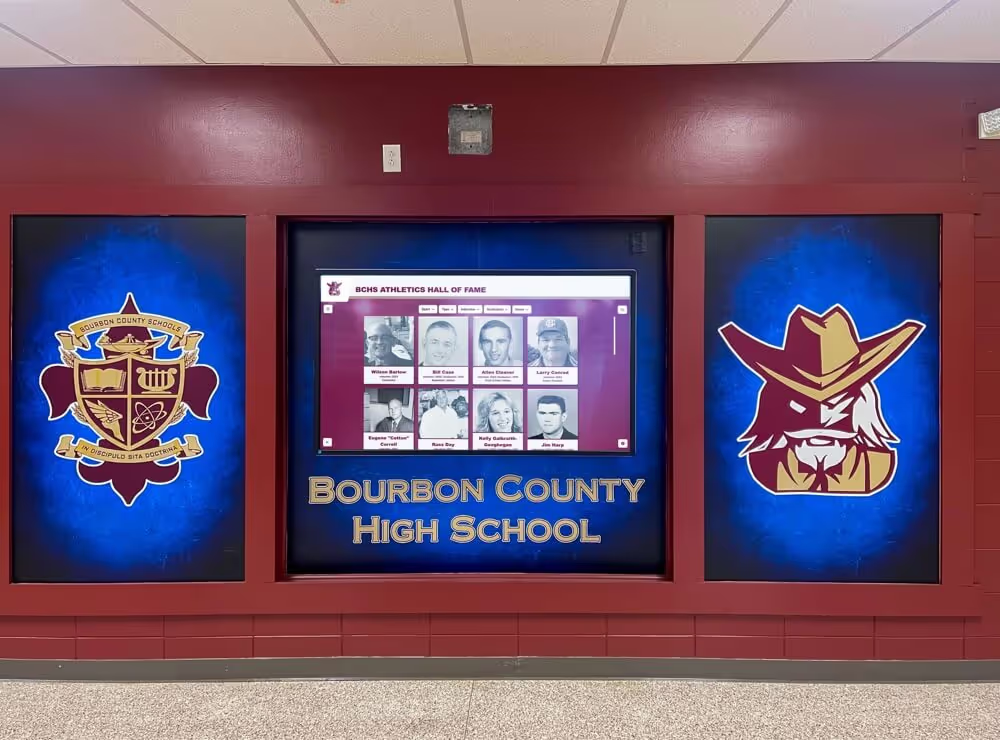
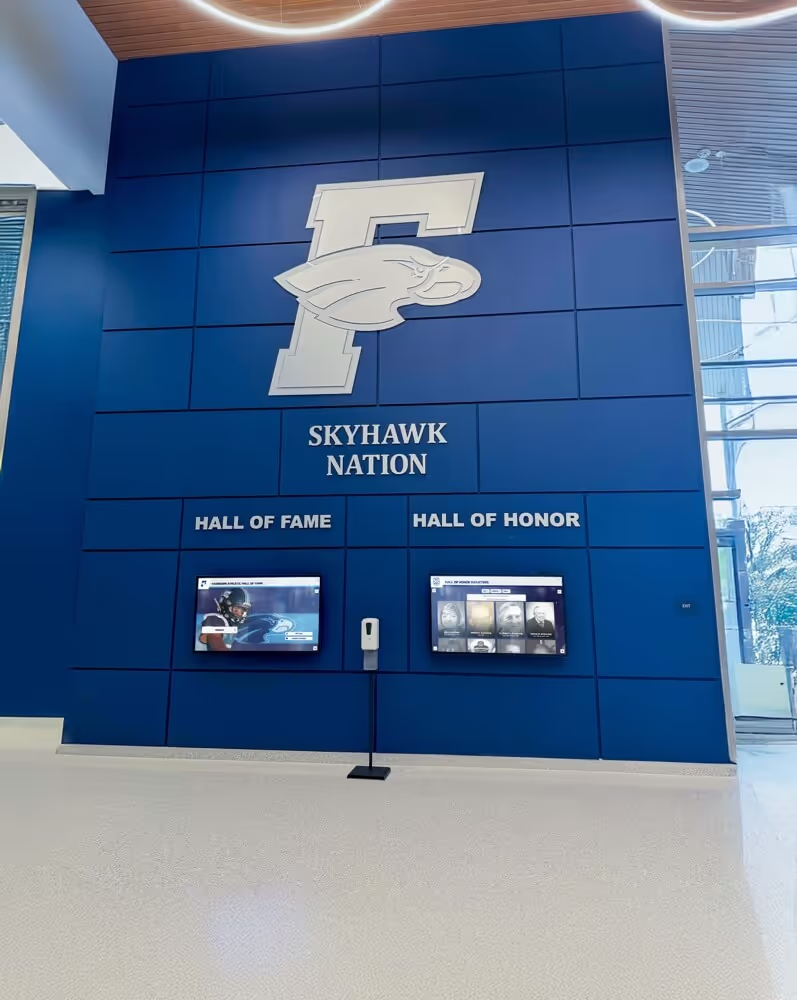
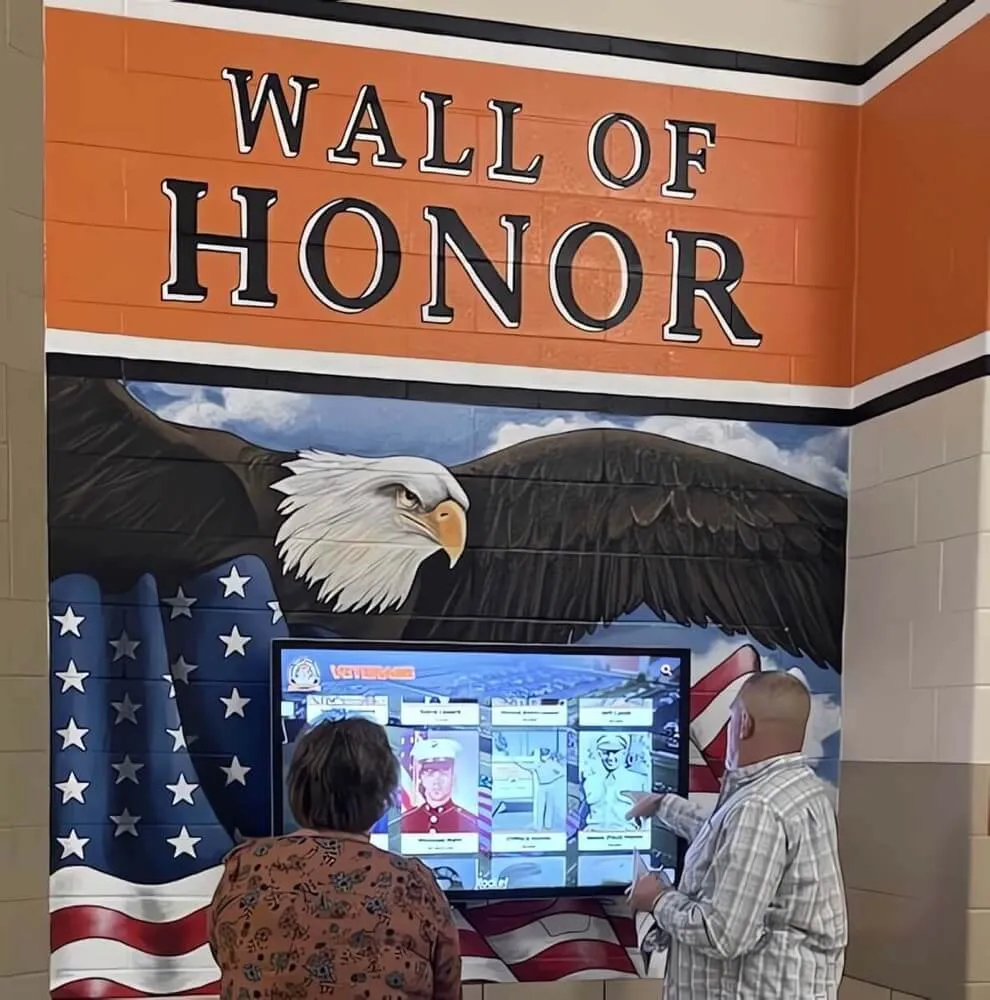
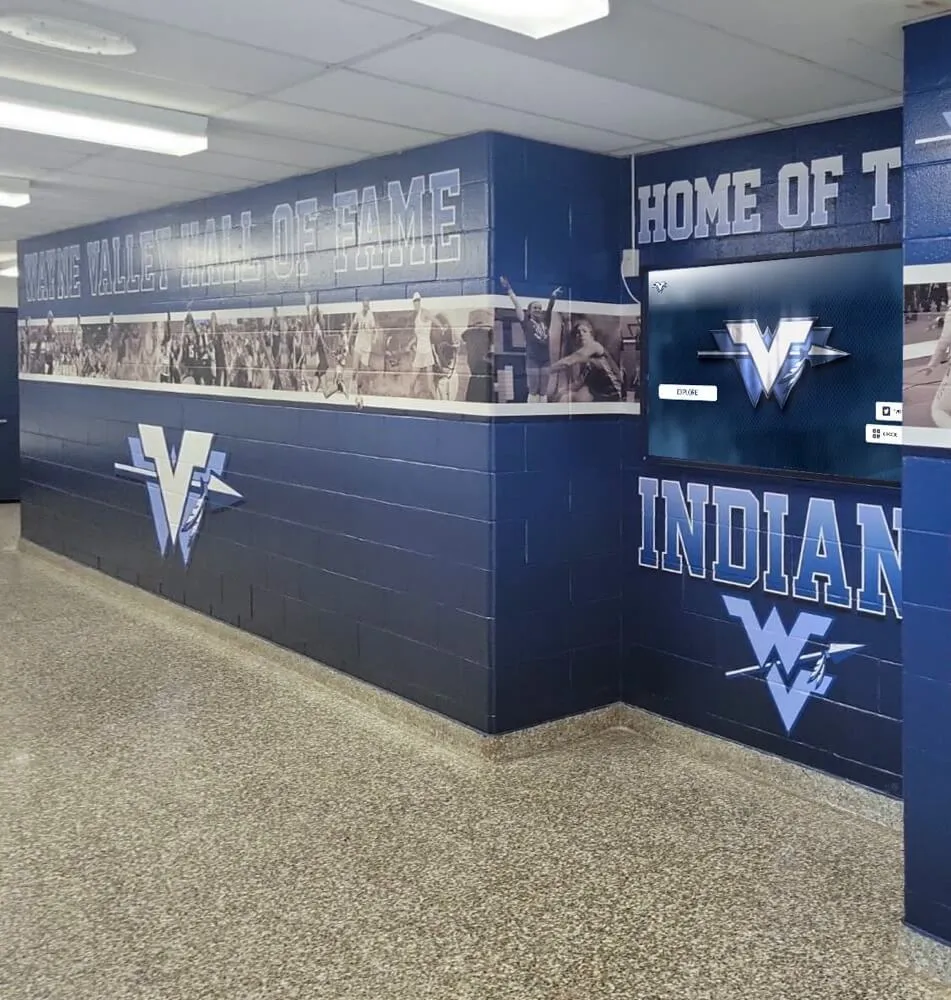
The hall of fame touchscreen profiles visitors browse today were built from records collected in newsletters, yearbooks, and archives over years — the newsletter is where that documentation begins
The connection between newsletters and lasting recognition is not theoretical. It is a production pipeline: newsletter content, systematically organized, becomes the raw material for every recognition product the school will ever produce.
End-of-year recognition ideas for lasting impact offer additional perspective on how schools are converting year-round content collection into recognition moments that feel special rather than routine.
Frequently Asked Questions About Athletic Department Newsletters
How often should an athletic department newsletter be published?
Weekly during the active season is the standard for schools with multiple sports programs running simultaneously. Monthly during off-season periods maintains the audience relationship and gives space for deeper alumni and archival features. The key is consistency: a newsletter published on the same day each week trains readers to expect it, which increases open rates and engagement more reliably than frequency alone.
Who should write and manage the athletic department newsletter?
In most high schools and universities, the athletic director or a designated communications coordinator owns the newsletter. Coaches contribute game recaps and awards content; a yearbook adviser or journalism teacher sometimes handles layout and editing. What matters most is having a single owner who is accountable for publication consistency. Newsletters that rely entirely on volunteer contributions without a dedicated owner rarely sustain consistent quality.
How do we store past newsletter issues for future reference?
Archive past issues in a shared folder with a consistent naming convention: school name, academic year, issue number, and date. A PDF or static HTML export of each issue is more durable than relying on email platform archives, which may not be accessible to future staff. Cross-reference newsletter archives with the broader athletic records system so that game recaps and athlete spotlights from past issues can be retrieved by sport, season, or athlete name.
What is the difference between a team newsletter and an athletic department newsletter?
A team newsletter covers a single sport program — the swim team’s weekly update, the football program’s parent communication. An athletic department newsletter covers the entire athletic program across all sports and serves a broader audience including administrators, alumni, and community members. Schools with strong athletic programs often publish both: team-level updates for sport-specific audiences and a department-wide newsletter that provides institutional perspective across programs.
How do newsletter sections connect to digital display content?
The most direct connection is through the athlete spotlight and records sections. Information published in those newsletter sections — athlete profiles with photos, new school records, awards — can be formatted for digital lobby displays with minimal additional work. Schools using integrated recognition platforms can often push newsletter content directly to display queues. For schools without integrated systems, a simple workflow of forwarding the newsletter’s spotlight section to the display administrator each week creates a consistent content pipeline without requiring additional software.
How Rocket Alumni Solutions Supports Athletic Department Recognition
Rocket Alumni Solutions builds the digital infrastructure that makes newsletter content visible beyond the inbox. Their interactive touchscreen walls of fame, digital trophy cases, record boards, and lobby recognition displays are designed to receive the same athlete profiles, game milestone data, and awards documentation that well-structured athletic department newsletters produce every week.
For athletic directors who want newsletter content to drive lobby recognition without duplicating data entry, Rocket’s systems provide the display layer that keeps the school’s physical environment in sync with its written communications. The athlete spotlighted in Monday’s newsletter can be featured on the lobby touchscreen by Tuesday — with the same profile photo, career statistics, and coach commentary.
Turn Your Newsletter Into a Recognition System
Your athletic department newsletter is generating valuable recognition content every week. Rocket Alumni Solutions builds the display infrastructure that makes that content visible on lobby touchscreens, digital trophy cases, and interactive record boards — ensuring that game updates become lasting recognition instead of archived emails.
Request a demo at Rocket Alumni Solutions to see how schools are connecting their newsletter workflows to digital recognition systems that honor athletes in the hallway, the lobby, and the archive.
A well-structured athletic department newsletter does not require more effort — it requires better organization of the effort you are already making. Every score you report, every athlete you spotlight, every record you document is a brick in the recognition foundation your school is building. The newsletter is how those bricks get laid consistently, week after week, season after season, until the archive you have built is something the community can genuinely be proud of.