An athletic department without a mission statement is an athletic department without a compass—reacting to each season, each budget cycle, each coaching hire without a shared sense of why any of it matters. The best athletic programs in America don’t just compete; they stand for something specific, and that something is expressed in language clear enough that every student-athlete, parent, coach, and community member can point to it and say: that’s us.
Crafting an athletic department mission statement is both a strategic exercise and a creative one. Done well, it does more than hang framed in the athletic director’s office—it becomes the foundation for how programs recruit athletes, recognize achievement, design facility displays, and communicate with the broader community. A strong mission statement is the story a department tells about itself before a single game is played.
This guide explores what separates powerful athletic department mission statements from generic ones, presents more than twenty examples organized by theme and institution type, walks through a practical writing framework, and shows how the best programs translate mission into visible recognition infrastructure that reinforces identity every day.
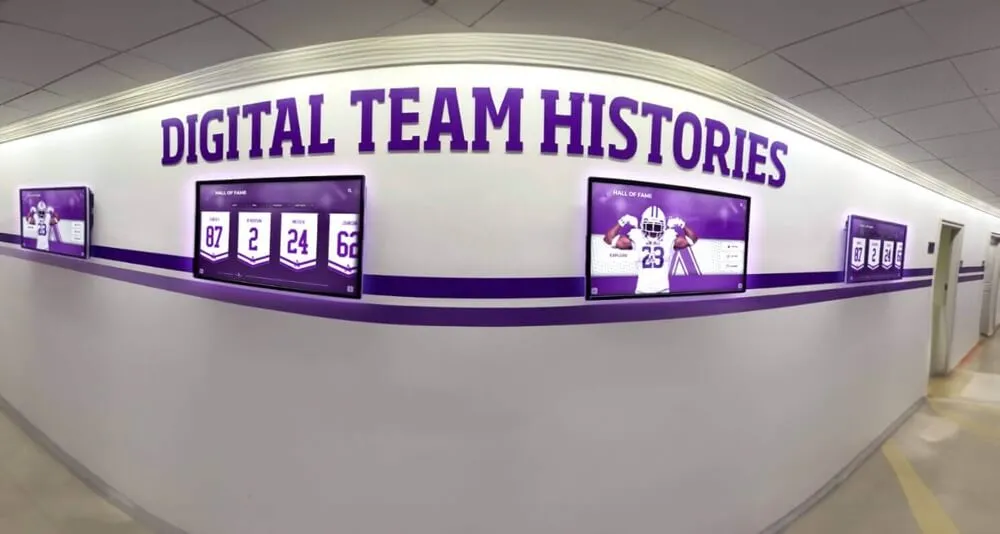
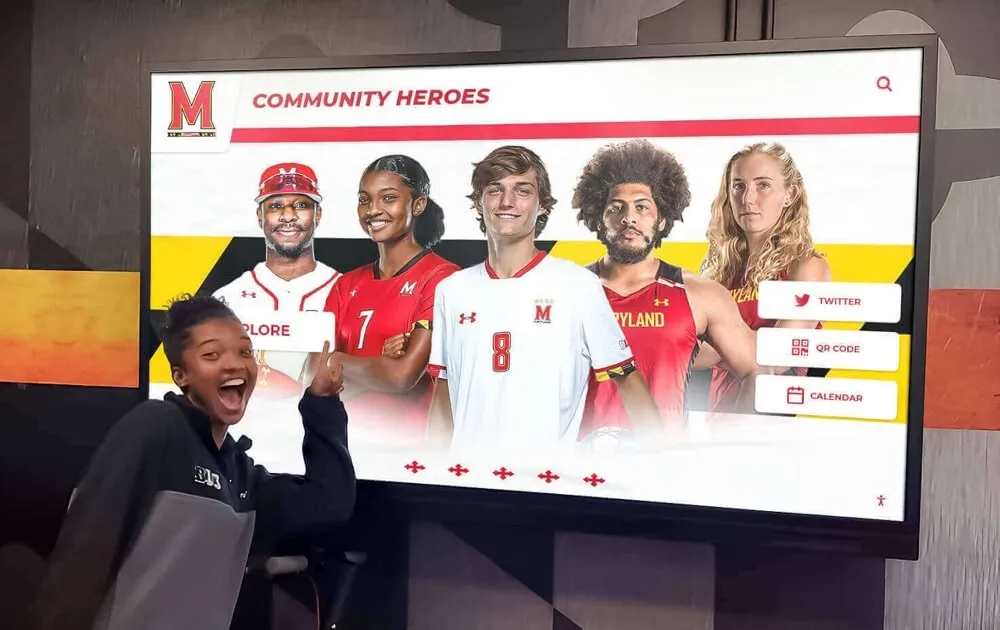
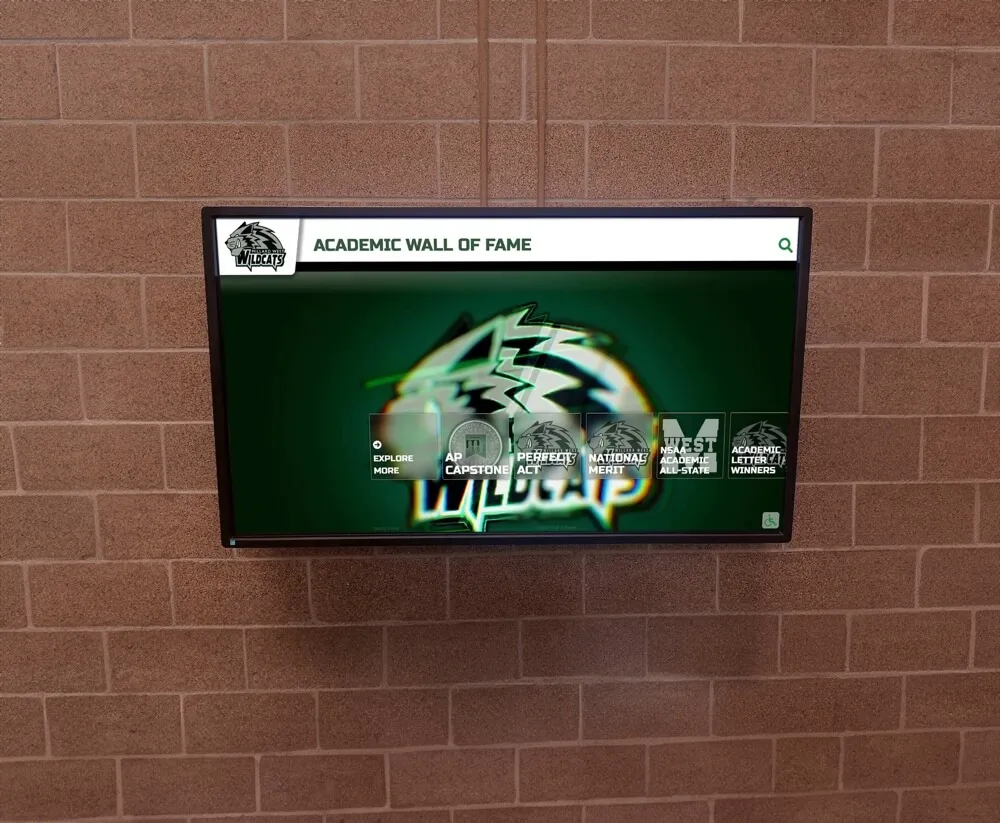
A mission statement only earns its keep when it shows up in the physical and digital spaces where athletes, students, and visitors actually spend time. Schools that frame their mission alongside championship banners, hall of fame portraits, and recognition displays communicate something fundamentally different from those that store their mission in a PDF nobody reads.

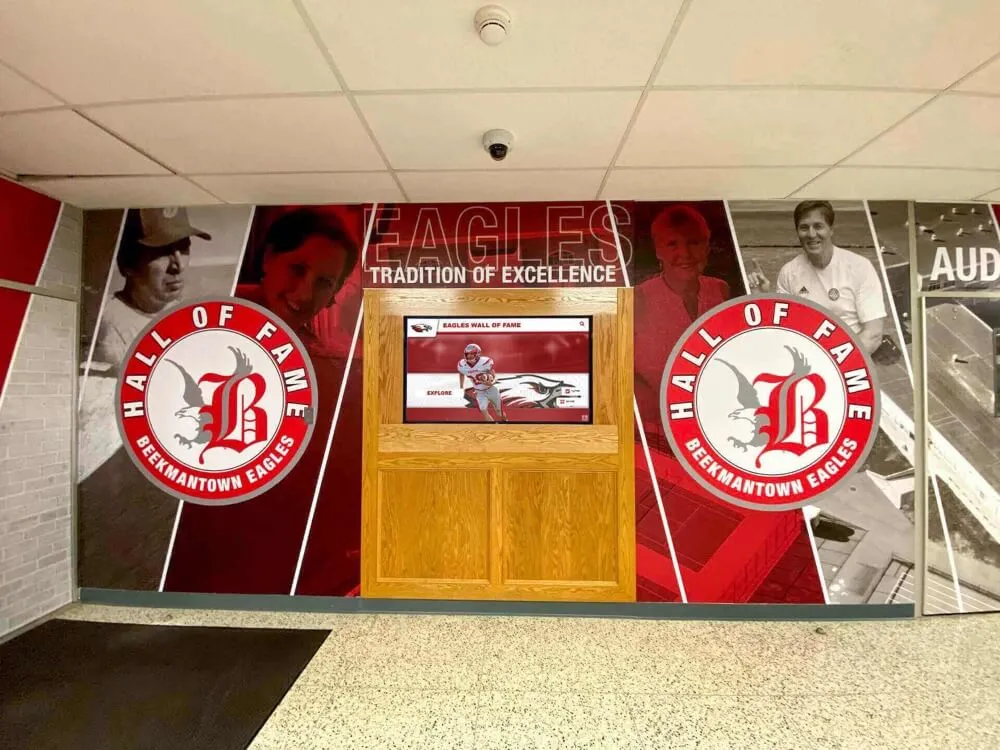
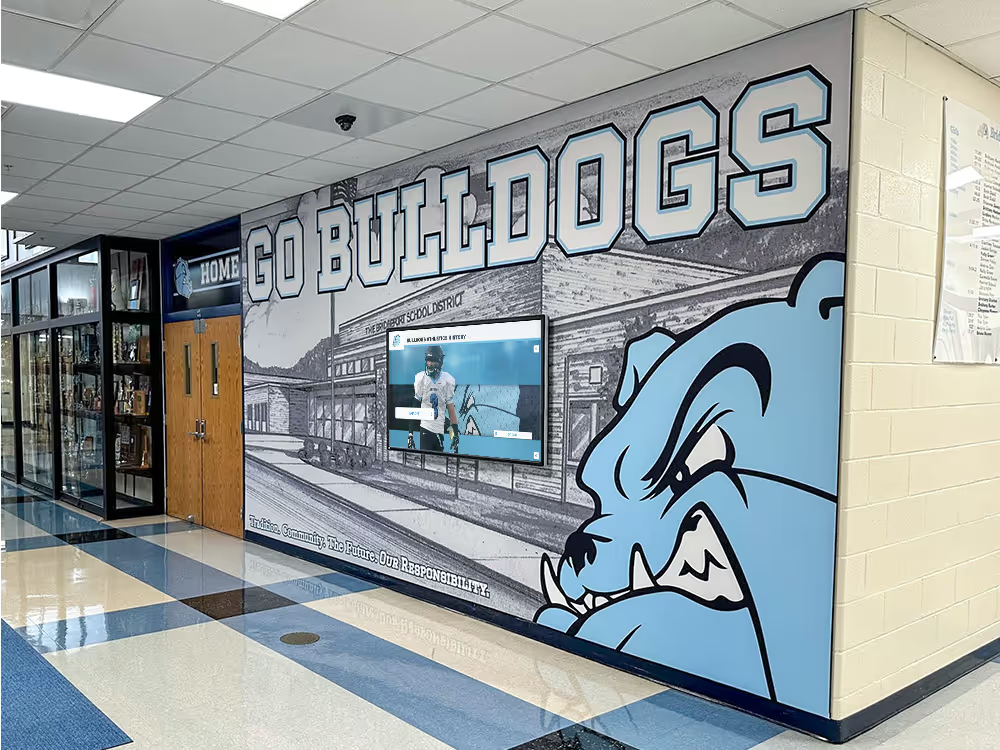
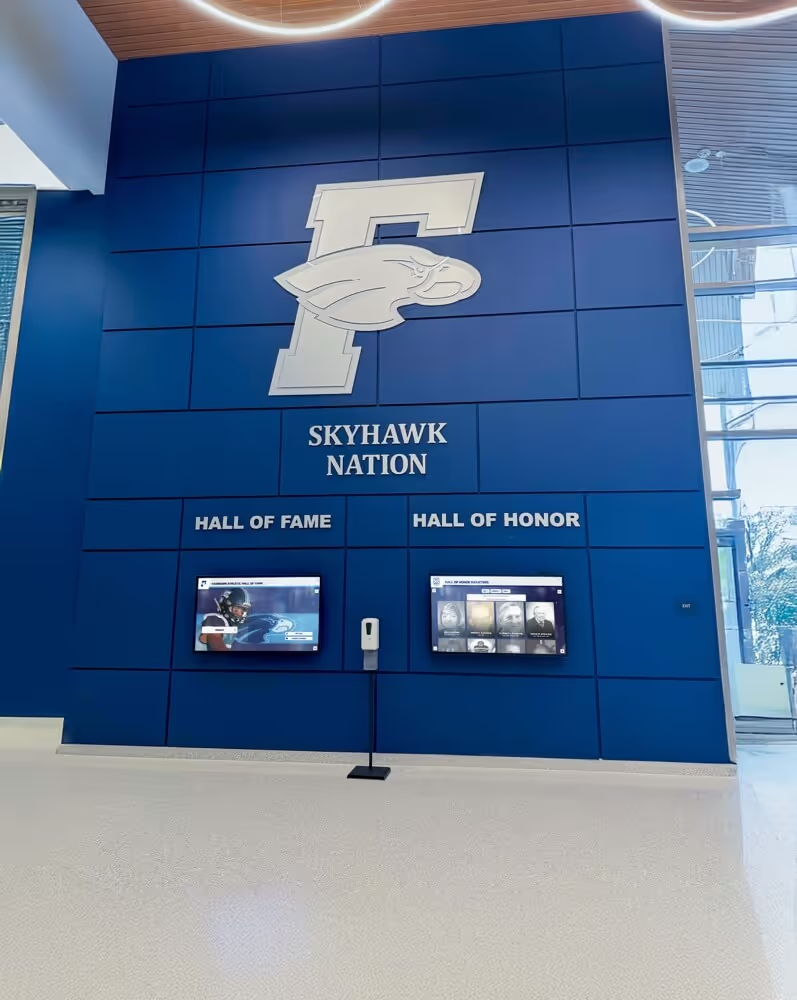
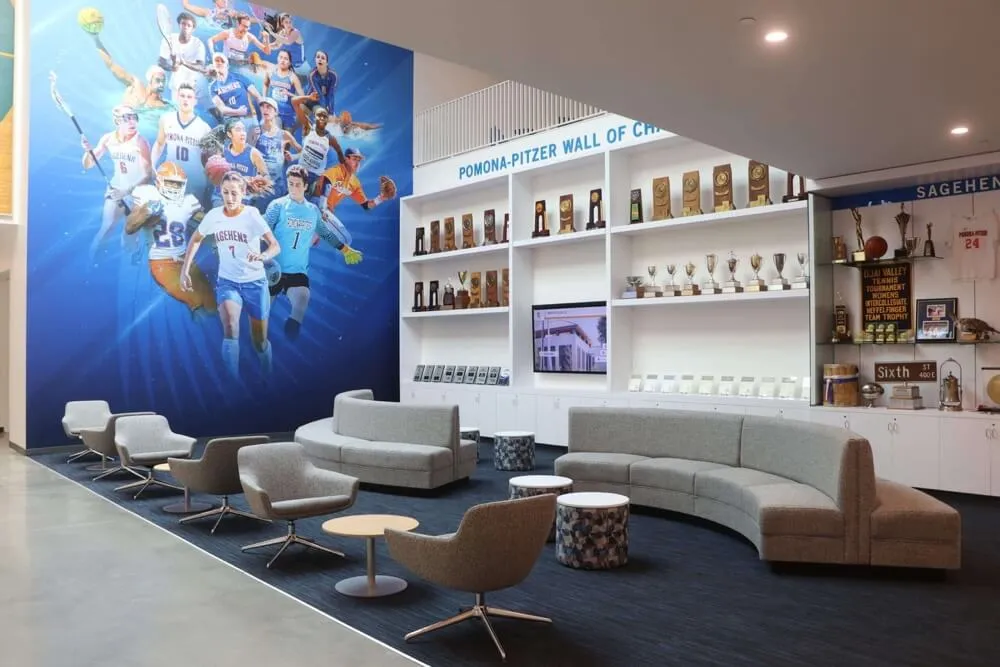
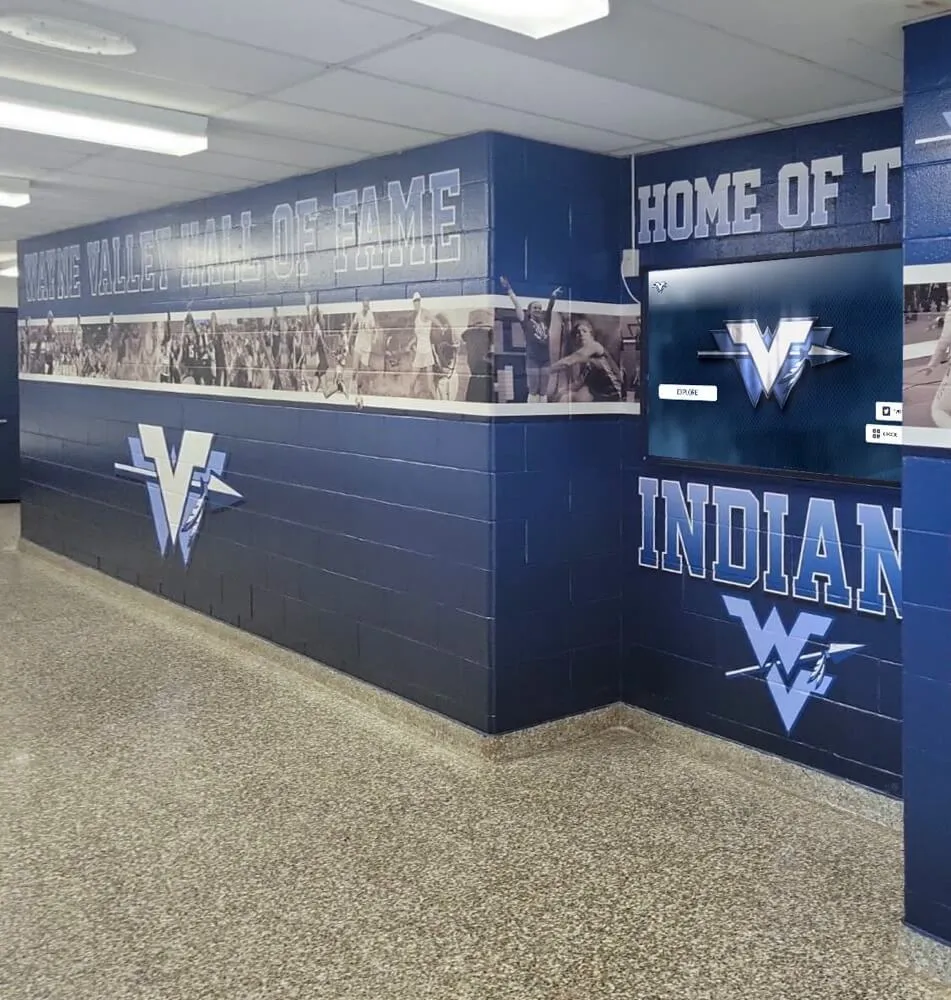
Athletic lobbies that combine institutional murals and crests with live digital recognition screens make a program's identity visible every day—to athletes arriving for practice, visitors touring the facility, and recruits forming first impressions
What an Athletic Department Mission Statement Actually Does
Before examining examples, it helps to understand what a well-written athletic department mission statement is designed to accomplish—and what it isn’t.
What a Mission Statement Is
A mission statement is a concise declaration of an athletic department’s core purpose: why it exists, whom it serves, and what values guide its decisions. It operates at the level of principle rather than tactics—describing intent rather than listing activities.
At its best, an athletic department mission statement:
- Defines what the program stands for beyond wins and losses
- Unifies stakeholders around shared language and shared values
- Guides decisions about resource allocation, program priorities, and hiring
- Sets expectations for athletes, coaches, and staff about what participation demands
- Communicates outward to recruits, families, donors, and the broader community
A mission statement is not a marketing slogan, a list of goals, or a strategy document. It is the foundation underneath all of those things.
What a Mission Statement Is Not
Many athletic departments confuse mission statements with vision statements, value lists, or strategic plans. The distinction matters:
Vision statements describe what the department aspires to become—an aspirational future state. “To be the most respected academic-athletic program in the region” is a vision, not a mission.
Value lists enumerate principles like integrity, excellence, and teamwork—important, but insufficient alone to constitute a mission. Values answer how the department operates; mission answers why it exists.
Strategic plans describe specific initiatives and timelines. A mission statement operates at a level of permanence that strategic plans cannot—it should remain essentially stable even as specific programs and priorities evolve.
Understanding these distinctions prevents the common mistake of writing a five-paragraph hybrid document that tries to do all three things at once and ends up doing none of them well.
What Makes an Athletic Department Mission Statement Strong
Across the strongest examples in American scholastic and collegiate athletics, certain characteristics recur consistently.
Clarity Over Comprehensiveness
The most effective mission statements can be read, understood, and remembered by a seventeen-year-old student-athlete encountering them for the first time. Brevity is not laziness—it is precision. If your mission statement requires three hundred words to explain itself, it isn’t a mission statement; it’s a policy document.
The sweet spot for athletic mission statements is typically one to three sentences: enough to convey genuine meaning, short enough to be remembered and recited without a reference card.
Specificity to the Institution
Generic mission statements—ones built entirely from interchangeable phrases like “developing the whole student,” “pursuing excellence,” and “building character”—could belong to any program anywhere. They signal a department that completed an administrative requirement rather than one that genuinely reflected on its identity.
Strong mission statements carry fingerprints. They reflect the institution’s particular history, the community it serves, the kinds of athletes it attracts, and the specific values that have earned the program its reputation. A public high school serving a rural agricultural community should not have the same mission statement as a private prep school in a major metropolitan area.
Connection to Academic Identity
In scholastic settings, athletic mission statements that explicitly connect athletic participation to academic growth and character development are consistently more credible and more durable than those that treat athletics as a separate sphere. The student-athlete concept isn’t just regulatory language—it’s the organizing principle that gives secondary and collegiate athletics their legitimate claim on educational resources.
Actionable Values
The most powerful athletic mission statements don’t just list values—they use verbs that indicate what the department does with those values. “Developing leaders” is more actionable than “leadership.” “Competing with integrity” is more specific than “integrity.” The difference is subtle but meaningful: active language describes a program in motion rather than a program with good intentions.
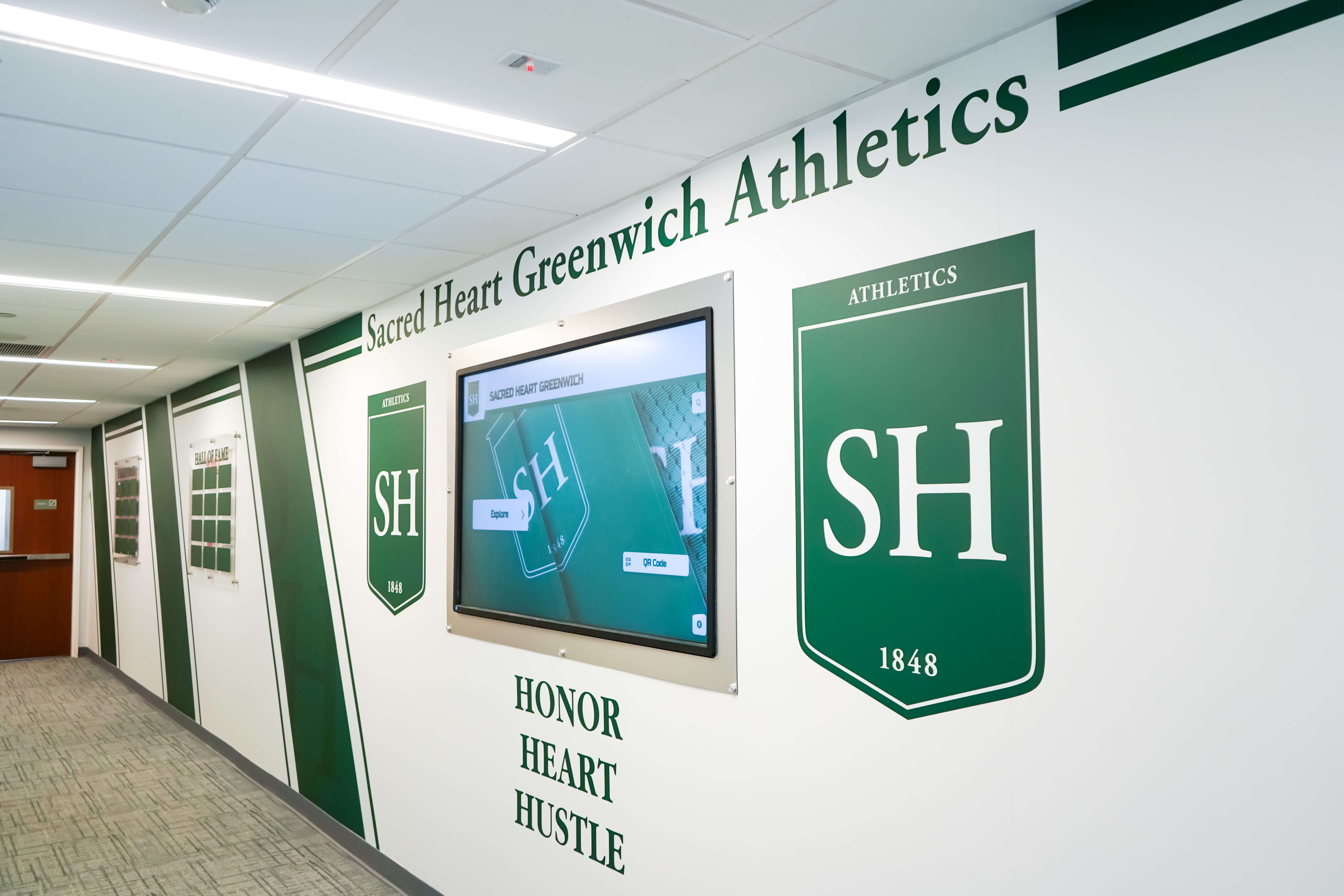
Hallways lined with program shields and recognition displays communicate institutional tradition without a single word—the physical environment reinforcing what the mission statement puts into language
Athletic Department Mission Statement Examples by Theme
The following examples are organized by thematic emphasis—the core value or identity claim each type foregrounds. None are verbatim quotes from specific institutions; they are constructed to illustrate how each thematic approach shapes the language and scope of a mission statement.
Theme 1: Character and Leadership Development
These statements foreground athletic participation as a vehicle for developing human qualities that outlast any athletic career.
Example 1: “Our athletic program exists to develop student-athletes of exceptional character—people who compete fiercely, treat every opponent with respect, and carry the values learned through sport into every dimension of their lives.”
Example 2: “We use athletic competition to build leaders: young men and women who understand discipline, embrace accountability, and leave this program better prepared for whatever challenges life presents beyond the final buzzer.”
Example 3: “The measure of our program is not championships won but character demonstrated—in competition, in the classroom, and in the community—by every athlete who wears our colors.”
Theme 2: Academic-Athletic Integration
These statements explicitly position athletic participation within an educational framework.
Example 4: “Our athletic department develops students first and athletes second—creating an environment where competitive excellence and academic achievement reinforce each other, and where every student-athlete graduates prepared for the next level of education and life.”
Example 5: “We believe athletic participation is education: that the lessons learned through competition, teamwork, failure, and recovery are among the most important a young person can receive, and we design our programs accordingly.”
Example 6: “Excellence in our hallways and excellence on our fields are not competing priorities—they are the same priority, pursued by the same students, guided by the same values, and celebrated with equal pride.”
Theme 3: Community and Tradition
These statements root the program in its specific community and historical identity.
Example 7: “We represent a community with a proud athletic tradition, and we honor that tradition every time we compete—by playing with pride, winning with grace, and reflecting the values that our families and neighbors have built into this program over generations.”
Example 8: “This program carries the history of everyone who wore this uniform before you. Our mission is to honor that history through your effort, your conduct, and your contribution to the community that invested in you.”
Example 9: “Our athletes compete for their school, their families, and the community that shows up for them—and we build programs worthy of that loyalty.”
Programs that lean into community and tradition often find the most compelling recognition opportunities through jersey retirement ceremonies that permanently honor the program’s greatest contributors—rituals that translate abstract mission language into visible, personal tribute.
Theme 4: Competitive Excellence
These statements make performance and pursuit of excellence central without abandoning educational or character language.
Example 10: “We pursue excellence relentlessly—in preparation, in execution, and in the pursuit of championships—because we believe that the habits of excellence built in athletic competition shape successful human beings.”
Example 11: “Our standard is simple: give everything. To your preparation. To your teammates. To this program. Everything, every day. That standard produces champions—on the field and off it.”
Example 12: “We build winners—not just competitors who occasionally win, but athletes who develop the mindset, the discipline, and the resilience to achieve at the highest level in everything they pursue.”
Theme 5: Inclusion and Opportunity
These statements foreground broad access to athletic participation as a core departmental value.
Example 13: “Every student who chooses athletic participation in our programs deserves a genuine opportunity to develop, compete, and grow—regardless of ability level, sport, background, or prior experience. We build programs for everyone.”
Example 14: “Our athletic department serves every student athlete, from the freshman playing their first competitive season to the senior competing at the state level—because development happens at every level, and every level deserves our full commitment.”
Example 15: “We believe sport belongs to everyone. Our mission is to create athletic experiences that develop every participant’s potential, celebrate every level of achievement, and build a program our entire community is proud to support.”
Theme 6: Holistic Student Development
These statements take the broadest view of what athletics should accomplish, integrating physical, mental, social, and academic dimensions.
Example 16: “Our athletic programs develop the whole person—physically through training and competition, mentally through learning to manage pressure, socially through the bonds of team, and academically through the discipline required to balance demanding commitments.”
Example 17: “We exist to create complete human beings who happen to be exceptional athletes—young people whose experiences in our programs make them stronger, wiser, more compassionate, and better prepared to contribute to the world beyond these walls.”
Example 18: “Athletic participation in our department develops resilience, integrity, teamwork, and self-discipline—the qualities that build successful students, engaged citizens, and fulfilled human beings.”
Theme 7: University and Division I Framing
At the collegiate level, mission statements often address the dual mandate of academic institution and competitive athletic enterprise more directly.
Example 19: “Our athletics department advances the educational mission of this university by providing student-athletes with a high-quality competitive experience, supporting academic achievement and degree completion, and connecting the campus to its broader community through programs that generate institutional pride and engagement.”
Example 20: “We develop championship programs and champion people—student-athletes who compete at the highest collegiate level while completing rigorous academic programs and developing the character and skills that define successful leaders.”
Example 21: “Our mission is to recruit, develop, and graduate exceptional student-athletes; compete for championships at the highest level of collegiate athletics; and operate our programs with the integrity, transparency, and ethical commitment our institution demands.”
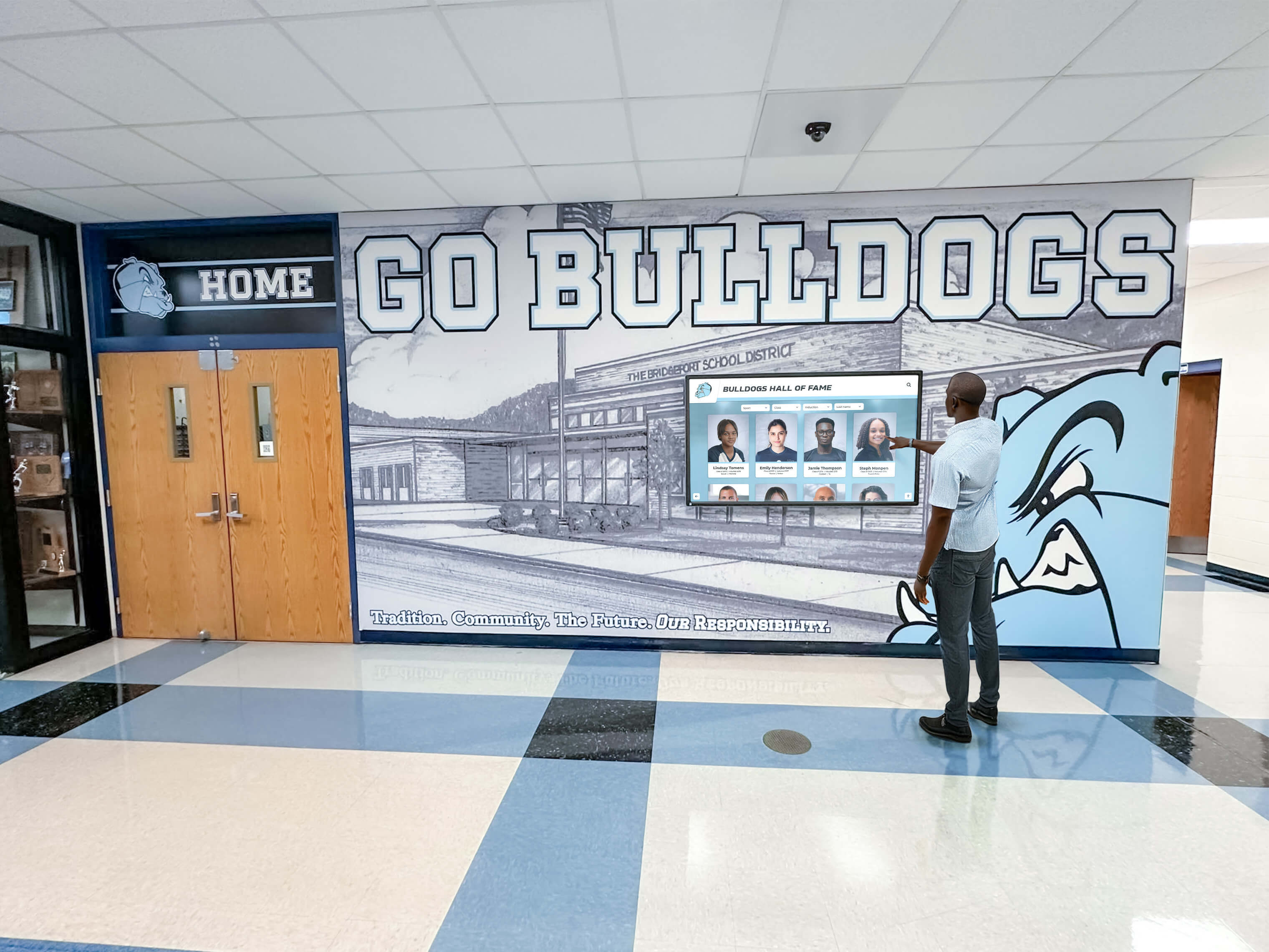
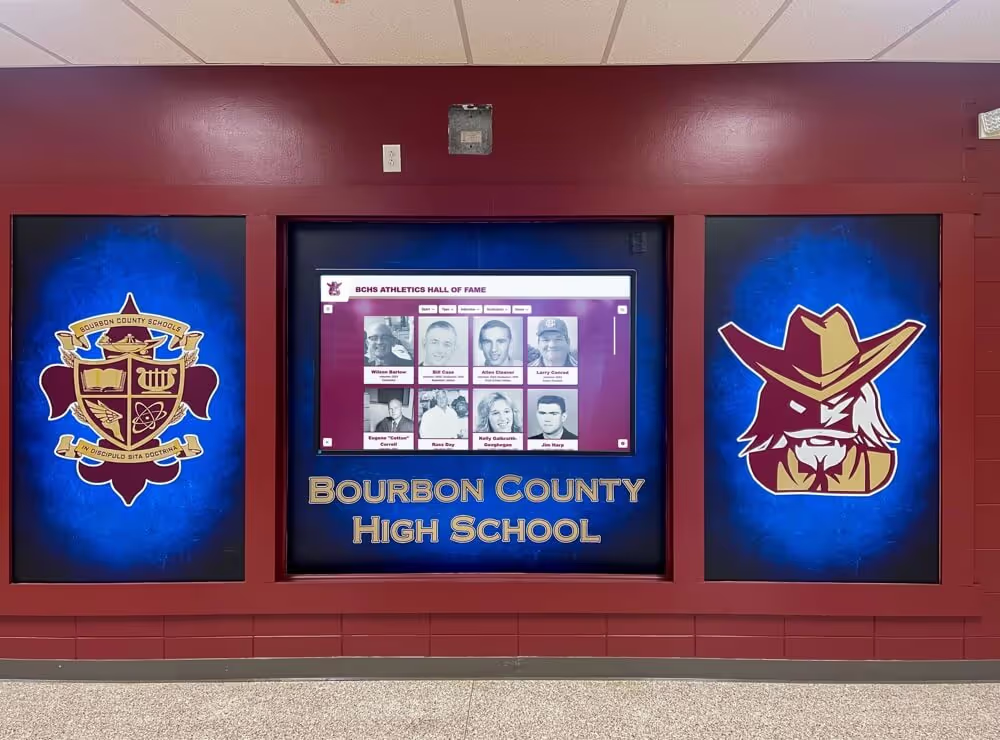
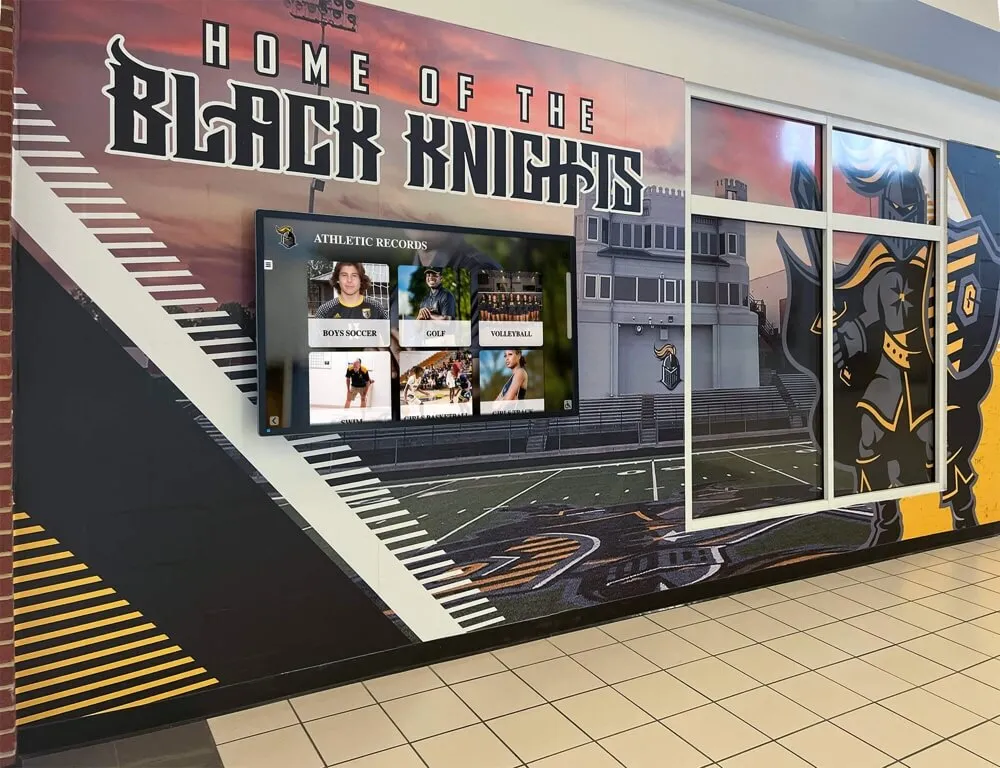
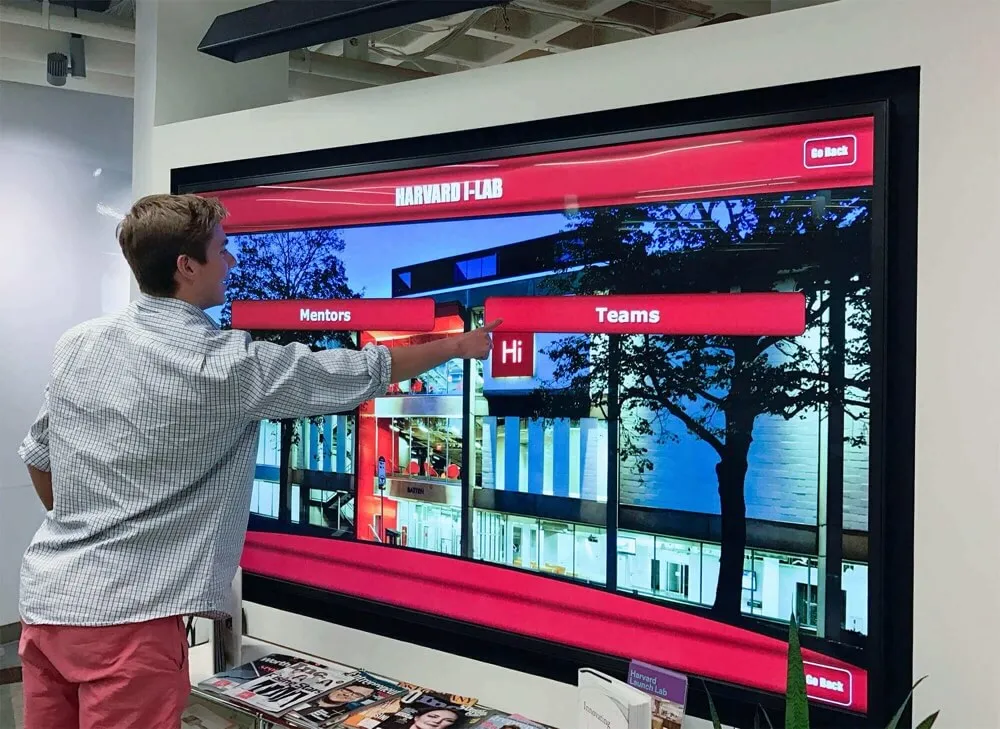
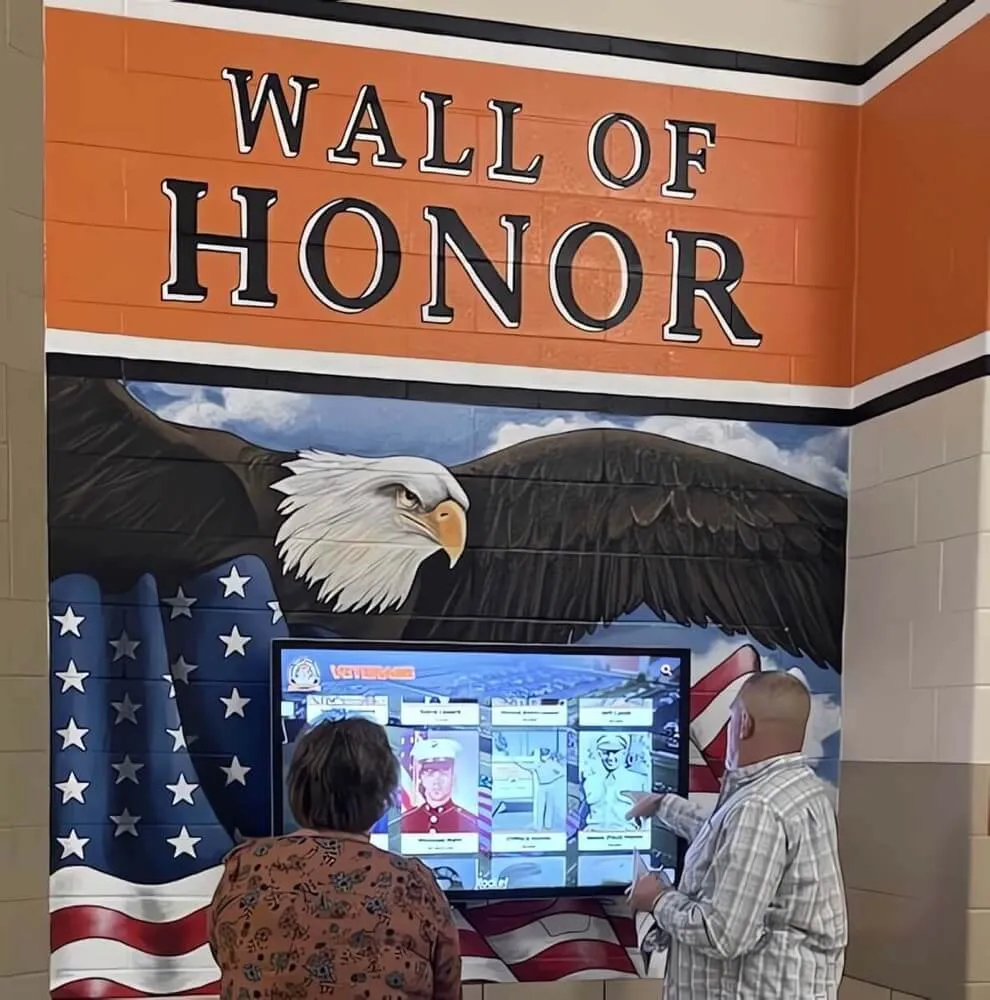
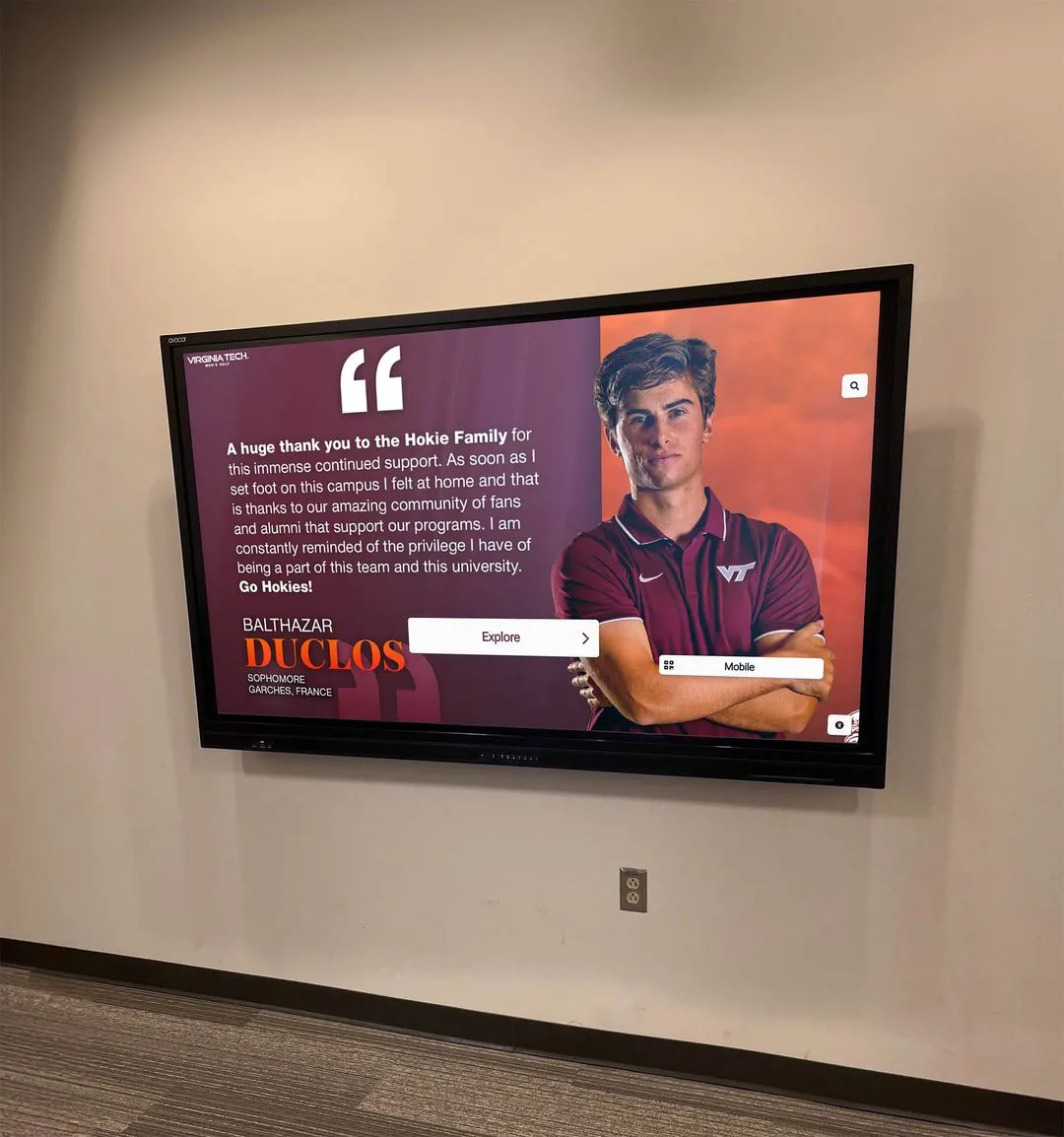
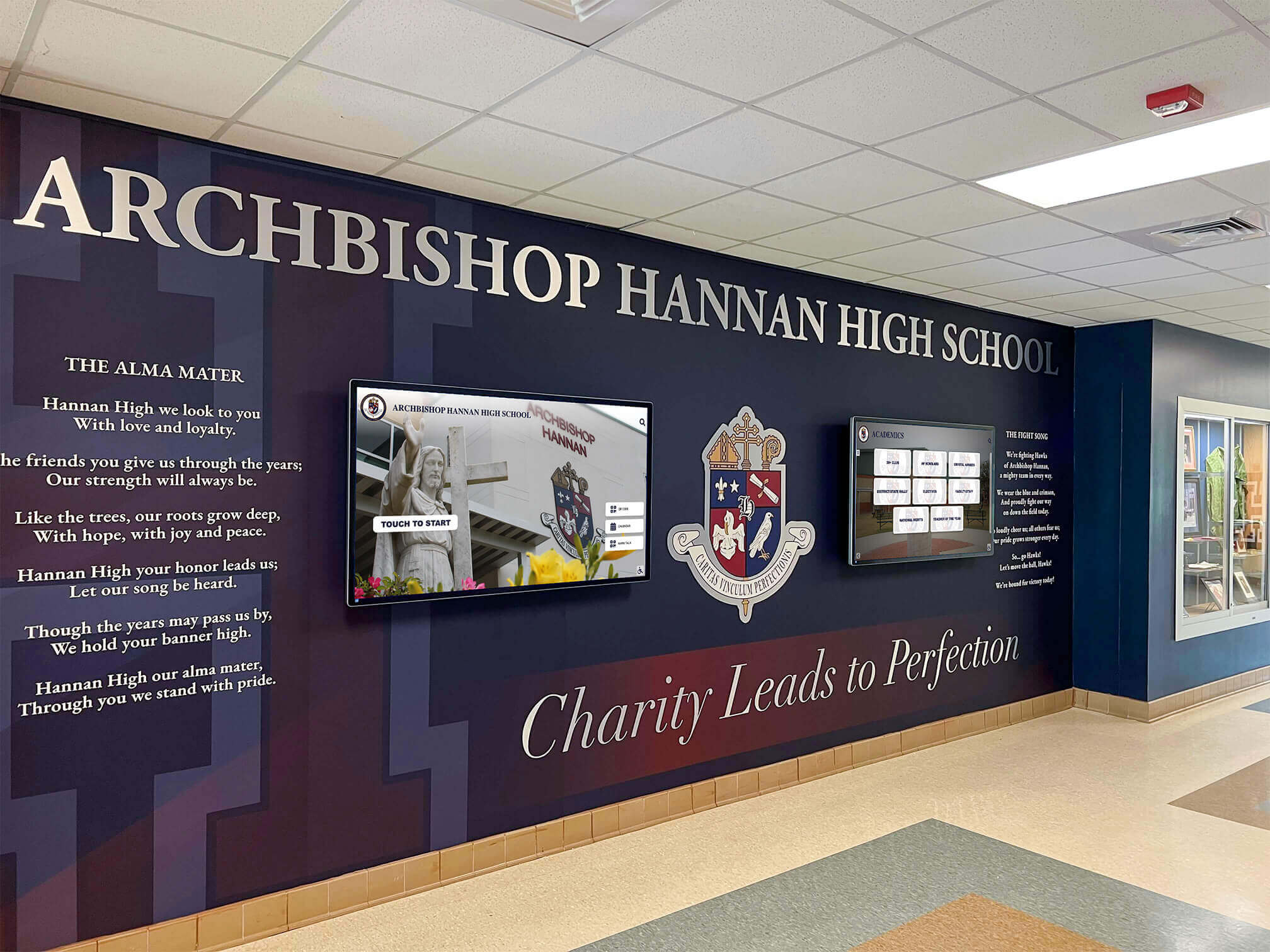
Interactive recognition kiosks installed in athletic hallways give a program's mission statement physical presence—connecting stated values to documented achievement and making the department's identity tangible for every visitor
How to Write Your Athletic Department Mission Statement
With examples in hand, the writing process becomes more approachable. The following framework guides athletic directors and program leaders through the essential steps.
Step 1: Identify Your Anchoring Purpose
Start with the question every mission statement must answer: Why does this athletic department exist?
Not why athletics exists in general—why this program, at this institution, serving this community. The answers should draw on:
- Institutional history: What values have defined this program across its history? What do alumni most consistently say they learned from their athletic experience here?
- Community identity: What does athletic success mean to the school’s broader community? Is this a program where athletics carries cultural or social significance beyond the games themselves?
- Stakeholder expectations: What do families expect when they entrust their children to your programs? What do student-athletes want their experience to be remembered for?
- Educational mission alignment: How does the school’s broader educational mission shape what athletic participation should accomplish?
Spend meaningful time on this question before writing a single word of the mission statement itself. The clarity you develop here determines the quality of everything that follows.
Step 2: Draft Around One Core Claim
Every strong mission statement makes one central claim—one organizing principle that everything else serves. Identify yours:
- We develop character through competition
- We build leaders through sport
- We honor tradition through excellence
- We serve every student through inclusive athletic opportunity
- We pursue championships in academics and athletics equally
Once you’ve identified your central claim, the mission statement writes itself: one or two sentences that express that claim in specific, memorable language.
Step 3: Apply the Specificity Test
After drafting, apply the specificity test: could this statement appear unchanged on the website of 100 other athletic departments? If yes, it needs more of your institution’s fingerprint.
Concrete ways to add specificity:
- Name what makes your program distinctive: a specific tradition, a community context, a particular history of achievement
- Use active verbs: developing, competing, building, honoring, serving—not “committed to” or “focused on”
- Reference what you actually expect: What do athletes who succeed in your program do differently than those who don’t?
Step 4: Test for Usability
A mission statement earns its place by actually being used—in coach communications, in recruiting conversations, in recognition programming, in facility signage. Test yours by asking:
- Can a coach reference it in a team meeting without it feeling corporate or stiff?
- Can it appear on a recruiting website and mean something specific to a prospective student-athlete?
- Can it be displayed in a lobby or hallway and communicate something real to someone seeing it for the first time?
- Can a student-athlete recite its essential idea without reading it verbatim?
If the answer to any of these is no, revise until yes.
Step 5: Involve Your Community
Mission statements developed in isolation rarely achieve the buy-in necessary to actually shape organizational behavior. Before finalizing, share drafts with:
- Coaches across programs (not just head coaches)
- Current student-athletes
- Alumni who can speak to whether the statement reflects the program they experienced
- School administrators who can confirm alignment with the institutional mission
- Parents and community members who can assess whether it resonates beyond the athletic building
The goal isn’t design by committee—mission statements written by committee tend toward the bland. The goal is input that identifies language that rings false, values that feel missing, or phrases that don’t survive contact with actual program reality. Resources on building school pride through identity programs provide useful frameworks for gathering this kind of stakeholder input in a structured way.
Translating Mission Into Visible Recognition
A mission statement’s true test is whether it shows up—visibly, consistently, and meaningfully—in the physical and digital environments where athletic programs actually operate. This is where most departments fall short: they develop good language and then put it in a document.
The departments that build lasting program identity translate mission language into recognition infrastructure.
Connecting Mission to Hall of Fame Criteria
Your hall of fame induction criteria should be a direct expression of your mission statement. If your mission foregrounds character and leadership, hall of fame candidates should be evaluated not only on athletic achievement but on demonstrated leadership and community impact. If your mission centers academic-athletic excellence, inductees should reflect both dimensions.
Comprehensive guides to building school athletic hall of fame systems that connect recognition programming to stated program values create coherence between what departments say they stand for and what they visibly celebrate.
Mission Language in Facility Design
Athletic facilities are the most powerful brand expression a department controls. Murals, signage, display systems, and environmental graphics communicate program identity to every athlete, visitor, and prospective recruit who walks through the door.
Departments that embed mission language directly into facility design—painting core phrases on gym walls, displaying values alongside championship records, incorporating mission-aligned recognitions into trophy cases—ensure that stated purpose and physical environment tell the same story. Exploring thoughtful school hallway design approaches can help athletic directors see how physical environments reinforce stated values across an entire building—not just in the weight room or gymnasium.
Communicating Mission Through Recognition Programming
Recognition programming is how mission becomes personal. When an athletic department publicly celebrates specific achievements—team championships, individual records, scholar-athlete honors, coaching milestones—it signals to every current athlete what the program actually values beyond what the mission statement says.
Detailed planning resources for hall of fame induction ceremonies help programs maintain comprehensive historical records of achievement—documenting not just championship seasons but the full range of accomplishment that a values-driven mission statement implies should be honored.
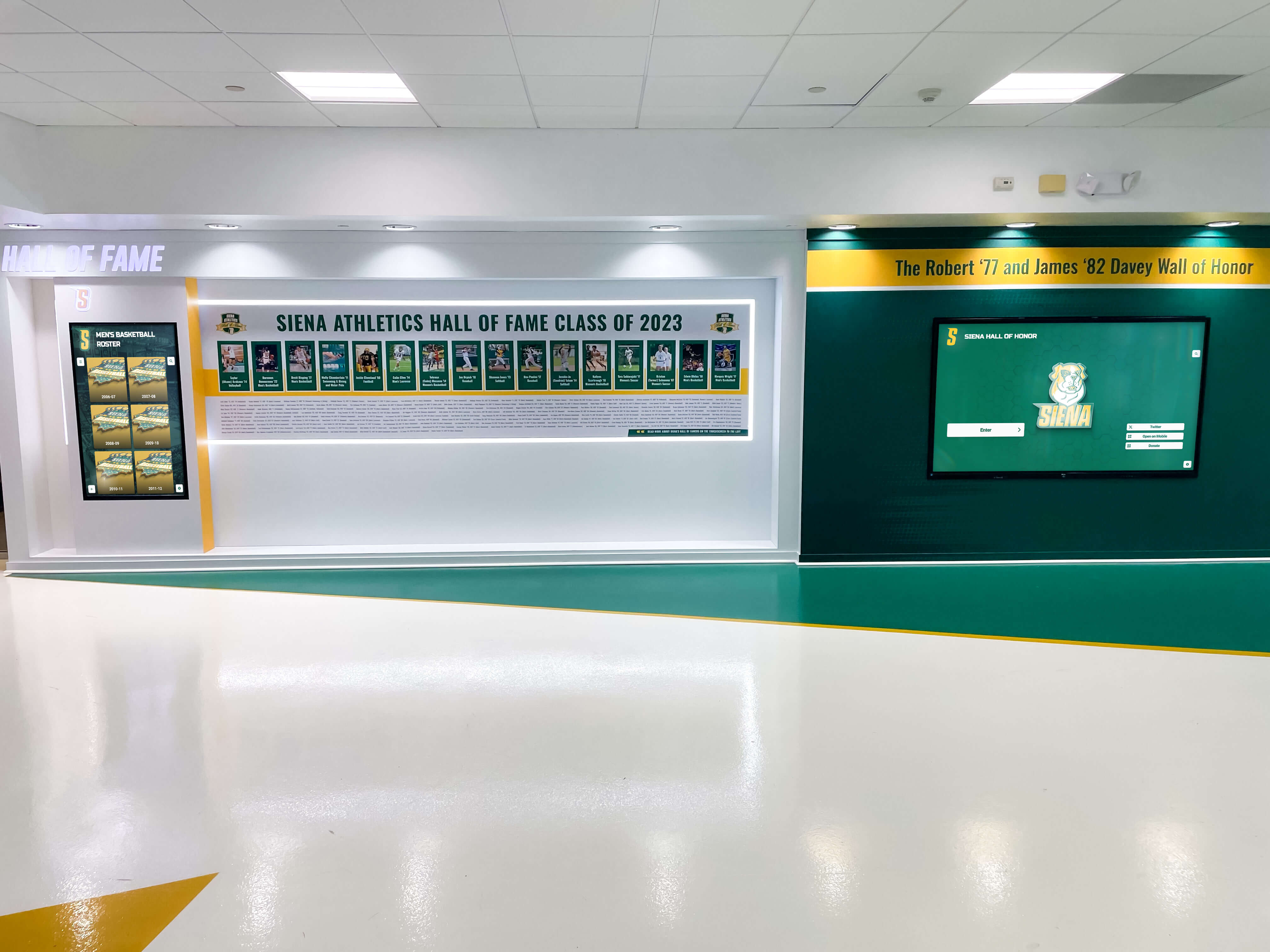
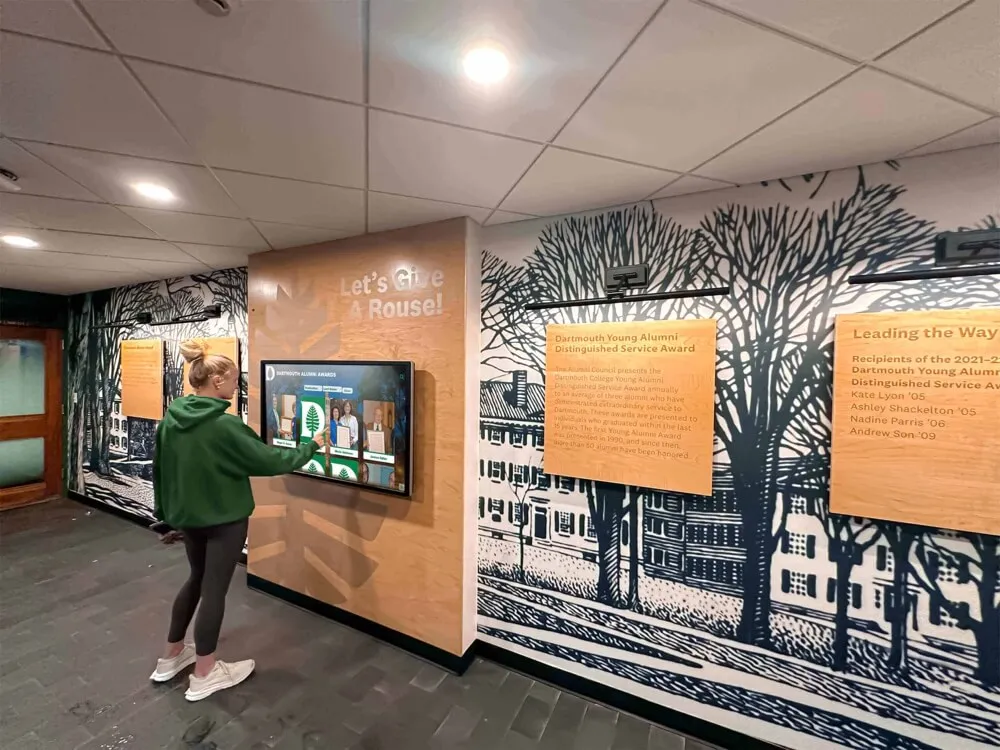
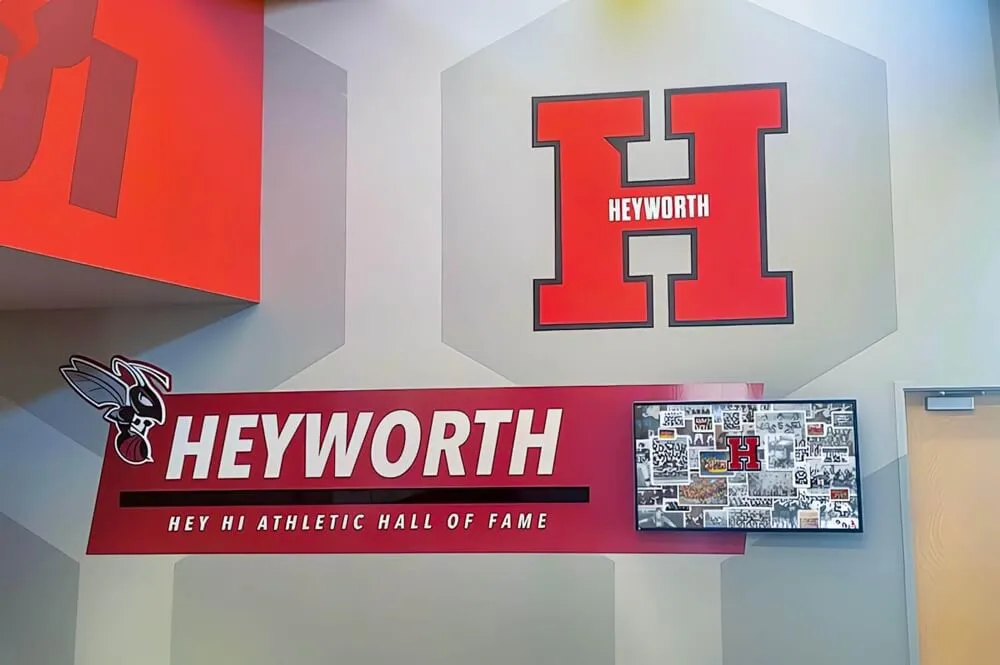
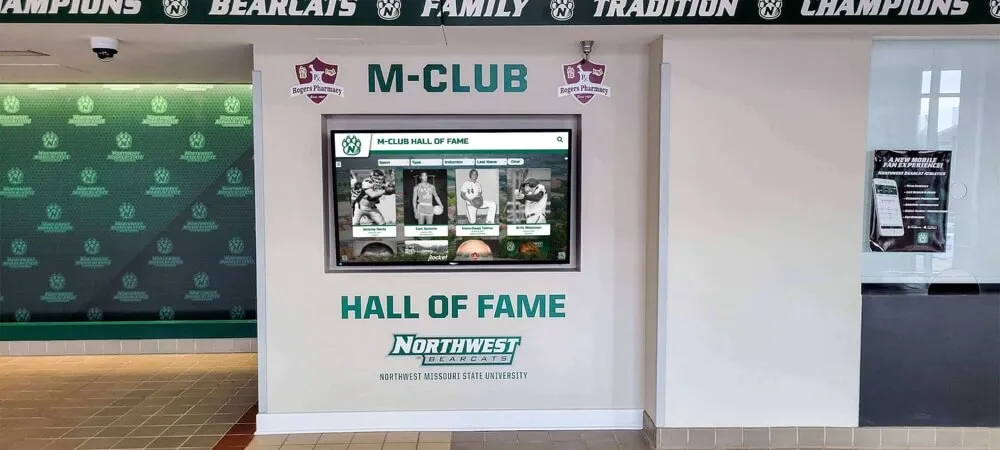
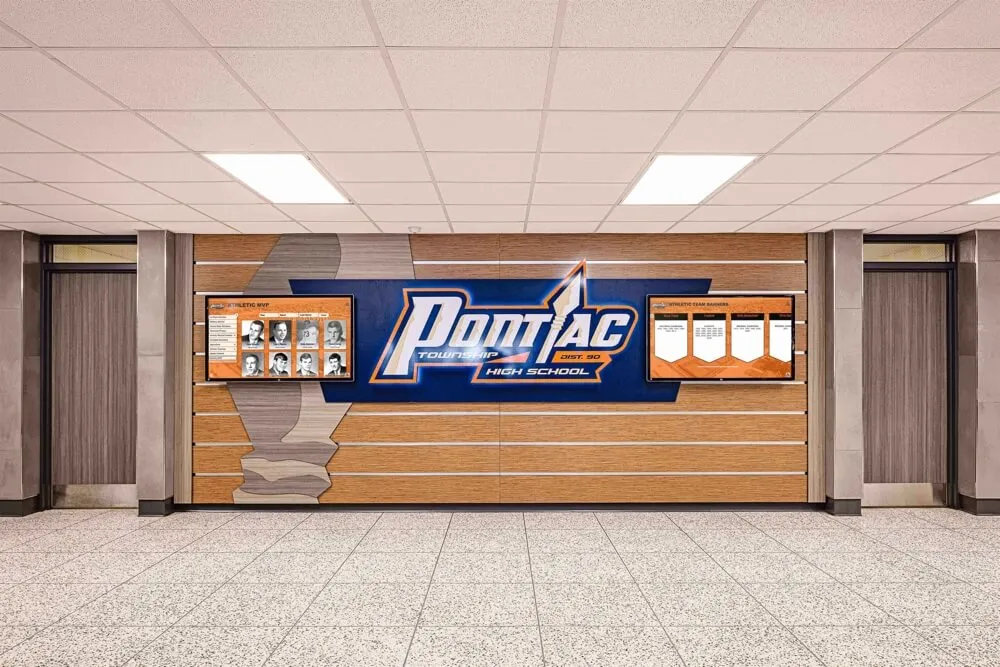
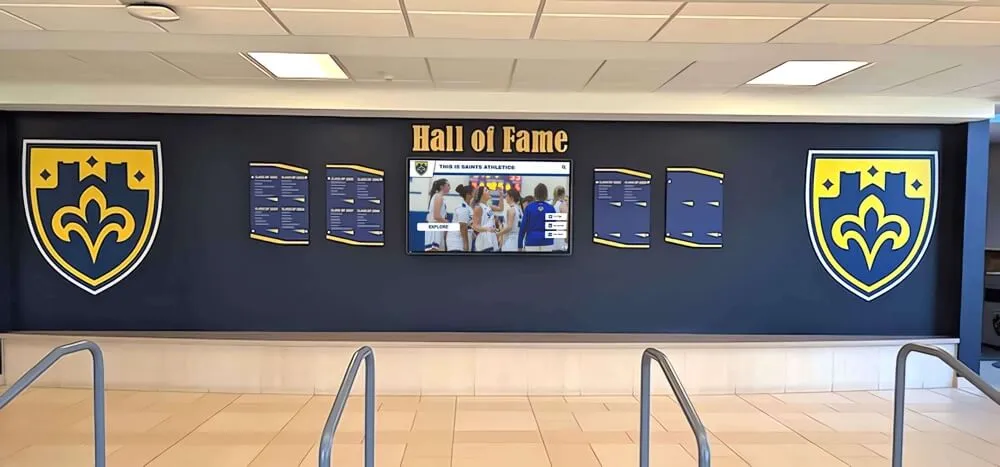
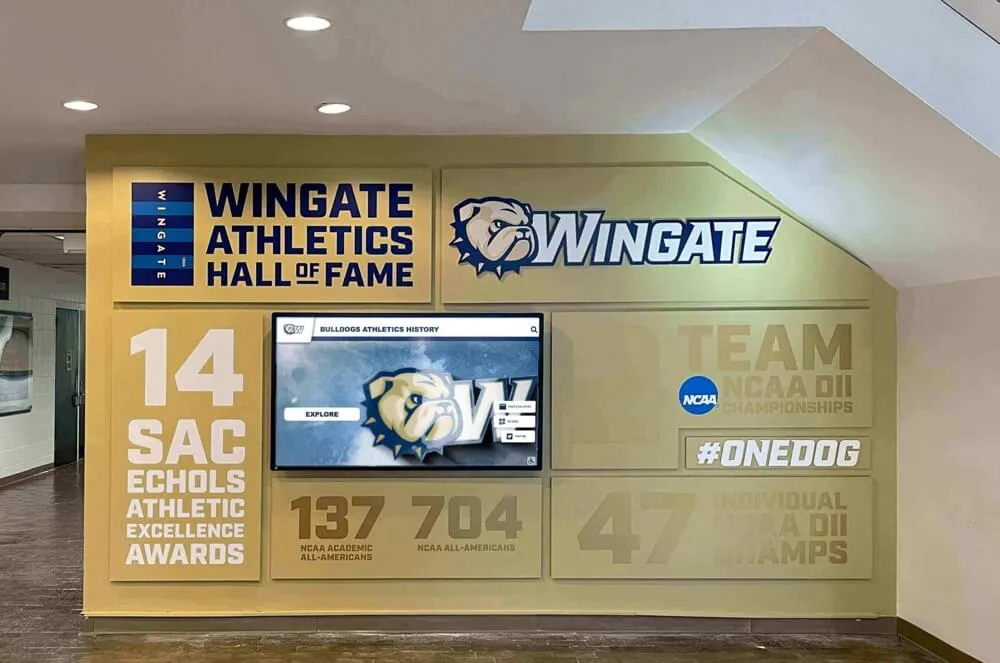
Hall of fame wall displays that feature athlete portraits alongside institutional identity graphics give a program's mission statement a human face—showing visitors not just what the department claims to value, but the specific people who embodied those values
How Digital Recognition Systems Express Athletic Mission
The physical displays that once expressed athletic program identity—trophy cases, championship banners, framed composite photos—have real limitations: they are static, space-constrained, and accessible only to people who happen to be in the right location at the right time.
Modern digital recognition systems expand what’s possible, allowing departments to express their mission through comprehensive, interactive, searchable recognition infrastructure that serves the full scope of a values-driven program.
Showing the Depth of Achievement
A program that says its mission is to develop the whole student-athlete—not just varsity champions—needs recognition infrastructure that documents the full breadth of athletic participation. Complete high school wall of fame planning guides show programs how to honor scholar-athletes, team captains, record holders, senior contributors, and community servants alongside championship teams—making the mission’s full scope visible rather than just its most photogenic achievements.
Connecting Past and Present
Mission statements that claim to honor tradition require recognition systems that actually make tradition accessible. When a program’s identity is rooted in its history—decades of achievement, generations of coaches, long-serving community supporters—the recognition infrastructure needs to surface that history for every visitor, not just those who happened to be around when it was made.
Comparing digital signage options for schools helps departments understand how interactive systems are replacing static historical displays—allowing current athletes to explore program history decades deep and creating the sense of institutional continuity that tradition-focused mission statements claim as a program value.
Celebrating Academic-Athletic Success
Programs whose missions explicitly value academic achievement need recognition infrastructure that makes that achievement as visible as athletic achievement. Studying how the college football hall of fame approaches athletic excellence and recognition provides high school and university programs with models for documenting and celebrating the full range of student-athlete accomplishment—from on-field achievement to academic honors to post-athletic career contributions.
Creating Recruitable Environments
For programs that recruit student-athletes, physical environment is part of the pitch. A recruit walking through a facility with comprehensive recognition displays, visible mission language, and documented achievement across decades receives a clear message: this program takes its stated values seriously enough to build them into the walls.
Designing inspiring athletic training and program spaces through professional-quality recognition infrastructure signals program seriousness and investment—communicating that the department’s stated commitment to developing athletes has a physical expression that predates the recruit’s visit and will outlast it.
Ready to give your athletic department’s mission a permanent home?
Rocket Alumni Solutions helps schools and universities build interactive touchscreen recognition systems that translate mission into visible, navigable displays of achievement—installations that honor every program, every season, and every athlete who contributed to your department’s story. Request a custom mock-up to see what your program’s identity could look like on a touchscreen wall.
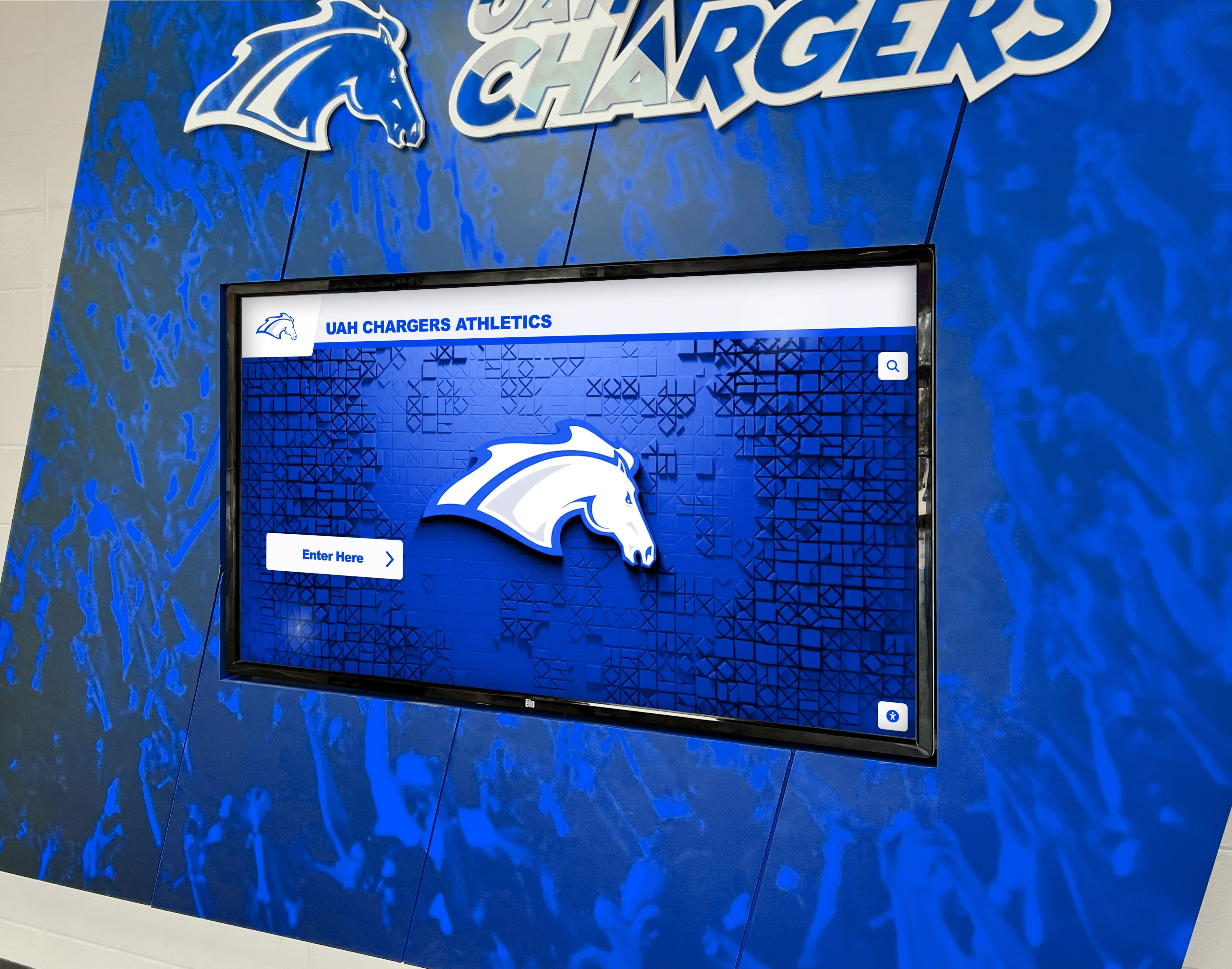
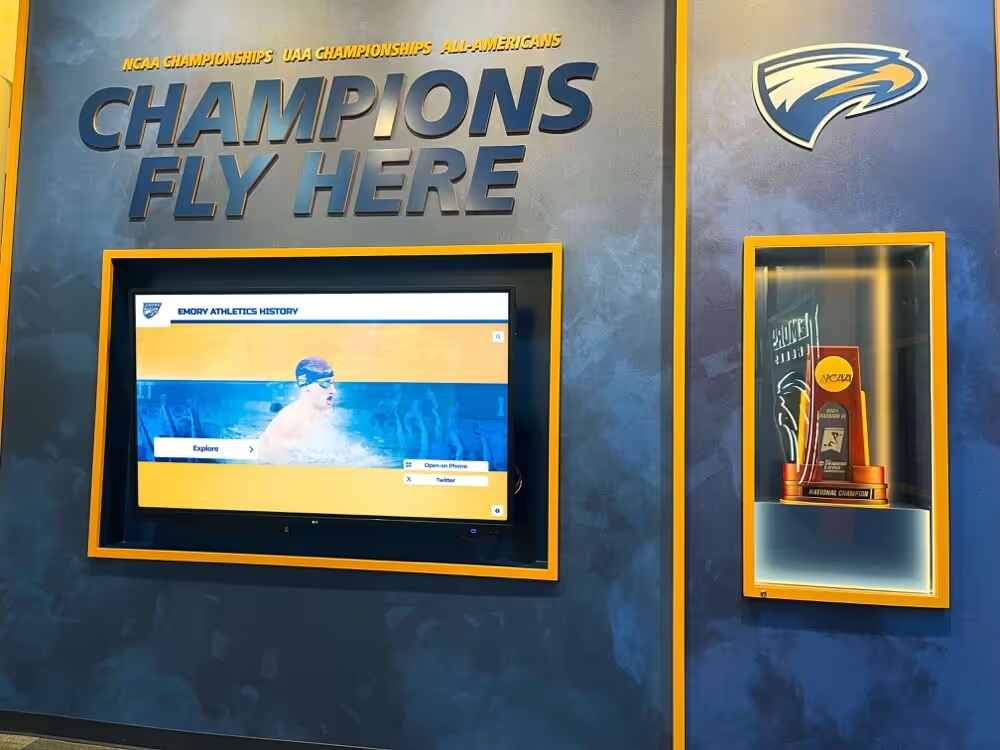
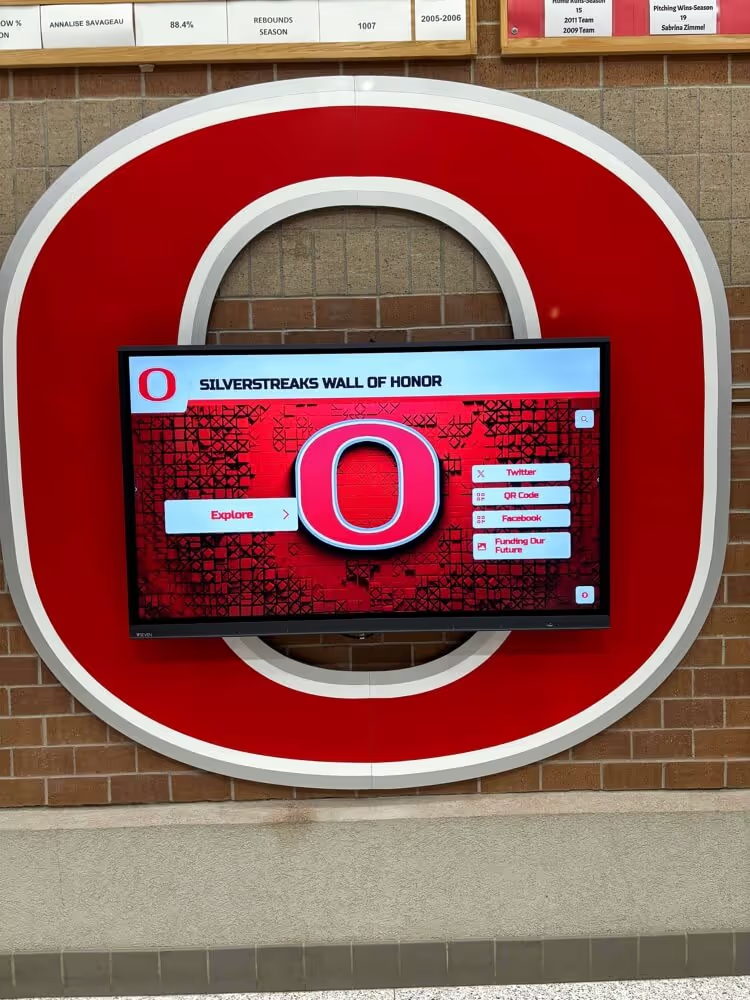
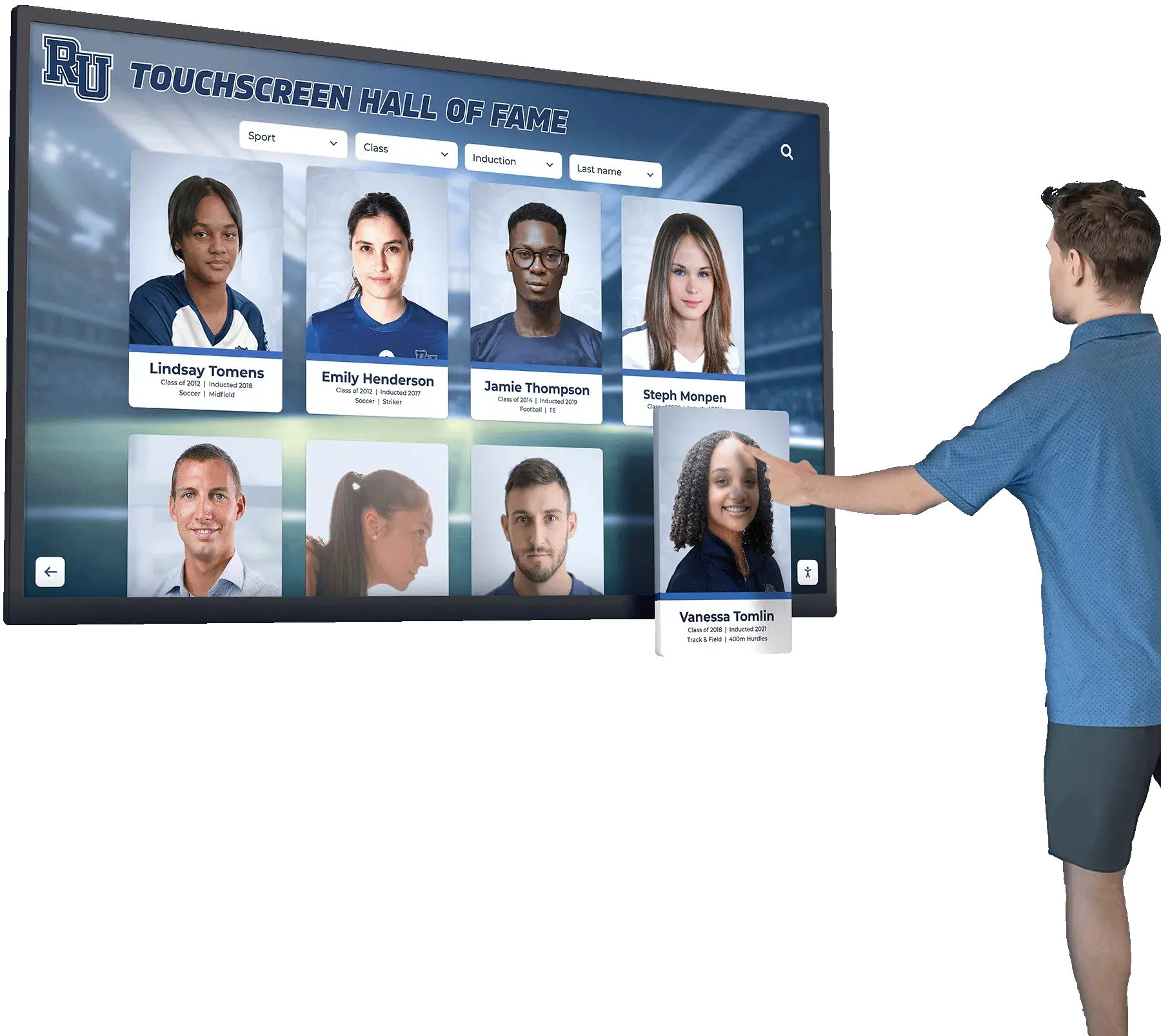
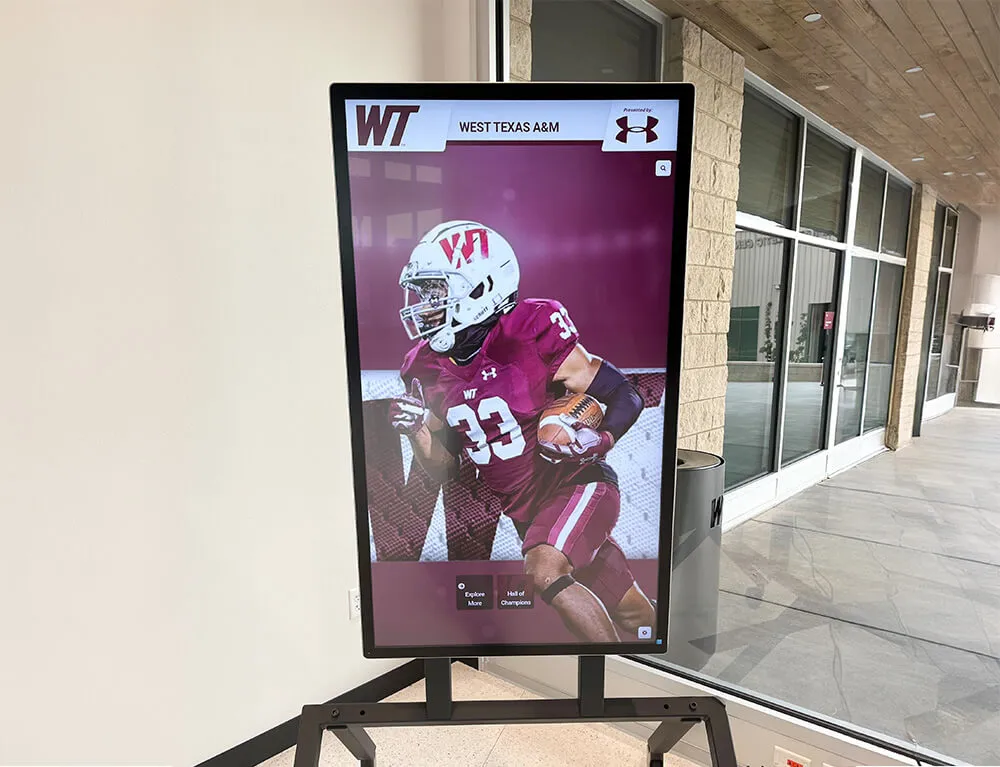
Digital recognition screens integrated into athletic facility walls extend a program's recognition infrastructure beyond static cases and banners—bringing the department's mission to life with searchable, updatable achievement content
Mission Statement Integration: Department-Wide Alignment
Writing a strong mission statement is necessary but not sufficient. The statement only creates value when it’s consistently integrated into how the department operates.
Coaching Alignment
Every coach in the department should be able to articulate the mission statement in their own words and connect it to their day-to-day coaching decisions. This doesn’t require memorization—it requires internalization. Coaches who genuinely share the department’s stated values will naturally reinforce them without being reminded.
Annual coaching conversations that explicitly reference mission alignment—how individual programs are living the departmental values, where gaps exist, what’s working—make the mission a living document rather than a framed artifact. Coaches who have developed their own articulated coaching philosophy are better positioned to translate the department’s mission into the specific language and expectations of their individual programs.
Athlete Onboarding
Student-athletes introduced to the mission statement as a meaningful part of program orientation—not just a slide in a mandatory presentation—are more likely to internalize its values. The best athletic departments make mission introduction personal: sharing stories of athletes who embodied the stated values, asking incoming athletes to reflect on what the mission means to them, and creating visible connections between the statement and the specific recognition displays that honor alumni who lived it.
Recognition programs that explicitly connect current student-athlete achievement to the department’s mission values create ongoing opportunities to make abstract language concrete and personal. End-of-year student awards programs provide models for how recognition events can reinforce mission values at every level of athletic participation—not just for varsity champions, but for every athlete who exemplified the department’s stated character standards.
Parent and Community Communication
Athletic department mission statements that are regularly referenced in parent communications, booster club updates, and community-facing materials build shared understanding of what the program stands for and what stakeholders can expect from it.
Recognizing and honoring retired coaches through dedicated displays connects championship celebration and institutional history to mission language—presenting long-term achievement as evidence of stated values rather than as standalone accomplishment—reinforcing to the community that what the department says it stands for is reflected in what the department actually builds over time.
Annual Review
Mission statements should be stable, not static. An annual review process that asks whether the statement still accurately reflects the program’s identity—without reflexively changing language that remains true—ensures the mission keeps pace with genuine evolution while maintaining the continuity that makes mission language credible.
The questions to ask in an annual review:
- Does this statement still reflect what we actually do and value, or has the program’s character evolved in ways the language doesn’t capture?
- Are there new program values or community commitments that deserve inclusion?
- Have we made decisions this year that contradict the mission? If so, was that the right decision, and does the mission need to change—or was it a departure we should address?
- Are coaches and athletes using the mission language genuinely, or does it feel like a compliance exercise?
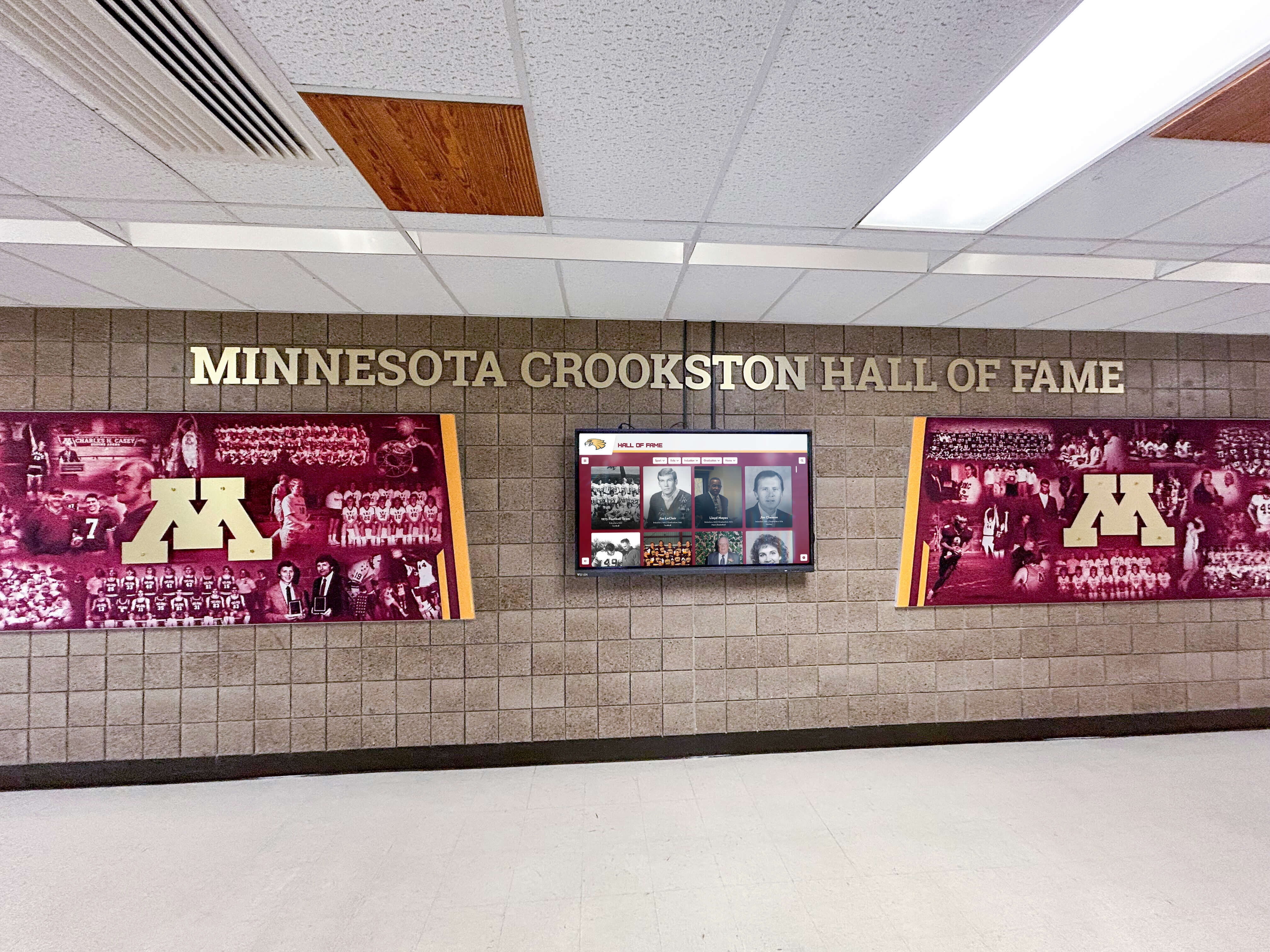
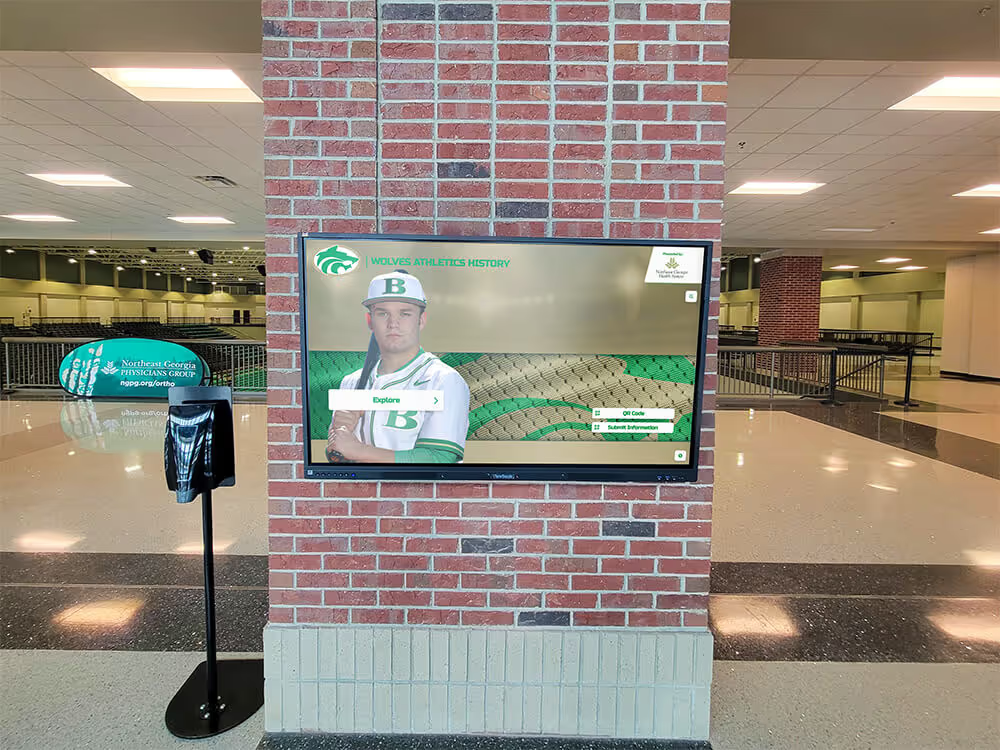
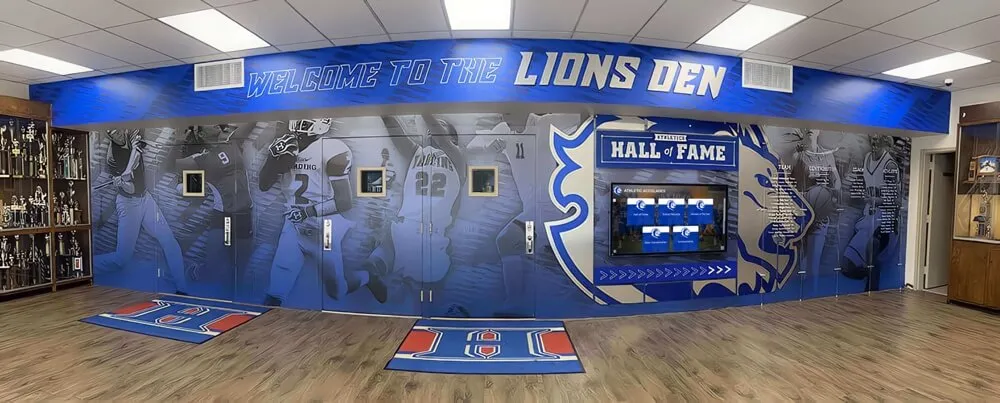
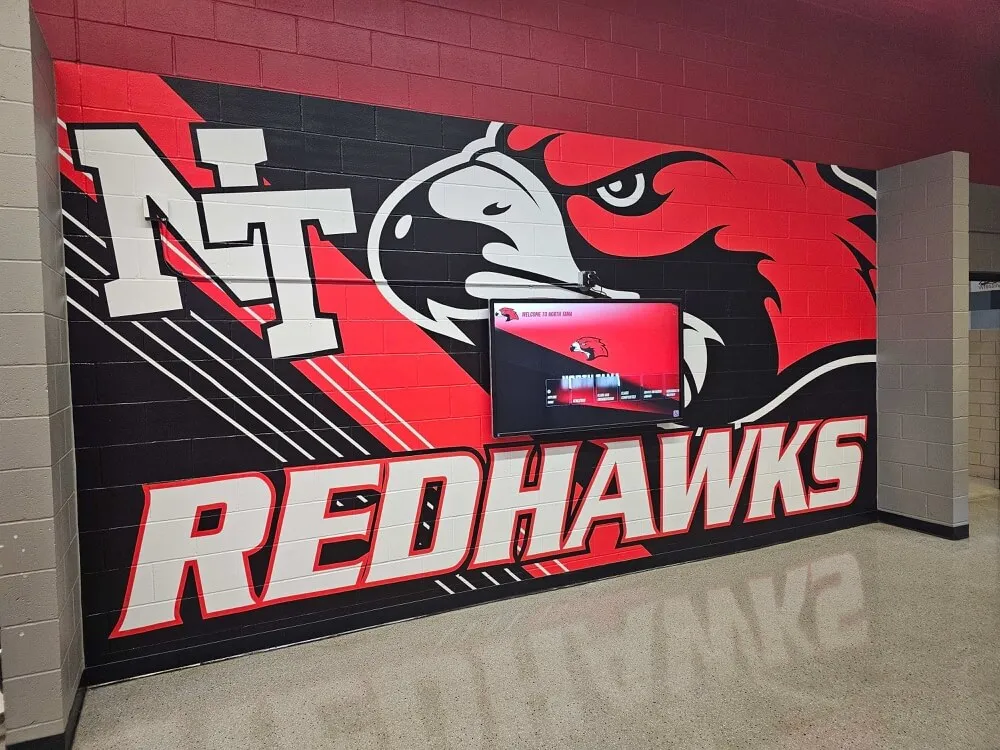
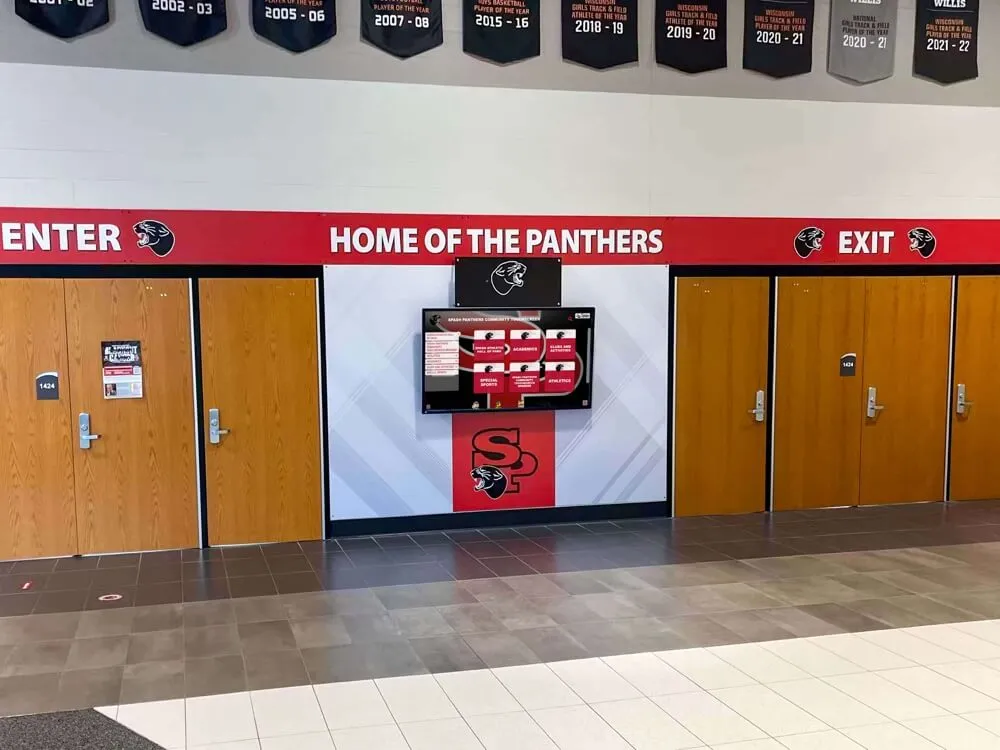
Permanent installations that combine institutional color murals with digital recognition screens communicate program mission continuously—to current athletes, community visitors, and prospective student-athletes on recruiting visits
Frequently Asked Questions
How long should an athletic department mission statement be?
One to three sentences is the standard. Longer statements tend to become lists of values rather than focused declarations of purpose. If you find yourself writing more than three sentences, look for opportunities to consolidate: identify the single most important thing you want to say and build the statement around that claim, using additional sentences only to add precision, not new ideas.
Should the athletic mission statement be different from the school’s overall mission statement?
The athletic department’s mission statement should be aligned with—not identical to—the school’s broader mission. A school that emphasizes academic excellence and character development should produce an athletic mission that reflects those values; a school with a service-oriented mission should see that service ethic expressed in how the athletic department engages with its community. The athletic statement translates school-wide values into the specific context of competitive sport and student-athlete development.
How often should an athletic department mission statement be revised?
Major revisions should be infrequent—every five to ten years at most, and only when genuine programmatic or community identity change warrants it. Minor language refinements can happen more frequently without undermining the statement’s perceived stability. The worst outcomes come from either never revisiting the statement (leaving language that no longer reflects reality) or revising too frequently (preventing any accumulation of identity around a consistent message).
Who should approve the final athletic department mission statement?
Final approval typically rests with the athletic director in consultation with school administration. But the development process should involve input from coaches, student-athletes, and community stakeholders. The goal is a statement that athletic staff and athletes feel represents their actual experience of the program—not one imposed from above that coaches and athletes privately dismiss as administrative language.
How should the mission statement be displayed in athletic facilities?
Prominent, permanent, high-visibility placement is the standard. Options include: painted or vinyl lettering in athletic lobbies and gymnasiums; incorporated into entrance murals alongside mascot and program branding; displayed adjacent to hall of fame installations; included in trophy case environments; and integrated into digital recognition systems that combine mission language with achievement displays. The more consistently and prominently the statement appears, the more credibly it communicates program values.
Can a mission statement help with donor cultivation?
Yes. Donors—whether individuals, foundations, or corporate supporters—want to invest in programs with clear, values-driven identities. An athletic department that can articulate what it stands for and demonstrate how its recognition programming, coaching philosophy, and community engagement all express those values presents a more compelling case for philanthropic support than one that describes accomplishments without connecting them to purpose. Mission-driven fundraising conversations are more resonant than achievement-based ones alone.
Conclusion: Mission Becomes Identity Through Recognition
An athletic department’s mission statement is only as strong as the evidence supporting it. The most powerful programs in American scholastic and collegiate athletics are not those with the best language—they are those where stated values and visible reality align so completely that the mission statement feels not like aspiration but like description.
Building that alignment requires intentional investment: in recognition infrastructure that honors the full scope of mission-aligned achievement, in facility design that makes stated values physically present, in coaching culture that treats the mission as a living guide rather than an administrative artifact, and in recognition programming that celebrates what the department actually values rather than only what the scoreboard reflects.
The schools that get this right—where a recruit’s campus visit, a returning alumni’s homecoming experience, and a current athlete’s daily walk through the gym all tell the same story—are the schools whose mission statements outlast every coaching staff, every budget cycle, and every competitive era. They are the programs that don’t just win seasons; they build identities that persist.
Turn your athletic department’s mission into a visible identity.
Rocket Alumni Solutions builds interactive touchscreen walls of fame, digital recognition displays, and athletic hall of fame systems that translate program values into permanent, navigable installations. Schools and universities across the country use Rocket’s turnkey systems to express their program identity to athletes, recruits, alumni, and the broader community—every day, not just on game day. Request your custom mock-up to see what your athletic department’s story could look like.