Athletic archive VHS mold quarantine is the process of visually and olfactorily inspecting legacy game cassettes for fungal growth, physically isolating any suspect tapes from the rest of the collection before playback or digitization begins, documenting each affected cassette in the archive record, and engaging a qualified audio-visual conservator to assess whether — and how — the affected tapes can be safely treated and transferred. Mold is a well-documented degradation mechanism in magnetic tape collections: under conditions of sustained high humidity and warmth, fungal colonies can colonize the oxide binder layer that holds magnetic particles to the tape base, the cassette shell surfaces, and the felt pressure pads inside the cassette housing. A tape with visible mold growth should not be played on a school’s VHS deck before assessment by a trained conservator. Threading a mold-affected cassette risks depositing fungal material on the video heads, potentially contaminating the playback equipment used for all subsequent digitization work and spreading spores to other tapes handled on the same deck.
For school athletic archives, the practical stakes are significant. A championship game recording from 1991 or a coach’s retirement tribute from 2003 may have survived three decades of physical storage only to be lost in a digitization session that proceeds without mold screening. Athletic archive VHS mold quarantine is the intake step that prevents that outcome — it identifies preservation risks before any recording is committed to a capture session and routes affected tapes to appropriate professional help rather than allowing a single contaminated cassette to damage both the tape and the equipment assigned to preserve it.
This guide gives school athletic directors, administrators, facilities staff, and IT coordinators a practical mold identification checklist, a step-by-step quarantine protocol tailored to school environments, a reference table for assessing collection risk by storage conditions, and guidance on when and how to seek qualified conservation assistance before digitization proceeds.

Athletic archive storage areas that share physical space with trophy cases, locker rooms, or equipment rooms are frequently subject to the humidity fluctuations that promote mold growth on VHS tape — mold quarantine before digitization is the intake step that catches this risk before a recording is lost
What Mold on VHS Looks Like: Identification Before Handling
Mold identification on VHS cassettes begins before any tape is threaded into a deck. A brief visual and olfactory inspection of every cassette in the collection — conducted without threading or playing the tape — can flag suspect material for quarantine before any contamination of playback equipment occurs.
Olfactory indicators — check before opening any storage box:
The musty, earthy smell characteristic of active or dried mold growth is often detectable on a cassette before any visual signs are apparent. Staff sorting through a box of stored cassettes may notice the smell before identifying which specific tape is the source. Any cassette with a strong or unusual odor — particularly a musty, sour, or mildew-like smell distinct from normal plastic aging — should be set aside for closer visual inspection and treated as a quarantine candidate until ruled out.
External shell inspection — visible without opening the cassette:
| What to Look For | Location | Action |
|---|---|---|
| White, gray, or tan fuzzy patches | Label surface, plastic shell, reel hub area | Quarantine immediately; do not handle without gloves |
| Powdery white or gray residue | Cassette shell edges, tape window surround | Quarantine; residue may be dried spores or oxide shed aggravated by mold |
| Brown, black, or dark staining | Shell surface, label area, cassette window surround | Quarantine; discoloration may indicate prior mold activity or water damage |
| Unusual discoloration of the plastic shell | Any exterior surface | Inspect more closely in good light before deciding on quarantine |
| Deformed or swollen cassette shell | Seams, reel hub area | May indicate water intrusion that preceded mold; quarantine regardless |
| Water tide lines or staining on label | Label surface | High probability of water exposure; quarantine as mold risk |
| Normal appearance, no odor | All exterior surfaces | Proceed to cassette-window inspection before clearing for digitization |
Cassette window inspection — without threading the tape:
Every VHS cassette has a small transparent window in the lower portion of the shell through which a short section of tape is visible. Inspecting this window with a flashlight gives a limited view of the tape surface that can reveal mold growth without threading or transporting the tape through the deck.
Hold the cassette so light falls across the tape visible through the window at an oblique angle. Under normal conditions, the tape surface appears uniformly smooth and dark, with a slight sheen from the oxide coating. Mold on the oxide surface may appear as:
- Irregular matte or dull patches interrupting the otherwise uniform sheen of the oxide surface
- White or pale filamentous growth visible as faint lines or fuzzy texture on the tape surface
- Powdery residue adhering to the tape surface visible through the window
- Dark spots or brown discoloration that does not correspond to normal recording content
Any abnormality visible through the cassette window that cannot be attributed to a known recording characteristic (such as leader tape or a recorded slate) should be treated as a mold indicator and the cassette quarantined pending professional assessment.
Important: If mold growth is suspected based on odor or external inspection, do not open the cassette shell to inspect the tape directly. Opening the shell without proper equipment in an appropriate environment releases spores that can spread to other materials. Cassette disassembly for close inspection is a task for a qualified conservator working in a controlled environment.
Why School Athletic Archives Are Particularly Vulnerable
Not all tape collections face equal mold risk. School athletic archives accumulate specific vulnerability factors that distinguish them from institutional archives maintained in purpose-built preservation environments.
Storage environments not designed for tape preservation. School VHS tape collections are frequently stored in equipment rooms, coach’s offices, storage closets adjacent to gymnasiums, media center back rooms, or athletic department offices — spaces where temperature and humidity are controlled for occupant comfort rather than for tape preservation. Gymnasiums, locker rooms, and adjacent storage areas experience humidity levels that rise significantly during athletic use. Tapes stored in cabinets or cardboard boxes in these spaces may have experienced sustained high-humidity conditions repeatedly over decades.
Long dormancy periods between uses. Historic game footage recorded in the 1980s and 1990s may not have been played since a few years after original recording. Tapes that sit for years in conditions even slightly above ideal humidity may develop mold growth that was not present when the tape was last accessed. Staff retrieving these cassettes for digitization are often encountering them for the first time in a decade or more.
Original storage in cardboard boxes. Consumer VHS cassettes were often stored in their original cardboard retail boxes, supplemented by hand-labeled cardboard boxes, or simply stacked without individual cases. Cardboard is hygroscopic — it absorbs and retains moisture — and in a humid environment, a cassette stored in a damp cardboard box has sustained contact with a moisture-retaining material against its shell. This promotes the humidity conditions at the tape surface that support mold growth.
Mixed collections from multiple sources. A school’s athletic tape archive may include cassettes donated by former coaches, transferred from a retired athletics director’s office, recovered from a storage facility, or acquired from a booster club. Tapes arriving from unknown storage conditions may already carry mold that is not yet visible on external inspection. Introducing an affected cassette to a storage area that also holds unaffected tapes creates a pathway for cross-contamination.
Limited awareness at time of original storage. The staff who recorded and stored game footage in the 1970s, 1980s, and 1990s were typically not archivists or preservation specialists. Storage decisions reflected immediate convenience — available space, available boxes, available shelving — rather than preservation standards. The result is collections stored in conditions that preservation professionals would classify as high-risk.
Athletic Archive VHS Mold Quarantine: An Eight-Step School Protocol
The following protocol is designed for school staff conducting a pre-digitization intake inspection of a legacy VHS collection. It does not require specialized equipment beyond basic personal protective gear, adequate lighting, and materials for documentation and physical isolation.
Step 1: Prepare the Inspection Area
Before handling any cassettes, prepare a clean, well-lit inspection area separate from the main tape storage location. Adequate overhead and supplemental lighting is essential — mold growth visible through a cassette window is often subtle and can be missed under poor light.
Gather the following before beginning:
- Disposable nitrile gloves — one pair per inspector, changed when moving from a suspect tape to a clean tape to prevent cross-contamination from gloved hands
- Flashlight or portable work light — for window inspection at oblique angles
- Sealable plastic bags (zip-lock style, gallon size or larger) — for immediate isolation of quarantined tapes
- Permanent marker and adhesive labels — for marking quarantined bags without marking cassette shells directly
- Intake inspection log — paper or digital, with columns for tape ID, label content, inspection date, and quarantine status
- Camera or phone — to photograph any visible mold before bagging
Do not conduct inspections near the main tape collection. A separate table in a hallway, conference room, or separate office avoids releasing any spores near stored tapes.
Step 2: Inspect Each Cassette for Odor Before Visual Examination
With gloved hands, hold each cassette near — not directly under — the nose and assess for the musty or earthy odor associated with mold. This step takes a few seconds per cassette and can identify suspect tapes before any visual signs are apparent, particularly when mold growth is in an early stage or located in a part of the cassette not visible through the window.
Any cassette with an unusual odor should be flagged for immediate quarantine. Record the tape ID (label content, a written number, or a sequential intake number assigned during this inspection) and the observed symptom.
Step 3: Conduct the External Shell Inspection
Using good lighting, examine each cassette exterior carefully for the signs described in the identification section above: fuzzy patches, powdery residue, staining, water tide lines, and shell deformation. Rotate the cassette and examine all surfaces — top, bottom, both sides, and both ends — not only the label face.
Particular attention areas:
- The cassette window surround — this joint between the clear window material and the shell plastic is a common location for surface mold growth
- The reel hub openings on the bottom of the shell — small ventilation openings through which internal humidity exchanges with the surrounding environment
- The tape-guide area visible through the front door of the cassette (the flap that lifts when the cassette is inserted into a deck) — this area can show surface growth on internal components without disassembly
Step 4: Inspect the Tape Surface Through the Cassette Window
As described in the identification section, use a flashlight at an oblique angle to inspect the tape surface visible through the cassette window. Note any departure from the expected uniform sheen: matte patches, visible texture, white filamentous growth, or dark spots.
Record findings in the inspection log. If the cassette window is fogged, yellowed, or obscured by condensation residue, note this as well — window obstruction itself may indicate moisture exposure significant enough to classify the cassette as a quarantine candidate.
Step 5: Quarantine Suspect Tapes Immediately
Any cassette that shows positive indicators from steps 2, 3, or 4 should be quarantined immediately before the inspection continues. Do not set it down on the same surface as uninspected or cleared tapes.
Quarantine procedure:
- Photograph the cassette exterior and the cassette window view before bagging, using the tape ID as the image filename
- Place the cassette into a sealable plastic bag without pressing out all of the air — the goal is containment, not compression
- Seal the bag
- Label the outside of the sealed bag with the tape ID, the date of inspection, and the words “QUARANTINE — DO NOT PLAY” in large, legible writing
- Place the sealed, labeled bag in a designated quarantine storage area physically separated from the main tape collection
Do not stack quarantined bags on top of unaffected tapes. Store quarantined tapes in a separate bin, tote, or shelf area clearly marked as quarantine. If the collection is large, a separate room or storage area is preferable.
Step 6: Continue Inspection With Changed Gloves
After quarantining a suspect tape, change gloves before handling the next cassette. This prevents the transfer of any surface material from the quarantined cassette to subsequent tapes. If gloves are not available in sufficient quantity for individual changes, clean the current gloves with a dry cloth before proceeding — avoiding water, which can introduce moisture to the next cassette’s surface.
The goal is to prevent cross-contamination during the inspection itself. An inspection session that does not account for cross-contamination risk may spread mold spores from an affected tape to cassettes that were previously unaffected.
Step 7: Document Every Quarantined Tape in the Archive Record
Each quarantined cassette should receive a complete entry in the intake inspection log before the inspection session ends. Minimum documentation for a quarantined tape:
| Field | Example |
|---|---|
| Tape intake ID | VHS-2026-087 |
| Label content | “Football vs. Jefferson — Homecoming 1994” |
| Inspection date | 2026-09-26 |
| Inspector name | T. Okafor, Athletic Department |
| Mold indicators observed | Musty odor; white powdery patch on cassette window surround |
| Photographic record | VHS-2026-087-exterior.jpg, VHS-2026-087-window.jpg |
| Quarantine bag label | VHS-2026-087 — QUARANTINE — Do Not Play |
| Storage location of quarantine bag | Athletic office storage closet, quarantine bin (top shelf) |
| Next action | Refer to conservator for assessment |
| Conservator referral date | Pending |
| Conservator response | Pending |
This documentation serves multiple purposes: it maintains the chain of custody for tapes that may require professional treatment, it provides information a conservator needs to prioritize assessment, and it creates a record that demonstrates to school administration that the archive is being managed with appropriate care.
Step 8: Contact a Qualified Audio-Visual Conservator Before Any Cleaning or Digitization Attempt
Quarantine contains the immediate risk — it prevents mold-affected tapes from contaminating playback equipment or spreading spores to adjacent tapes. But quarantine alone does not treat the affected cassettes or restore them to a condition suitable for digitization. That assessment and treatment work requires a qualified professional.
What a qualified conservator can do that school staff should not attempt:
- Assess whether the mold on a specific tape is active or dormant, and whether the oxide binder layer has been structurally damaged
- Determine whether the tape is a candidate for cleaning and stabilization before transfer, or whether the damage has progressed beyond the point where transfer would yield usable results
- Perform cleaning procedures in an appropriate controlled environment using tools and techniques that do not cause additional abrasion or spore dispersal
- Advise on whether tapes should be transferred by the school’s existing capture equipment or routed to a specialist facility
- Provide a written condition report for each affected tape that becomes part of the archive record
How to find qualified help:
Regional preservation networks, state archives offices, and professional organizations such as the Association for Library Collections & Technical Services (ALCTS) and the International Association of Sound and Audiovisual Archives (IASA) maintain directories and referral resources for audio-visual preservation specialists. College and university library preservation departments sometimes offer consultation services to regional schools or can recommend qualified vendors. The Library of Congress Preservation Directorate publishes resources on caring for audio-visual materials that include guidance on finding professional help.
When contacting a conservator, provide the intake inspection log entries and photographs for each quarantined tape. A conservator who can review documentation before an assessment visit is better prepared to prioritize the tapes that represent the greatest risk or the greatest potential for successful recovery.

Athletic archive VHS mold quarantine is a prerequisite for the footage that eventually powers recognition displays — a mold-affected tape that is played on an unchecked deck risks contaminating the capture equipment used for the entire digitization project
School Mold Risk Assessment by Storage Condition
Use this table to assess the relative mold risk of different areas where your school’s VHS collection may be or have been stored. This reference is intended to inform inspection priority — tapes stored in higher-risk environments warrant closer scrutiny and should be inspected before tapes from lower-risk storage.
| Storage Environment | Risk Level | Reason | Recommended Inspection Priority |
|---|---|---|---|
| Temperature- and humidity-controlled archive room (maintained year-round) | Low | Consistent conditions minimize humidity spikes | Standard sequential inspection |
| Air-conditioned school office (used year-round) | Low–Moderate | Generally stable but subject to seasonal variation and HVAC failure | Standard sequential inspection |
| Media center back room or AV closet (air-conditioned building) | Moderate | HVAC serves primary spaces first; secondary rooms may fluctuate | Inspect before other office-stored tapes |
| Coach’s office or athletic department suite | Moderate | Proximity to locker rooms and showers introduces humidity risk | Inspect with attention to odor |
| Storage room adjacent to gymnasium or weight room | Moderate–High | Gymnasium use drives humidity; adjacent rooms absorb moisture | Inspect these first; high quarantine probability |
| Equipment storage closet (shared with athletic gear) | High | Damp equipment, towels, and gear generate humidity in enclosed space | Inspect first; strong quarantine probability |
| Basement or sub-grade storage | High | Sub-grade environments accumulate moisture from ground contact | Inspect first with gloves; expect high mold incidence |
| Non-climate-controlled storage facility or outbuilding | Very High | No humidity control; temperature cycling draws moisture in/out of tape | Maximum caution; expect active mold on many tapes |
| Cardboard boxes in any of the above | Adds one risk level | Cardboard retains moisture in contact with cassette shell | Treat box-stored tapes as one risk level higher than the storage location alone |
| Tapes from unknown or undocumented storage | Unknown — treat as High | No basis to assume favorable conditions | Inspect before integrating into collection |
If your school’s VHS collection includes tapes from multiple storage environments — a common situation when tapes have been consolidated from different coaches, departments, or storage locations — inspect tapes from the highest-risk environments first and quarantine any suspect cassettes before moving to the next group. This sequencing prevents high-risk tapes from contaminating lower-risk ones during the inspection session itself.
Storing Quarantined Tapes Safely While Awaiting Conservation Assessment
After quarantine bags are sealed and labeled, storage conditions for the quarantined material matter. The goal during the waiting period — between quarantine and conservation assessment — is to prevent further mold growth on affected tapes without introducing new risks.
Temperature and humidity. Lower humidity inhibits further fungal growth. If your school has a space with lower ambient humidity than the general storage environment — a document storage room, an administrative office with stable HVAC — storing quarantine bags there is preferable to returning them to the original storage location where conditions may have promoted growth in the first place.
Do not seal tapes in completely airtight containers if they are damp. A tape that was stored in a humid environment may have elevated moisture content within the cassette. Sealing a damp tape in a completely airtight container traps that moisture and can accelerate rather than arrest mold growth. The sealable plastic bags used for initial quarantine are appropriate for short-term containment; for longer waiting periods before a conservator visit, consult the conservator about preferred interim storage.
Freezing requires professional guidance. Some preservation literature discusses freezing as a method to arrest mold growth pending professional treatment, but this should only be done on the explicit advice of a conservator familiar with audio-visual materials. Moisture condensation during thawing can cause additional damage to tape oxide and binder. Do not freeze quarantined tapes based solely on general guidance; discuss it with the conservator first.
Maintain physical separation. Quarantine bags should remain physically separated from unaffected tapes throughout the assessment process. Do not place quarantine bags in a shared storage area with the rest of the collection even if bagged, because damaged bags or accidental openings can release spores into the shared space.
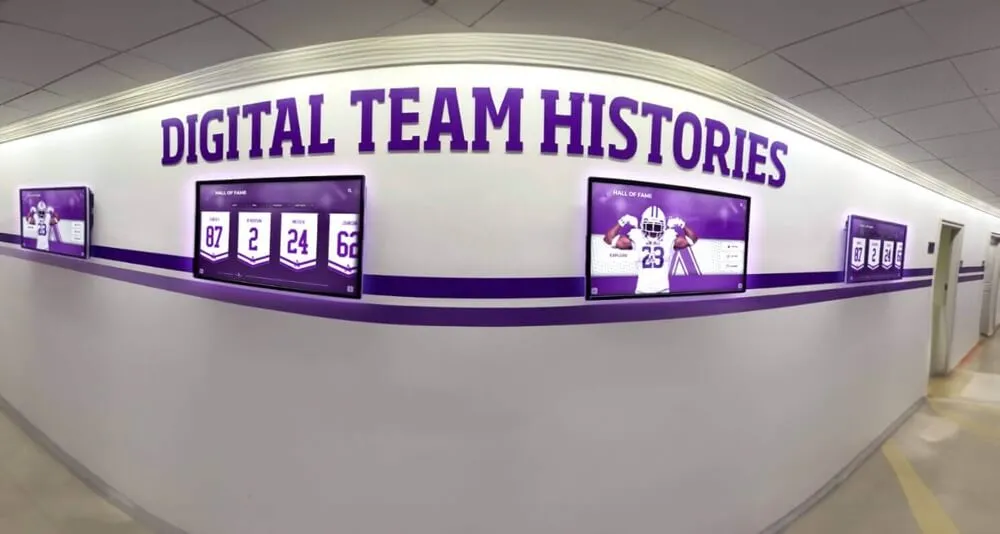
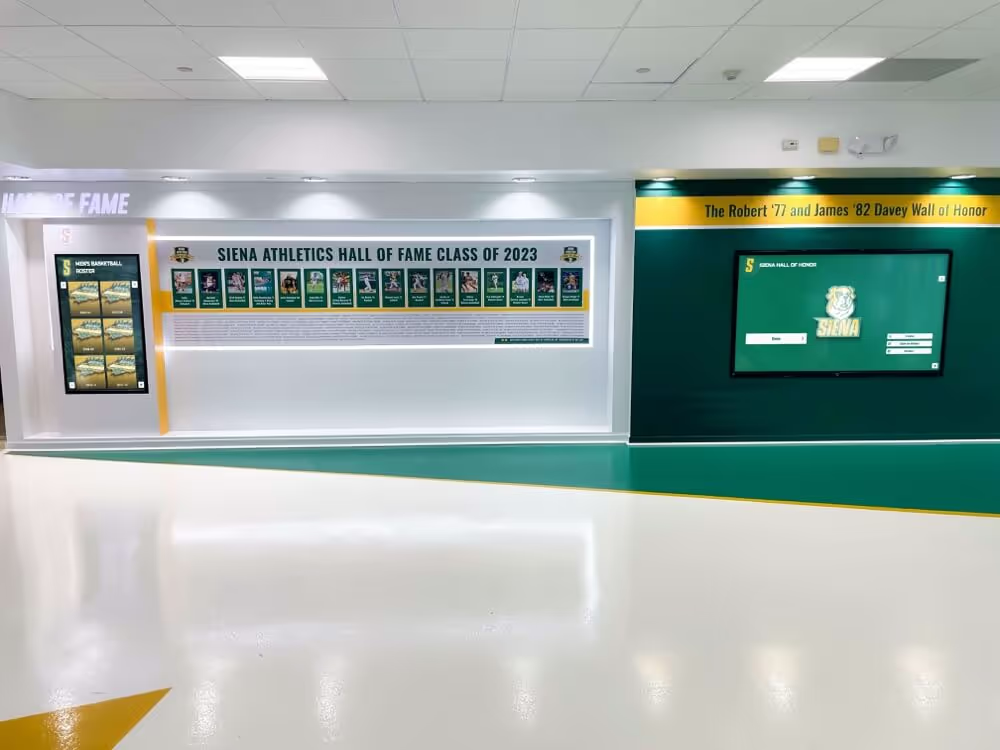
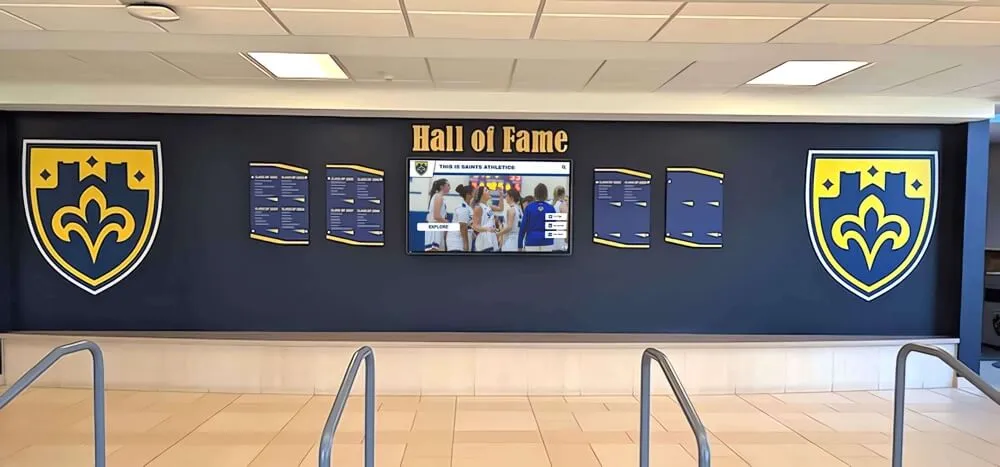
Historic game footage is the raw material for recognition programs — shields, plaques, and hall-of-fame walls tell a school's story forward, but the VHS recordings in storage tell it backward; mold quarantine before digitization protects that backward record before it can be lost
Before the Conservator Arrives: What Schools Can Do Without Specialist Equipment
While awaiting a conservator assessment, school staff can take several preparatory steps that make the eventual assessment and treatment process more efficient — without handling or attempting to treat the affected tapes.
Complete the archive inventory for unaffected tapes. While quarantined tapes await assessment, proceed with intake inspection and documentation for cassettes that cleared the initial screening. A complete inventory of the unaffected collection gives the conservator context about the full scope of the archive and helps prioritize which quarantined tapes contain content of greatest significance.
Compile existing documentation. Collect any existing records about the quarantined tapes: original recording logs, athletic department video library records, coach’s notes, or any documentation that establishes what content is on each affected cassette. A 1994 homecoming game recording that appears in an original recording log or game schedule represents confirmed content; a tape labeled “practice footage” may be lower priority if conservation resources are limited. This documentation helps a conservator and the school prioritize assessment work.
Improve storage conditions for the unaffected collection. While the quarantined tapes are being assessed, assess the storage conditions for the tapes that passed initial inspection. If the collection has been stored in a high-risk environment, moving unaffected tapes to better conditions now — before the next inspection cycle — reduces the likelihood that additional tapes will develop mold during the interval before digitization begins.
Continue documenting with a consistent archive vocabulary for newly inspected tapes. Systematic documentation at intake — including storage condition notes, inspection outcomes, and content descriptions — creates the archive record that will accompany each tape through the digitization process and into whatever recognition platform the school uses for its completed digital archive.
Connecting Mold Quarantine to the Full Pre-Digitization Inspection Workflow
Athletic archive VHS mold quarantine is one step within a broader pre-digitization inspection process. A complete intake inspection for a school’s legacy VHS collection includes mold screening alongside other pre-digitization checks that identify different categories of tape risk before any recording is committed to a capture session.
Related pre-digitization inspections that complement mold quarantine:
- Physical tape condition inspection — checking for broken splices, torn leaders, and tape pack deformation that require mechanical repair before playback
- Label and content identification — establishing what is on each tape before digitization so that content significance can guide prioritization
- Capstan speed mode identification — confirming the recording speed (SP, LP, or EP) before the capture session to ensure the playback deck is set correctly, as described in related pre-digitization capstan-speed checks for VHS collections
- Audio channel mapping verification — confirming which audio channels carry game audio, ambient sound, or coach narration before the capture session configures the audio routing
- Post-capture quality inspection — reviewing captured files for chromatic aberration and other signal artifacts that indicate deck or tape problems that should be addressed before the next capture session
A mold quarantine process that results in affected tapes being routed to a conservator is not a delay in the digitization project — it is the step that ensures those tapes enter the project rather than being lost to a failed capture attempt that damages both the tape and the capture equipment.

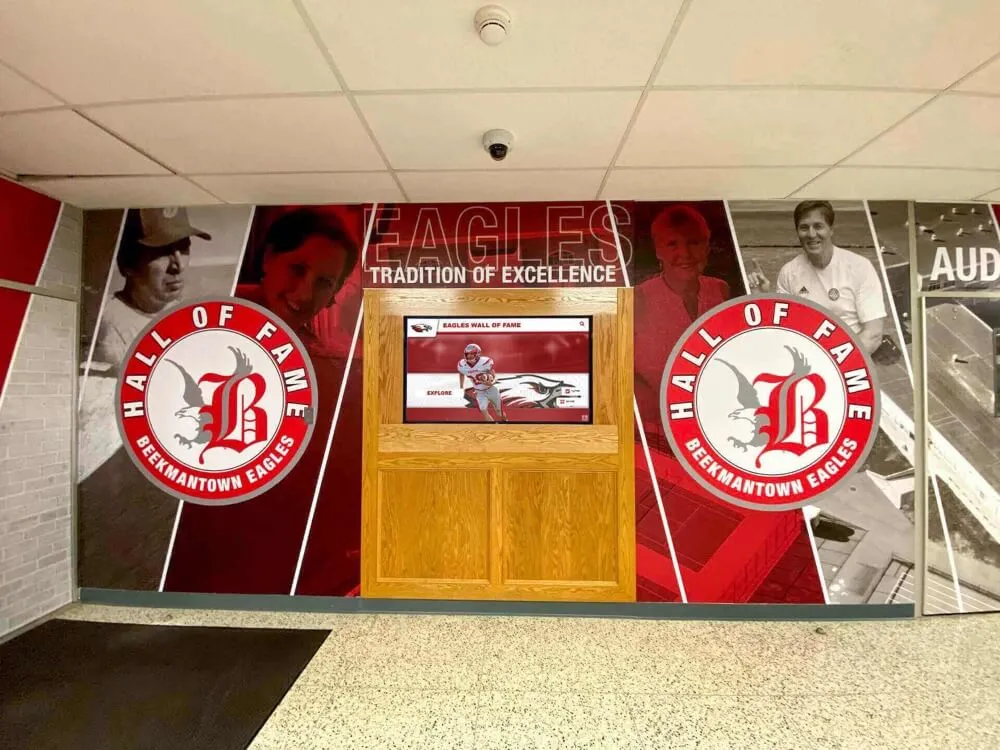
Interactive recognition displays are built on a school's digital archive — and that archive depends on the decisions made years earlier during VHS intake, including whether suspect tapes were identified, isolated, and routed to appropriate professional care before digitization began
Mold Quarantine in the Context of School Athletic Recognition Programs
The connection between VHS mold quarantine and a school’s active recognition programs may not be immediately obvious, but it is direct. The game footage on a 1985 VHS tape — if recovered intact through a careful pre-digitization inspection, professional conservation treatment when needed, and a high-quality capture session — can eventually appear in a school’s digital hall-of-fame display, a lobby recognition screen, a student-athlete recognition program, or a year-end athletic banquet presentation.
The same tape, played through a contaminated deck on a rushed digitization timeline that skipped the mold inspection, may produce an unusable file — and may damage the playback equipment used for the rest of the collection.
Schools that invest in systematic pre-digitization intake — including VHS mold quarantine — build a digital archive that is reliable enough to support ongoing recognition programs rather than one that is incomplete in ways that cannot be fully understood until a specific piece of footage is needed.
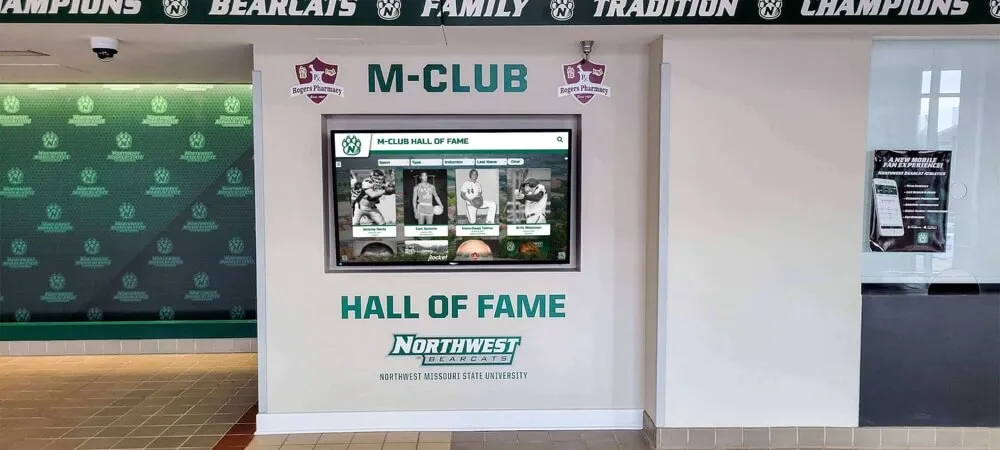
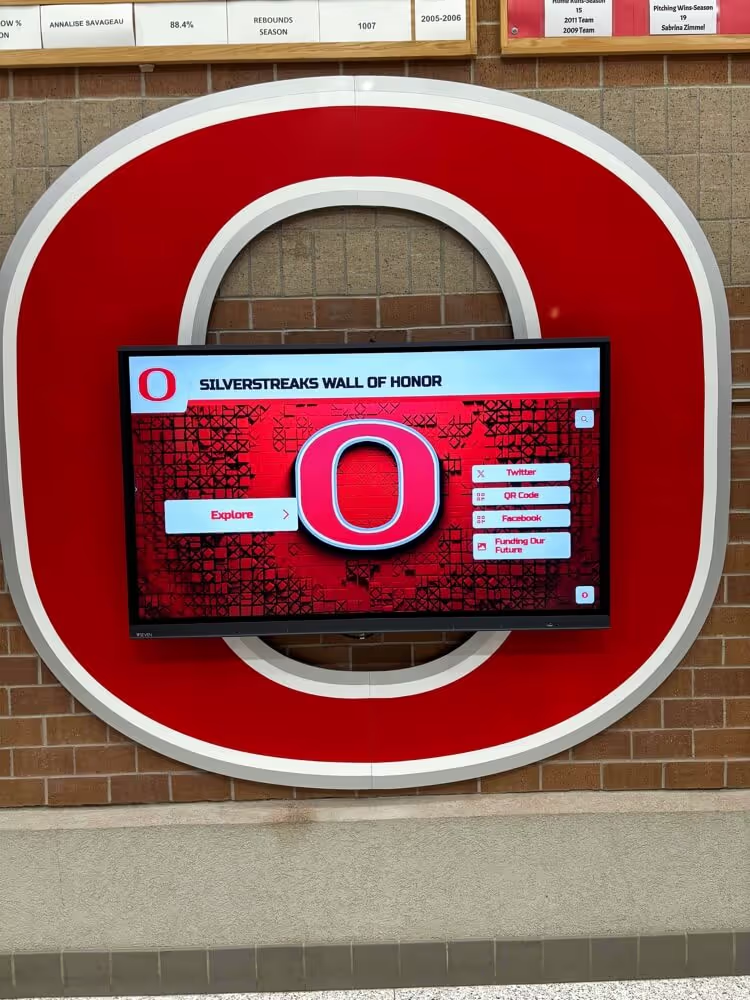
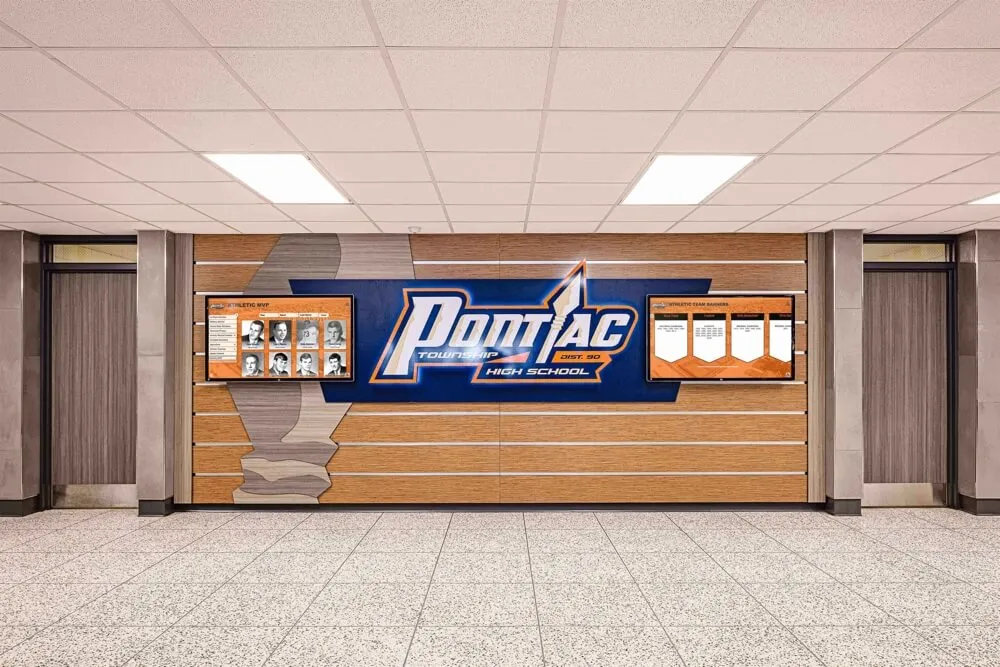
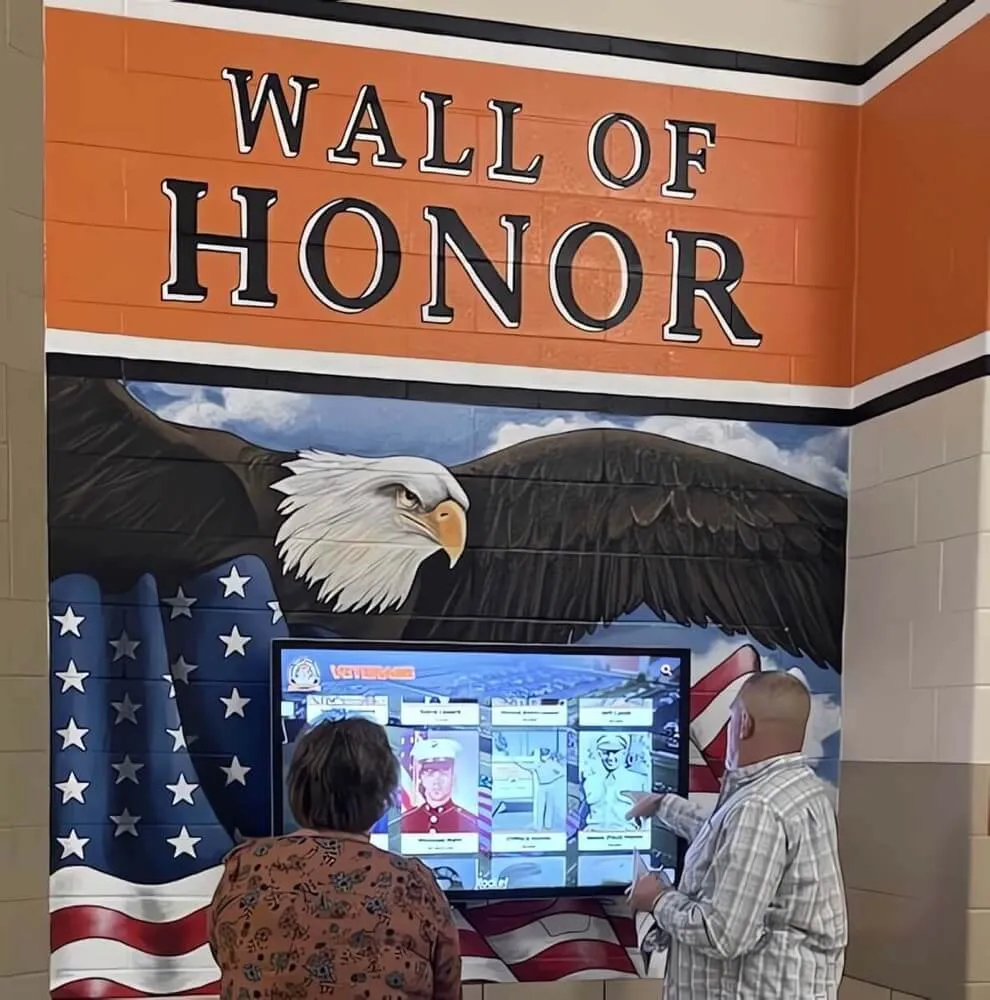
The Rocket Alumni Solutions platform works with schools to display archived athletic content — photos, biographical profiles, game highlights, and historical recognition milestones — in formats ranging from touchscreen kiosks to lobby digital displays. The content that powers those displays originates in the archived material a school has preserved, which is why the preservation steps that precede digitization — including mold quarantine — determine what can ultimately be displayed.
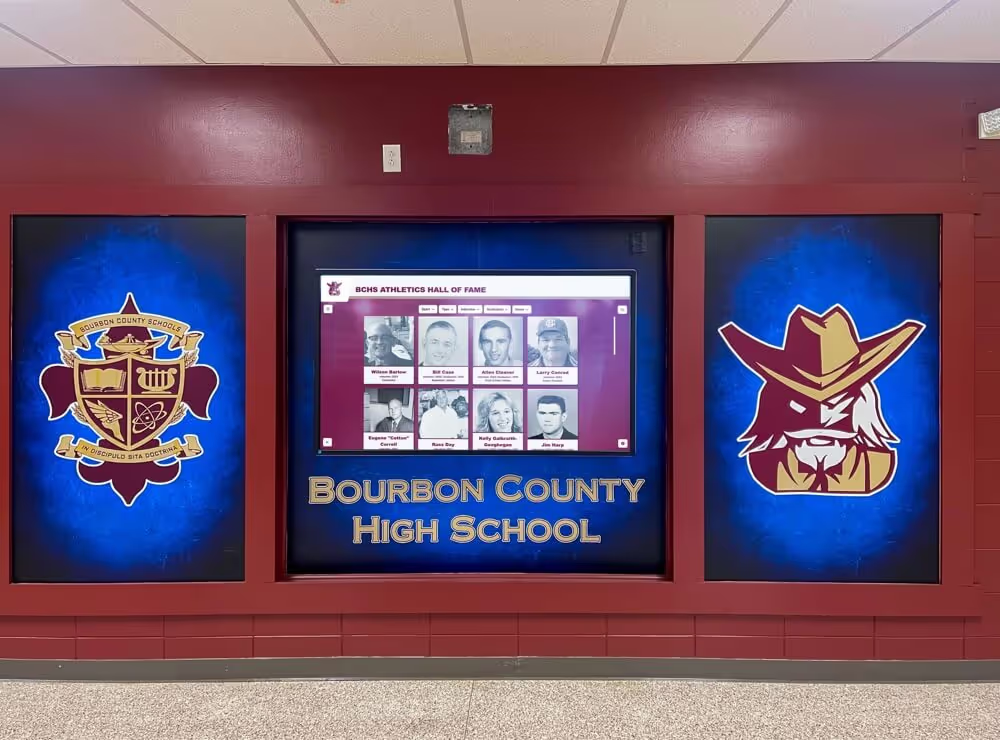
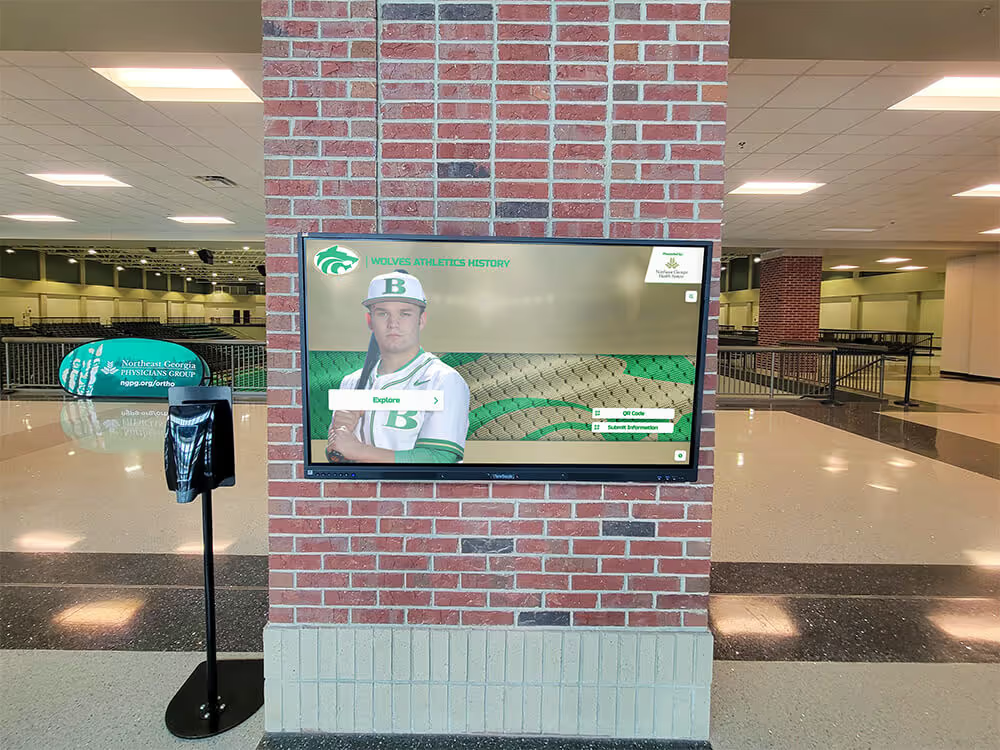
Touchscreen kiosks embedded in trophy cases can display historic game footage, team histories, and athlete profiles — but only if the source VHS recordings survived storage intact and were handled correctly during pre-digitization intake, including mold screening
Frequently Asked Questions: Athletic Archive VHS Mold Quarantine
Q: Can we clean a moldy VHS tape ourselves before digitizing it?
No. Attempting to clean mold from a VHS tape without professional knowledge, appropriate tools, and a controlled environment carries significant risk. Rubbing or wiping the oxide surface of a tape without proper technique can grind mold material into the binder layer, abrade the magnetic oxide, and cause irreversible damage to the recording. In addition, cleaning without appropriate containment releases spores that can spread to other tapes and to surfaces in the room. Mold treatment for magnetic tape is a specialized procedure that a qualified audio-visual conservator is trained to perform. The appropriate school response to a mold-affected tape is to quarantine it and contact a conservator — not to attempt treatment.
Q: What if we only see a small amount of mold on one tape? Is that still a quarantine situation?
Yes. Even limited visible mold growth indicates that conditions were sufficient for fungal colonization, that spores are present on the tape surface or within the cassette, and that the binder layer may have been affected in ways not visible to the naked eye. The quantity of visible growth does not reliably indicate the extent of tape damage or the risk of spread to other materials. Quarantine any tape with visible mold indicators, regardless of how limited the visible growth appears, and let a conservator assess the extent of damage and the viability of transfer.
Q: If we play a moldy tape, what actually happens to the deck?
Threading a mold-affected tape into a VHS deck draws the tape past the video heads, which spin at high speed in close contact with the tape surface. Mold colonies on the oxide surface are deposited directly onto the video heads during this contact, accumulating in the head gaps and on the drum surface. Sufficient mold accumulation clogs the head gaps, degrading or eliminating playback quality for all subsequent tapes played on the same deck. Cleaning the heads after mold contamination is possible but requires careful work; in cases of heavy contamination, head replacement may be necessary. The capture equipment used for an entire digitization project can be compromised by a single mold-affected tape played without prior inspection.
Q: How long can tapes stay in quarantine before mold causes permanent damage?
The condition of mold-affected tapes does not necessarily improve with time, and active mold growth under favorable conditions can continue to damage the oxide binder layer. Reaching a conservator promptly after quarantine is preferable to an extended wait. If the quarantine period must extend — because a conservator cannot be reached immediately — storing bags in the driest available environment in the school reduces the risk of active growth continuing during the waiting period. Communicate the waiting period to the conservator when you make contact, so they can advise on whether interim protective steps are appropriate for the specific tapes.
Q: How do we find a conservator who works specifically with VHS tapes?
Audio-visual preservation is a specialized field. General archivists and photograph conservators may not have experience with magnetic tape. Look for conservators or preservation services that explicitly list audio-visual materials, magnetic tape, or analog video among their areas of practice. Professional organizations including the American Institute for Conservation (AIC), IASA, and regional archival networks maintain directories that can help identify qualified practitioners. State archives offices and university library preservation departments are also useful referral sources. When describing your collection, note that the tapes are VHS format, that mold is the concern, and what the tapes contain — this helps a specialist assess whether the work is within their scope before a site visit is arranged.
Q: Should we notify school administration about a mold-affected tape collection?
Yes. School administration should be aware when a preservation risk is identified in institutional holdings, both because the remediation may involve costs that require administrative approval and because documentation of the finding and the response protects the school in the event of a records audit or a question about the status of specific recordings. A brief written summary — noting how many tapes were quarantined, what the quarantine process involved, and what professional help is being sought — is appropriate as a routine administrative communication.
Q: What about tapes that were stored with mold-affected ones? Are they also at risk?
Any tape stored in close physical contact with a mold-affected cassette — touching it in a stack, stored in the same box, or in the same enclosed drawer or cabinet — should be treated as potentially exposed during the initial quarantine round. Mold spores are microscopic and transfer through direct contact and through the air within an enclosed storage space. Tapes from the same storage location as quarantined tapes should receive closer inspection attention than tapes from demonstrably different and lower-risk storage areas.
Ready to bring your recovered athletic archive to life in a recognition display your school can be proud of?
Once your VHS collection has been screened, mold-affected tapes referred to a conservator, and the rest of the collection prepared for digitization, the resulting digital archive can power interactive hall-of-fame displays, lobby recognition screens, and athlete profile platforms built specifically for schools.