An athletic archive source reliability rubric is a scoring framework that ranks every information source contributing to a school’s athletic history—official scorebooks, printed programs, photographs, game-day rosters, and oral history interviews—so that conflicting dates, names, scores, and achievements can be resolved with documented rationale rather than individual judgment. Without a rubric, archive decisions rely on whoever is in the room: the registrar who remembers the game differently, the booster president who insists the championship year was 1987 not 1988, the retired coach whose recollection is compelling but unsupported by paper. A rubric converts those competing claims into a structured comparison with a documented outcome.
This guide gives school administrators, athletic directors, archive teams, and IT and facilities stakeholders a complete athletic archive source reliability rubric organized across the four primary source types—official records, printed programs, photographs, and oral histories—along with a seven-step application process, conflict resolution procedures, and guidance on connecting a verified archive to the recognition programs and digital displays that depend on it.

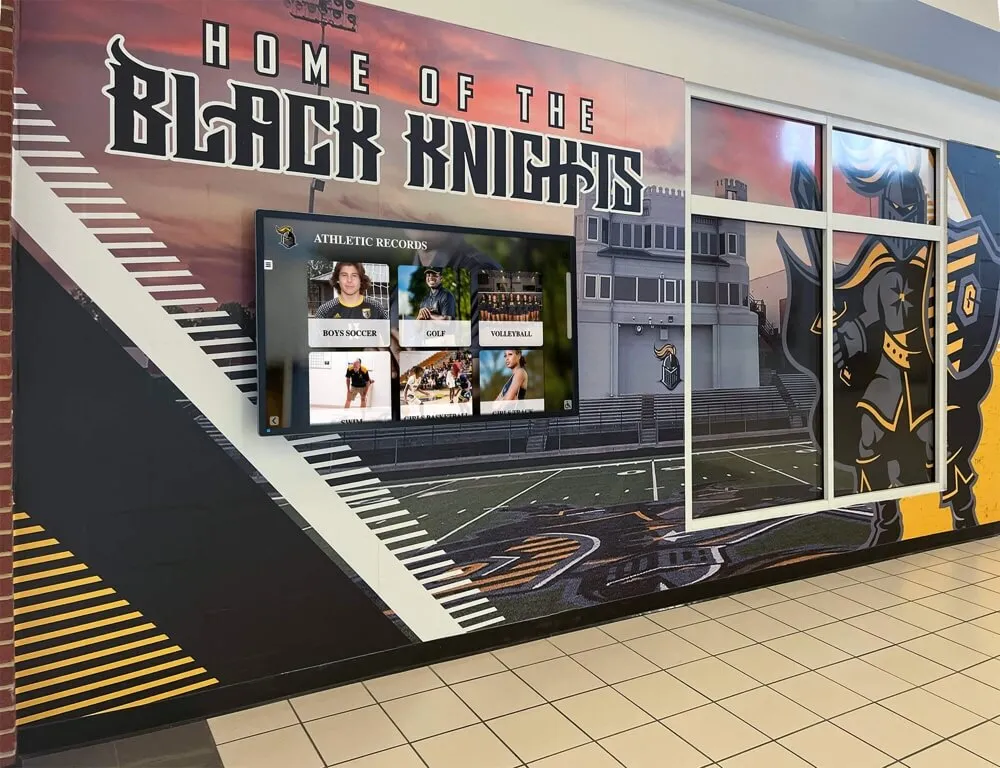
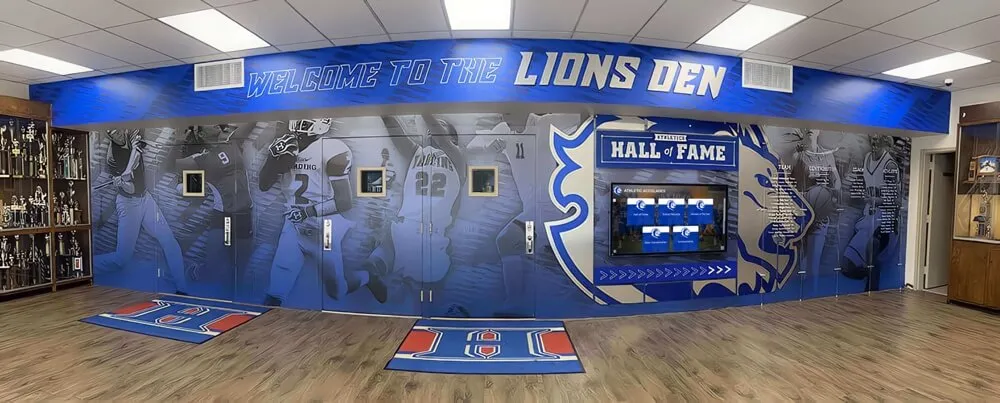
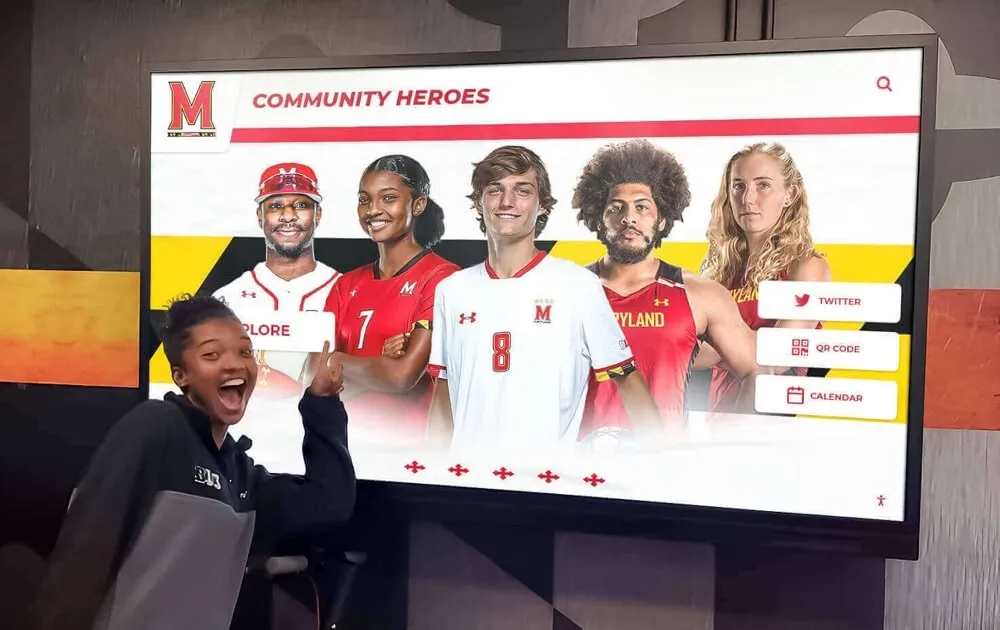
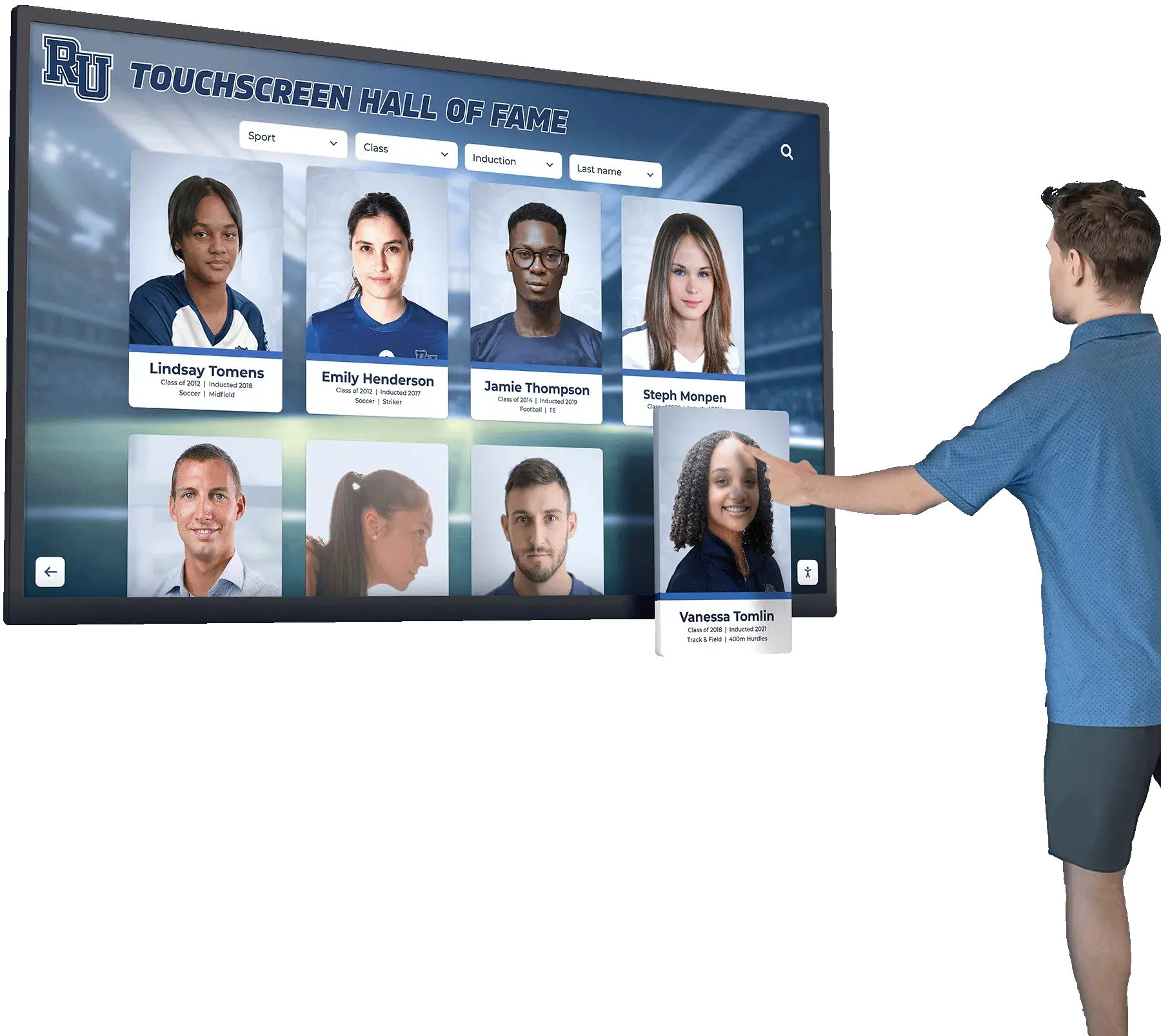
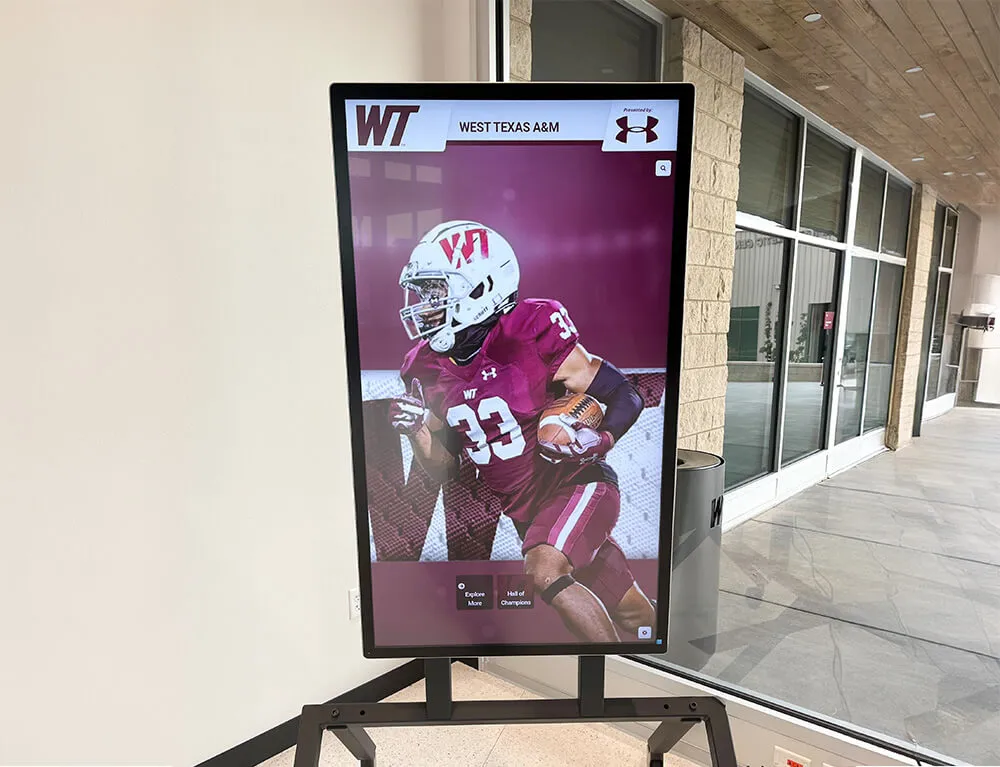
Every athlete portrait in a recognition display draws from archive records — a source reliability rubric determines which version of each fact is authoritative when sources disagree
What an Athletic Archive Source Reliability Rubric Does
A source reliability rubric answers one question for every piece of conflicting information in your athletic archive: which source do we trust most, and why?
Schools without a rubric resolve conflicts informally—deferring to the most senior person present, accepting the most recent document regardless of its quality, or defaulting to what is already in the database. These approaches produce different answers depending on who is handling the record, making it impossible to apply consistent standards across a large backlog or an ongoing archive maintenance program.
A formal rubric does four things:
- Establishes a hierarchy so all team members apply the same reasoning when comparing two sources
- Assigns scores so borderline decisions produce a documented comparison rather than a guess
- Creates an audit trail that future administrators can review without reconstructing the reasoning from memory
- Protects the school if a recognition decision—a hall-of-fame induction, a championship banner, an award certificate—is later questioned by an athlete or family
The rubric is particularly important for records predating digital systems. Handwritten scorebooks, mimeographed game programs, and team portraits from the 1950s through the 1990s often contain inconsistencies that no single staff member can resolve from memory. The rubric gives archive teams a structured way to work through that backlog systematically.
Building a robust source reliability process is foundational to displaying accurate athletic hall-of-fame content that families and alumni will trust for years.
The Four Primary Source Types in Athletic Archives
Athletic archives draw from four distinct categories of source material, each with different inherent reliability characteristics. Understanding those characteristics is the starting point for the rubric.
1. Official Records
Official records are documents created by the school, a governing athletic association, or a public authority as part of an administrative or legal process. They include:
- Scorebooks and official game sheets signed by officials or referees
- Athletic department season-end statistical summaries
- State athletic association championship records and certification documents
- School board meeting minutes referencing athletic awards or facility dedications
- Transcript or enrollment records used to verify athlete eligibility
Official records carry the highest baseline reliability because they were created at the time of the event, by parties with a direct obligation to accuracy, often for regulatory or compliance purposes.
2. Printed Programs
Printed programs—game-day programs, banquet programs, and annual sports guides—occupy a middle tier. They are contemporary with the events they describe, but they are produced under deadline pressure by staff or volunteers who may not have verified every statistic or roster entry before going to print.
Common program-level errors include transposed jersey numbers, misspelled athlete names, incorrect graduation years, and carry-forward errors where the previous season’s statistics appear under a current athlete’s name.
3. Photographs
Photographs provide visual evidence for jersey numbers, uniform styles, venue configurations, and approximate time periods, but they are rarely self-dating and cannot confirm numerical statistics. A photograph can corroborate that an athlete wore a particular jersey number in a particular era, but it cannot verify a scoring record or an eligibility status.
Photographs become more reliable when they carry embedded metadata, printed captions, or chain-of-custody documentation from a known photographer or a school archive donation. Undated photographs with no provenance record are the lowest-reliability photographic source.
4. Oral Histories
Oral histories—recorded interviews with former athletes, coaches, administrators, and staff—contribute information about context, significance, and events that were never captured in writing. They are essential for building recognition narratives and for recovering history from eras when official recordkeeping was sparse.
Oral histories are inherently subjective and subject to memory decay, but they are not automatically unreliable. A first-person account from the athlete who scored the record-breaking goal, recorded within a decade of the event, carries more weight than a secondhand account recorded forty years later. The rubric handles these distinctions with a structured scoring approach rather than a blanket hierarchy.
The Athletic Archive Source Reliability Rubric
The rubric scores each source on five dimensions, each rated on a 1–4 scale. The five dimensions apply consistently across all four source types, but the scoring criteria differ by type to reflect the different ways each type is created and preserved.
| Dimension | 4 — High | 3 — Moderate | 2 — Limited | 1 — Low |
|---|---|---|---|---|
| Contemporaneity | Created same day/week as the event | Created within the same season | Created within a few years of the event | Recalled or reconstructed years later |
| Authority | Created by a party with formal obligation (official, registrar, governing body) | Created by school staff in an official capacity | Created by school volunteers, boosters, or student staff | Created by a private individual with no documented role |
| Corroboration | Confirmed by two or more independent sources at the same reliability tier | Confirmed by one other source | Partially consistent with other sources | Contradicts all other available sources |
| Preservation Integrity | Original document, unaltered; chain of custody documented | Clear copy of an original; no visible alterations | Photocopy or scan of unknown generation; possible alterations | Transcription only; original no longer available |
| Specificity | Contains exact dates, names, scores, or statistics relevant to the claim | Contains relevant information with minor gaps or ambiguity | Contains partially relevant information requiring inference | Contains relevant information only at a general or approximate level |
A source scoring 20 points (5 × 4) is the highest possible. A source scoring 5 points is the lowest. When two sources conflict, the higher-scoring source provides the accepted value. When scores are equal, additional documentation is required before the value is published.
Source-Specific Rubric Scorecards
The tables below apply the five-dimension rubric to each source type, listing the scoring criteria that are most commonly relevant when evaluating athletic archive sources.
Official Records Scorecard
| Criteria | Score | Notes |
|---|---|---|
| Signed by an official, referee, or governing-body representative | +4 Contemporaneity / +4 Authority | Highest-weight record type |
| State championship certification with governing-body seal | +4 Authority | Treat as definitive for championship claims |
| Season statistical summary prepared by athletic director | +3 Authority | High but not regulatory; verify against game sheets |
| School board minutes referencing an athletic honor | +3 Authority, +3 Contemporaneity | Official, but minutes capture summaries, not detail |
| Eligibility or enrollment documentation | +4 Authority | Definitive for athlete eligibility claims; not for performance stats |
| Document has visible alterations, corrections, or white-out | −1 Preservation Integrity | Note alteration and document what is visible beneath |
| Document is a photocopy with no original available | −2 Preservation Integrity | Photocopy acceptable with corroboration; not standalone for disputed claims |
Printed Programs Scorecard
| Criteria | Score | Notes |
|---|---|---|
| Program printed and distributed at the event | +4 Contemporaneity | Contemporary, but verify against official records |
| Roster confirmed against official eligibility list | +1 Corroboration | Boosts authority when cross-check is documented |
| Multiple programs from the same season are consistent | +3 Corroboration | Internal consistency improves program reliability |
| Program produced by external printing company (dated imprint) | +3 Preservation Integrity | Printed artifacts are harder to retroactively alter |
| Roster entry conflicts with official scorebook | −2 Corroboration | Flag conflict; official record takes precedence |
| Statistics section labeled “through [mid-season date]” | −1 Specificity | Partial-season data; do not use as final-season totals |
| Name spelling differs from official enrollment record | −1 Specificity | Use enrollment-record spelling as authoritative form |
Photographs Scorecard
| Criteria | Score | Notes |
|---|---|---|
| Photograph carries a dated photographer’s stamp or caption | +4 Contemporaneity | Dated evidence is the highest-value photographic attribute |
| Photo donated by the athlete or family with signed donor form | +3 Authority | Chain of custody and donor attestation improve weight |
| Jersey number visible in photo matches official roster | +3 Corroboration | Cross-confirms roster entry; useful for disputed jersey assignments |
| Embedded EXIF metadata with camera date | +3 Contemporaneity | Treat as strong contemporaneity evidence; note cameras can have wrong clocks |
| Photo found in school archive with accession record | +3 Preservation Integrity | Institutional provenance raises reliability |
| Undated photograph, no caption, no donor documentation | +1 Contemporaneity, +1 Authority | Cannot confirm era without external corroboration |
| Photo labeled by hand on reverse, handwriting unidentified | +2 Contemporaneity | Note label exists; do not treat handwriting as verified identification |
| Photo confirms a fact already established by official records | +4 Corroboration | Photographic confirmation of a documented fact is the best use of photos |
Oral Histories Scorecard
| Criteria | Score | Notes |
|---|---|---|
| First-person account from the athlete who experienced the event | +4 Authority (primary source) | Strongest oral authority; still requires corroboration for numerical claims |
| Interview recorded within 10 years of the event | +4 Contemporaneity | Memory decay is limited; account is most reliable in this window |
| Interview recorded 11–25 years after the event | +3 Contemporaneity | Useful; note the time gap in the citation |
| Interview recorded 26+ years after the event | +2 Contemporaneity | Treat with caution for specific dates and statistics |
| Account confirmed by a second independent oral source | +4 Corroboration | Two independent first-person accounts are strong corroborating evidence |
| Interviewer notes or transcript accompanies the recording | +3 Preservation Integrity | Transcripts enable search, citation, and future cross-reference |
| Recording only; no transcript or summary | +2 Preservation Integrity | Usable, but less accessible for cross-reference |
| Account is secondhand (“I heard that…”, “they said…”) | +1 Authority | Note secondhand status; do not use for disputed factual claims |
| Account directly contradicts official record | −2 Corroboration | Document both versions; official record is preferred unless rubric score overrides |
How to Apply the Athletic Archive Source Reliability Rubric: 8 Steps
Working through these steps in order gives your archive team a consistent, documented process for every disputed record, name, date, or achievement claim.
Step 1: Identify the specific claim requiring resolution. Write the claim as a testable statement before pulling any source material. “John Martinez scored 34 points in the 1991 regional championship game” is a testable claim. “John Martinez was a great player” is not. Specificity at this stage prevents scope creep and keeps the rubric focused on what can actually be verified.
Step 2: List every source that contains information relevant to the claim. Pull all sources before scoring any of them. It is common to stop after finding a single source that appears authoritative — only to discover later that a second source contradicts it. A complete source inventory prevents that problem and often reveals corroborating evidence that strengthens the accepted value.
Step 3: Score each source on the five rubric dimensions. Use the source-specific scorecards in the section above. Enter each score in a simple tracking sheet: source name, type, and scores for each of the five dimensions. Record total scores before comparing.
Step 4: Identify the highest-scoring source. The source with the highest total rubric score provides the accepted value for the claim. If two or more sources share the same score, move to Step 5. If one source is clearly highest, record it as the authority and document the scores as the rationale.
Step 5: Resolve ties using the corroboration dimension. When two sources tie on overall score, the source that is corroborated by a third source — even a lower-scoring one — takes precedence. If no corroboration is available, the conflict is escalated to the archive review committee (Step 6) rather than published with an unresolved value.
Step 6: Escalate unresolvable conflicts to a review committee. Some conflicts cannot be resolved by the rubric alone — particularly when oral history accounts are richly documented but directly contradict an official record that is incomplete or partially preserved. The archive review committee (typically composed of the athletic director, a historian or records custodian, and a senior administrator) reviews the rubric scores, the raw sources, and the escalation memo, then issues a documented decision.
Step 7: Record the accepted value and the rubric rationale. Document the accepted value, the sources evaluated, the rubric scores, and the basis for the decision in the archive record for that athlete or event. This documentation is the institutional memory for the decision — the next administrator who reviews the record does not need to relitigate the question from scratch.
Step 8: Flag values that remain contested. When the review committee cannot produce a definitive answer, the accepted value is marked as “best available” with a flag indicating that the record remains subject to future revision if additional evidence surfaces. Published recognition profiles (hall-of-fame plaques, display entries, digital yearbook pages) should reflect any material uncertainty rather than presenting a contested fact as confirmed.
For schools building or refreshing digital recognition displays, this process directly parallels the work described in guides on AP Scholar and academic achievement recognition — the underlying principle is the same: only publish what you can verify.
Conflict Resolution Reference Table
The table below summarizes the most common conflict patterns and the rubric-based resolution approach for each.
| Conflict Pattern | Recommended Resolution |
|---|---|
| Official scorebook date differs from printed program date | Accept official scorebook date; document program date in source notes |
| Athlete name spelled differently across three sources | Accept enrollment-record spelling; note all variants in the record |
| Season statistical total differs between program and athletic department summary | Accept athletic department summary if prepared at season end; verify against game-sheet totals if available |
| Photograph jersey number contradicts official roster | Flag discrepancy; do not publish either value until roster is confirmed against eligibility documentation |
| Oral history claims a record that no written source confirms | Mark as oral-history sourced; do not publish as a confirmed record without corroboration |
| Two oral histories from independent sources agree on a value that no written record confirms | Accept with “oral history, corroborated” attribution; note absence of written confirmation |
| Championship year differs between state association record and school display | Accept state association record; update school display with documented correction |
| Award recipient name differs between award program and school board minutes | Accept school board minutes (higher authority); note program discrepancy |
| Photo date stamp conflicts with official game schedule | Accept official schedule; note photo metadata discrepancy and possible camera clock error |
Connecting the Rubric to Recognition Programs and Digital Displays
A source reliability rubric is most valuable when the verified archive it produces feeds directly into the recognition systems your school and athletic department use. Every hall-of-fame induction nomination, every Gatorade Player of the Year profile, every championship banner, and every digital display entry draws from the same archive — and that archive is only as reliable as the process that built it.
Hall-of-fame nominations. Nomination forms that require archive-verified citations force nominators to engage the rubric process before submission, rather than after a contested induction. Requiring a source type (official record, program, photograph, or oral history) and a rubric-score summary for each claim shifts the evidentiary burden to the point where it is easiest to satisfy — before public commitment.
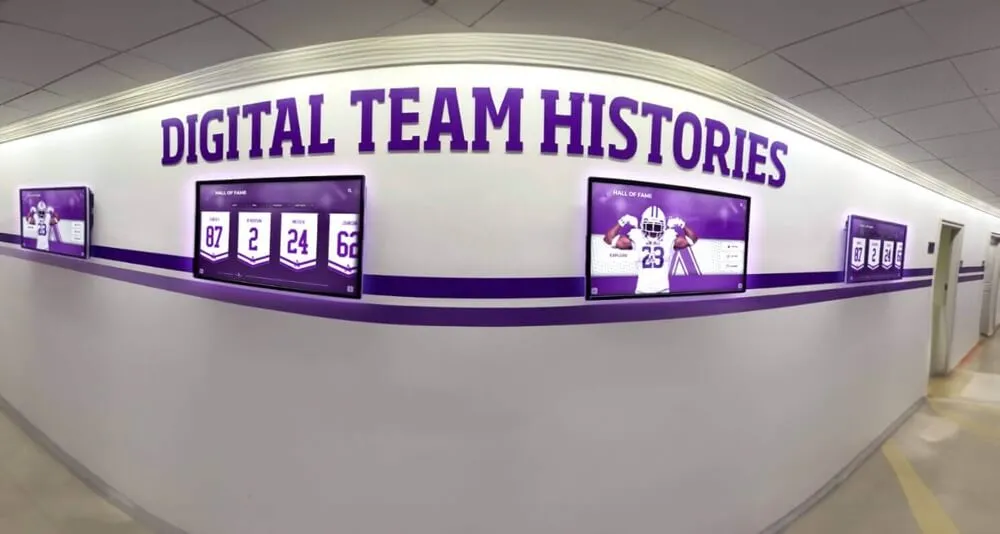
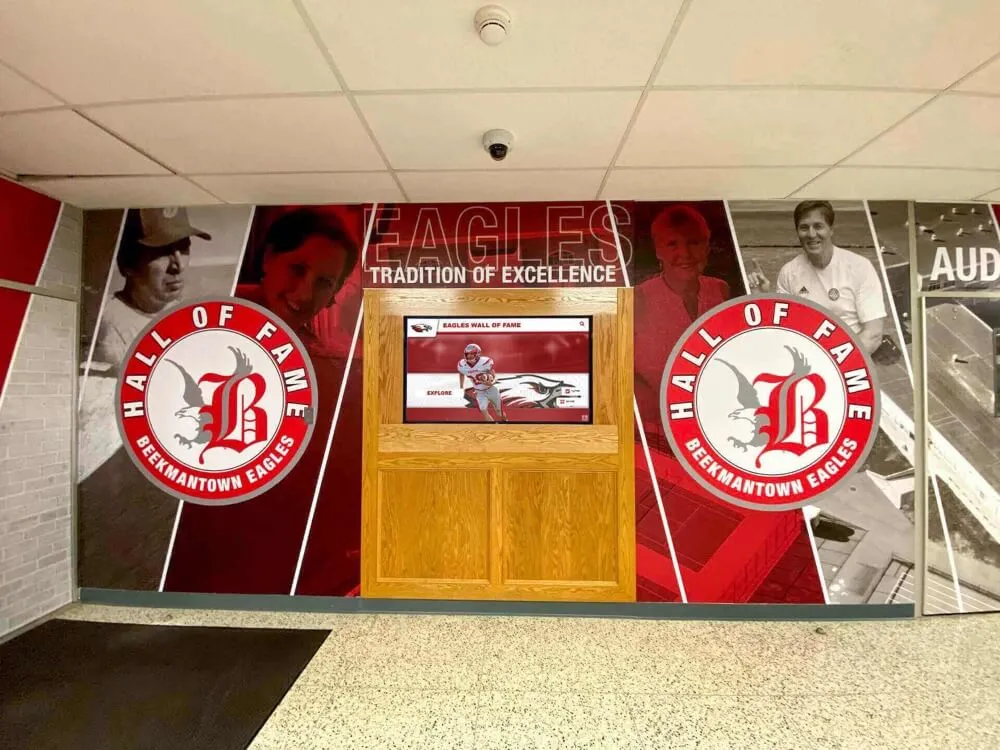
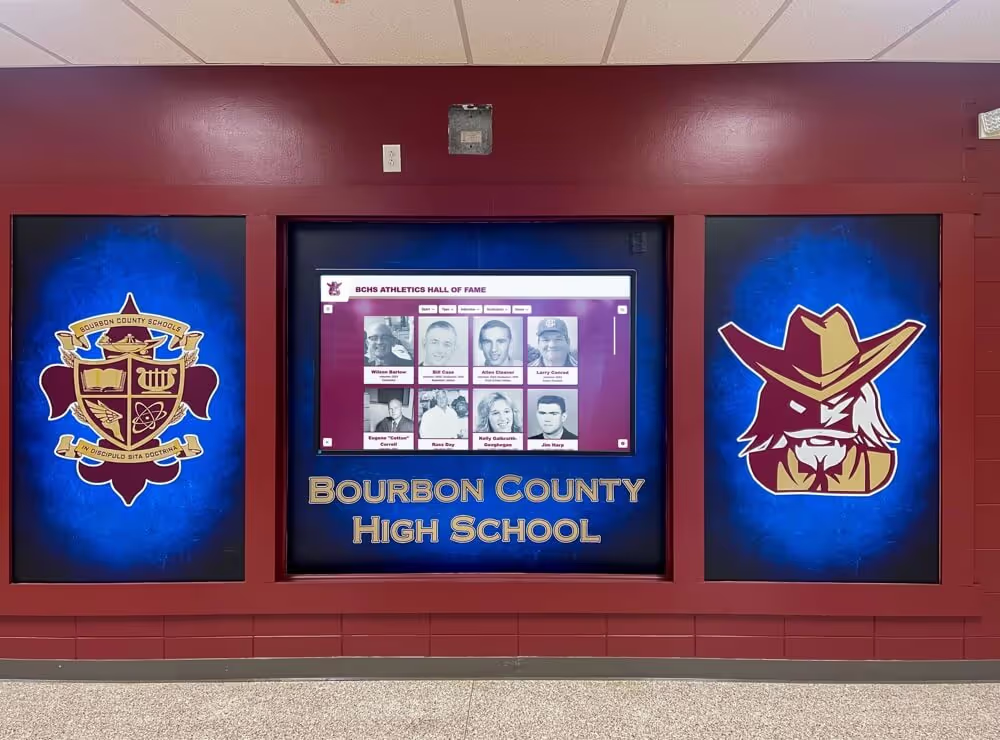
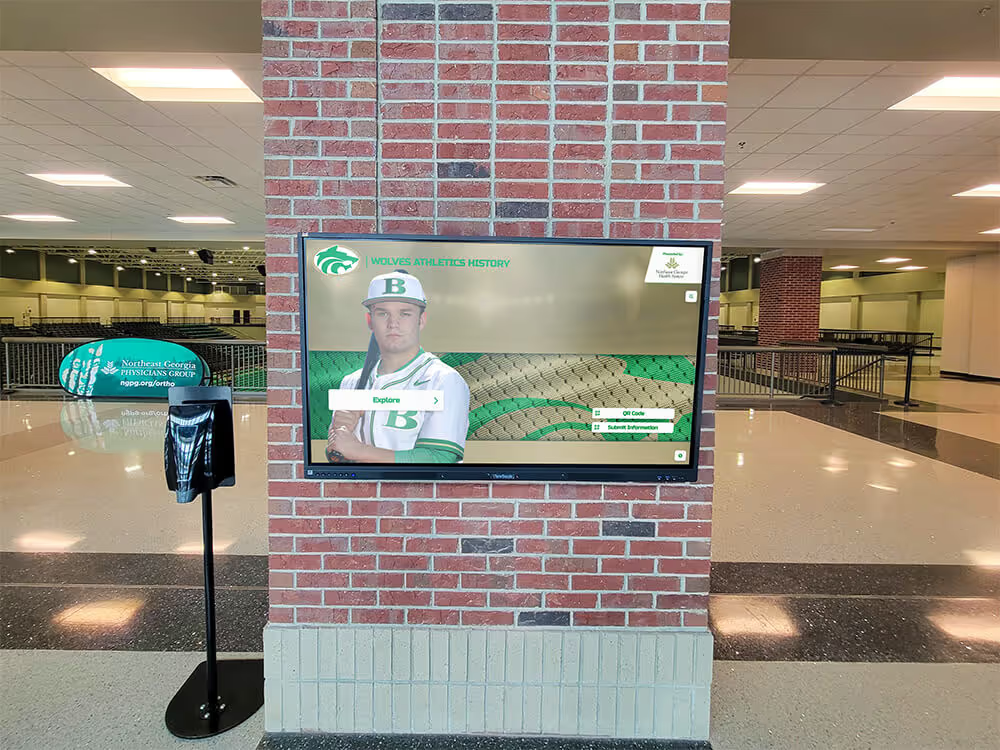
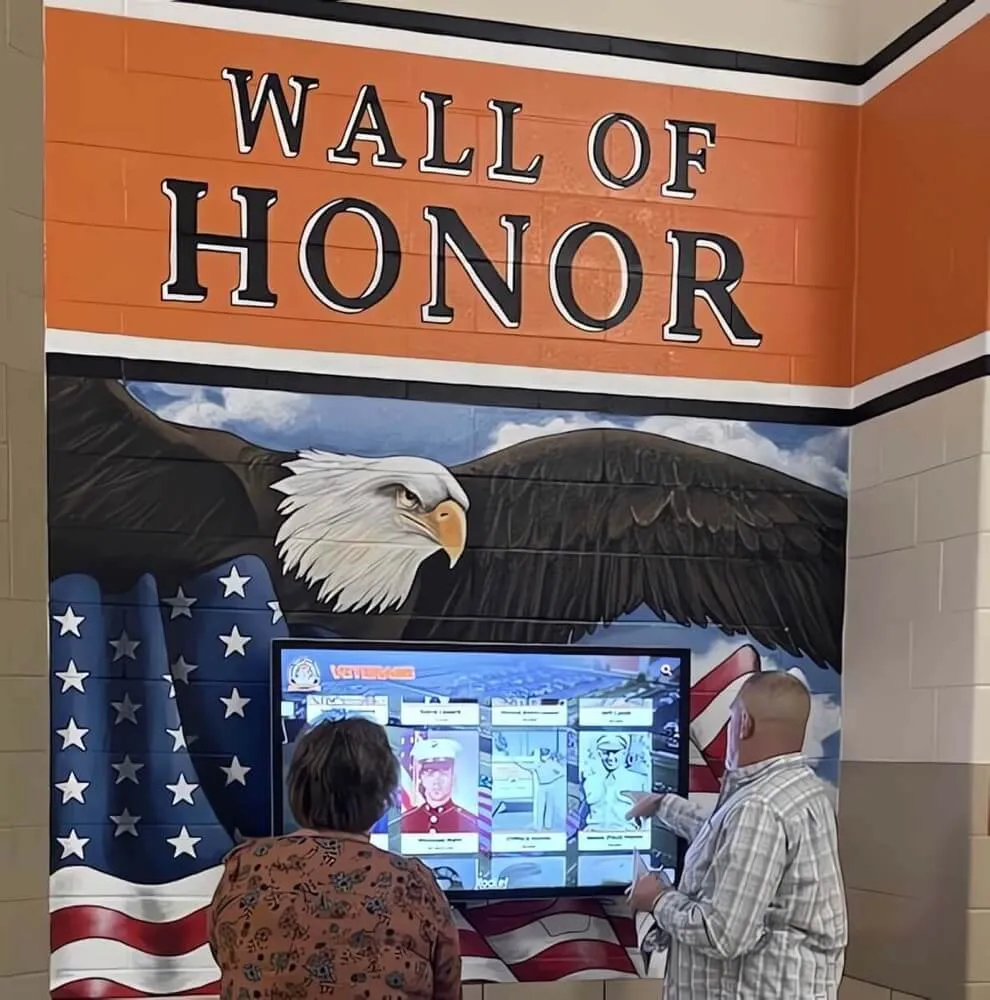
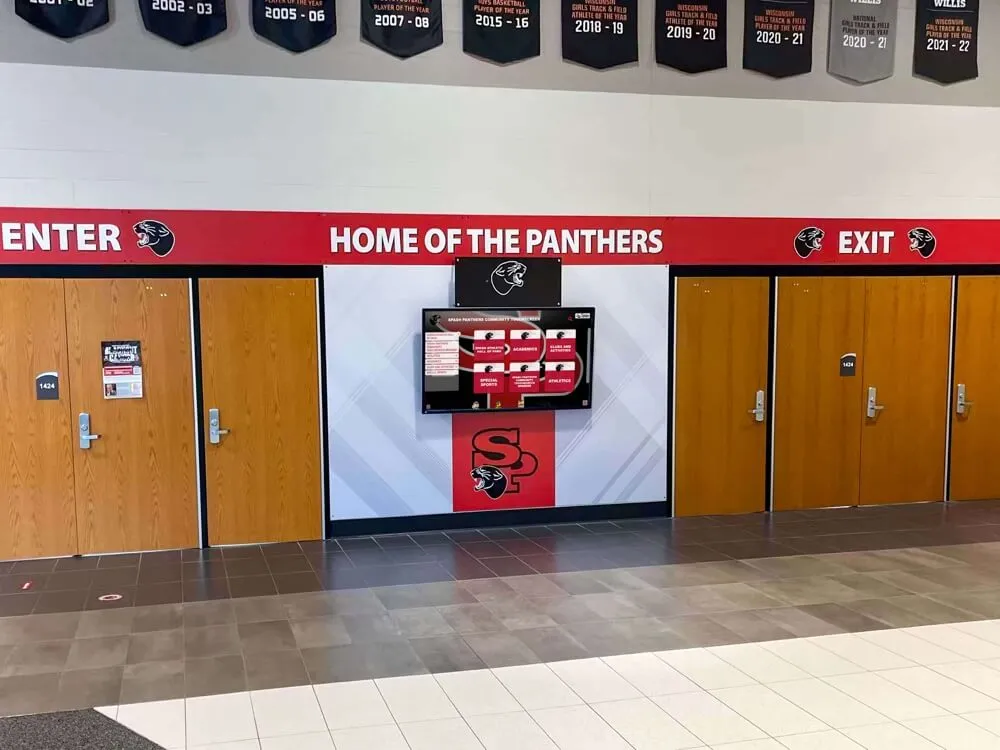
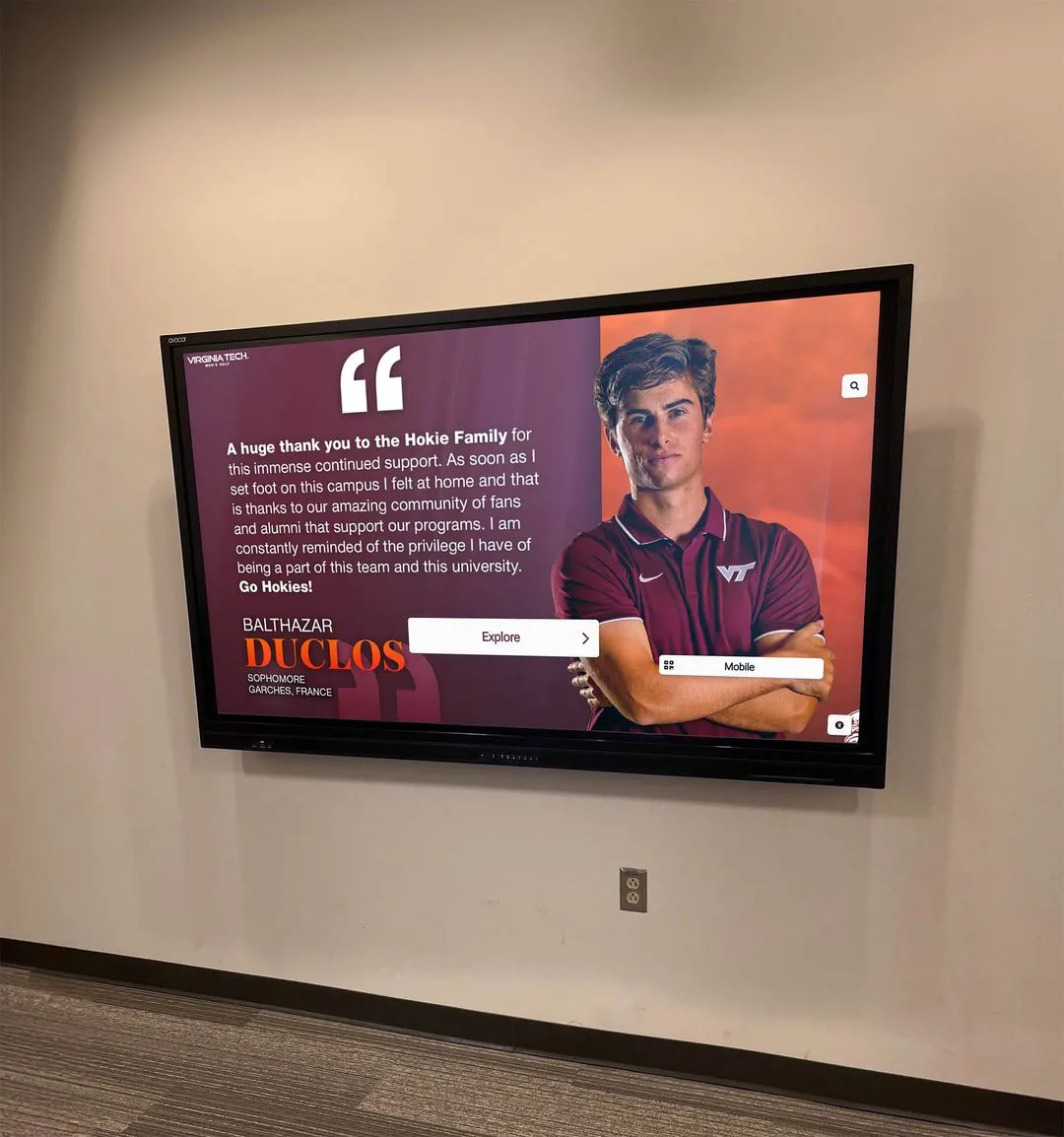
Digital recognition displays. Interactive lobby displays that surface athlete profiles, records, and achievements from a verified archive are considerably easier to maintain than displays built from unverified institutional memory. When a family or alumni contact questions a displayed fact, the archive team can retrieve the rubric documentation and explain — specifically — why that value was accepted. For schools using interactive kiosk systems, pairing the display with a verified archive process is the difference between a permanent installation and a permanent liability. Guides to interactive display planning for K–12 schools consistently emphasize accuracy as a core installation requirement.
Annual report and newsletter content. Athletic department newsletters and annual reports that reference historical records or recognition milestones should draw from the verified archive rather than from staff memory. A standard notation—“Source: athletic archive, verified [date], primary source: official scorebook”—gives published content a defensible basis and models good archival practice for readers.
Donor recognition and fundraising programs. Naming opportunities tied to athletic achievement (endowed scholarships, facility dedications) may reference historical records in donor agreements. Ensuring that referenced records are rubric-verified before they appear in legal or gift documentation prevents disputes that are significantly harder to resolve after a gift is accepted. Booster club event documentation follows similar verification principles for financial and contractual accuracy.
Questions and Answers
What should a school do when the original official record no longer exists? When an original scorebook, game sheet, or administrative record has been lost, destroyed, or is otherwise unavailable, work down the reliability hierarchy: printed programs are the next tier, followed by photographs with contemporaneous captions, followed by corroborated oral histories. Document that the original record is unavailable and identify all substitute sources evaluated. Any value accepted from a substitute source should be marked as “best available — original record unavailable” in the archive.
How should schools handle records from eras when official recordkeeping was inconsistent? For records predating systematic athletic administration — typically before the mid-1970s in many schools — oral histories and printed programs carry more weight because official records were simply not produced or were not preserved. The rubric accommodates this by scoring contemporaneity relative to what was available in the era, rather than applying a fixed penalty for the absence of an official record that could not have existed. Document the era context in the archive record.
Can a low-scoring oral history override a higher-scoring official record? In most cases, no. The rubric is designed to produce consistent outcomes, and a higher-scoring source should provide the accepted value. The exception is when the official record is demonstrably incomplete — for example, a scorebook that is missing the pages covering the relevant game — and the oral history is a first-person account with strong contemporaneity scores. In that case, the review committee decision (Step 6) is the appropriate path, not an automatic oral-history override.
How often should the rubric be re-applied as new sources surface? Any time a new source is discovered — through a donation, a records transfer, or a digitization project — the rubric should be re-applied to any claim the new source touches. If the new source’s score exceeds the current accepted source, the accepted value is revisited. Document the re-evaluation date and the outcome. Schools that build continuous archive intake processes find this easier because new sources are evaluated as they arrive rather than in large remediation batches.
Should the rubric be applied to digital-only sources, such as newspaper databases or sports statistics websites? Yes, with the understanding that digital sources require additional scrutiny on the authority and preservation integrity dimensions. A newspaper article from a digitized archive is scored on the same dimensions as a physical clipping — contemporaneity, authority of the reporter and publication, and so on. A sports statistics website that aggregates self-reported data scores considerably lower on authority than an official governing-body record. Apply the rubric rather than treating digital sources as categorically reliable or unreliable.
What training do archive team members need to apply the rubric consistently? Team members need to understand the five dimensions, the four-point scale, and the source-specific scorecard criteria. A brief calibration exercise — scoring three or four sample conflicts as a group and comparing results — establishes shared understanding of edge cases before the rubric is applied to the archive backlog. Annual recalibration sessions help maintain consistency as team membership changes.
How does the rubric interact with sports records that are tracked on digital display systems? Digital recognition displays in school hallways and athletic facilities pull content from a data source — whether a spreadsheet, a database, or a dedicated recognition platform. The rubric process should precede any content entry into that data source. Treating the display system’s database as authoritative rather than as a downstream output of a verified archive inverts the process and allows display errors to accumulate without a correction mechanism.
Applying the Rubric to Photo and Program Collections
Photo and program collections deserve an extended note because they are often the largest and most heterogeneous source types in a school athletic archive, and they interact with the other source types in ways that create both corroboration opportunities and conflict risks.
Working with donated photograph collections. When a former athlete, family member, booster, or community member donates a photograph collection, the rubric process starts with a donor intake form that captures: donor name, relationship to the school, approximate dates represented, and any identifying information the donor can provide about the photographs. This intake information becomes part of the authority and contemporaneity scoring for every photograph in the donation.
Photographs that arrive without any donor context—found at estate sales, purchased from third-party sellers, or received without documentation—should be scored as low on authority and contemporaneity until corroborating evidence is found. They may still be valuable for visual corroboration of facts established by other sources, but they should not be used as the primary basis for any recognition claim.
Working with printed program collections. Many schools have incomplete program collections — gaps created by years when programs were not printed, years when printed programs were not retained, or years when programs were printed by booster organizations rather than the school and were not deposited in the archive. Gaps in the program collection do not invalidate the programs that do exist, but they should inform how heavily programs are weighted relative to official records for the eras they cover.
When comparing programs across seasons, look for carry-forward errors — common in small schools where programs were assembled from a template updated annually. A roster entry that appears verbatim across two or three programs for different seasons, without modification, may indicate that the template was not updated rather than that the athlete actually competed across all those seasons.
Oral histories as context, not statistics. The most productive use of oral history in an athletic archive is for context, narrative, and significance — not for numerical verification. A former athlete’s account of what a championship meant to the community, how the team prepared, and what the season experience was like provides content that no official record can supply. That content enriches recognition profiles, yearbook entries, and hall-of-fame induction narratives in ways that make the archive genuinely valuable beyond a list of scores and dates. The rubric appropriately limits oral history authority for numerical claims while preserving its role as the primary source for narrative and significance.
Building a Rubric Documentation Template
Every archive team should maintain a simple documentation template for recording rubric evaluations. The template does not need to be complex — a shared spreadsheet is sufficient for most schools. At minimum, each entry should capture:
| Field | Purpose |
|---|---|
| Claim being evaluated | The specific fact, date, name, or statistic under review |
| Sources evaluated | List of source names, types, and locations |
| Rubric scores by source | Five-dimension scores for each source evaluated |
| Highest-scoring source | The source that provides the accepted value |
| Accepted value | The fact, date, name, or statistic to be published |
| Conflict notes | Any conflicts identified and how they were resolved |
| Review committee decision | Applicable only when escalated (Step 6) |
| Evaluation date | Date the rubric was applied |
| Evaluator name | Staff member who completed the rubric |
| Re-evaluation triggers | Conditions that would warrant reopening the evaluation |
This template serves as the institutional memory for every rubric decision. When a recognition committee, an athletic director, or an administrator inherits the archive in a future year, the documentation answers the most common question — “where did this value come from?” — without requiring reconstruction from original sources.
For schools preparing for hall-of-fame nomination cycles or recognition fundraising events, completing rubric documentation before the nomination window opens ensures that every submitted claim is backed by a traceable source evaluation — reducing the risk of contested inductions and the administrative burden they create.
Moving from Rubric to Published Recognition
Once the rubric process is complete and accepted values are documented, publishing those values — in hall-of-fame profiles, digital yearbook entries, recognition displays, and athletic department reports — is straightforward. The rubric documentation provides the source citations that back every published fact, and the flagging system (Step 8) ensures that contested values are clearly distinguished from confirmed values.
Schools that operate interactive scoreboard and display systems benefit from this process when they need to update records, correct historical displays, or onboard new staff who were not present for the original archive decisions. A rubric-backed archive is a living document — one that can be extended, corrected, and trusted over decades rather than locked to the institutional knowledge of any single person.
Bring Your Verified Athletic Archive to Life
A source reliability rubric gives your archive team the framework to resolve conflicting records — and Rocket Alumni Solutions gives those verified records a permanent, displayable home. From hall-of-fame walls to lobby recognition kiosks, Rocket builds custom interactive displays that surface athlete histories, achievement records, and program milestones with the accuracy your school’s legacy deserves.
Request a free demo to see how Rocket can display your verified athletic archive