Athletic archive OCR accuracy quality control is the structured process of verifying that optical character recognition output from scanned yearbooks, game programs, and rosters is complete enough — and correct enough — to trust. Without it, athlete names get misspelled, jersey numbers get transposed, and achievement dates get scrambled inside the very database that’s supposed to celebrate them.
This guide gives athletic directors, administrators, booster leaders, and archive stewards a practical QC framework: which materials to sample, how many pages to check, what error rates to accept, and how to route corrections before the archive goes live. Whether your school is digitizing forty years of football programs or a single decade of swimming rosters, the same sampling and review logic applies.
When OCR errors slip through unreviewed, they compound. A misspelled surname in a 1998 roster propagates into an alumni search index, a touchscreen hall of fame display, and a donor-recognition database — creating three separate corrections instead of one. A QC pass before publication is the cheapest form of data repair a school can run.

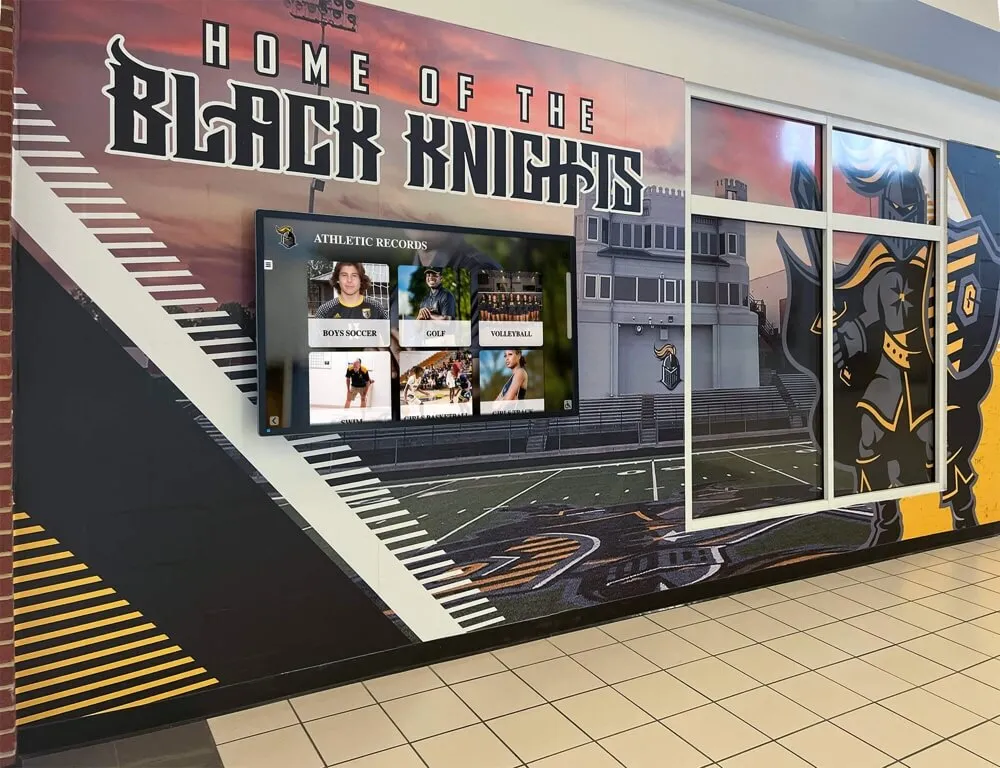
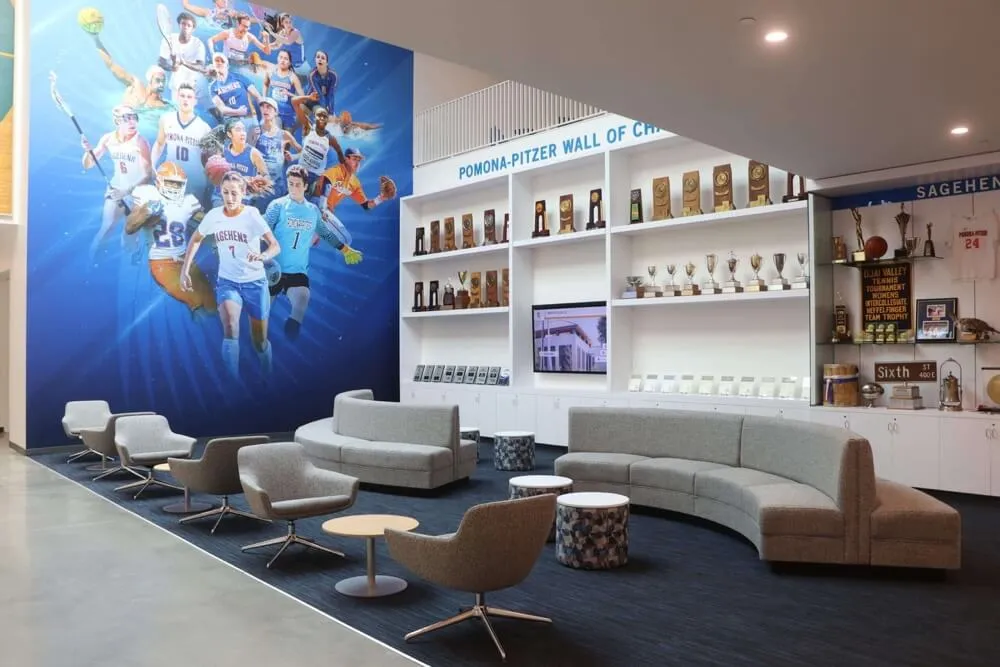
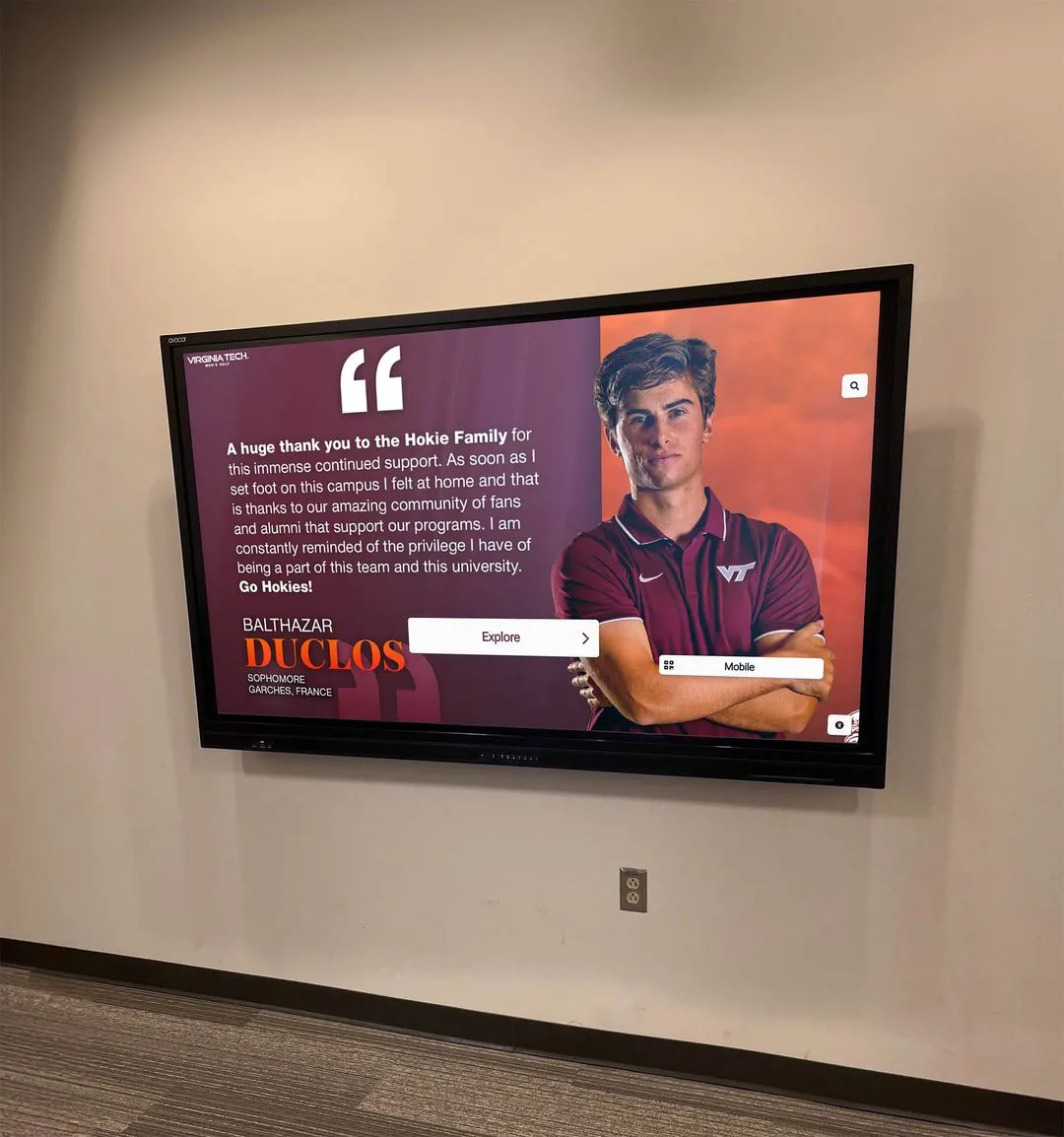
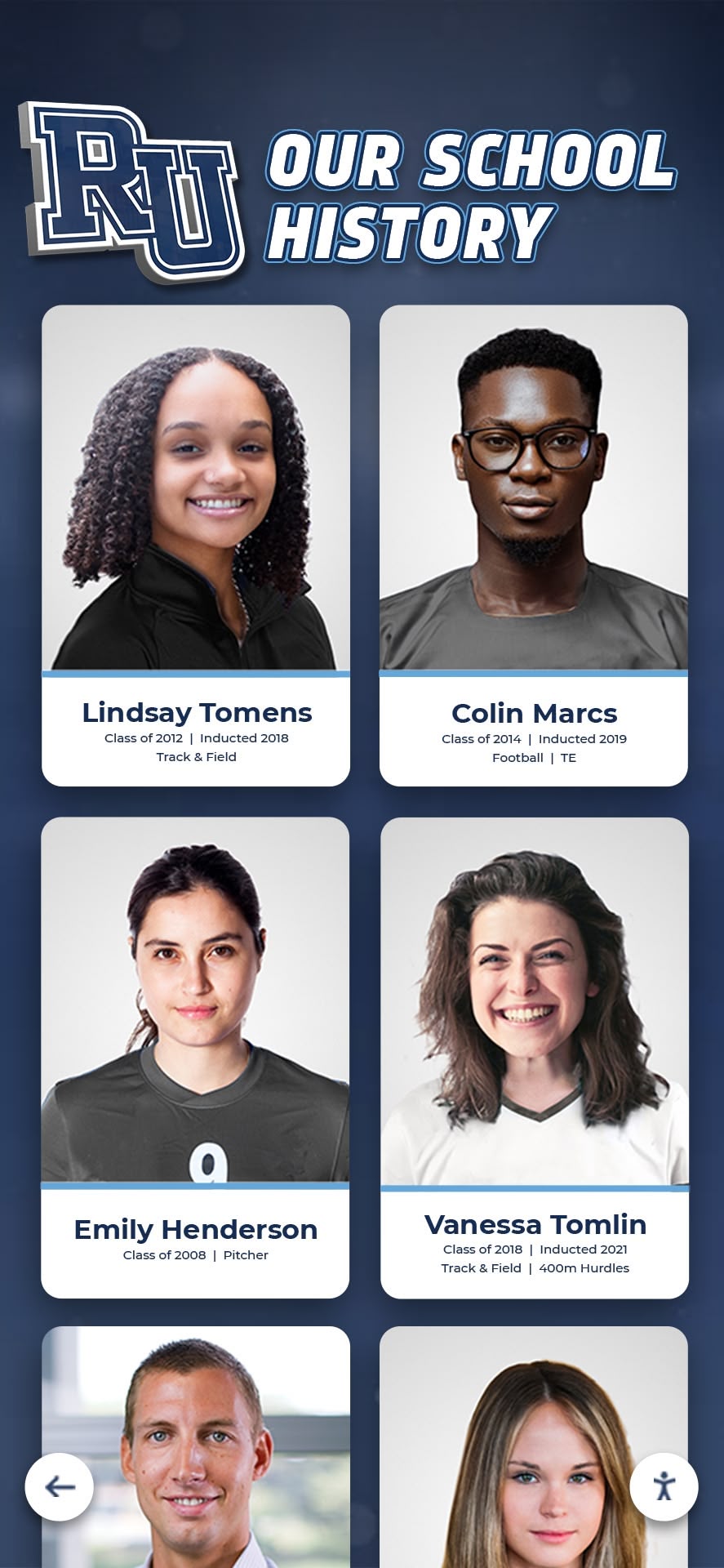
Historical athlete portrait records become searchable assets only when OCR accuracy quality control confirms that names, dates, and achievement data are correct before publication
Why Athletic Archives Demand Stricter OCR QC Than General Documents
Standard OCR quality benchmarks — often cited as 99% character accuracy — sound reassuring until you apply them to athlete data. A 1% character error rate in a 500-word feature article produces roughly five misread characters, most of which a reader corrects mentally while reading. A 1% error rate applied to a roster of 200 names statistically produces two wrong names — names attached to specific people whose records, search results, and display appearances all carry the mistake forward.
Athletic archive material compounds this challenge in three ways.
Names are non-negotiable. A body text error is an annoyance. A name error is an inaccuracy affecting a real person’s documented history. Coaches, athletes, and parents checking whether a player appears in the school’s historical record will find the error instantly — and lose confidence in the entire archive.
Sports statistics are structured data. Rosters, record books, and box scores contain numbers that have relationships to each other. A transposed digit in a season scoring record or a misread jersey number invalidates a data point that may be the only existing record for that achievement. Unlike prose text, there is no surrounding context to catch the error.
Game programs use non-standard typography. Programs from the 1970s through the 2000s routinely used condensed fonts, reversed-out type (white text on dark backgrounds), and tables with minimal white space — conditions that cause OCR engines to underperform even when the source material is in good physical condition.
These characteristics explain why athletic archive OCR accuracy quality control requires its own sampling methodology, separate from the general quality checks applied to yearbook body text or administrative documents.
The Four Material Types and Their QC Priorities
Effective QC starts by categorizing source materials before sampling begins. Each category has different error risks and different tolerance thresholds.
Yearbook Athletic Sections
Yearbook sports sections contain team portraits, individual action photos, caption text identifying players, season summary paragraphs, and award callouts. OCR errors in caption text — “John Smyth” rendered as “John Smoth” — are the most consequential because captions directly tie names to images in the archive index.
QC priority: 100% review of all portrait caption labels in sports sections; statistical sampling for body text paragraphs.
Printed Game Programs
Game programs are among the most typographically challenging materials in an athletic archive. Roster tables often use very small point sizes, headers use reversed-out or colored type, and programs from earlier decades may have been photocopied from originals rather than printed professionally — giving OCR engines a degraded second-generation image to read.
QC priority: Full review of all roster tables; sampling of narrative sections; pay particular attention to jersey number columns, which OCR frequently confuses with other numerals.
Standalone Rosters and Record Books
Departmentally maintained rosters and athletic record books are often typed on typewriters or produced in early desktop publishing systems, giving them relatively clean typography — but they may also have been annotated by hand, which OCR engines typically cannot read reliably.
QC priority: Full review of any section containing handwritten annotations; statistical sampling for typed sections.
Media Guides and Press Materials
Media guides typically contain the most comprehensive athlete statistical records in a school’s archive — season records, career totals, and historical program milestones. Their structured tables and dense statistical content make them high-value but error-prone.
QC priority: 100% review of statistical tables and record sections; sampling for biographical text.
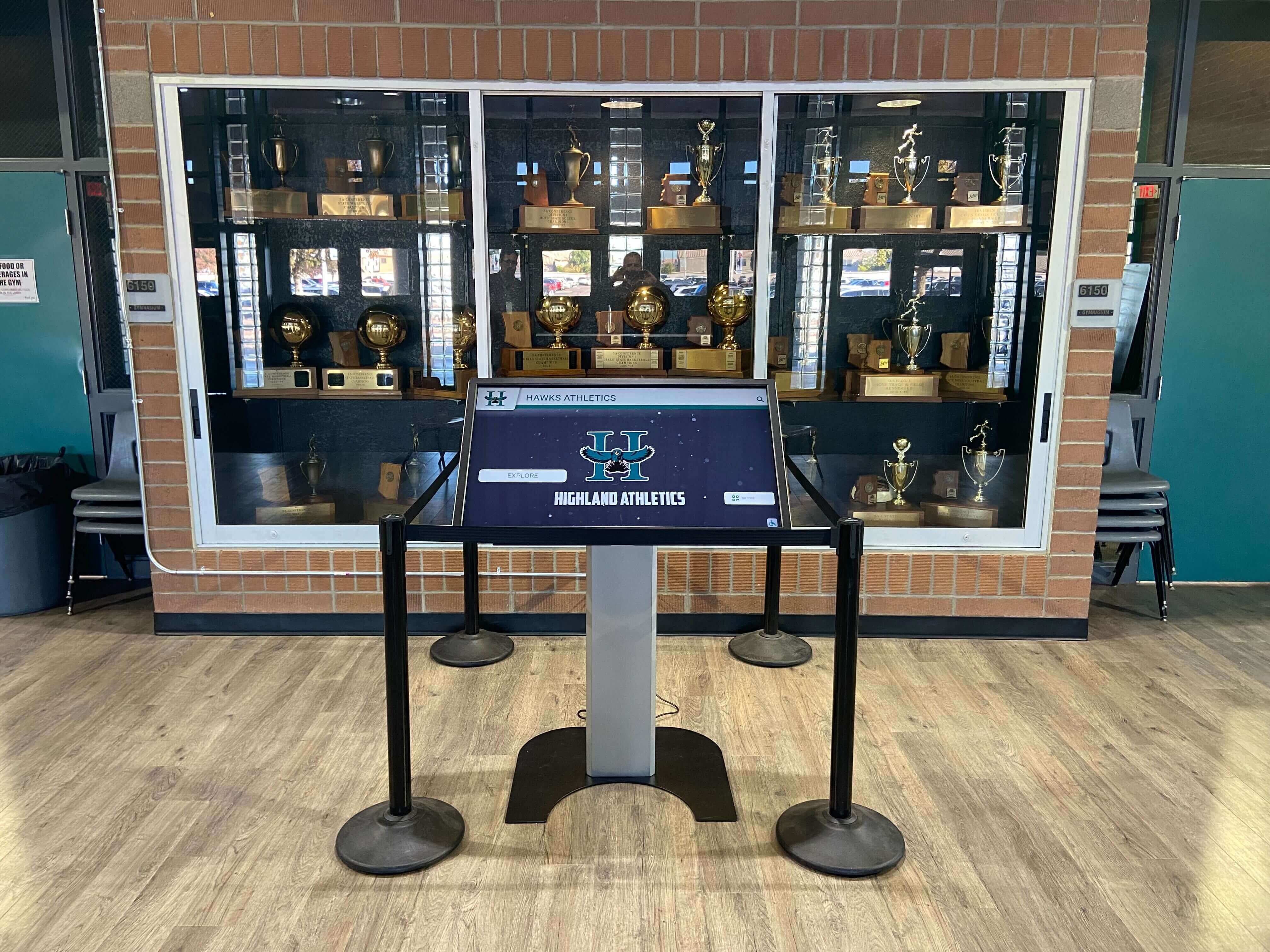
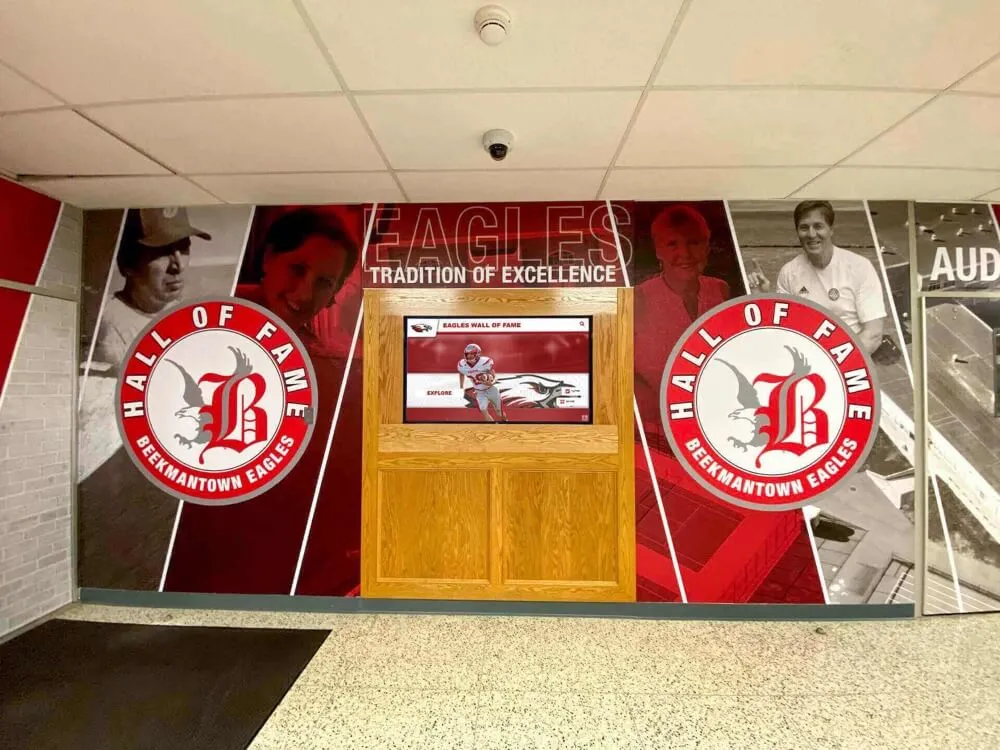
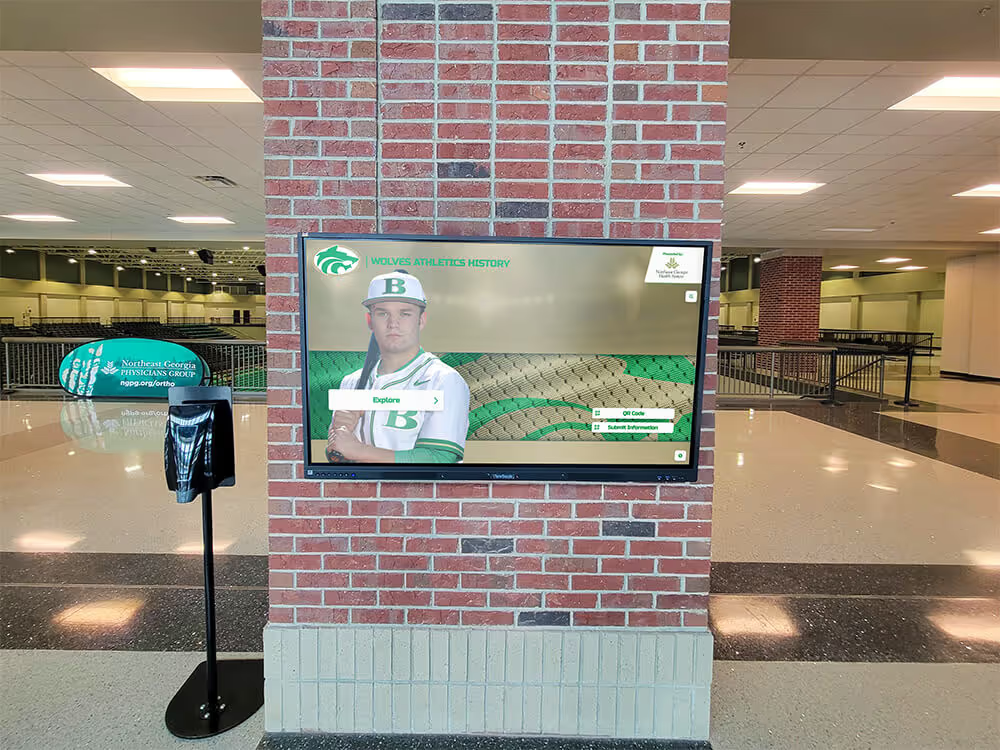
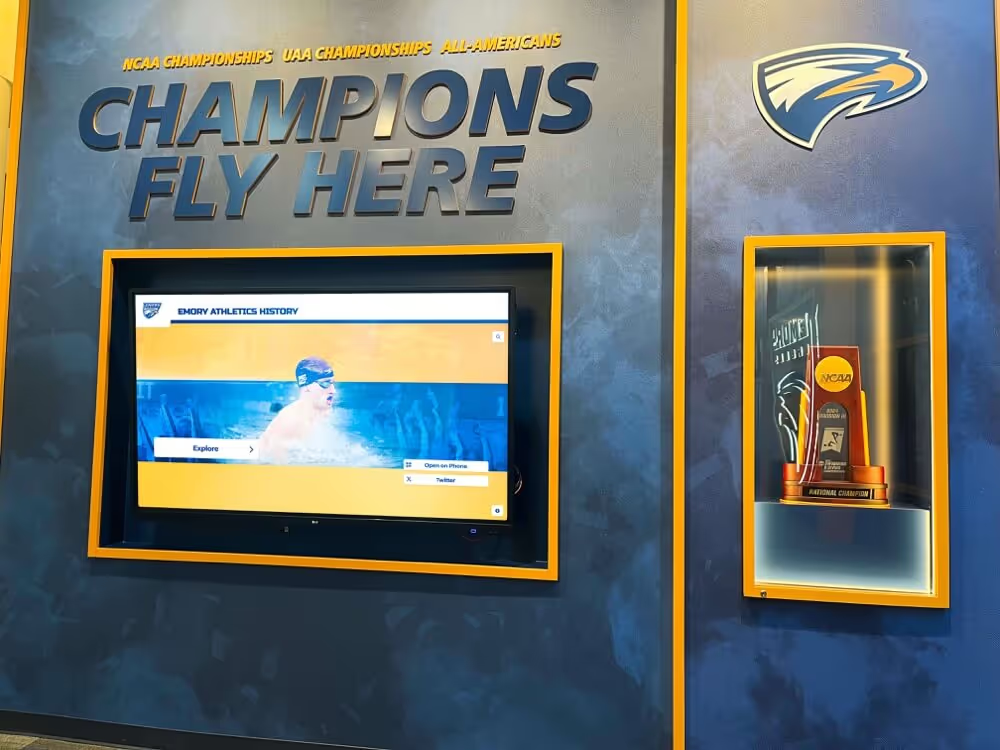
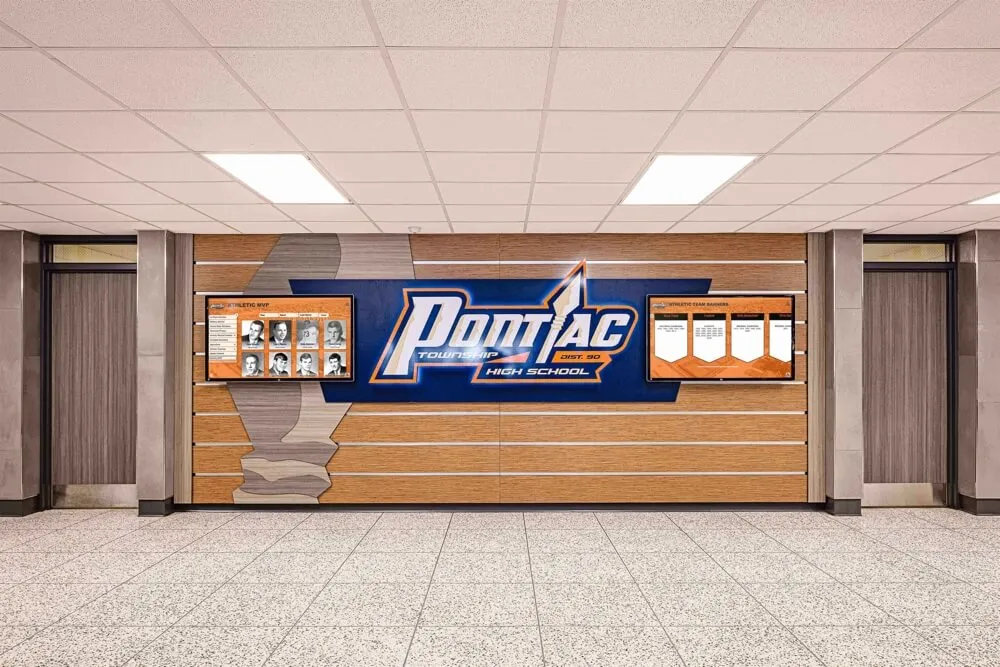
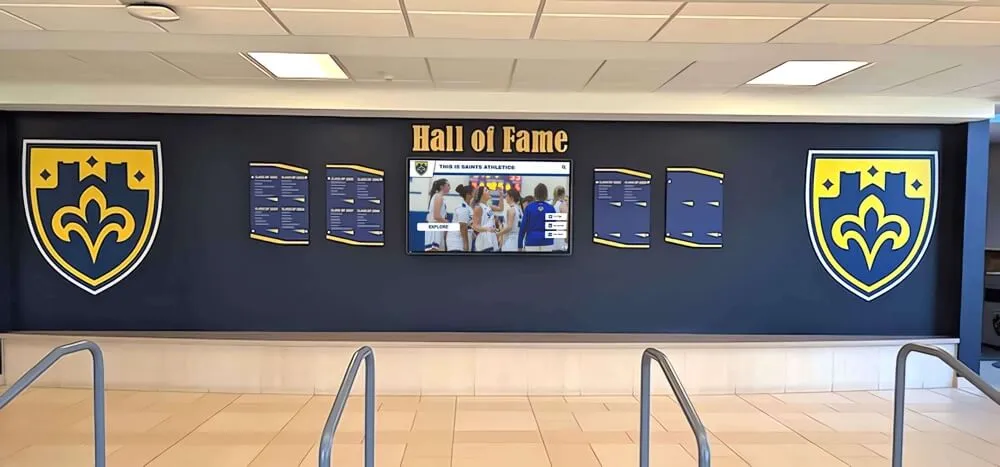
Touchscreen displays in trophy case areas draw directly from OCR-indexed archive data — making QC accuracy essential before any display goes live with athlete names and records
Building Your Sampling Plan
A statistically sound sampling plan gives you confidence in the accuracy of the full collection without requiring page-by-page manual review of every document. The plan has three components: sample size, stratification, and acceptance criteria.
Sample Size by Collection Size
Use this table to set your minimum sample per material category:
| Collection Size (pages per category) | Minimum Sample Size | Notes |
|---|---|---|
| Under 100 pages | 100% review | Full review is practical at this scale |
| 100–500 pages | 50 pages or 20%, whichever is larger | Stratify across decades |
| 500–2,000 pages | 100 pages or 15%, whichever is larger | Stratify by decade and document type |
| 2,000–10,000 pages | 200 pages minimum | Stratify by decade, document type, and condition tier |
| Over 10,000 pages | 300 pages minimum | Add oversampling for high-risk material types |
Name-dense sections — roster tables, portrait caption grids, name index pages — should always be oversampled relative to narrative text sections, regardless of total collection size.
Stratification: Why Random Sampling Alone Is Not Enough
Pure random sampling tends to underrepresent high-risk material. A random draw from 500 pages of mixed yearbook content might return a sample composed primarily of body text paragraphs, missing the portrait caption grids that carry the highest name-error risk.
Stratify your sample to guarantee coverage of:
- Each decade in the collection — OCR accuracy typically degrades with document age; older materials need proportionally higher sampling rates
- Each material type — yearbook sections, programs, rosters, and media guides each have different error profiles
- Each condition tier — documents rated as “good,” “fair,” and “poor” based on physical assessment should each appear in the sample
- Specific high-risk formats — reversed-out type, condensed fonts, tables with minimal white space, and pages with handwritten annotations
A stratified sample of 150 pages across five decades, three material types, and three condition tiers will reveal far more about overall accuracy than 150 randomly selected pages from a single decade of programs.
Acceptance Criteria: Setting Thresholds Before You Start
Set your accuracy thresholds before reviewing the sample — not after. Choosing thresholds after seeing results introduces unconscious bias toward accepting whatever errors were found.
Recommended thresholds for athletic archive OCR quality control:
| Content Type | Character Accuracy Target | Name Accuracy Target | Action Below Threshold |
|---|---|---|---|
| Portrait caption names | 99.5%+ | 99%+ | Full re-review of all caption labels |
| Roster table names | 99.5%+ | 99%+ | Full roster review and correction |
| Roster table numbers | 99%+ | N/A | Full roster number review |
| Statistical records/tables | 99%+ | N/A | Full table review |
| Body text / narrative sections | 97%+ | N/A | Additional sampling; targeted correction |
| Back-of-book name indexes | 99.5%+ | 99%+ | Full index review |
When any sampled section fails its threshold, the standard response is to escalate from sampling to full review for that section across the relevant portion of the collection. A failed roster sample from 1990s programs means all roster tables from that era get full human review — not just the sampled pages.
How to Conduct the QC Review
Sampling defines what you check. The review process defines how you check it.
Side-by-Side Comparison
The most reliable QC method is direct comparison between the OCR output text and the original scanned image, displayed side by side on screen. The reviewer reads the OCR text while looking at the original page, marking any discrepancy.
Most professional OCR platforms and document management systems offer a built-in verification interface that displays the recognized text alongside the source image. If your workflow lacks this, a split-screen comparison between the PDF text layer and the original scan accomplishes the same goal at the cost of more manual setup.
Error Logging
Every error found during review should be logged, not just corrected in isolation. An error log that records the document type, decade, page, error type, and original versus corrected text allows you to:
- Calculate character and name accuracy rates for each material category
- Identify systematic error patterns (e.g., a specific font causing consistent misreads)
- Determine whether a failed sample requires full-section escalation
- Document the QC process for institutional records
A simple spreadsheet captures all the necessary fields. The log becomes your evidence that the QC process was completed and what it found.
Error Categorization
Categorize errors rather than simply counting them. Four error types are common in athletic archive OCR, each with different implications:
Substitution errors — one character is replaced by another (e.g., “rn” read as “m,” “l” read as “1”). These are the most common OCR errors and affect both name and numeric data.
Deletion errors — a character is dropped (e.g., “Williams” becomes “Wiliams”). More likely with faded ink or low-contrast conditions.
Insertion errors — an extra character is added (e.g., “Smith” becomes “Smirth”). Often caused by noise in the scan being interpreted as punctuation or characters.
Segmentation errors — words or data fields are merged or incorrectly split (e.g., a jersey number and a name being read as a single string). Particularly common in tightly spaced roster tables.
Tracking error type distribution tells you whether the problem is with the source material, the scan quality, or the OCR engine configuration — information that changes the remediation approach.
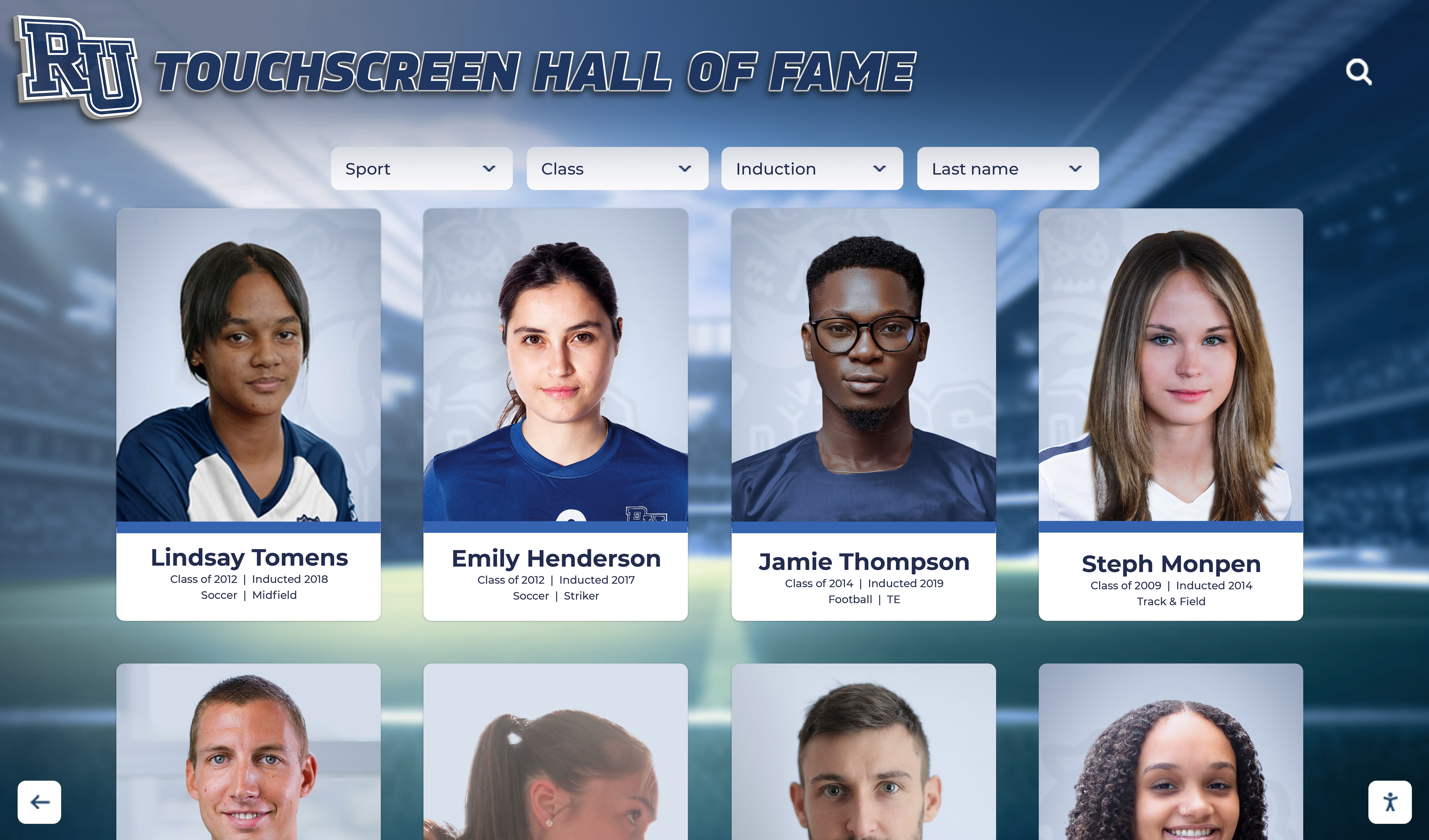
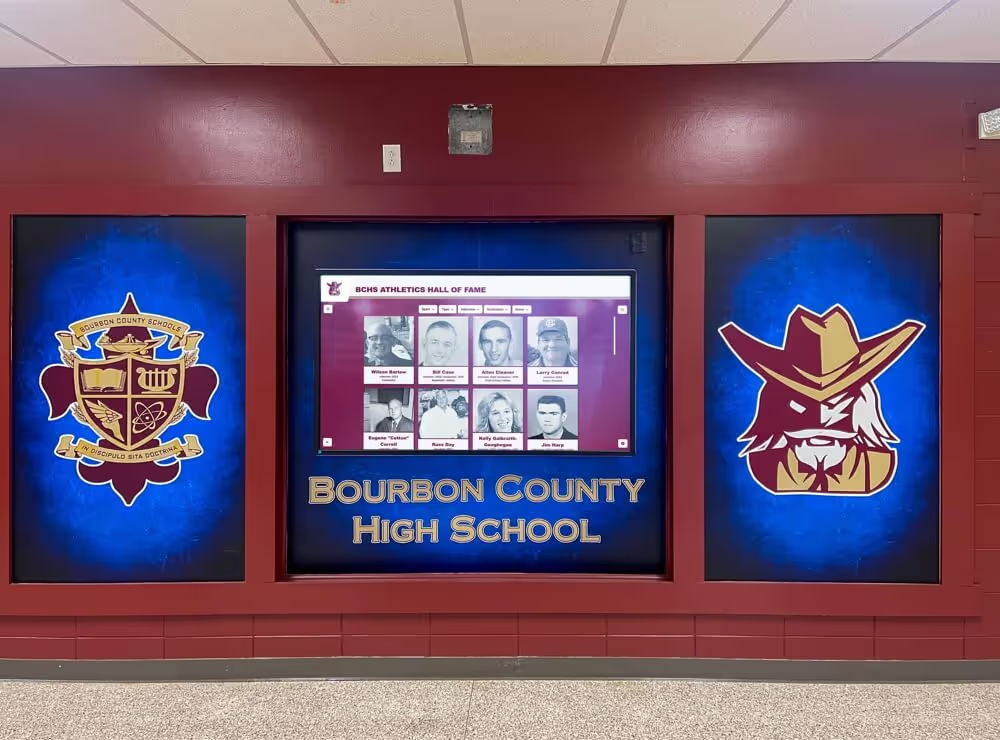
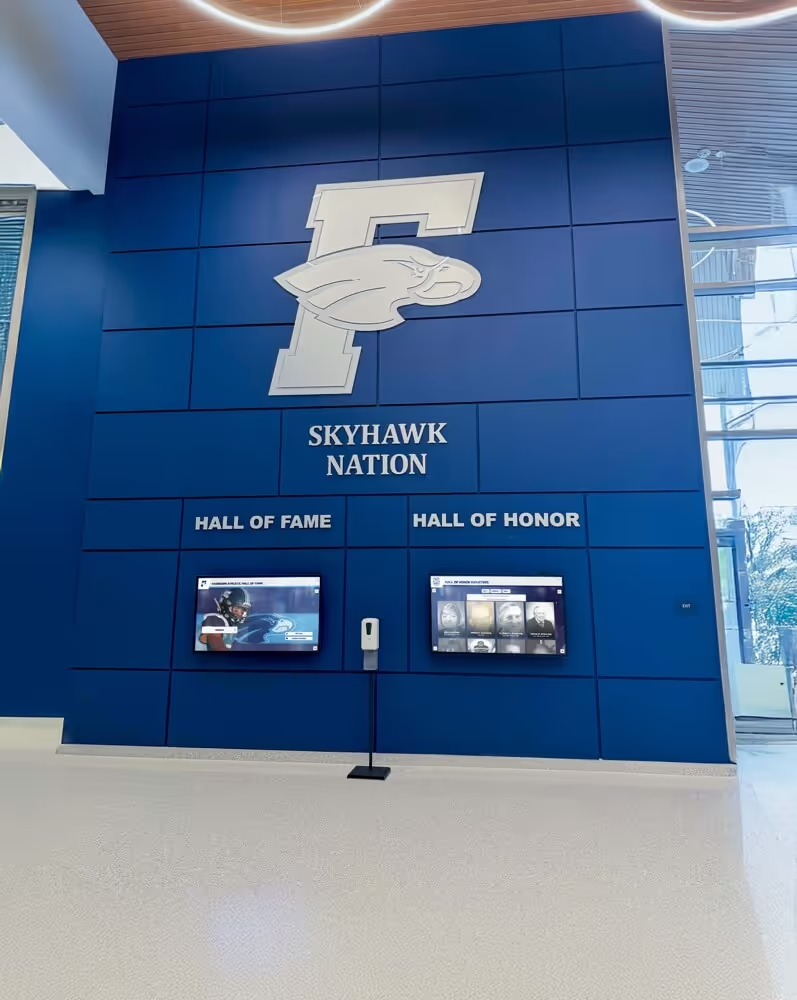
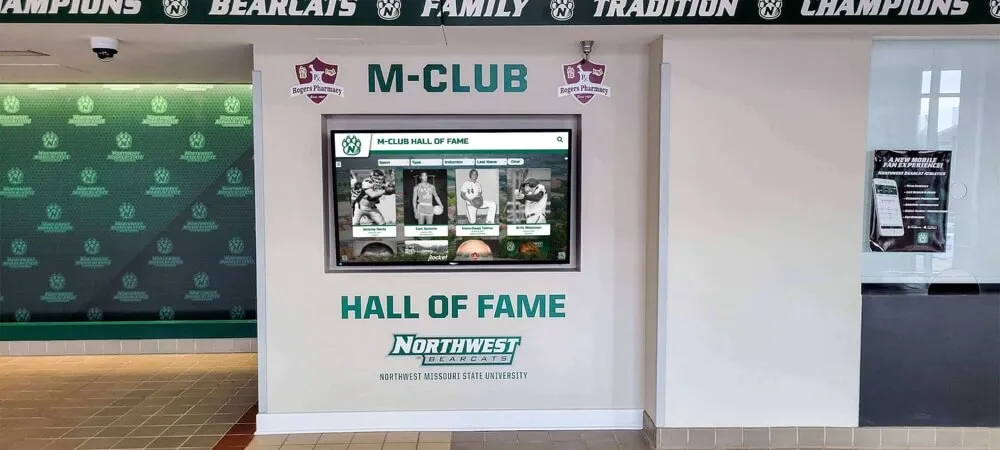
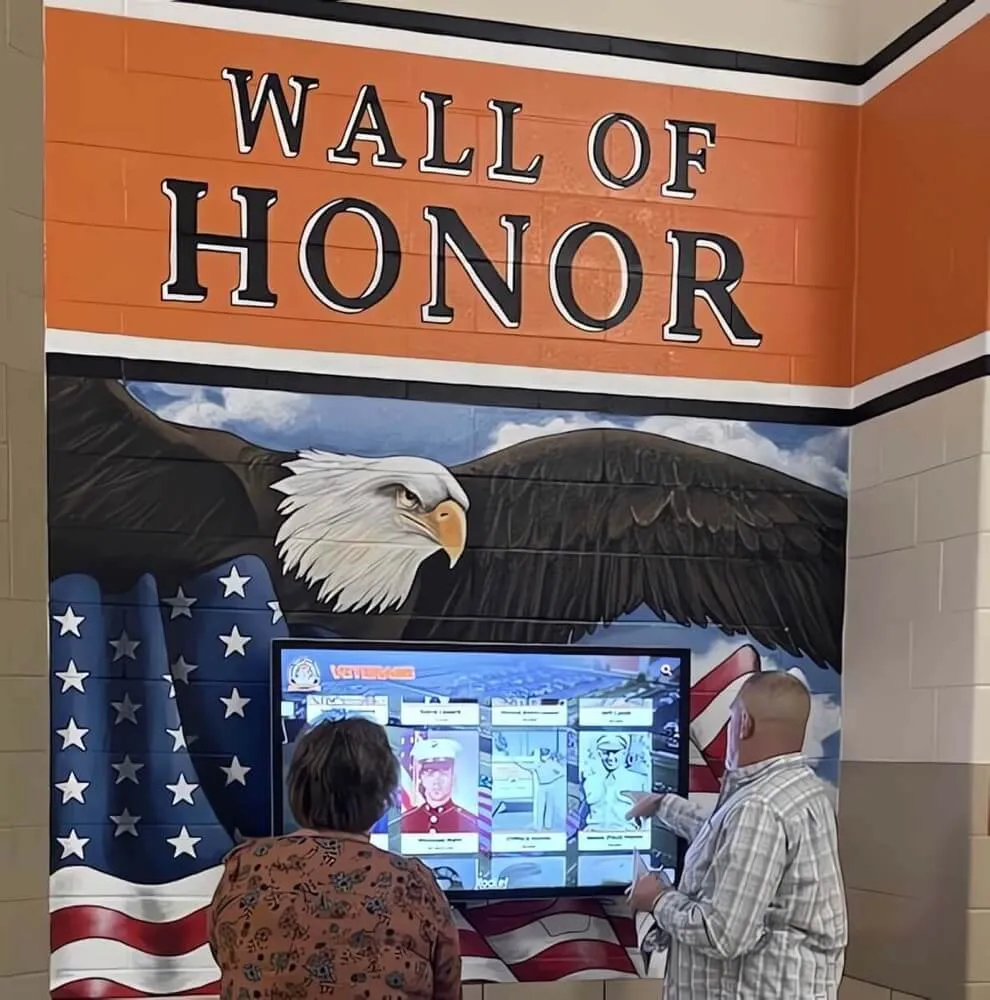
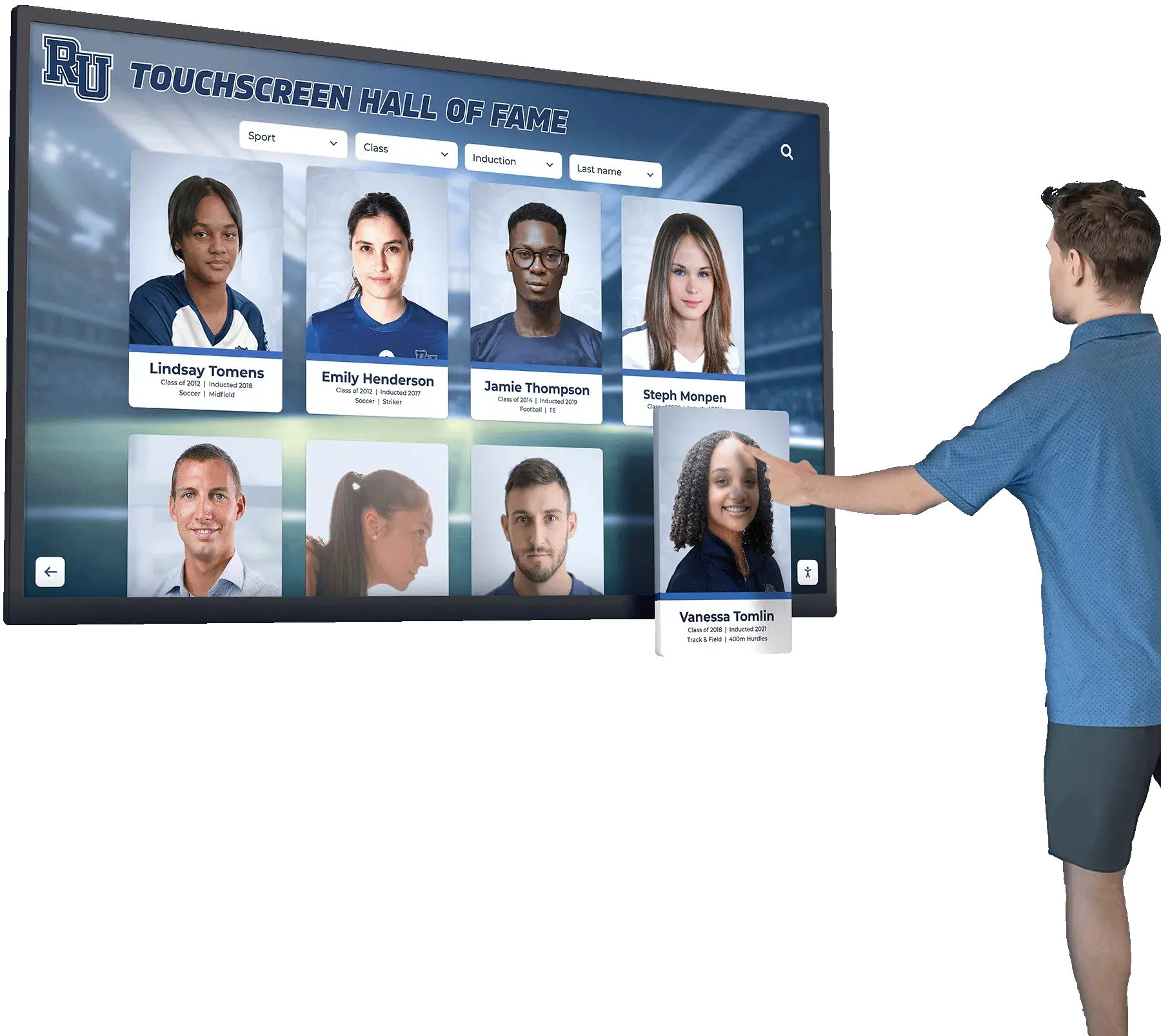
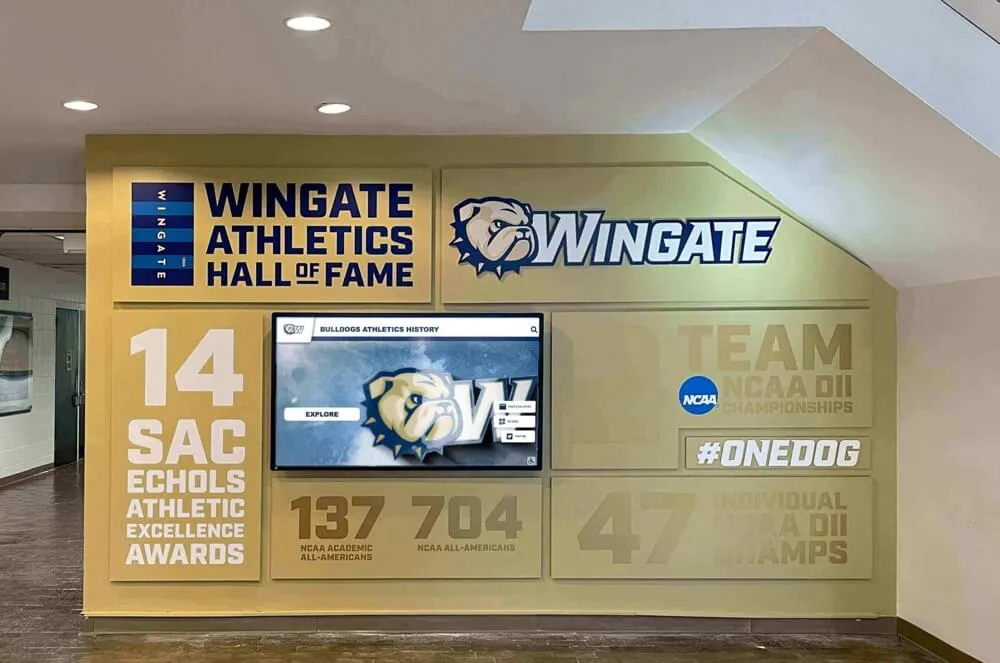
Every name displayed on an interactive hall of fame touchscreen traces back to OCR output — accuracy quality control is what ensures a celebrated athlete's record is spelled correctly and associated with the right years
QC Workflow: From Sample to Corrected Archive
A complete athletic archive OCR quality control workflow moves through five stages. Sequence matters — later stages build on the outputs of earlier ones.
Stage 1: Pre-QC Material Assessment
Before sampling, assess and tier the collection by material age, physical condition, and format complexity. This assessment guides stratification decisions and flags materials that need OCR re-runs or special handling before QC begins.
Flag materials for pre-QC re-processing if they show:
- Reversed-out type (white on dark backgrounds) with poor contrast
- Handwritten annotations mixed with typed text
- Physical damage affecting OCR input quality (tears, water damage, foxing)
- Unusual fonts or layouts outside standard OCR training data
Re-running OCR on flagged materials with adjusted settings or pre-processing corrections before QC begins saves time compared to correcting errors after the review.
Stage 2: Structured Sampling
Execute the sampling plan: select pages according to your stratification criteria, gather the source images and corresponding OCR text output, and assign review batches to qualified reviewers.
Use the same person for related batches when possible. A reviewer who spends time with 1990s football program rosters develops pattern recognition for the common errors in that specific format — making their subsequent reviews in that batch faster and more accurate.
Stage 3: Side-by-Side Review and Error Logging
Reviewers compare OCR output against source images page by page, logging every discrepancy. At this stage, errors are logged but not yet corrected — the full log is needed before calculating accuracy rates and making escalation decisions.
Apply the same review standards consistently across all reviewers. If multiple people are conducting reviews simultaneously, brief them on error categorization criteria and review a calibration batch together before independent review begins. Calibration prevents one reviewer applying different standards than another, which invalidates the accuracy calculations.
Stage 4: Accuracy Calculation and Escalation Decisions
With the error log complete, calculate accuracy rates for each material category and stratification tier. Compare against your pre-set thresholds to determine which sections pass and which trigger escalation to full review.
Document every escalation decision with its rationale. This record demonstrates due diligence and helps future projects set more precisely calibrated thresholds based on actual outcomes.
Stage 5: Correction and Verification
Apply corrections to OCR output, verify that corrections were applied accurately, and log the corrected state. For sections that underwent full review due to failed sampling, a second-pass spot-check on a small subset of the corrected output confirms that the correction process itself did not introduce new errors.
The booster clubs and administration teams that maintain clear audit trails for their athletic programs — including the kind of rigorous financial oversight described in booster club segregation of duties frameworks — will recognize this pattern: independent review of consequential data, documented thresholds, and a verification step after correction is not bureaucracy. It is the process that makes institutional records trustworthy.
Special Considerations for Specific Material Types
Roster QC: Jersey Numbers and Name–Number Pairing
Rosters present a specific QC challenge beyond name accuracy: verifying that jersey numbers are correctly paired with player names. An OCR error that swaps two numbers in a dense roster table may produce two individually plausible jersey numbers while assigning them to the wrong players — an error that neither automated confidence scoring nor cursory review will catch.
QC approach: For full roster reviews triggered by failed sampling, verify the name–number pairing, not just the individual fields. Compare against any available independent source — printed program covers, photographic evidence of jersey numbers, or administrative enrollment records — when pairing accuracy cannot be confirmed from the OCR output alone.
Yearbook Sports Section: Portrait Caption Grid QC
Portrait caption grids in yearbook sports sections pack many small name labels into a structured layout. OCR errors in these grids tend to cluster: a font or print quality issue affecting one row of portraits often affects adjacent rows. If a review reveals errors concentrated in a specific grid section, expand the review to cover the entire page rather than treating adjacent rows as unrelated samples.
QC approach: When portrait caption errors are found in a sampled grid, review the full grid containing those errors. Escalate to full sports-section caption review if errors appear in more than one grid within the sampled pages.
Historical Programs: Reversed-Out Type and Color Backgrounds
Game programs from the 1970s through 1990s frequently used reversed-out roster tables and section headers — white text printed on dark blue, green, or red backgrounds. Standard OCR engines trained primarily on black text on white paper underperform significantly on reversed-out type, and pre-processing tools that invert the image to create dark text on white backgrounds don’t always restore enough contrast for reliable recognition.
QC approach: Treat all reversed-out text as high-risk regardless of the OCR confidence score. Full manual review of reversed-out roster and header sections is appropriate even when the confidence score suggests accuracy — confidence scores for this format type are often misleadingly optimistic.
Athletic recognition events that draw on archive data — including player of the game programs and season-end banquets — depend on accurate historical records. An incorrectly digitized program roster is not an abstract data problem; it is a potential inaccuracy displayed in front of an audience that includes the athletes involved.
Senior Night Programs and One-Off Event Materials
Senior night programs, tournament brackets, and other one-off event materials often exist as single copies in poor condition and were produced with less professional printing than annual yearbooks or season programs. Their OCR accuracy tends to be lower, and they contain names that may not appear in any other digitized document — making each name more critical to get right.
Programs celebrating baseball senior nights or similar milestone events often represent the only surviving printed record of a player’s final appearance in the program — motivation for full manual review rather than sampling.
QC approach: Treat single-copy, one-off event materials as requiring full manual review regardless of collection size. The materials are typically short enough that full review is feasible, and the irreplaceability of the content justifies the time.
OCR QC for Multi-Decade Collections: Managing Scale
Schools digitizing comprehensive athletic archives spanning multiple decades face a scale challenge that sampling alone cannot fully address. A collection of 800 game programs across forty years may pass its overall accuracy threshold while containing an entire decade of substandard OCR caused by a specific printing technology used in programs from that era.
Decade-based trending analysis adds a layer of insight beyond aggregate accuracy rates. Calculate accuracy separately for each decade in the collection and chart the results. A program archive that averages 98.5% accuracy overall but shows 94% accuracy for a specific fifteen-year period has identified a remediation target. That era’s programs need additional attention — whether that means OCR re-runs with adjusted settings, pre-processing improvements, or expanded manual correction work.
Condition-tier correlation produces similar insight. If your pre-QC material assessment tiered documents by physical condition, compare accuracy rates across condition tiers. A clear correlation between condition tier and accuracy rate validates your assessment methodology and identifies which portions of the collection need the most remediation investment.
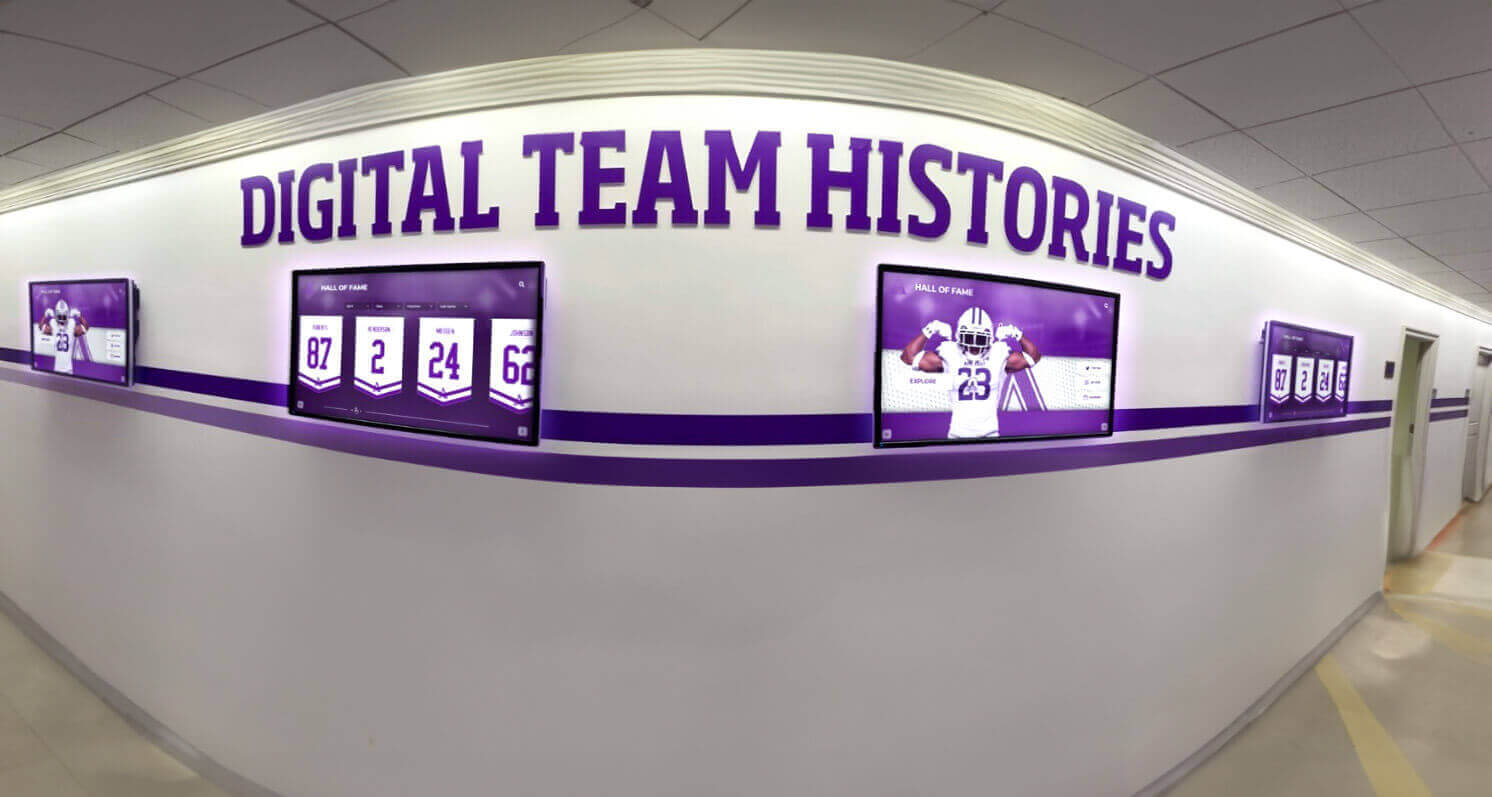
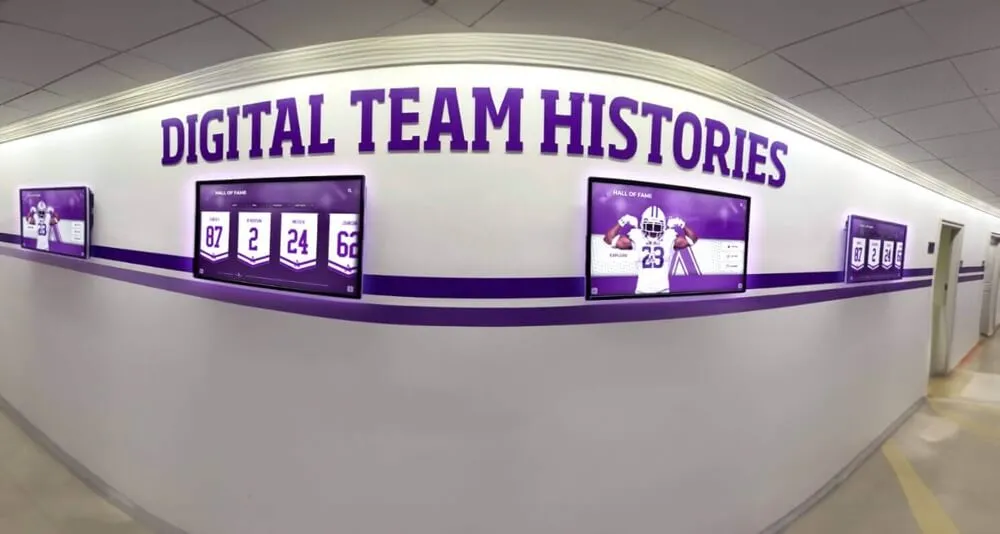
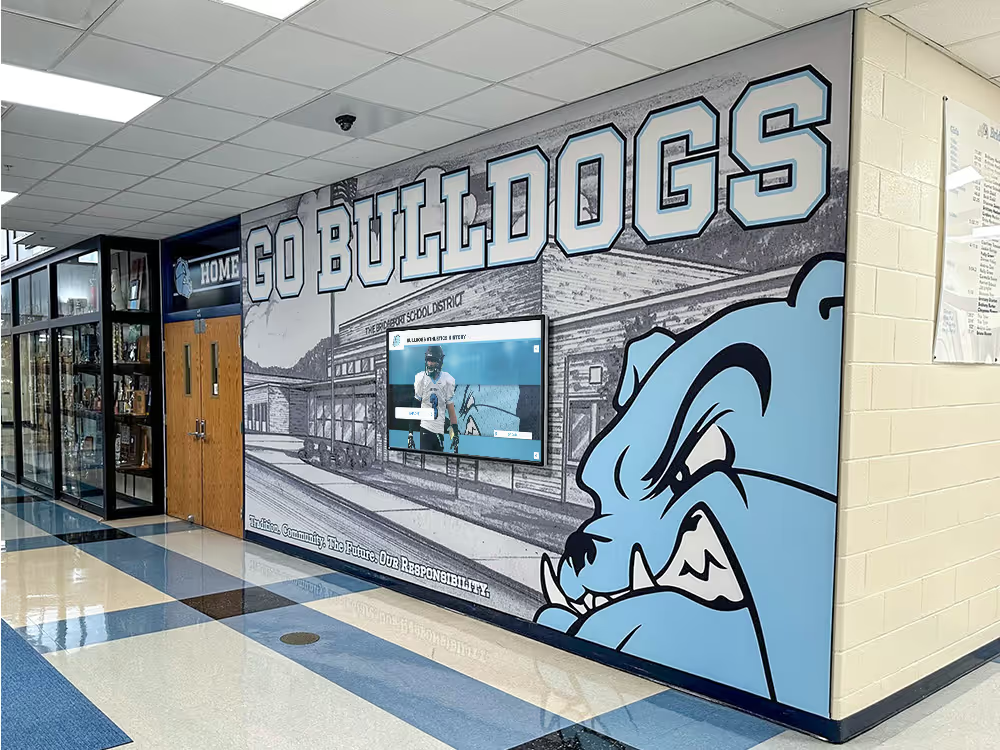
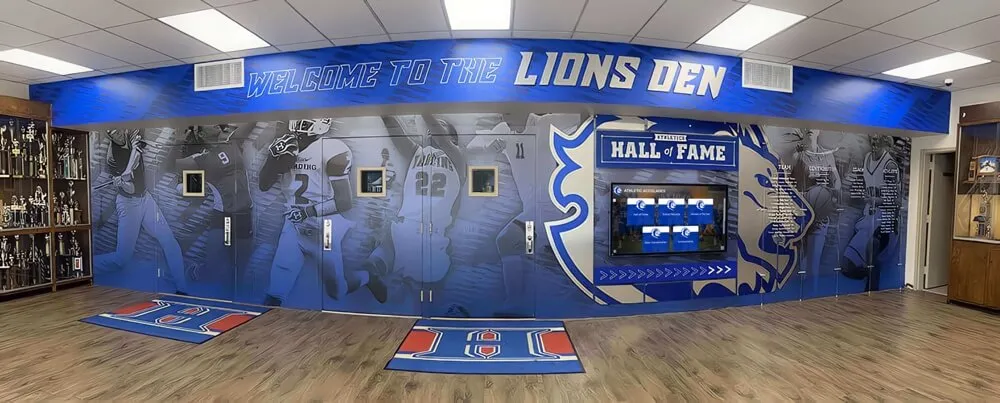
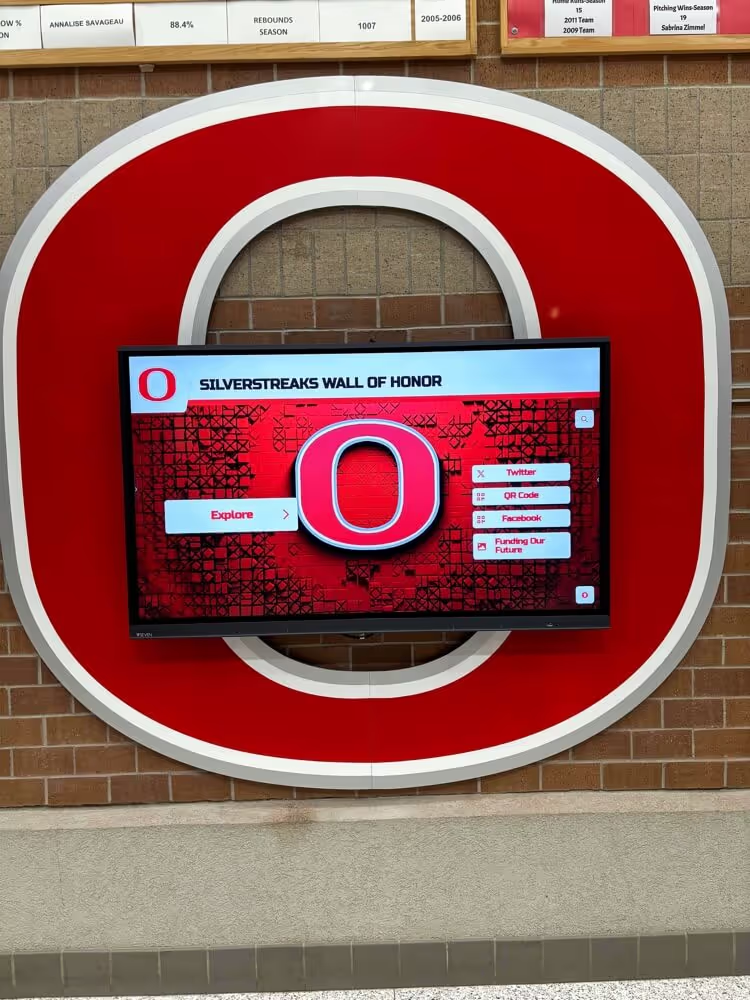
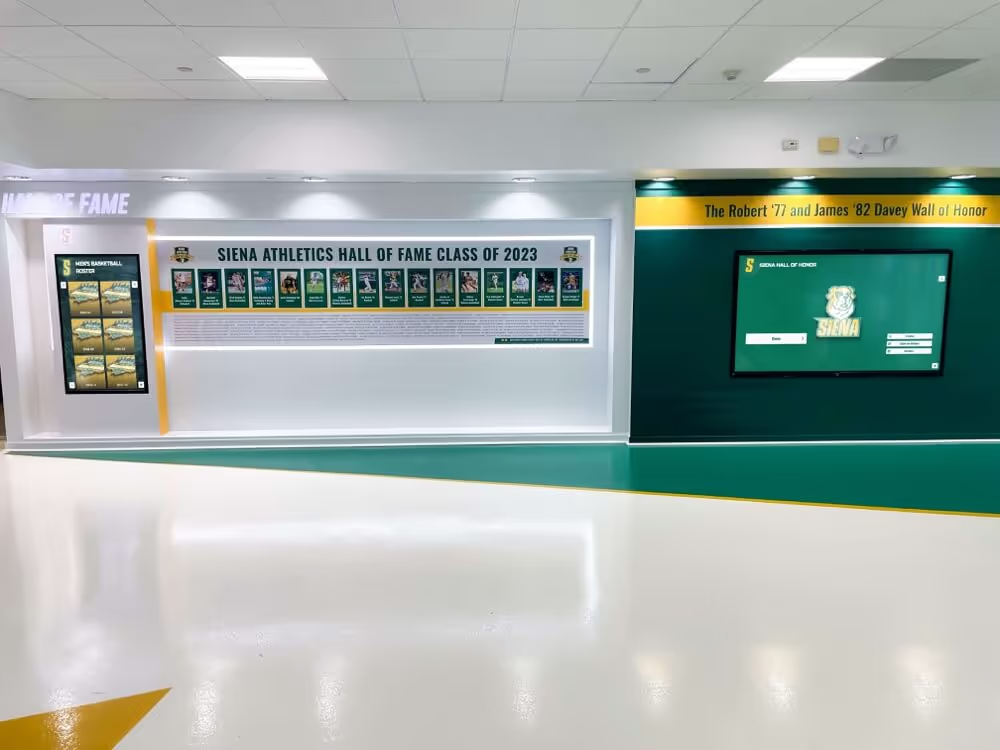
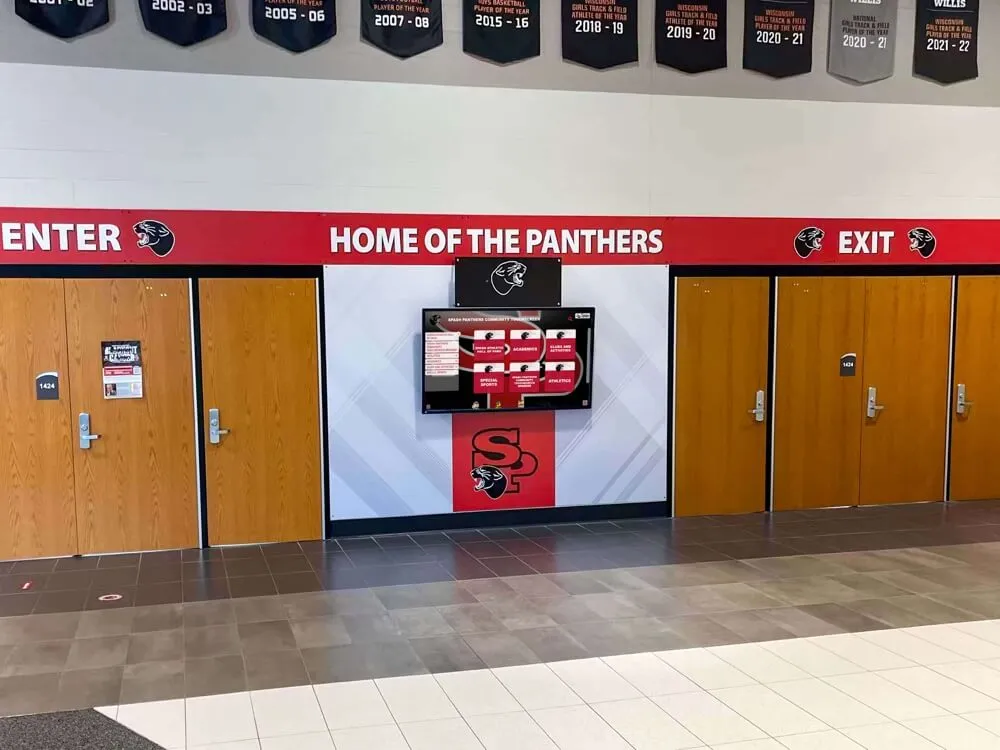
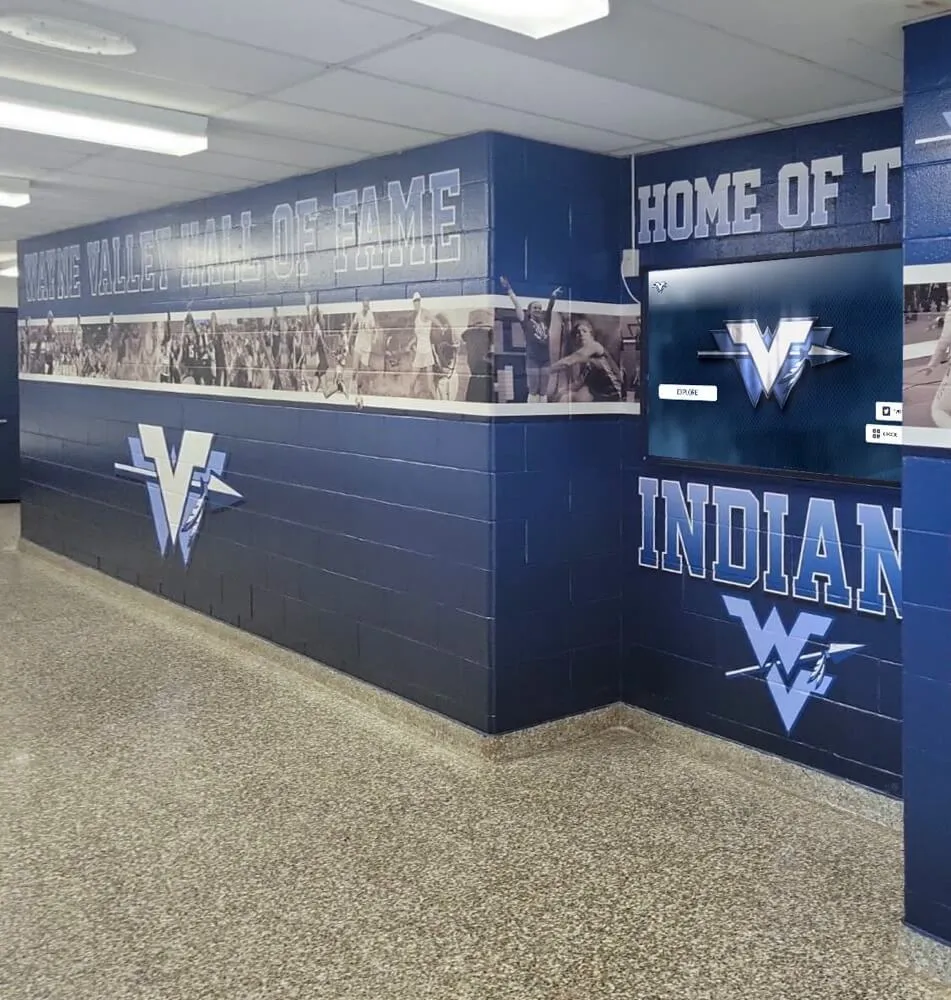
Hallway displays celebrating multi-decade team histories draw on OCR archive data that spans generations — quality control across every decade ensures historical records are accurate regardless of when materials were originally produced
Connecting QC-Verified Data to Recognition Displays
A quality-controlled athletic archive is not an end in itself — it is the foundation for every downstream application that uses that data. The value of rigorous OCR QC compounds over time as more applications draw from the verified source.
Searchable web archives surface in alumni searches, connecting graduates to their documented history without requiring any outreach. When a former athlete searches their own name and finds an accurately rendered yearbook caption or roster listing, the institutional credibility of that archive is established in seconds.
Interactive touchscreen displays in lobbies, trophy cases, and athletics facilities present QC-verified data to visitors, current students, and returning alumni. Errors that slipped through a QC process do not stay in a back-end database — they appear on a screen in a heavily trafficked area in front of people who know the correct information. Basketball touchscreen recognition displays and similar interactive systems depend on source data that has been verified before publication.
Trophy and award archives that display historical glass trophy award recipients or sport-specific achievement records need accurate name-to-achievement associations. An error in the name linked to a state championship record is the kind of visible mistake that erodes trust in an otherwise impressive display.
Development and alumni engagement teams that build donor recognition programs and reunion outreach from athletic archive data — including those using booster club audit-compliant processes to document institutional history — are working from your QC-verified name index. The accuracy of their identification work depends directly on the accuracy of the archive that informs it.
QC Checklist for Athletic Archive OCR
Use this checklist to confirm that quality control is complete before any portion of the archive is published or integrated into a display system.
Pre-QC Preparation
- All source materials catalogued and assigned to material categories
- Physical condition assessment completed; condition tiers assigned
- High-risk formats identified (reversed-out type, handwritten annotations, unusual fonts)
- OCR re-runs completed for flagged high-risk materials
- Accuracy thresholds set for each content type before review begins
- Sample sizes calculated using collection-size guidelines
- Stratification criteria defined covering each decade, material type, and condition tier
Sampling and Review
- Stratified sample drawn per plan
- Calibration batch reviewed with all reviewers before independent work begins
- Side-by-side comparison conducted for every sampled page
- Error log maintained with document type, decade, page, error category, and correction
- Jersey number and name–number pairing verified for all roster content in sample
Accuracy Calculation and Escalation
- Character accuracy calculated per material category
- Name accuracy calculated separately for name-dense sections
- Sections below threshold escalated to full review
- Escalation decisions documented with rationale
- Decade-based accuracy trending analysis completed for multi-decade collections
Correction and Verification
- All corrections applied to OCR output
- Spot-check of corrected sections completed
- Final accuracy rates calculated and documented
- QC log archived for institutional records
Publication Readiness
- No section below threshold remains unreviewed
- Name index completeness verified against independent source when available
- Metadata consistency confirmed across collection
- Archive access model and interface verified before publication
Managing Ongoing QC for Growing Archives
Athletic archives are not static. New materials are added every year — current season programs, annual yearbook sports sections, championship records — and the QC process needs to accommodate ongoing additions without requiring a complete re-review of the existing archive.
Batch processing with QC gates prevents errors from accumulating in newly added materials. Every new batch of scanned and OCR-processed documents should pass its own QC review before being merged into the published archive. The threshold and sampling standards applied to new batches should match those used for the original collection — consistency across time preserves the reliability of the full archive.
Version control for corrections tracks changes to OCR output over time, making it possible to distinguish original OCR output from human corrections. This record is useful when the same source material is later reprocessed with improved OCR technology — the correction history tells you which fields were originally wrong and can be compared against the new output to confirm improvement.
Schools managing comprehensive athletic records — including those that maintain the kind of rigorous booster club financial documentation that supports audits and institutional accountability — will find that an ongoing QC process for digital archives follows the same principle: consistent standards, documented processes, and independent verification of consequential data.

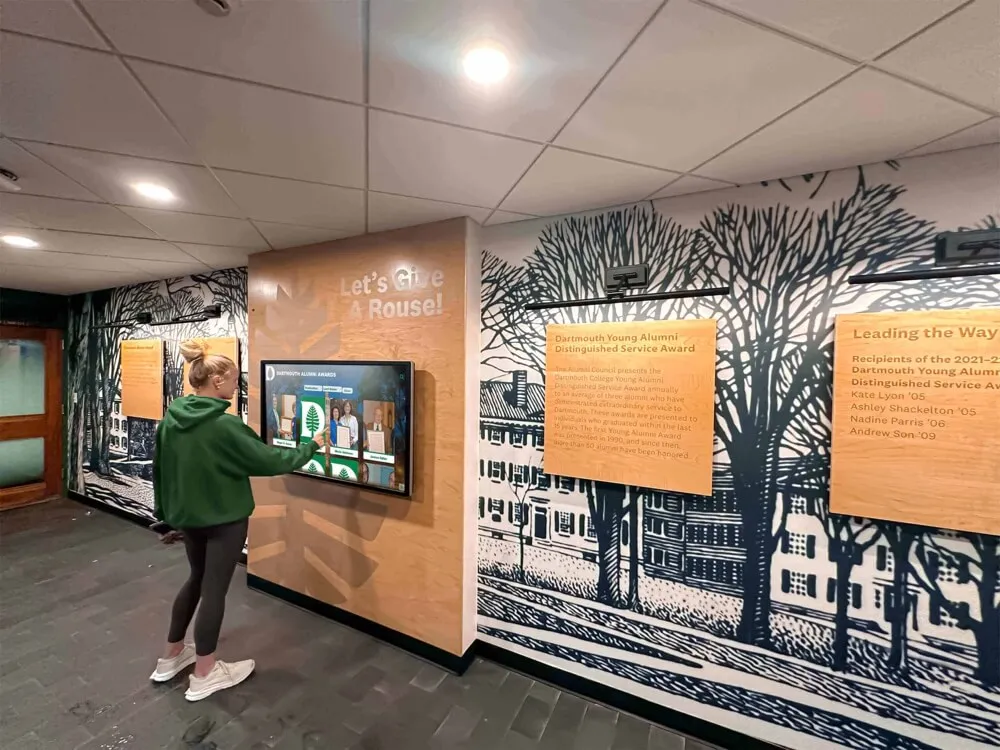
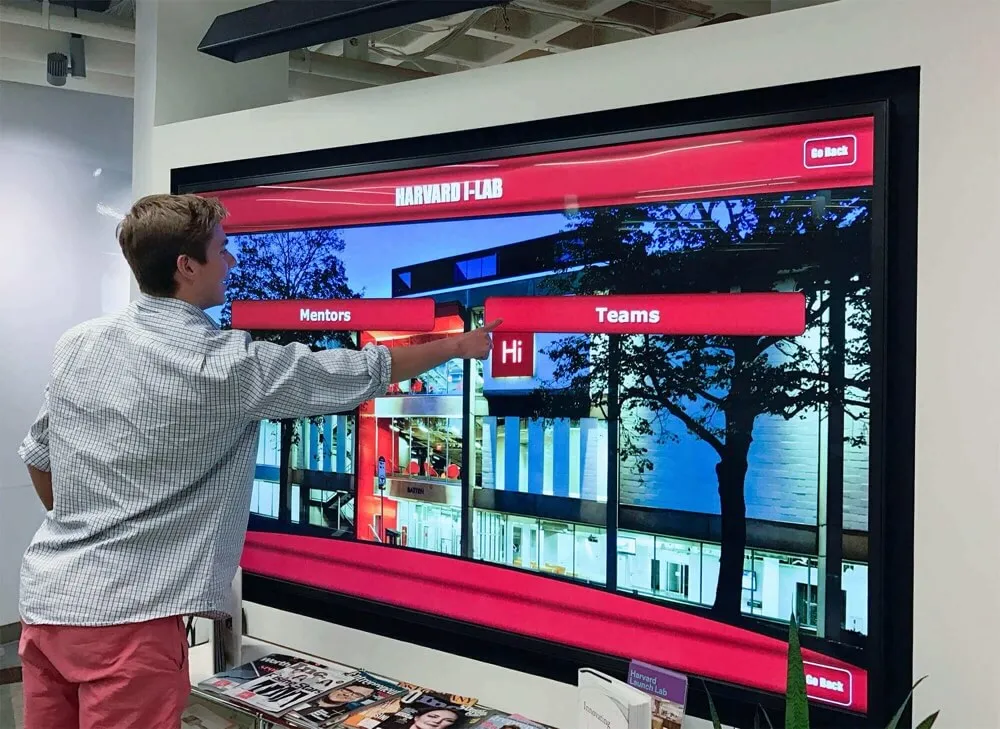
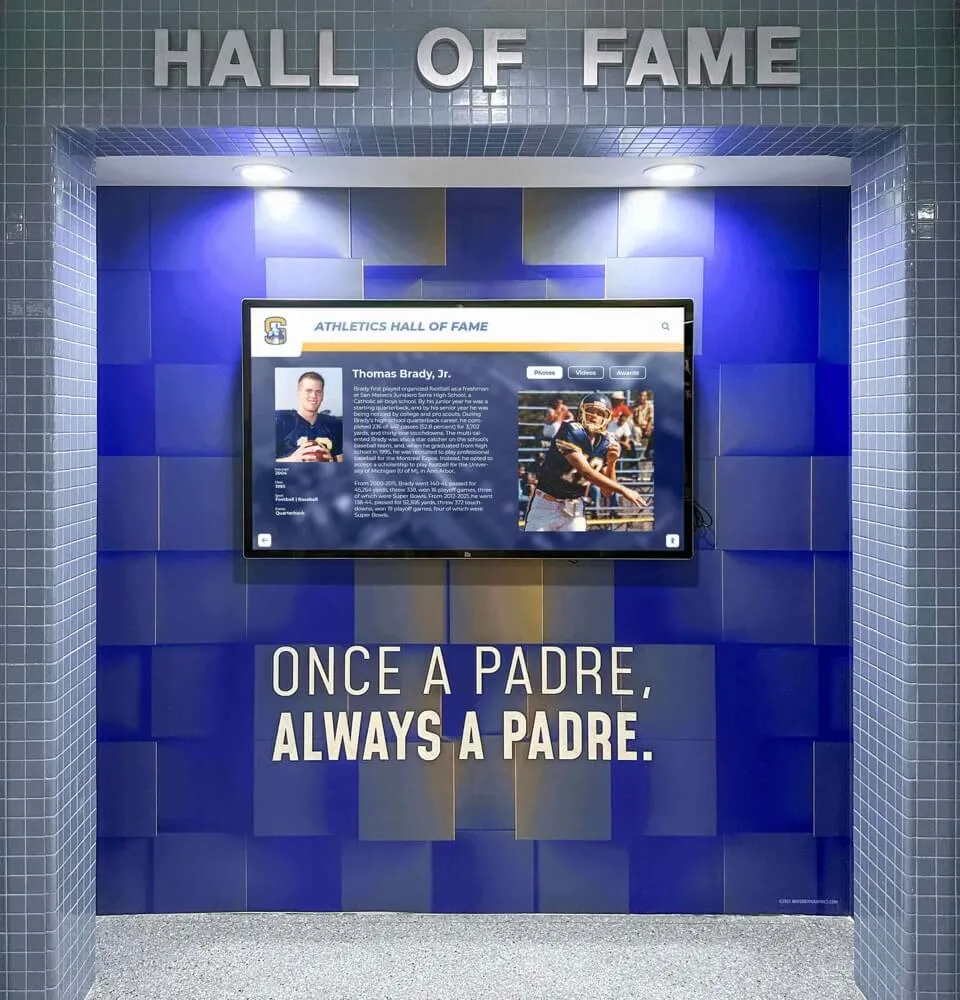
When a visitor selects an athlete's profile on a hall of fame touchscreen, the accuracy of that display depends on the OCR quality control process that verified the name, record, and year data before it was published
From Verified Archive to Living Recognition System
A quality-controlled athletic archive is more than a digital filing system — it is the data infrastructure that makes active, ongoing recognition programs possible. Schools that invest in thorough OCR QC create a verified record of every athlete, coach, and achievement that the institution has documented, spanning every program and every decade in the digitized collection.
That verified record can power a searchable alumni database, an interactive lobby touchscreen, a trophy case display, an athletic hall of fame nomination process, and a development office’s historical research — simultaneously, from the same underlying data. The QC process run once becomes the foundation for every recognition application built afterward.
For athletic directors and archive stewards who want to connect a quality-controlled archive to a live display system without building the integration from scratch, platforms designed specifically for school recognition bring the two sides together: verified archive data flowing into interactive displays that students, visitors, and alumni can explore every day.
Ready to put your verified athletic archive to work?
Rocket Alumni Solutions builds interactive hall of fame displays, searchable athlete archives, and recognition systems that draw directly from your digitized content — so the accuracy work you invest in OCR quality control translates into a display your school can be proud of.