Athletic archive film curl inspection before digitization is the pre-scan assessment process that examines each reel of historic game film for longitudinal and transverse curl — geometric deformation of the film strip caused by uneven dimensional change — and determines whether the reel can be advanced safely through a scanner’s gate and transport mechanism before any scanning attempt begins. When a 16mm or 8mm game reel stored in a school’s equipment closet, gymnasium storage room, or boiler room accumulates curl over decades of exposure to fluctuating temperature and humidity, the film strip no longer lies flat. A curled film strip that cannot maintain consistent, flat contact with a scanner’s film gate causes focus anomalies in captured frames, creates uneven pressure against the gate’s optical surface, and in severe cases prevents the film from threading correctly through the scanner’s transport path at all. As the Image Permanence Institute documents on FilmCare.org, permanent curl — when accompanied by embrittlement — may make a film difficult or impossible to duplicate with a printer or scanner.
This guide gives school athletic directors, AV coordinators, IT staff, and archive volunteers a practical curl inspection workflow for 16mm and 8mm game reels: a direct definition of curl and its types, a numbered inspection procedure, documentation steps using intake photographs, a classification table for routing reels to the correct handling path, scanner transport implications, and the criteria for specialist referral — all distinct from the related pre-scan assessments for shrinkage measurement and perforation damage inspection.
Film curl is one of three geometric conditions that can prevent a historic game reel from being safely scanned — alongside measured shrinkage and perforation damage. Unlike shrinkage, which requires a precision gauge to quantify, curl is a visible, hands-on finding that a school staff member can assess and document during the initial intake of reels before any digitization workflow begins.

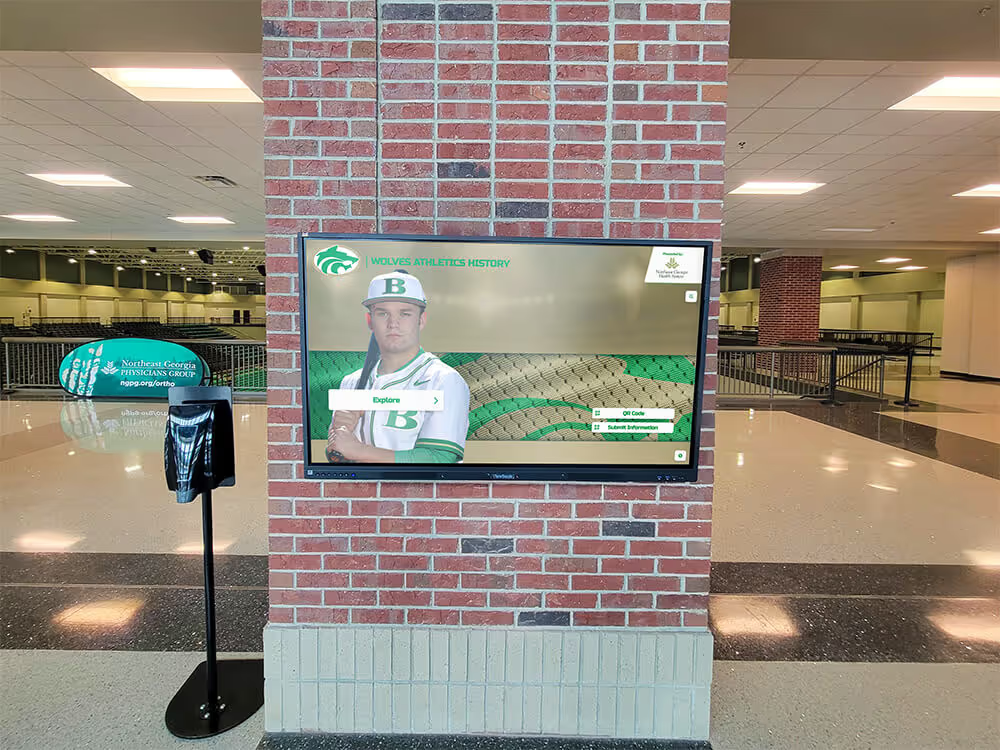
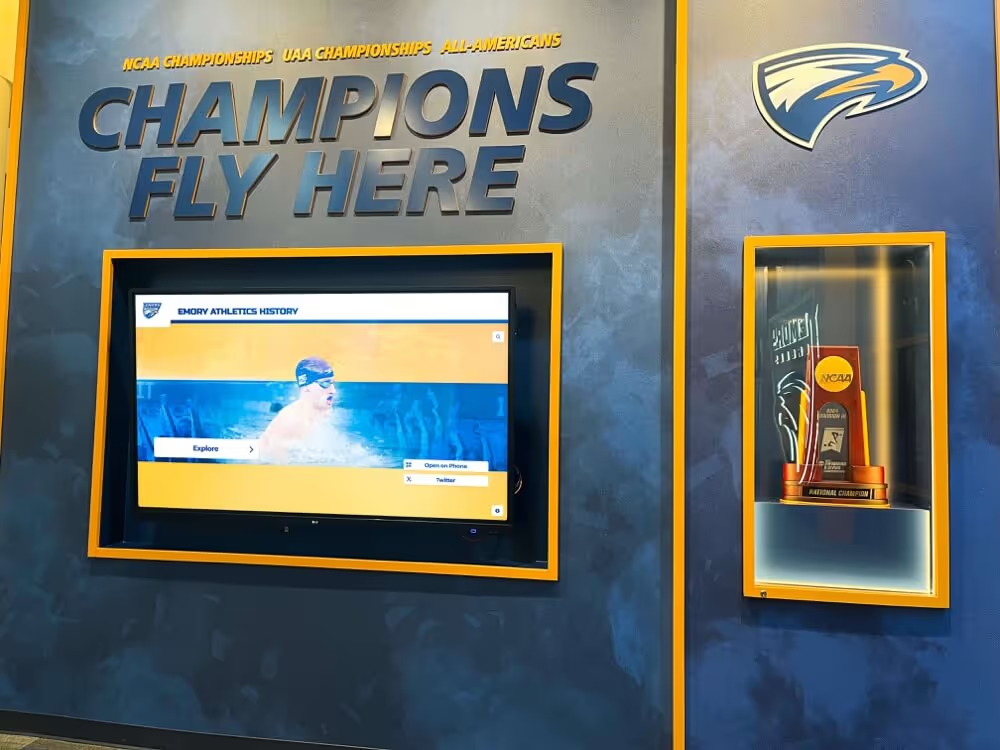
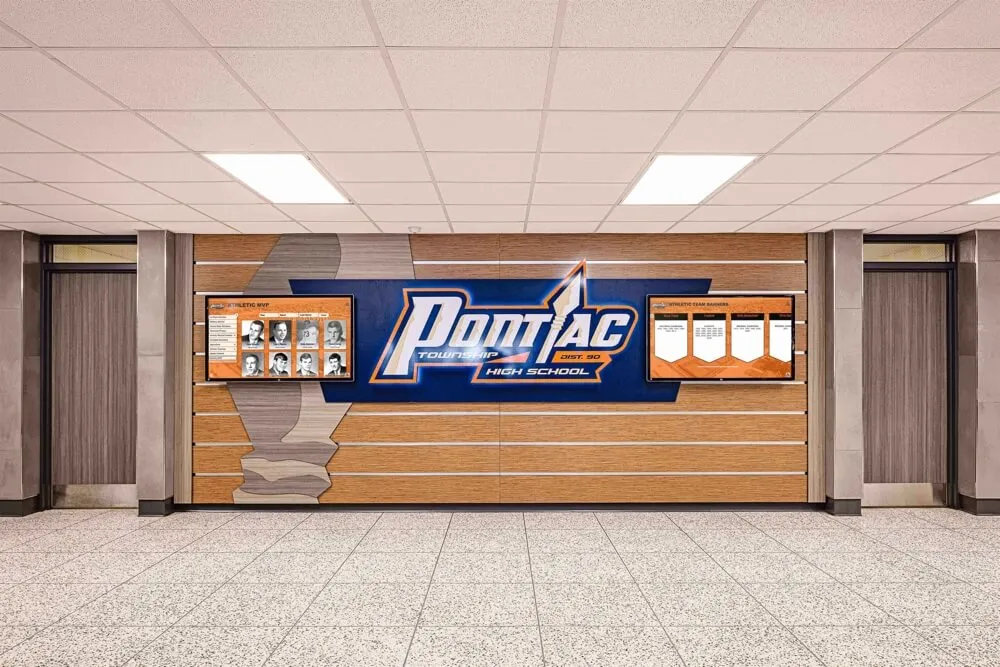
School hallway recognition displays showing athletic records and team history depend on game footage safely recovered from archival reels — curl inspection before digitization confirms each reel can be advanced through a scanner's gate without the flat-contact failures that cause focus errors and transport jams
What Film Curl Is and Why School Athletic Archives Face It
Film curl is a form of distortion — a geometric deformation of the film strip that causes it to bend away from a flat plane. The Image Permanence Institute at Rochester Institute of Technology documents on FilmCare.org that distortion in film is caused by uneven shrinkage across a film’s dimensions and manifests as warp or curl. Uneven shrinkage may result from differences in dimensional change between the film’s support layer and its gelatin binder, or from different locations on the film being exposed to different relative humidity conditions in the storage environment.
For school athletic archives, the most common source of curl is decades of storage in environments where temperature and humidity fluctuated — gymnasiums, equipment closets, boiler rooms, and janitor’s storage areas where summer heat dries the film base and winter conditions shift again. Cellulose acetate, the base material in nearly all game film manufactured after the 1950s, responds to moisture by expanding when humid and contracting when dry. When the base and emulsion layers respond at different rates, or when one edge of the wound reel is exposed to drier conditions than the other, the resulting differential dimensional change produces curl.
FilmCare.org distinguishes between two categories relevant to school archive handling:
- Temporary curl results when a film has been moved from one storage environment to another and is acclimatizing to the temperature and relative humidity of the new environment. The warp will disappear when the film returns to its proper storage environment — or when it fully equilibrates to the new one.
- Permanent curl results from long-term storage in extremely dry conditions, or from dramatic shrinkage caused by acetate decay. Permanent curl is irreversible and can only be prevented by maintaining cold or frozen storage at moderately dry conditions. For a reel with permanent curl, no storage adjustment will restore flatness once the deformation is set.
The scanning implication is direct: a permanently curled film strip that cannot lie flat against a scanner’s aperture plate or gate surface does not maintain consistent focus across the image frame. Severe curl prevents clean threading through the scanner’s transport path entirely.
Named Distortion Forms Associated with Curl
School archive staff may encounter specific forms of curl-related distortion when inspecting game reels:
| Distortion Form | Description | Typical Cause |
|---|---|---|
| Edgewave | Undulating deformation along one or both edges of the film strip; may appear as spoke-like irregularities when wound on a reel | Uneven shrinkage across the film width; differential humidity exposure along the reel edge |
| Spoking | A form of distortion visible in a wound reel where warped or curled sections project unevenly from the reel face in a spoke-like profile | Warped or curled film stored loosely wound at low relative humidity; internal curl redistributes under low-tension winding |
| Longitudinal curl | Curl along the length of the film strip, causing it to roll like a scroll when unrolled flat | Differential dimensional change between emulsion and base layers along the film’s long axis |
| Transverse curl | Curl across the film’s width, causing the strip to form a partial tube or channel shape in cross-section when laid flat | Uneven humidity exposure or differential shrinkage across the film width |
Curl vs. Shrinkage vs. Perforation Damage: Why These Require Separate Assessments
Film curl inspection is a distinct pre-scan step from the two related assessments that school archives often conduct on the same collection:
| Condition | How It Is Assessed | Primary Tool | Scanner Risk |
|---|---|---|---|
| Curl | Visual observation; lay-flat test; intake photography | Eyes, flat surface, camera | Focus errors; gate contact failure; threading obstruction |
| Shrinkage | Pitch measurement with a film gauge | Precision film gauge or micrometer | Transport stress; perforation stress during advance |
| Perforation damage | Bright-light loupe examination of sprocket holes | Magnifying loupe, light table | Transport jam; frame-area tearing during pin engagement |
A reel may show any combination of these conditions independently. A reel with significant curl but no measured shrinkage beyond the safe threshold may proceed to scanning on a scanner with a wide-tolerance gate — provided curl severity has been documented and the scanner operator is aware. A reel with both curl and measured shrinkage near the stop-work threshold requires specialist assessment for both conditions before any scanner transport is attempted.
Athletic Archive Film Curl Inspection: A 6-Step Workflow
Step 1: Reel-Level Visual Assessment Before Unrolling
Before unwinding any film, assess the reel from the outside. This takes two to three minutes per reel and identifies the external indicators that predict curl severity inside the wound pack.
Wound reel profile — end-on view:
Hold the reel with one flange facing you and observe the wound film pack edge-on. Look for:
- Flush, even pack edge with consistent layer alignment: Low curl risk. Individual layers are visible but flush. Proceed to Step 2.
- Wavy or undulating pack edge: Layers displaced alternately inward and outward in an irregular pattern along the film edge. This is a direct indicator of edgewave distortion — the curl deformation is present in the wound layers and visible before any unrolling.
- Spoking profile: When you tilt the reel slightly and observe it from an angle, layers projecting unevenly from the reel face in a spoke-like pattern indicate that curled sections have relaxed and redistributed within the loose winding. Spoking is a named distortion form documented at FilmCare.org and indicates permanent curl at the affected reel positions.
- Telescoped or offset layers: Layers shifted laterally off-center from the core, with one or more layers protruding beyond the reel flange plane, indicate the film base has deformed under storage tension with differential curl in those layers.
Reel storage condition indicators:
- Metal canister stored tightly sealed in very dry conditions: Increases the probability of permanent curl from long-term dry storage
- Film stored without a reel core: Film stored loosely in a flat stack rather than wound on a core is at elevated risk for permanent edgewave and spoking from uneven pressure distribution across the pack
- Vinegar odor on opening: Acetic acid off-gassing from active acetate degradation indicates that the dimensional changes driving curl may be ongoing — the reel may have progressed beyond temporary curl into permanent distortion
Step 2: Unwind and Lay-Flat Test
The lay-flat test is the primary hands-on assessment for film curl. It reveals curl type and severity directly.
Equipment:
- Clean cotton or nitrile gloves (worn throughout)
- A clean, flat, non-abrasive surface of at least 60 cm × 30 cm (a clean glass or laminate tabletop; avoid rough surfaces that could scratch emulsion)
- A ruler or straight edge for reference
Procedure:
Unwind approximately 50–80 cm of film from the outer layers of the reel onto the flat surface. Handle the film by its base side (the shiny side) only. Do not touch the emulsion side. Allow the unwound section to rest on the flat surface without any applied tension for 30–60 seconds, then observe for five full minutes before recording measurements.
Assessing longitudinal curl:
Observe the film strip along its length. A flat, uncurled strip lies flush with the table surface along its entire unwound length. A longitudinally curled strip lifts off the table surface — the leading edge of the unwound section curves upward. Measure the height of the leading edge above the table surface with a ruler. This is your longitudinal curl measurement at the outer layers.
Assessing transverse curl:
Observe the film strip across its width by looking end-on at a cross-section perpendicular to the film’s length. A flat, uncurled strip has both edges at the same height above the table surface. A transversely curled strip shows one or both edges lifting above the center, forming a concave or convex cross-section. For 16mm film, any transverse lift exceeding approximately 2 mm at either edge (measured while the film’s center contact point remains on the table) is a moderate finding; lift exceeding 4–5 mm is significant and warrants careful attention to scanner gate-contact assumptions before threading.
Assessing edgewave:
With the film strip lying on the flat surface, observe one film edge from directly above. Edgewave appears as a sinusoidal waviness running along the film edge — alternating left and right deviations from a straight line. Hold a ruler parallel to the film edge approximately 2–3 mm away and observe the gap variation along the length of the unwound section.
Temporary vs. permanent curl during the lay-flat test:
Temporary curl from recent environment change partially relaxes as the film equilibrates. Permanent curl does not relax — the film strip remains curved off the flat surface after the full 5-minute rest period. For school archives where reels have been stored undisturbed for years in the same location, the curl observed after a 5-minute rest at normal room conditions is a reliable indicator of permanent deformation.
Do not attempt to flatten the film by pressing, weighting, or applying any heat or tension during assessment. The lay-flat test measures the film’s current geometry; any intervention beyond laying the film flat and observing it is outside the scope of in-house curl inspection and can cause additional damage to embrittled or fragile base material.
Step 3: Classify Curl Type and Direction
After the lay-flat test, assign a classification to each reel based on the observed curl type and severity:
| Classification | Curl Finding | Scanner Risk Level | Recommended Path |
|---|---|---|---|
| Class 0 — Flat | No observable curl; film lies flush on inspection surface after 5-minute rest | None | Proceed to standard pre-scan setup |
| Class 1 — Minor | Slight longitudinal lift (leading edge < 5 mm above table); no transverse curl or edgewave | Low | Proceed; note reel in intake record; inform scanner operator |
| Class 2 — Moderate Longitudinal | Longitudinal lift 5–15 mm at outer layers; film returns partially toward flat after rest | Moderate | Scanner gate tolerance check required before threading; operator monitors gate contact during scan |
| Class 3 — Moderate Transverse | Transverse edge lift 2–5 mm; film forms partial channel cross-section | Moderate | Confirm scanner gate geometry accommodates transverse curl; operator monitoring required throughout |
| Class 4 — Significant | Longitudinal lift > 15 mm, or transverse lift > 5 mm, or persistent edgewave along more than 30% of unwound section | High | Specialist assessment before any in-house threading attempt |
| Class 5 — Severe / Spoking Confirmed | Film will not thread flat through scanner guide path; spoking visible in reel end-on profile; permanent curl confirmed after 5-minute rest | Specialist path | Do not thread; specialist evaluation required |
Step 4: Intake Photography Documentation
Photography is the most practical documentation tool for curl inspection in a school archive setting. Unlike shrinkage measurement — which produces a single number — curl is a three-dimensional deformation best communicated through images that accompany the reel through the digitization workflow.
Photographs to capture for each reel showing Class 1 or higher curl:
Reel end-on profile: Photograph the wound reel from directly in front of one flange, showing the full pack edge. Capture any wavy or stepped layer alignment and any spoking visible in this view. Place the reel’s accession number or identification label in frame.
Lay-flat result — longitudinal view: Photograph the unwound film section from the side, showing the height of the leading edge above the flat surface. Include the ruler used to measure lift height alongside the film strip edge.
Lay-flat result — transverse cross-section: Photograph the film strip end-on from the end of the unwound section, showing the cross-sectional shape of the strip at rest. For transversely curled film, this view makes the channel or tube profile immediately visible.
Edgewave documentation (if present): Photograph the film edge from directly above with a ruler parallel to the film, showing the sinusoidal deviation along the edge.
Store photographs alongside the accession record for each reel. When routing a reel to a specialist, include the intake photographs — they communicate curl geometry without requiring the specialist to interpret a written description, and they establish a baseline condition record for comparison after any specialist assessment or treatment.
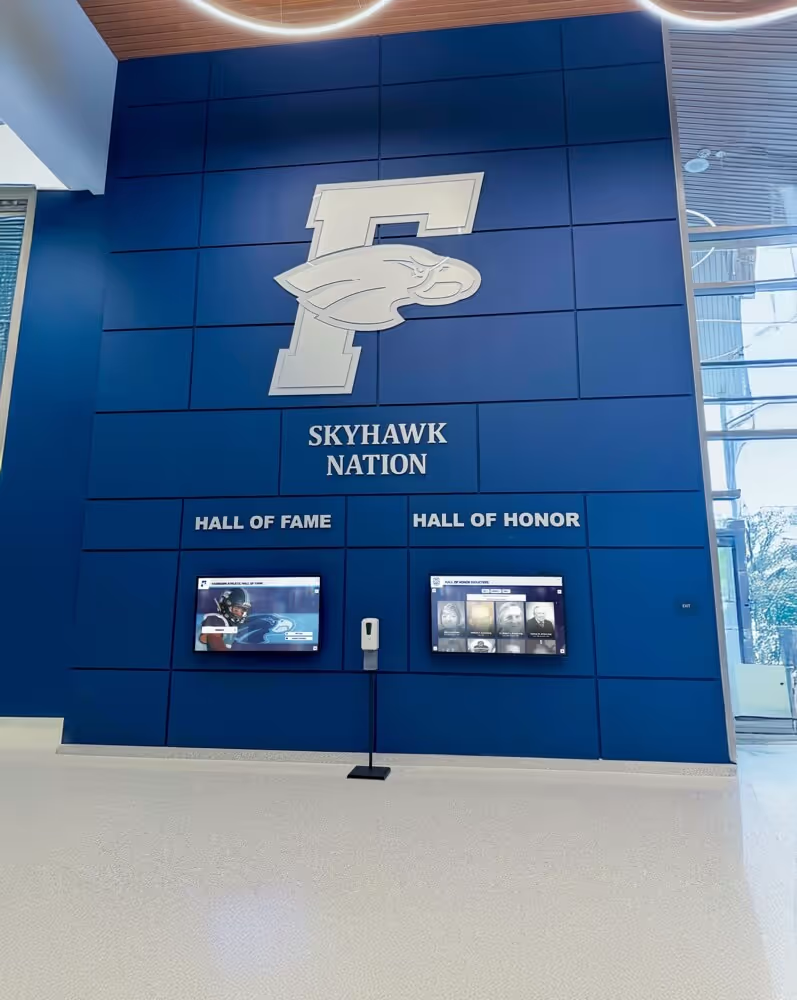
School trophy case kiosks presenting decades of athletic history depend on footage that survived the digitization intake process intact — curl inspection photography creates the documentation record that travels with each reel and informs every subsequent handling decision
Schools building comprehensive athletic recognition programs often find that connecting the film archive intake process to their broader preservation documentation supports everything from athletic communications plan templates to alumni engagement calendars — because each well-documented reel becomes a concrete asset that can be referenced, scheduled for scanning, and connected to specific recognition events.
Step 5: Scanner Transport Implications by Curl Type
Understanding how each curl type interacts with a scanner’s gate and transport path bridges the inspection findings from Steps 1–4 and the correct operational decision in Step 6.
Film scanners for 16mm and 8mm archive work use one of two primary transport mechanisms:
- Pin-registration transport: The scanner advances the film one frame at a time using registration pins that engage the perforations, pulling the film into precise position against the aperture plate. A curled film strip that cannot lie flat against the aperture plate under the gate’s spring pressure will have variable contact with the aperture surface — portions of the frame will be at a different focal distance than others, producing uneven sharpness across the captured image.
- Sprocket-drive transport: The scanner advances the film continuously using sprocket wheels whose teeth engage the perforations. A transversely curled film that has taken on a channel cross-section does not sit flat on the sprocket’s drive surface — the curled edges may contact the sprocket flanges rather than seating flush, creating uneven tension and lateral tracking errors during continuous advance.
Curl type-specific scanner transport risks:
| Curl Type | Scanner Mechanism Affected | Primary Risk |
|---|---|---|
| Longitudinal curl (mild) | Gate contact | Frame-to-frame focus variation; leading-edge tracking instability on thread-in |
| Longitudinal curl (severe) | Threading path | Film cannot navigate scanner’s curved threading path; threading impossible without force |
| Transverse curl (mild) | Gate flatness; aperture contact | Soft focus at curled edges; differential sharpness across frame width |
| Transverse curl (severe) | Sprocket seating; gate closure | Gate may not close fully; film may track laterally off sprocket path under advance |
| Edgewave | Sprocket teeth engagement | Variable sprocket engagement at wavy edge; lateral registration instability during scan |
| Spoking | Threading and initial advance | Individual spoke sections may catch on scanner guide rollers; threading failure at spoke locations |
A scanner operator who receives a reel without a curl classification record must make threading and gate decisions without the information that intake inspection provides. The intake photograph set from Step 4 ensures the operator has a visual reference for the film’s geometry before threading begins rather than discovering the curl condition during a failed threading attempt.
Step 6: Stop-Work Criteria and Specialist Referral
Apply stop-work immediately — do not thread the reel — if any of the following apply:
- Class 5 curl confirmed: The film will not thread flat through the scanner’s guide rollers and aperture path. Do not force the film through the transport path.
- Permanent transverse curl > 5 mm combined with embrittlement: Embrittlement confirmed by a gentle flex test (crackling, crazing, or fracture during a 2–3 mm lateral flex of the base). Embrittled film under gate pressure from a scanner attempting to flatten transverse curl risks base fracture during the first advance.
- Spoking visible in the wound reel combined with any curl measurement: Spoking in a wound reel indicates that curl deformation has been present long enough to redistribute within the winding — the interior layers may be in worse condition than the outer layers accessible during Step 2.
- Edgewave along more than 50% of the unwound section combined with vinegar syndrome odor: Active acetate degradation combined with existing edgewave distortion indicates ongoing dimensional change — the curl geometry at inspection may not be stable by the time a scan is attempted.
- Curl of any class combined with measured shrinkage at or above the stop-work threshold: Combined conditions require specialist evaluation of both findings together before any in-house scan is attempted.
- The reel is historically significant: Any championship game, hall-of-fame induction ceremony, or senior recognition event that exists on no other surviving medium — apply specialist consultation regardless of curl class if any distortion is present.
What a preservation specialist provides for curled film that cannot be safely scanned in-house:
Specialist film preservation labs operate equipment and apply techniques unavailable in most school AV settings. Labs may offer controlled humidification assessment for film that has developed permanent curl from extreme dry storage — carefully regulated exposure to elevated relative humidity over a defined period, applied under monitored conditions that are entirely different from improvised in-house approaches. Specialists also operate wide-tolerance film gates and optical-registration scanners that accommodate curl geometry incompatible with standard in-house equipment.
When routing a reel to a specialist, include the intake photographs from Step 4 alongside the curl classification, reel accession number, film format (16mm, Super 8, Regular 8mm), approximate recording date, and known storage history. This documentation set replaces the need for lengthy written descriptions and gives the specialist a complete visual record of the reel’s condition at the time of intake.
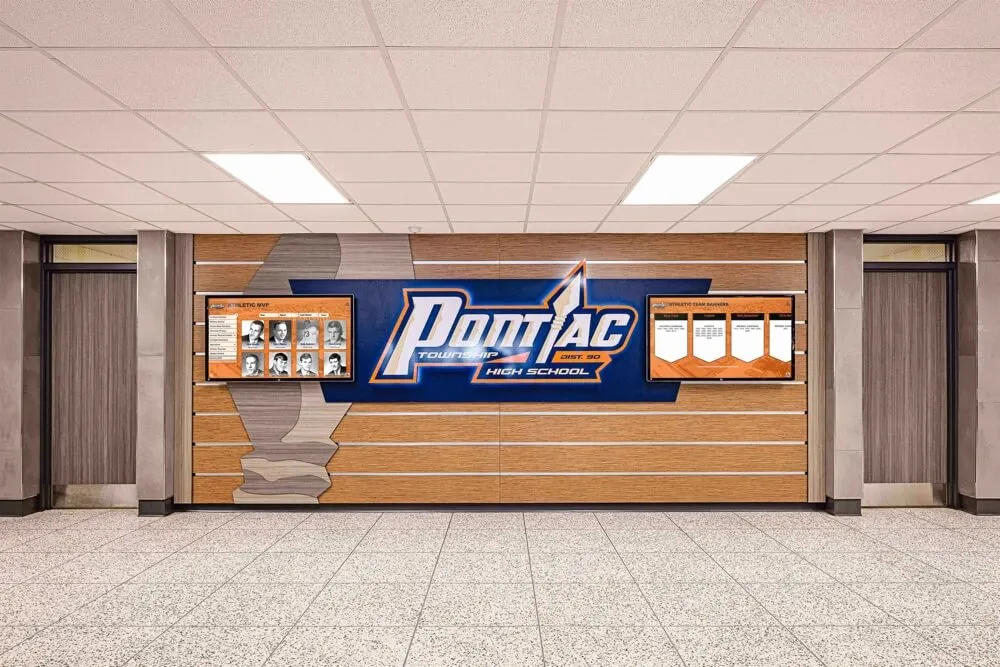
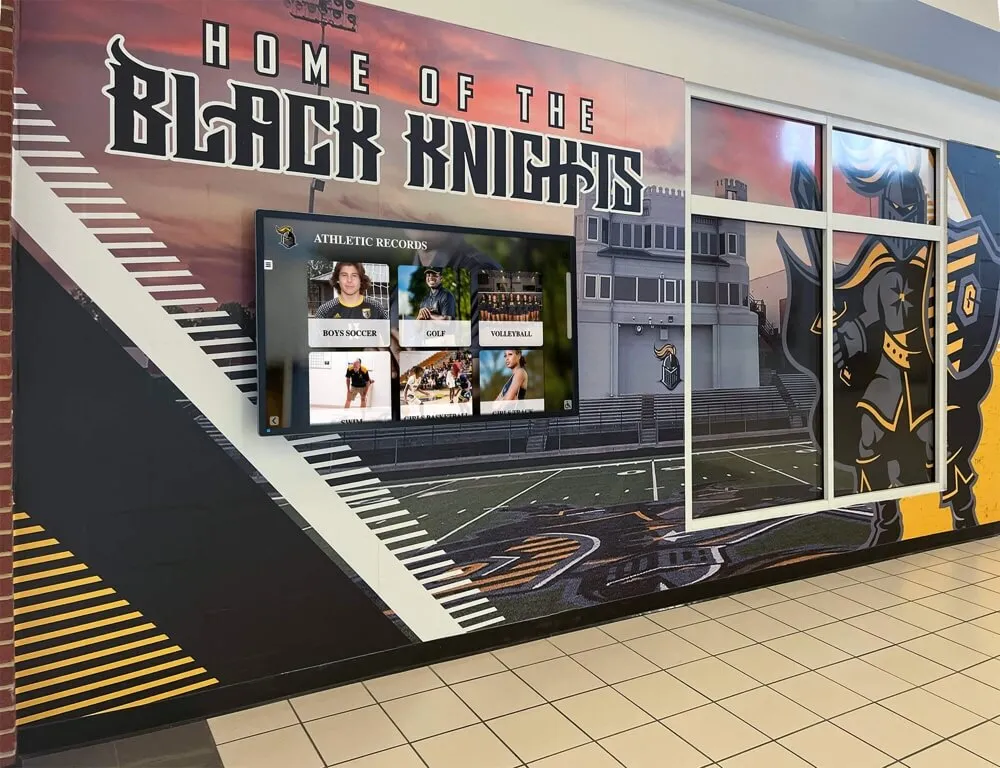
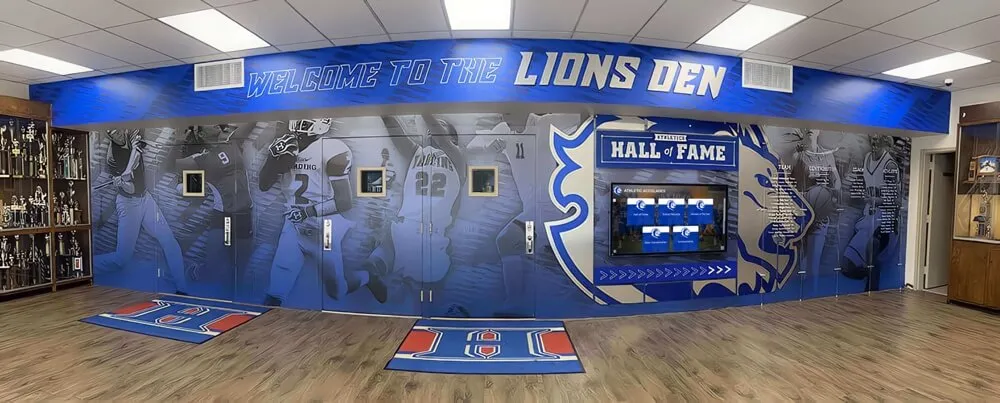
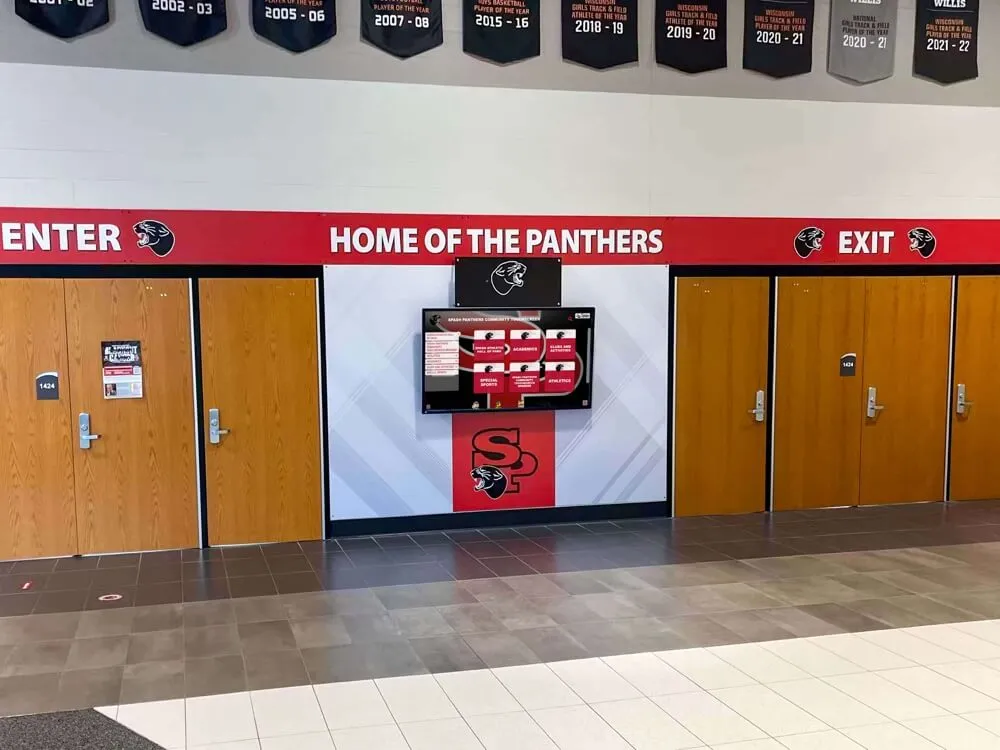
Athletic honor walls combining physical and digital recognition depend on footage that passed a complete pre-scan intake review — curl inspection and classification determine the scanning path each reel follows before any archive content reaches a display screen
Who This Curl Inspection Workflow Serves
| Role | Primary Concern | How Curl Inspection Helps |
|---|---|---|
| Athletic Director | Championship footage and program legacy | Prevents curl-related scanner transport failures from destroying irreplaceable game film |
| School Administrator | Institutional record completeness | Documents film condition before digitization so collection status is known and defensible |
| AV Coordinator / IT Staff | Scanner protection and workflow reliability | Routes curled reels away from in-house scanners that cannot accommodate the film’s geometry |
| Librarian / Archivist | Collection integrity and intake records | Provides curl documentation — including intake photos — that follows each reel through the workflow |
| Recognition Program Owner | Display-ready footage for athletes and alumni | Ensures archival video for hall-of-fame displays and lobby screens was recovered without curl-induced focus failures |
Schools pursuing sports memory wall ideas and athletic legacy programs know that the quality of displayed footage directly affects how compelling an installation feels to athletes, alumni, and visitors — curl-related focus failures in scanned footage produce visibly softer images that reduce the impact of the recognition experience the footage was digitized to support.
Athletic programs that have documented and cleared their historic game film through a complete pre-scan inspection — curl, shrinkage, and perforation condition addressed — can connect their recovered footage directly to touchscreen hall-of-fame installations, lobby recognition kiosks, and digital yearbook archives. See how Rocket Alumni Solutions brings safely digitized school archive footage into living recognition programs that celebrate athletes, teams, and coaching legacies throughout the school year.
Quick-Reference: Curl Inspection Decision Table
| Curl Finding | Classification | Scanner Risk | Action |
|---|---|---|---|
| Film lies flat after 5-minute rest; no edgewave or spoking | Class 0 | None | Proceed to standard pre-scan setup |
| Minor longitudinal lift < 5 mm at leading edge | Class 1 | Low | Proceed; note in intake record; inform scanner operator |
| Longitudinal lift 5–15 mm; partially relaxes at rest | Class 2 | Moderate | Gate tolerance check; operator monitoring throughout scan |
| Transverse edge lift 2–5 mm; film forms partial channel | Class 3 | Moderate | Confirm gate geometry; operator monitoring; stop if threading resistance felt |
| Longitudinal lift > 15 mm, or transverse lift > 5 mm, or persistent edgewave | Class 4 | High | Specialist assessment before any in-house threading attempt |
| Film will not thread flat; spoking confirmed; permanent curl after 5-min rest | Class 5 | Specialist path | Stop-work; specialist evaluation only |
| Any class + embrittlement confirmed by flex test | Escalate | Specialist path | Stop-work; specialist assessment required |
| Any class + shrinkage at or above stop-work threshold | Escalate | Specialist path | Stop-work; combined specialist evaluation required |
| Any curl + historically significant reel | Escalate | Specialist path | Specialist consultation regardless of curl class |
Connecting Curl-Inspected Film to Athletic Recognition Programs
The goal of curl inspection before digitization is the footage that safely reaches the other side — game recordings that were assessed, documented, correctly routed to the right scan path, and recovered as clean digital masters. For school athletic archives, that footage is the source material for recognition programs that make institutional history visible and meaningful for athletes, alumni, and the school community.
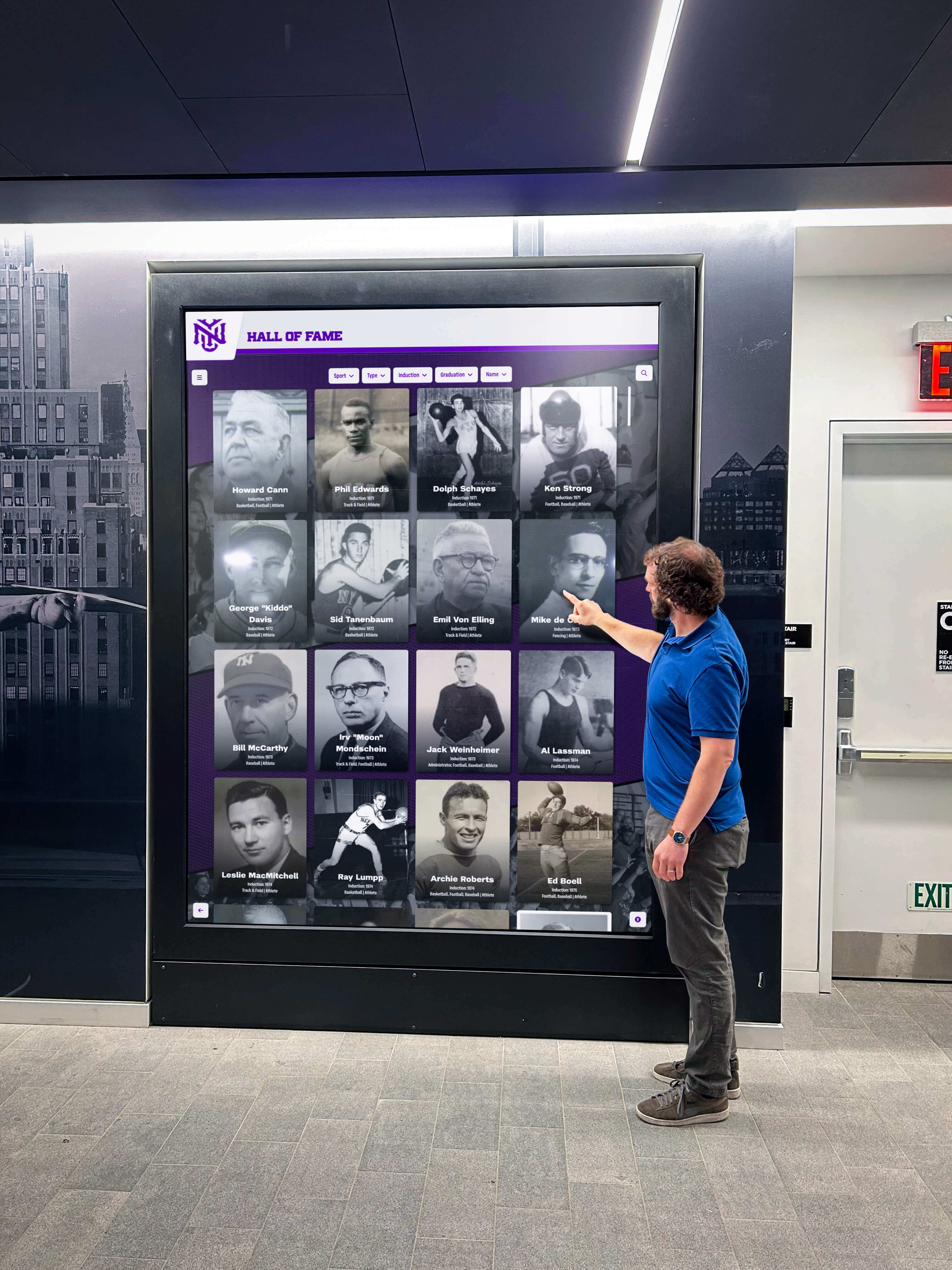
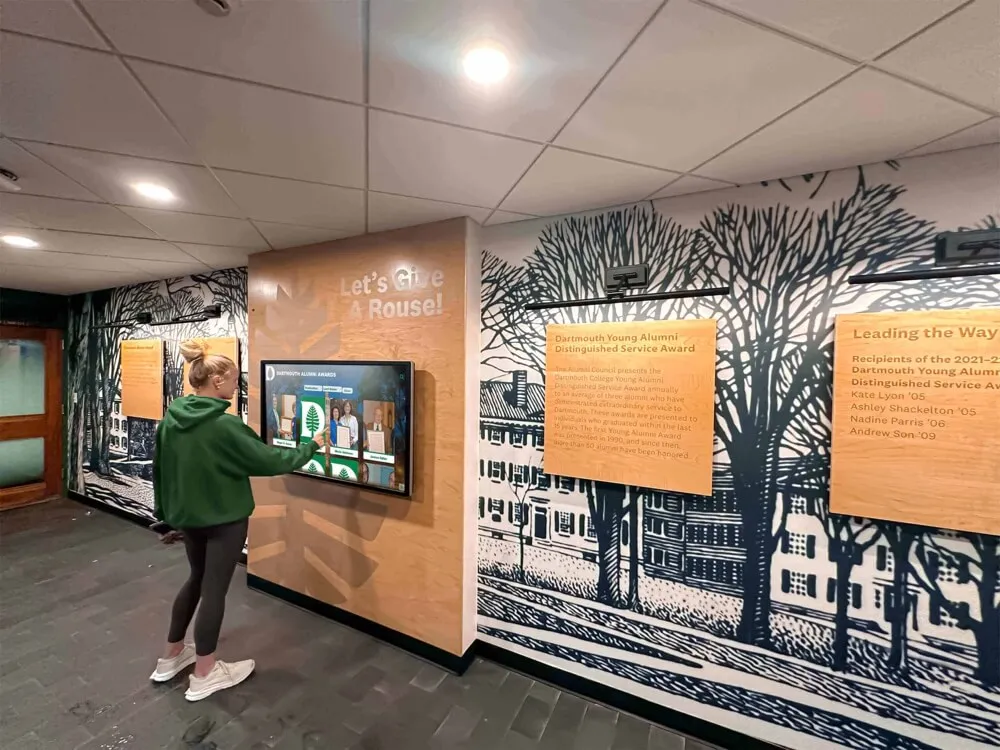
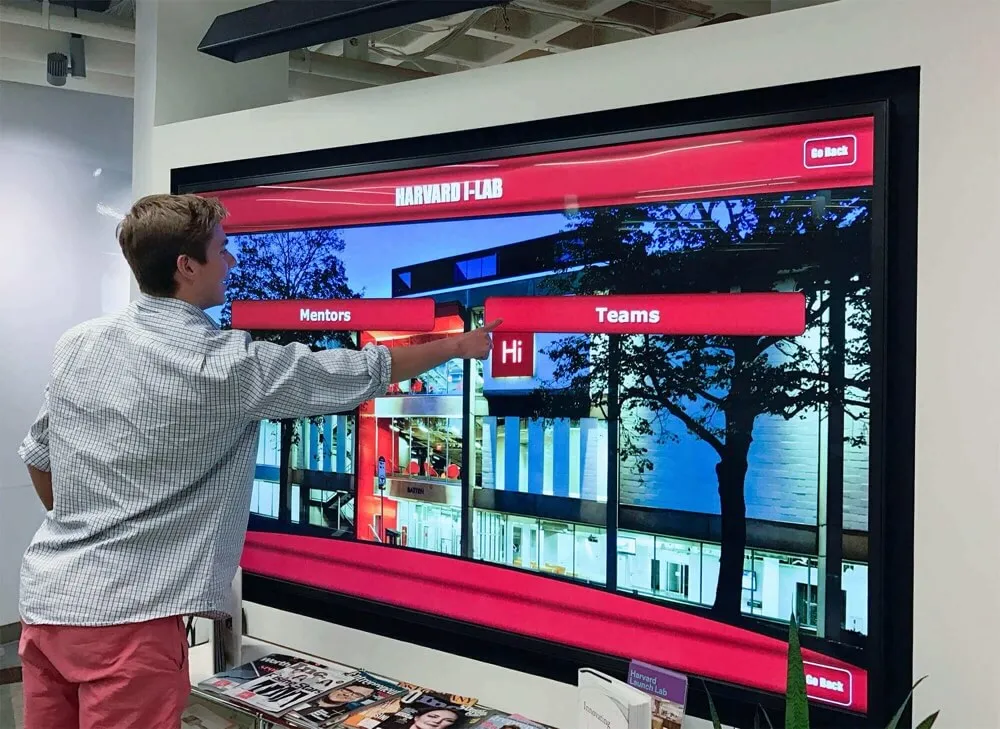
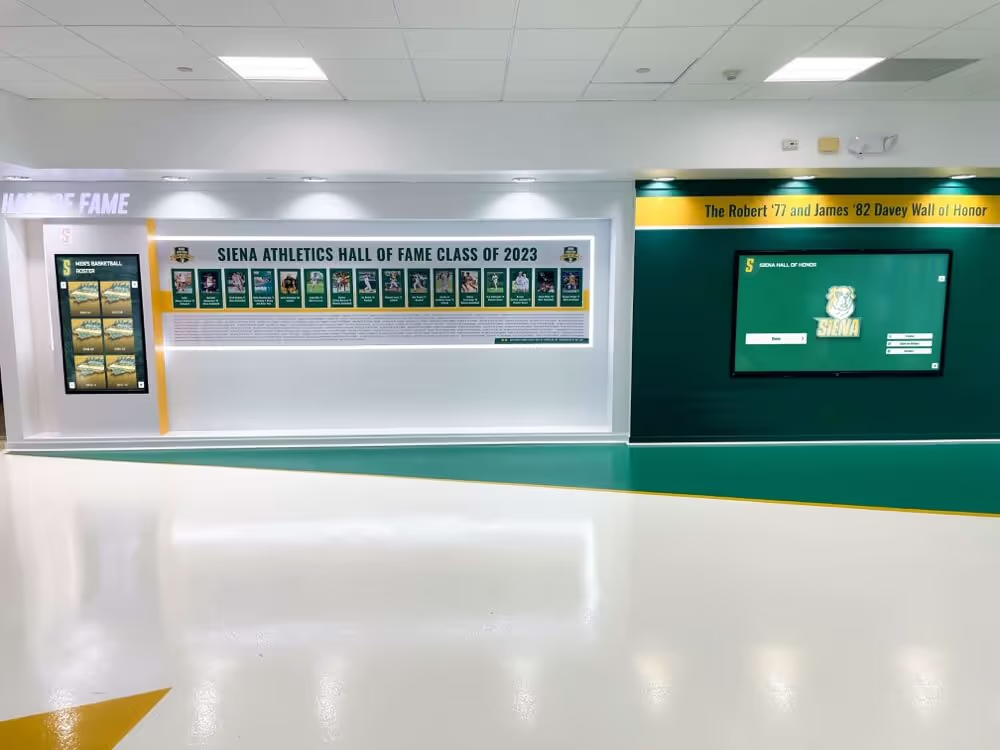
Interactive hall-of-fame screens in school lobbies draw alumni, students, and community visitors into decades of athletic history — footage that passed curl inspection and was cleanly digitized delivers the visual quality that makes these displays compelling
Schools with safely digitized film archives are positioned to develop the kind of long-term recognition infrastructure that serves athletes and alumni across decades. When schools also invest in athletic record board design alongside their digital archive programs, they create recognition ecosystems where physical and digital recognition reinforce each other — the film footage anchors the digital display while record boards provide the historical context that gives footage its meaning.
The dust and scratch removal workflow for scanned photos that follows a successful film digitization session builds directly on the foundation that curl inspection creates: a reel that was assessed, documented, and correctly routed through the right scan path produces source material of sufficient optical quality that post-processing can address surface-level artifacts rather than compensating for fundamental focus failures caused by a curled film strip that was forced through a gate it could not lie flat against.
For schools that want to understand the full care environment their archive program requires — including facilities considerations that protect reels before and after digitization — resources on athletic training room design and space organization offer relevant context for thinking about how dedicated, climate-appropriate storage space differs from a repurposed equipment closet, and why that difference matters for long-term film stability.
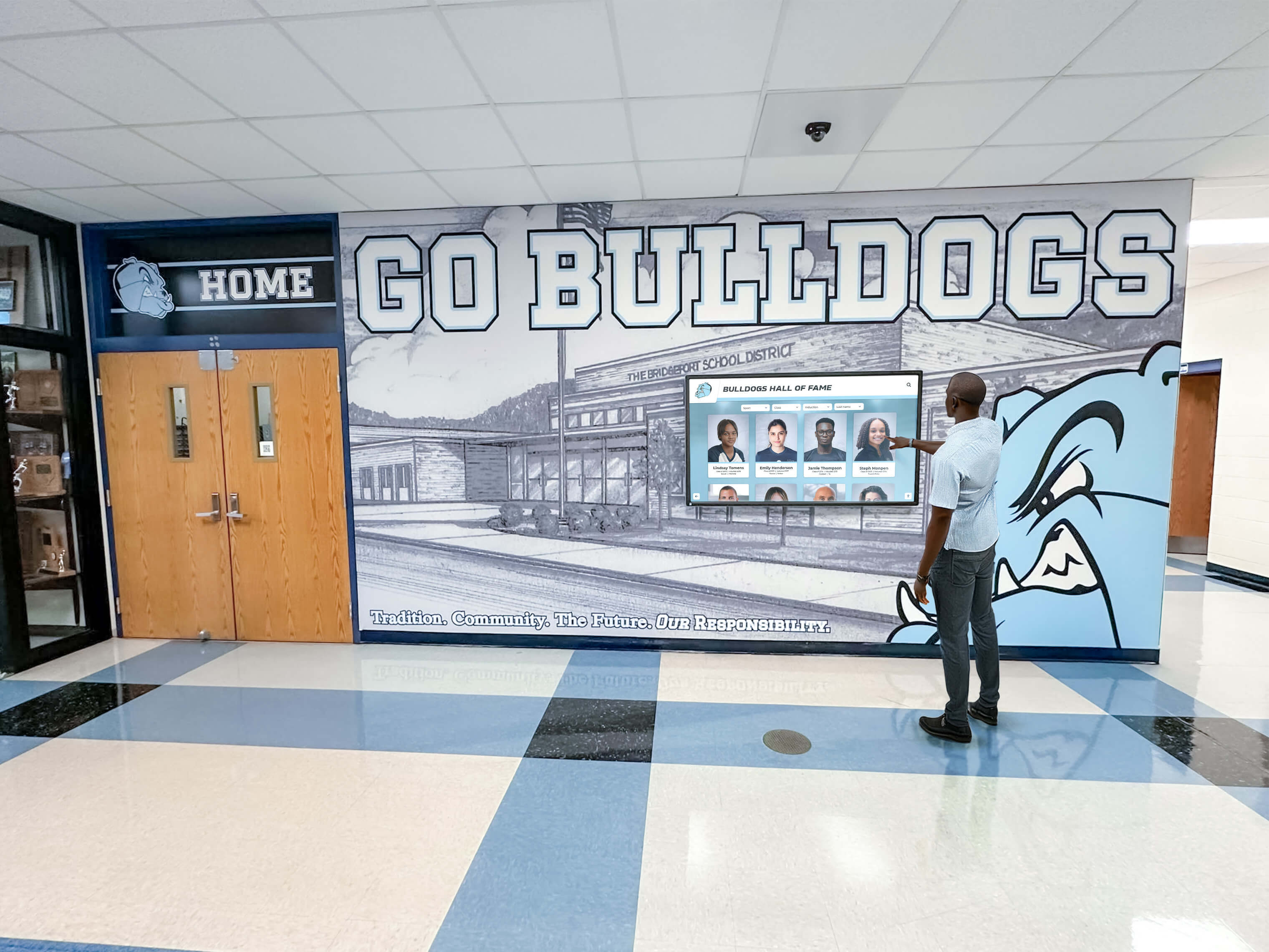
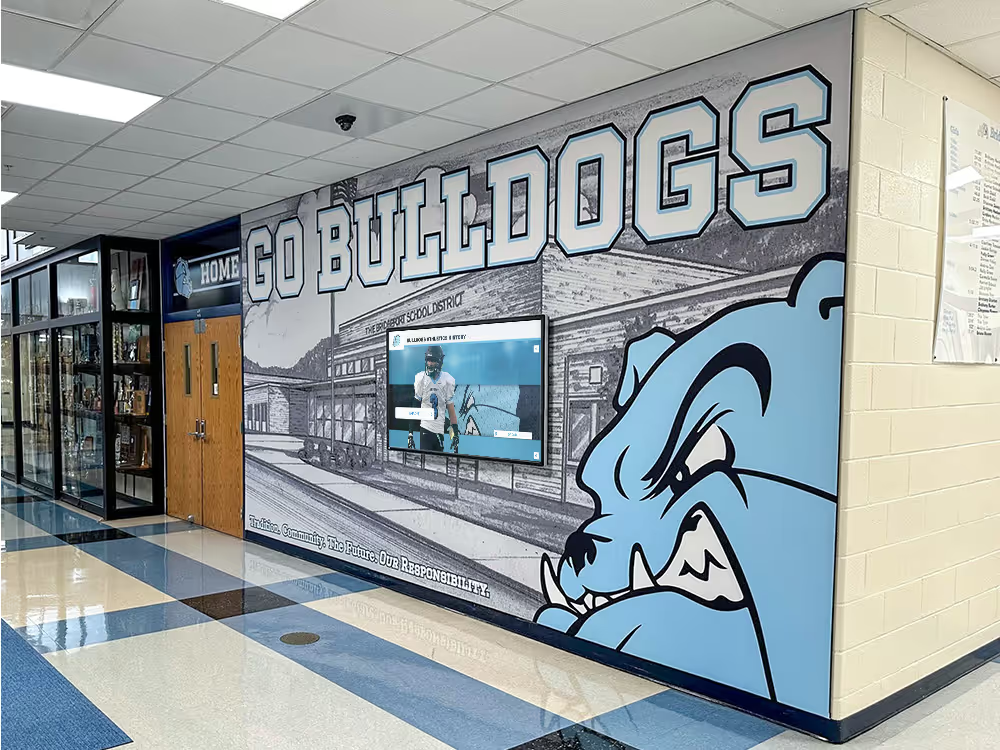
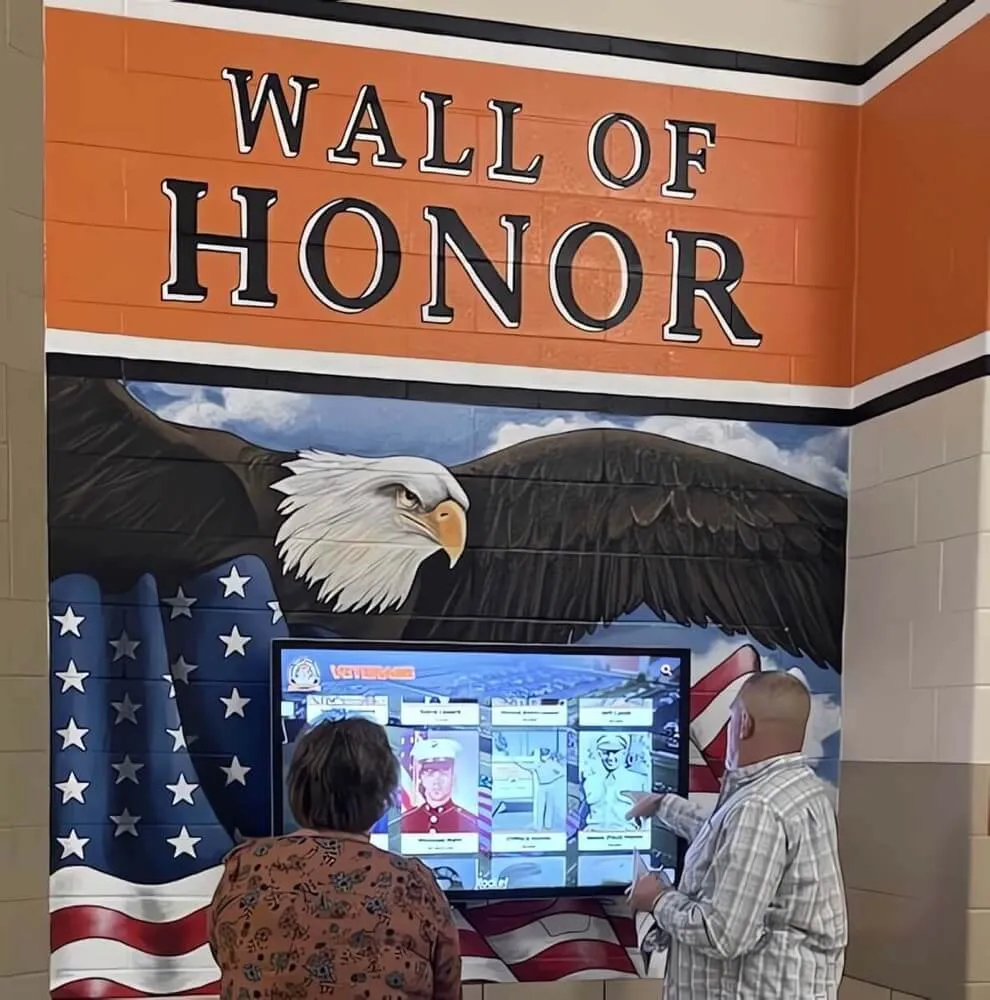
Hall-of-fame touchscreen displays in school hallways present athletic history to the community throughout the school year — every clip on that screen cleared a pre-scan inspection workflow that confirmed the source reel's geometry was compatible with safe scanner transport
Frequently Asked Questions
How is film curl different from film shrinkage, and can a reel have both?
Film shrinkage is a dimensional reduction measurable as a percentage change in perforation pitch — it is quantified with a precision film gauge and primarily affects whether a scanner’s transport mechanism can engage the film’s perforations without applying stress. Film curl is a geometric deformation — the film strip has bent or warped out of a flat plane — that affects whether the film can lie flat against a scanner’s gate surface and thread cleanly through the transport path. A reel can have both conditions simultaneously: a reel stored in extremely dry conditions for decades may develop significant pitch reduction and permanent curl from the same prolonged moisture loss from the acetate base. When both conditions are present, the reel requires specialist evaluation for both before any in-house scanning is attempted.
Does temporary curl always resolve before scanning begins?
Not always. The distinction between temporary and permanent curl depends on the cause and duration of the condition. A reel moved from a very cold, dry storage area to a warm inspection room may show significant curl immediately after removal that partially relaxes as it equilibrates. That is temporary curl. A reel stored for 30 years in a dry gymnasium closet that still shows significant curl on the lay-flat test after a full 5-minute rest at room temperature is demonstrating permanent deformation. The Image Permanence Institute notes that long-term storage in extremely dry conditions can result in permanent distortion. The 5-minute observation period in Step 2 is designed precisely to distinguish temporary equilibration from permanent curl before a scanning path is assigned.
Can a reel with mild transverse curl still produce a usable scan?
Yes. Class 1 and Class 2 curl findings can often be accommodated by in-house scanners with appropriately designed gates, with the scanner operator informed and monitoring gate contact during the scan. The intake photograph set from Step 4 allows the operator to pre-assess whether the curl geometry is compatible with the scanner’s gate closure before threading begins. Mild transverse curl that causes a slight channel cross-section will produce some softening at the curled edges — a known optical limitation, not a transport failure — and should be noted in the scan record so downstream processing is applied with the correct expectations for edge-zone sharpness. The critical distinction is between curl mild enough for the scanner’s gate pressure to achieve adequate film-to-aperture contact at the frame center, and curl severe enough that the gate cannot close fully against the film geometry.
Should I attempt to flatten curled game film before sending it to a specialist?
No. Do not attempt to flatten, press, weight, heat, or otherwise mechanically or thermally treat curled film in a school AV environment. Forced flattening attempts on permanently curled acetate film — particularly embrittled film — risk cracking or fracturing the base layer at the stress concentration points created by the curl geometry. The correct in-house action for a reel classified at Class 4 or 5 is to document it with the intake photographs from Step 4, record the curl classification and any embrittlement findings, place the reel in a labeled archival container, and route it to a specialist with the documentation record.
Does film curl affect all scanner types equally?
No. Different scanner designs accommodate film curl with different levels of tolerance. Flatbed-style film scanners that use a vacuum or spring-loaded gate to maintain film-to-aperture contact have more tolerance for mild longitudinal curl than rigid-aperture pin-registration scanners. Continuous-transport sprocket-drive scanners designed for archival 16mm typically use guide rollers and gentle gate pressure that handle mild transverse curl better than scanners designed for perfectly conditioned film. When a reel shows moderate curl (Class 2 or 3), the intake photograph set should accompany the reel to the scanner so the operator can assess compatibility with the specific scanner model before threading rather than discovering the curl geometry during a failed threading attempt.
A systematic athletic archive film curl inspection workflow — combined with the related assessments for shrinkage and perforation damage — converts a collection of historic game reels from an unknown-risk inventory into a documented, classified asset set where every reel has a known curl condition, a recorded intake photograph set, and a confirmed scanning path before any footage is placed at risk from a transport failure, gate-contact focus failure, or threading obstruction that careful intake work could have prevented.
Ready to connect your safely inspected and scanned athletic archive to a recognition program that brings it to life?
Request a Rocket Alumni Solutions demo and see how schools are turning decades of safely digitized game footage into touchscreen hall-of-fame displays, lobby recognition kiosks, and digital yearbook archives that celebrate athletic history for athletes, alumni, and the school community.