School athletic archive collodion photograph intake is the pre-digitization assessment process that examines a suspected wet-collodion glass negative or ambrotype from a school athletic archive for the visual and physical characteristics associated with the collodion process, documents the condition of the glass support and image layer in their current housing, and determines how each object should be stored, documented, and routed before any scanning or further handling decision is made. When a school athletic archive holds glass-encased or loose photographic materials from the mid-to-late nineteenth century, some of those objects may be wet-collodion products: either glass negatives intended to be printed from, or ambrotypes — thin or underexposed collodion negatives on glass backed with dark material to read as positive images. Both formats share the characteristic that the image is formed in a collodion layer applied directly to a glass support, a combination that is fragile in specific ways and that requires condition documentation before any digitization or handling plan is finalized.
This guide gives school athletic directors, archive volunteers, IT coordinators, and recognition-program managers a focused intake framework for suspected wet-collodion glass negatives and ambrotypes from school athletic collections: how to provisionally recognize collodion-process characteristics from appearance, why the glass support and collodion layer require careful condition documentation before any handling decision, what to record at intake without opening or dismantling housing, when to route materials to a photographic conservator, and how safely digitized collodion photographs connect to recognition displays that make school athletic history visible.
Historic glass negatives and ambrotypes in a school athletic archive are not common — but they are not impossible. Schools that hold program records from their founding decades, or that have received donations of family materials documenting early team seasons, may have collodion-process photographs among their oldest holdings. Recognizing those objects at intake, documenting their condition, and keeping their housing intact are the three decisions that determine whether the image survives to become a digital file in a recognition system or is damaged by a handling approach not suited to its fragility.
What Collodion Process Photographs Are and Why Intake Matters
The wet-collodion process, introduced commercially in the early 1850s and widely used through the 1870s and into the 1880s, produces a photographic image by coating a glass plate with collodion — a solution of nitrocellulose dissolved in a solvent — and sensitizing that wet coating with silver salts before exposure. The plate is exposed and developed while the collodion layer is still workable, producing a silver image embedded in a hardened collodion film adhered directly to the glass. Two formats of collodion photograph are most likely to appear in a school athletic archive:
Glass negatives. A collodion glass negative is a correctly exposed negative on glass, intended to be contact-printed onto paper to produce positive prints. When held to a light source, the image reads as a negative — light areas in the original scene appear dark, shadow areas appear light or clear. Glass negatives may survive loose, in paper envelopes, in original wooden boxes, or grouped with related documentation materials. The National Archives guidance on still-picture glass holdings documents the fragility of glass-plate negative collections, identifying broken glass, emulsion flaking, possible pour lines from the collodion application, and surface adhesion as primary physical conditions affecting glass-plate materials in archival storage.
Ambrotypes. An ambrotype is typically a thin or underexposed wet-collodion negative on glass placed against a dark backing — black velvet, paper, paint, or fabric — so the image reads as a positive by reflected light from the backing through the thin silver image. Ambrotypes were commonly produced in the 1850s and 1860s and were typically housed in hinged cases: leather-covered wooden or thermoplastic union cases with a protective cover glass, a decorative mat, and a velvet-lined cushion on the facing inner lid. That housing protects the ambrotype from handling contact and atmospheric exposure and should remain intact throughout intake.
For both formats, the glass support creates a specific risk: breakage. A cracked or broken glass plate loses the physical continuity of the collodion image layer at the break. The image layer — adhered to the glass — cannot be re-adhered to a broken support without specialist intervention, and the image information at the break zone may be lost permanently. Emulsion flaking, where the collodion layer detaches from the glass support in small pieces, similarly removes image information permanently when the flake is lost.

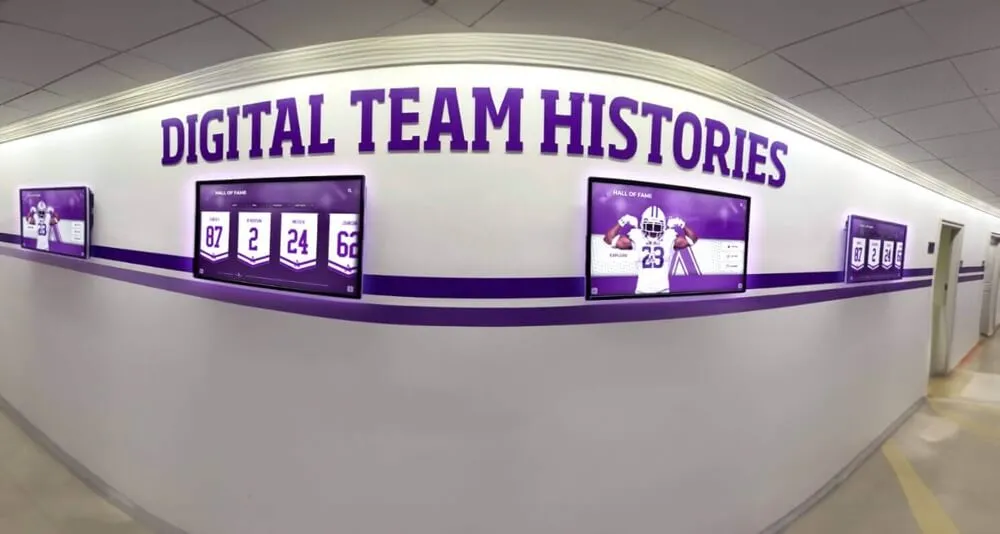
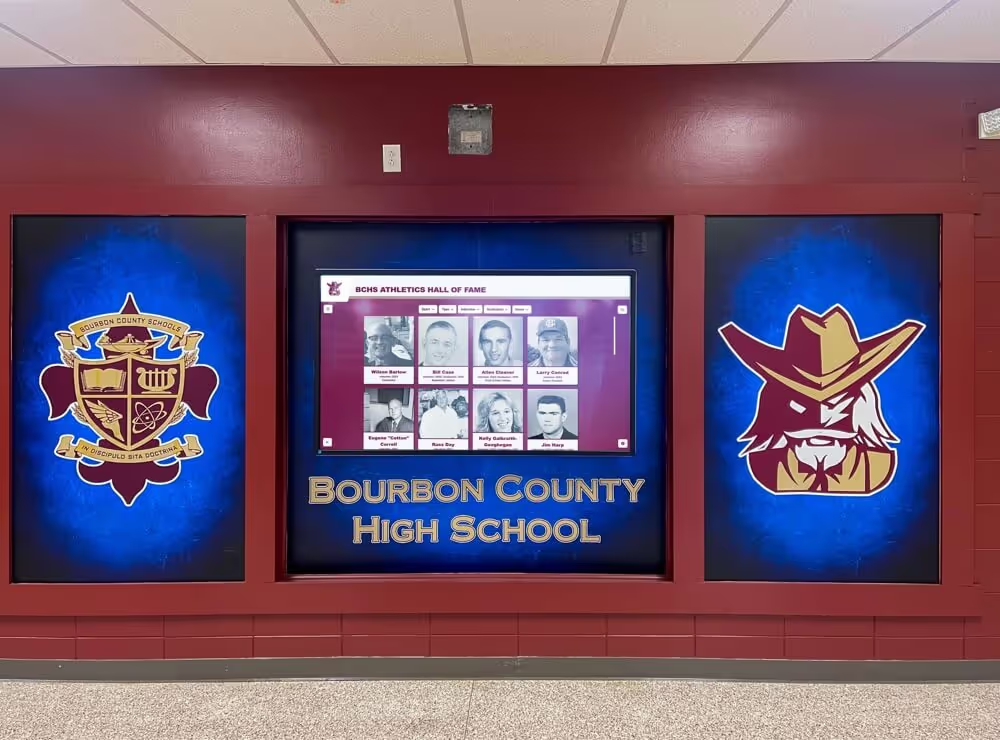
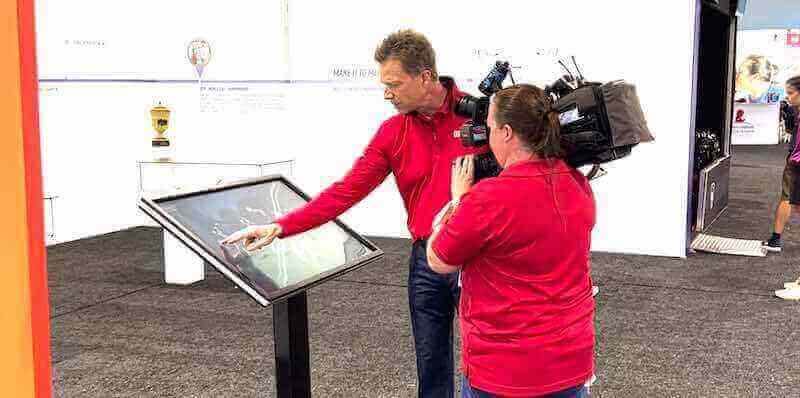
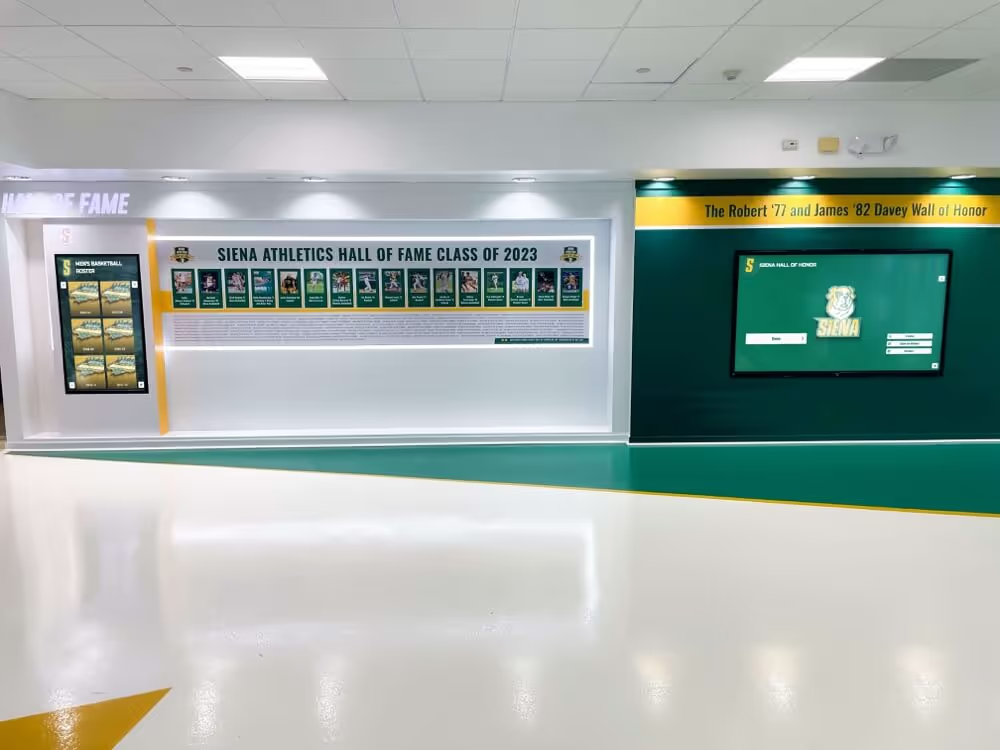
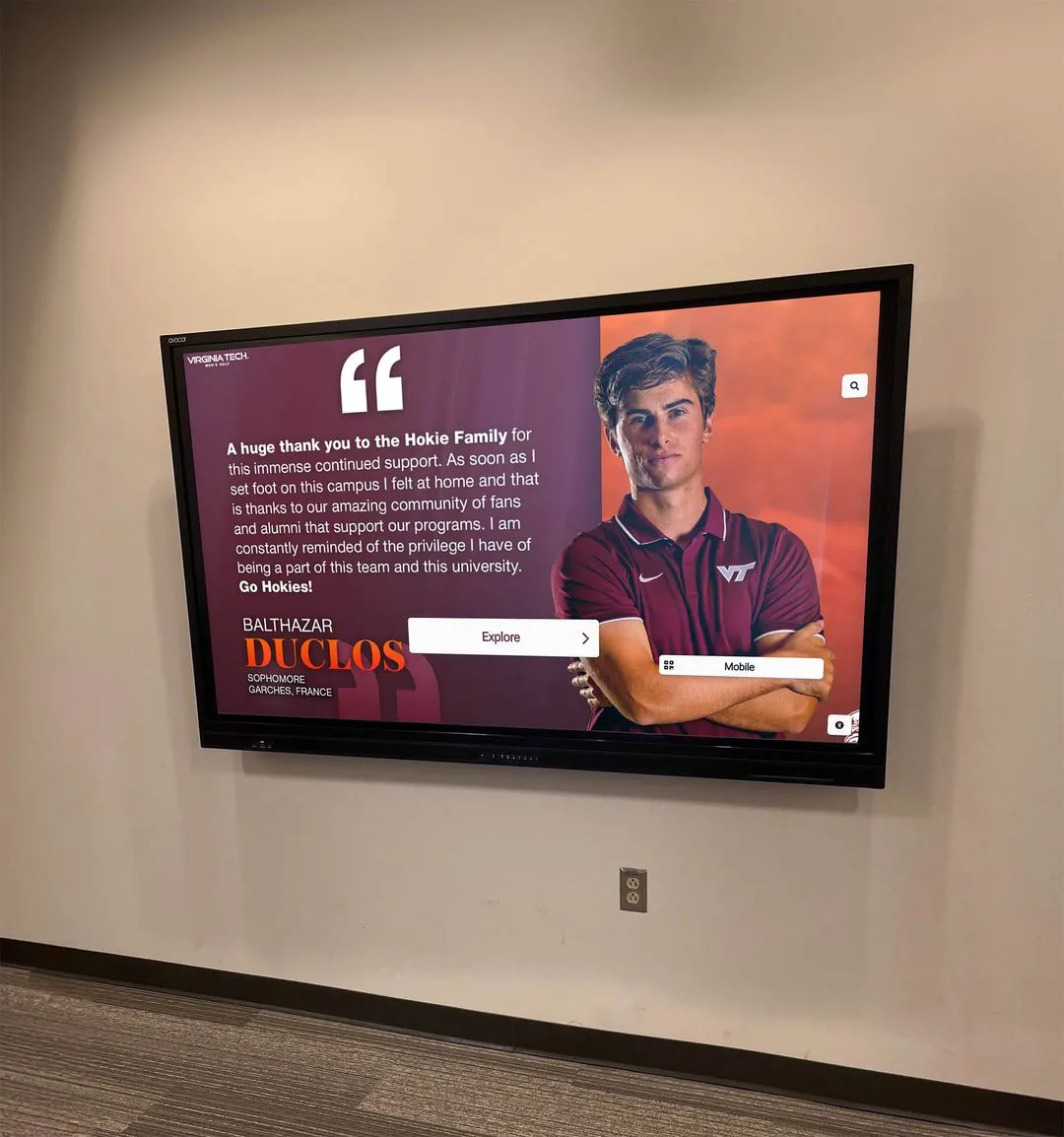
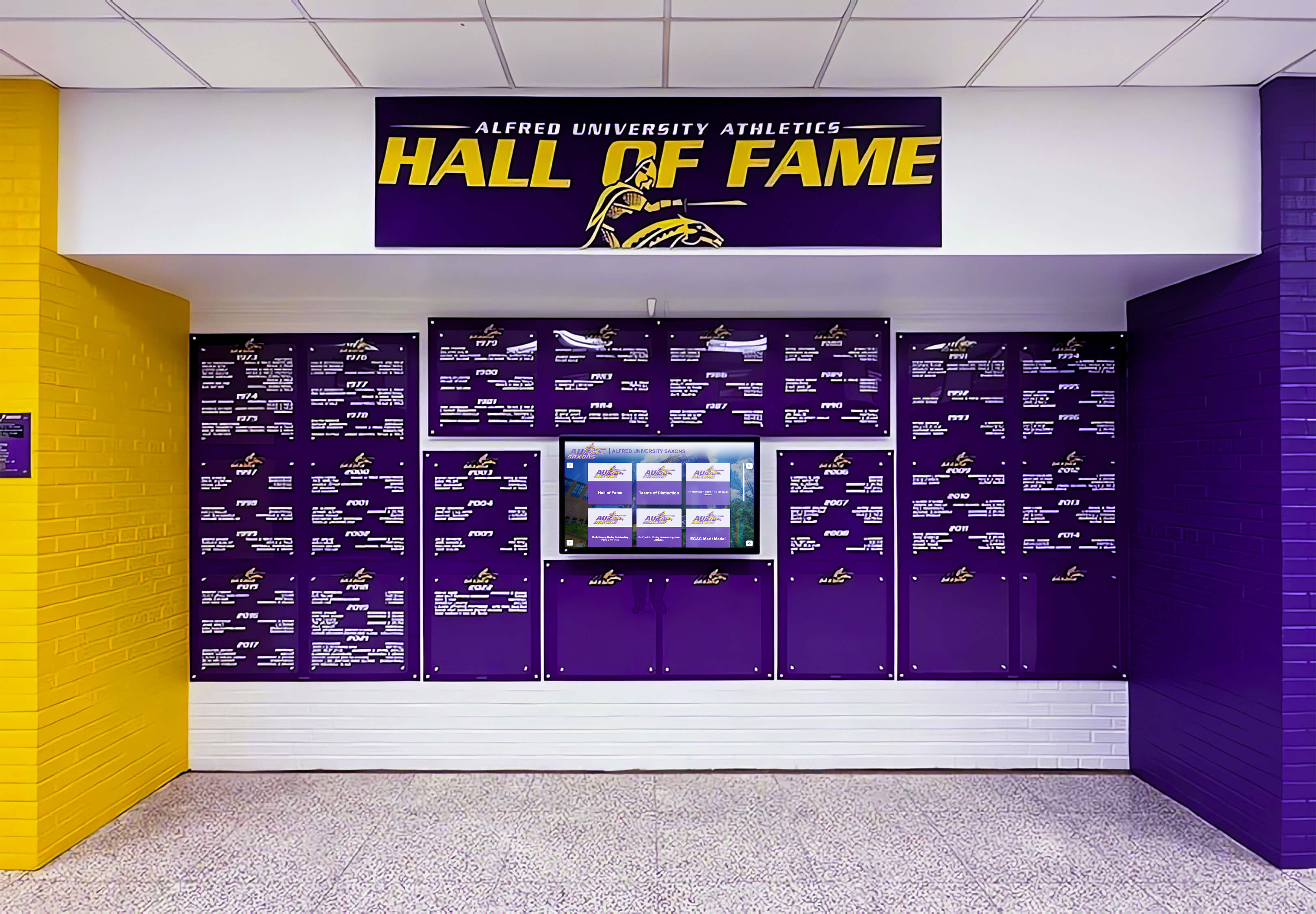
Recognition installations that present decades of athletic achievement draw on source photographs whose condition was assessed at intake — for glass negatives and ambrotypes, that assessment determines how the object is stored, who handles it next, and whether a conservator review is needed before any scanning begins
Recognizing Possible Collodion Photographs in a School Athletic Archive
Provisional identification from appearance supports the initial handling and housing decisions at intake. It does not substitute for specialist examination when the process identification would change a conservation decision.
Characteristics that suggest a glass negative:
- The image reads as a negative in transmitted light: light areas in the original scene are dark in the glass image, and shadow areas are light or clear glass
- The image support is a glass plate — rigid and transparent — rather than a paper or card substrate
- The image surface may appear slightly glossy or semi-matte depending on the specific collodion formulation and the plate’s storage history
- The plate may show a faint brownish or yellowish overall tone from silver image degradation or from a protective varnish applied over the collodion during processing
- Possible pour lines — slight unevenness or streaking near one edge of the plate — may be visible from the tilting motion used to coat the glass with liquid collodion
What pour lines can and cannot tell you at intake:
Pour lines visible as tonal variation or streaking near a plate edge are a visual characteristic associated with the wet-collodion coating process. However, appearance-based identification of pour lines — or any single visual characteristic of a glass plate — is not a definitive test for the process used or the date of production. Multiple photographic processes used glass supports. Gelatin dry-plate negatives, which replaced wet-plate processes from the late 1870s onward, also show coating irregularities in some cases. Collodion plates vary in appearance depending on operator technique, specific formulation, and storage history. A date or date range provided by a donor should be recorded as donor-supplied provenance — not treated as determined from the object’s appearance. Visual identification guides provisional handling decisions; it does not replace specialist examination.
Characteristics that suggest an ambrotype:
- A glass image, viewed in its case or housing, that reads as a positive — with recognizable figures, tone gradation, and a legible photographic image — without being held up to a direct light source
- Housing in a hinged case with a pane of cover glass, a decorative mat, and velvet or fabric inside the lid cover
- The case exterior may be leather-covered wood, pressed leather, or thermoplastic union-case material with a matte or embossed surface
- When tilted away from its dark backing or viewed at an angle in bright light, the tonal values may shift or appear to reverse — a characteristic of thin collodion negatives reading as positives by reflected light from the backing material
Keeping Housing Intact: Cases and Protective Glass
An ambrotype in its original hinged case should remain in that case throughout intake, condition documentation, and initial storage. The cover glass, mat, and dark backing are structural components of the object, not incidental packaging. Together they protect the collodion image from atmospheric exposure, handling abrasion, and the mechanical disruption that would occur if the image glass were handled without its protective surround.
Dismantling an ambrotype case — lifting the cover glass, removing the mat, separating the image glass from its backing — is a specialist action performed with specific tools under controlled conditions. It is not an intake action available in a school setting. Attempting to open a case to examine the image surface more closely risks cracking the glass, introducing the cover glass into contact with the image surface, and dislodging the backing material. Any condition information needed at intake should be recorded by examining the object through the case glass and photographing the interior through the cover glass without removing it.
If an ambrotype case arrives with the cover glass already missing, with components displaced, or with the image glass loose inside the case, record that condition exactly as found and route the object to a photographic conservator before any re-housing or further handling. An opened or partially disassembled case presents the same risks as a glass negative handled without its original enclosure.
For loose glass negatives not in a case, the appropriate enclosure is a four-flap paper sleeve or acid-free envelope sized to fit the plate snugly without pressure on the image surface. Each plate should be housed individually with interleaving between plates. Handle glass plates by their edges and support the full plate from below — do not hold a glass negative by a single edge corner, as concentrated stress at the grip point can cause breakage.
Athletic Archive Collodion Photograph Intake: A 5-Step Workflow
Step 1: Prepare the Intake Area
Establish a clean, padded work surface before any collodion glass materials are removed from their current storage or housing.
Required at the intake station:
- Clean cotton or nitrile gloves worn throughout all handling
- A padded flat surface — foam pad or padded archival blotter, not a hard tabletop — to cushion glass plates during examination
- A camera or smartphone for condition photography, with a scale reference such as a ruler
- Illumination for both reflected examination (diffuse overhead light) and transmitted examination (a lightbox or backlit surface) for glass negatives
- Acid-free four-flap paper sleeves or envelopes in appropriate sizes for re-housing glass negatives
- An intake log for recording object-level observations
Exclude from the intake station: any liquid, solvent, cleaning material, or hard surface tool.
Step 2: Document Condition Through the Housing
For cased ambrotypes, condition documentation proceeds through the cover glass without opening the case. Photograph the case exterior and the image interior through the cover glass.
Record at the object level for cased ambrotypes:
- Overall image condition visible through cover glass: clarity, tone, fading, and discoloration
- Surface haze, condensation residue, or contamination visible on the cover glass or on the image through it
- Backing material: visible, displaced, or missing
- Mat: present, displaced, or damaged
- Case integrity: hinge condition, closure function, damage to case exterior
- Any visible emulsion flaking or image-layer detachment visible through the cover glass
Record at the object level for loose glass negatives:
- Breakage: cracks, edge chips, complete breaks; location and extent of each break zone
- Emulsion condition: surface adhesion, flaking, lifting; the National Archives documentation on still-picture glass holdings identifies emulsion flaking as a primary risk condition in glass-plate archival collections
- Varnish or surface coating: present and stable, crazed, or lifting
- Glass surface: contamination, scratches, staining on the underside of the support
Step 3: Record Provenance Without Assigning Dates from Appearance
Transcribe all inscriptions, labels, donor notes, and accompanying documentation exactly as found into the intake record. Inscriptions inside ambrotype case lids, paper labels along glass plate edges, notes in original envelopes, and donor-supplied written descriptions all belong in the intake record as primary source documents.
The date or date range assigned to a glass negative or ambrotype should reflect documented evidence — an inscription, a dated label, a photographer’s studio imprint with known operating dates — not an inference from the object’s appearance. Visual characteristics of collodion photographs vary with technique, materials, and deterioration history. A donor-supplied date is recorded as provenance information, not treated as established from how the object looks.
When names, teams, or athletic accomplishments are associated with a historic photograph through donor documentation, verify those identifications independently before they enter any recognition database. The same principle that applies to verifying biographical facts in hall-of-fame recognition entries applies here: confirming names, dates, teams, and honors against primary sources before display is sound practice. The hall of fame biography fact-check checklist offers a structured approach to this verification step for any recognition entry.
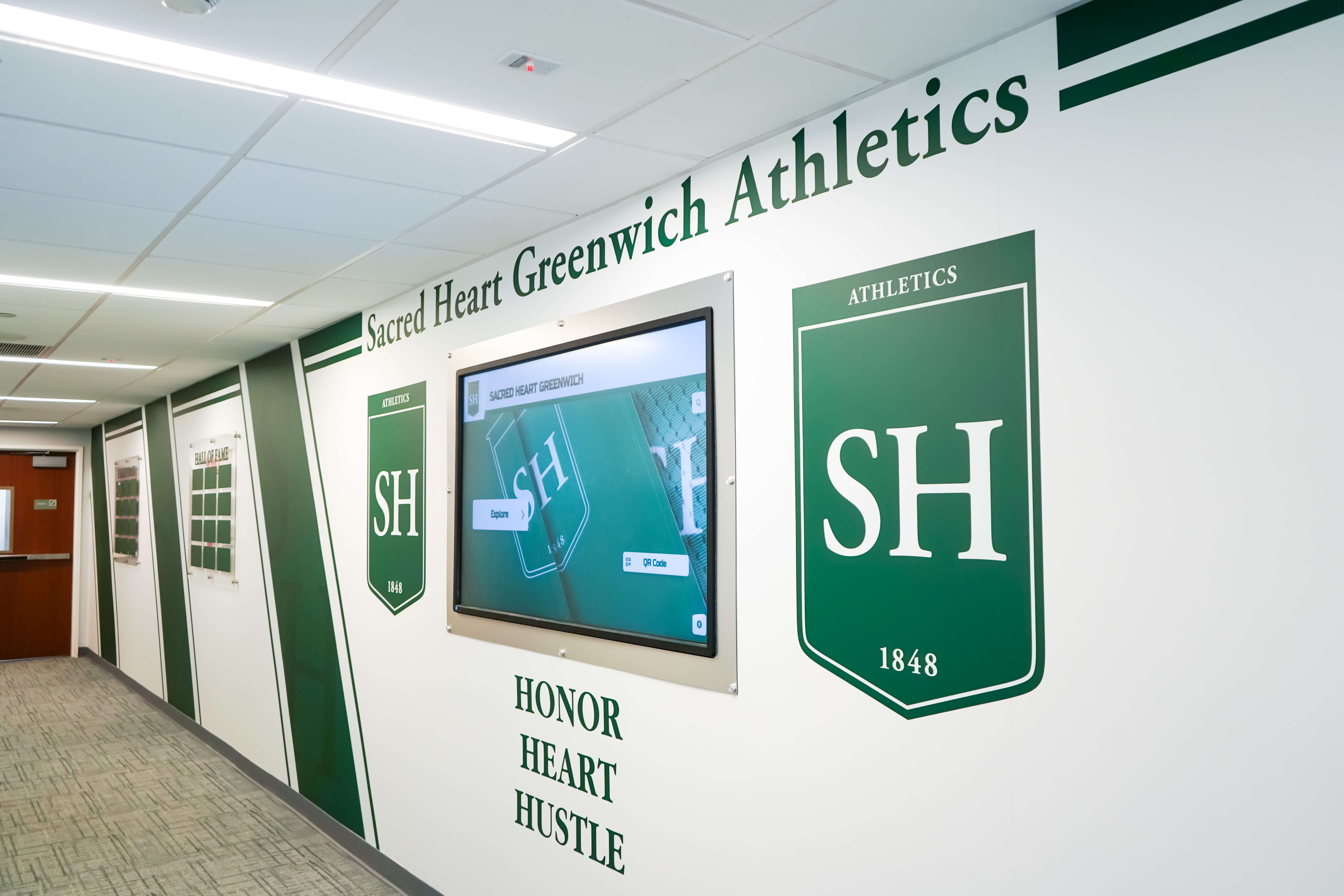
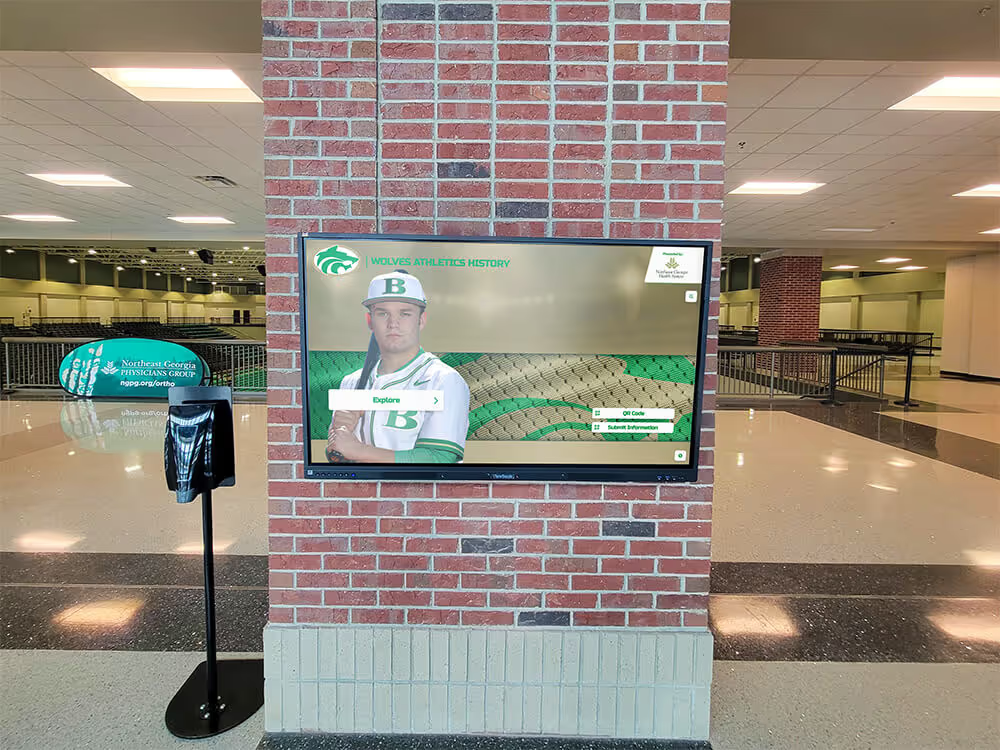
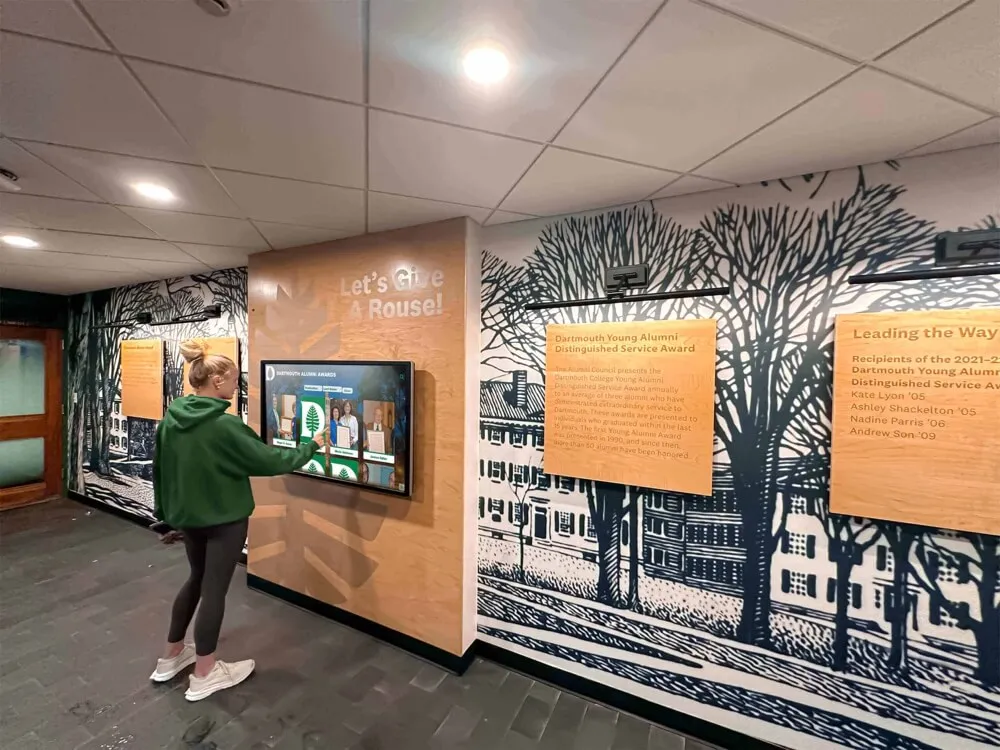
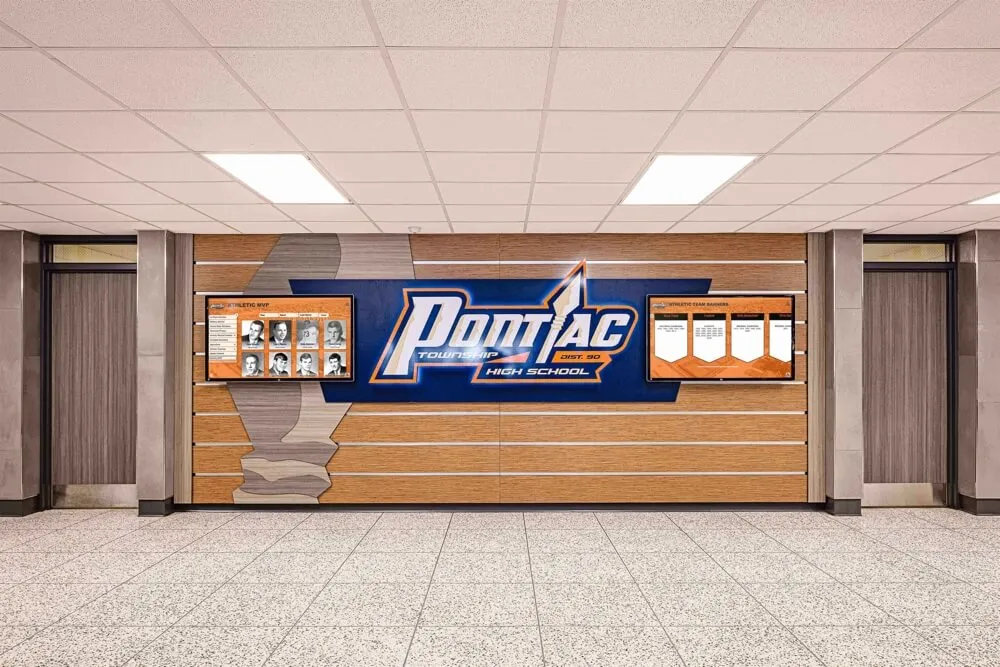
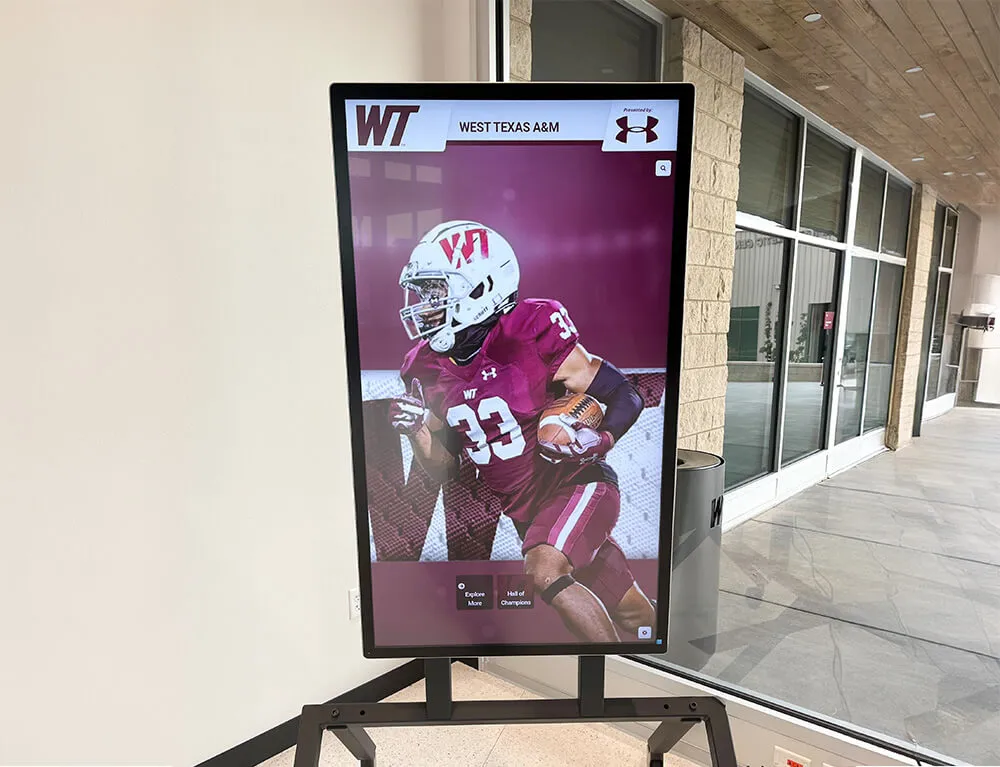
School recognition hallways presenting decades of athletic achievement draw on source photographs whose provenance and condition were recorded at intake — names, dates, and team associations from historic materials should be verified from documented evidence rather than inferred from appearance alone
Step 4: Complete the Accession Record and Re-house
Every object accepted into the athletic archive should receive an intake accession record capturing object identity, provenance, condition, and housing information at the moment of intake. Accession records are the foundation of a collection management system: they document the object’s state on arrival, the housing and handling decisions made at intake, and any subsequent actions. A consistent accession form applied to every object — photographs, trophies, cases, and associated documentation — ensures that all materials in the collection can be located and tracked over time.
The athletic hall of fame accession form guidance provides a framework for the fields to document for each artifact received into a recognition collection, ensuring that intake records are complete before any object moves to storage or display.
Re-housing after intake:
- House each glass negative individually in a correctly sized acid-free four-flap sleeve or envelope; do not reuse damaged or acidic original enclosures
- Store cased ambrotypes in their original cases, upright or flat in an archival box, with padding between stacked cases
- Store glass plates on edge — upright in a divided box — rather than flat in a stack; the cumulative weight of flat-stacked plates concentrates load on lower plates and increases breakage risk
- Label each enclosure exterior with the accession number; do not write on the glass, the case, or the image surface
Step 5: Route to a Conservator When Condition Warrants
Route the object to a photographic conservator for examination before any further handling when any of the following conditions are present:
- Active emulsion flaking or lifting: any area where the collodion image layer is visibly separating from the glass support
- Cracks or breaks in the glass support
- An ambrotype case that has been opened, with components displaced or the cover glass missing
- Unusual surface condition on a glass negative that may indicate unstable varnish, adhesion, or unidentified contamination
- Any condition where the intake assessment cannot determine whether further handling is safe for the specific object
A photographic conservator can confirm process identification through examination methods not available in a school setting, assess condition, perform stabilization treatment where appropriate, and document which digitization approaches are safe for a given object. The American Institute for Conservation Find a Conservator directory at culturalheritage.org allows searching by specialty including photographic materials.
Collodion Photograph Intake Checklist
Before intake handling:
- Padded work surface prepared; cotton or nitrile gloves on
- Camera and scale reference ready for condition photography
- Acid-free enclosures in appropriate sizes prepared
- Transmitted light source available for glass negative examination
At intake — cased ambrotypes:
- Case exterior condition documented and photographed
- Image interior photographed through cover glass with scale reference
- Condition recorded through cover glass: image clarity, fading, haze, backing visibility, mat and cover glass condition
- Case integrity noted: hinge, closure, case material damage
- Displaced components, opened cases, or missing cover glass noted — route to conservator before any further handling
At intake — loose glass negatives:
- Plate handled by edges only and supported from below throughout
- Breakage documented: location and extent of each crack or chip
- Emulsion condition recorded: surface adhesion, flaking, lifting areas
- Varnish or coating condition recorded if present
- Transmitted light examination completed; image reads as negative confirmed
- Pour lines or coating irregularities noted as visual characteristics only — not used to assign a date or determine process definitively
Provenance and accession:
- All inscriptions, labels, and donor documentation transcribed exactly as found
- Donor-supplied date recorded as provenance, not as a date determined from appearance
- Athlete names, teams, and honors flagged for independent verification before any recognition entry
- Accession number assigned and recorded on enclosure exterior
- Condition status and conservator-routing decision entered in intake log
Re-housing:
- Each glass negative individually sleeved in acid-free enclosure
- Cased ambrotypes stored in their cases, with padding between stacked cases
- Glass negatives stored on edge in divided archival box, not stacked flat
Before digitization:
- Conservator review completed for any active emulsion flaking, cracking, or condition uncertainty
- Non-contact digitization approach confirmed for fragile plates
- Conservator clearance documented in the accession record
Digitization Planning: Access Without Repairing Originals
The practical goal of intake is a digitization-ready object: a glass negative or ambrotype whose condition has been assessed, whose fragile areas are documented, and whose housing is appropriate for the next handling step. A high-quality digital copy — made from a cleared, stable original — makes the image accessible to recognition programs, display systems, and the broader school community without requiring the original to be handled repeatedly or displayed in a public setting.
For glass negatives, the scanning setup must support the plate without placing the image surface on flatbed scanner glass under mechanical pressure. A copy-stand setup using a camera above the plate allows the glass to rest on a padded surface without contact between the image layer and a scanner platen. For ambrotypes, digitization is typically performed with the object in its case, through the cover glass, using a copy-stand approach with controlled lighting that minimizes reflections from the cover glass. Neither format should be placed face-down on a standard flatbed scanner without specific conservator guidance indicating that the condition of the individual object permits that approach safely.
Digital copies enable access — presenting historic team photographs in recognition systems, lobby displays, and yearbook archives — without placing repeated handling demand on original fragile materials. Once digitized, the original glass negative or ambrotype returns to controlled archival storage where it remains available for future examination, while the digital file carries the full visual information of the photograph to every display that uses it. Schools developing a plan for presenting their oldest athletic photographs in accessible digital formats can draw on broader institutional photography experience; the historical photos archive guide for schools addresses the planning, organization, and display considerations for bringing photography collections into modern digital recognition contexts.
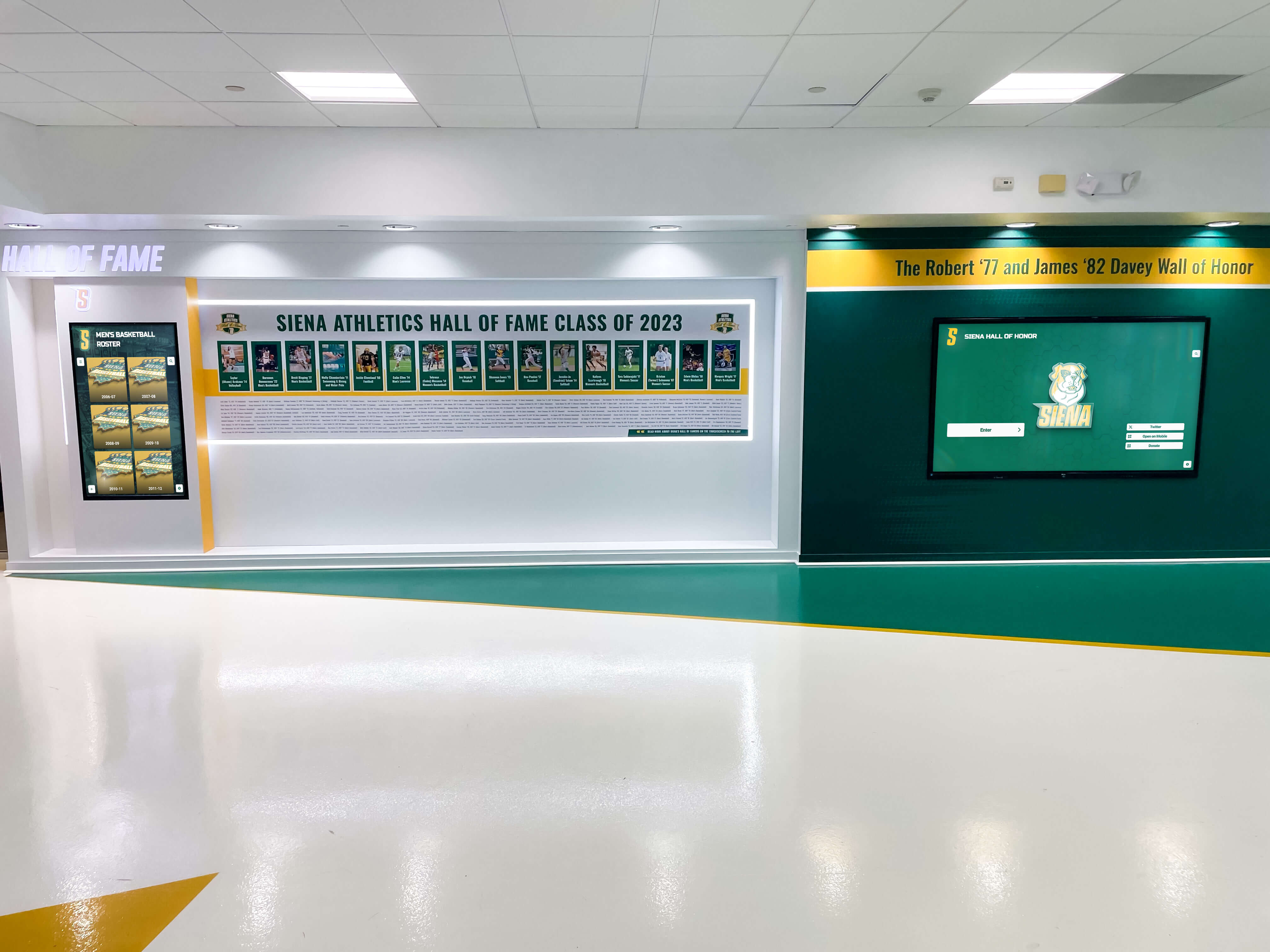
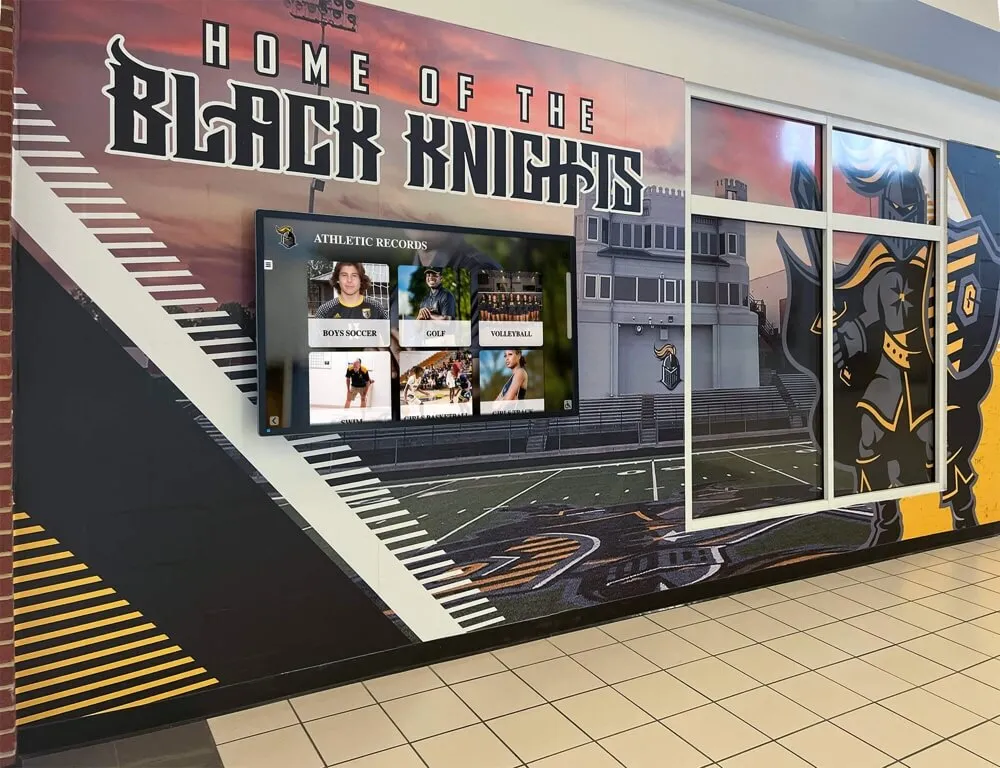
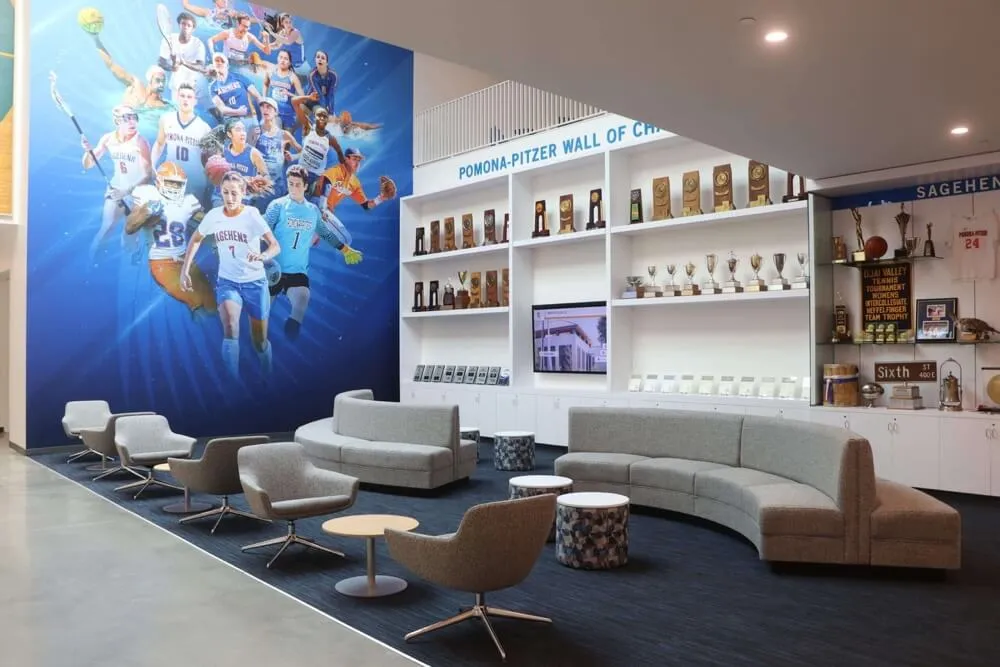
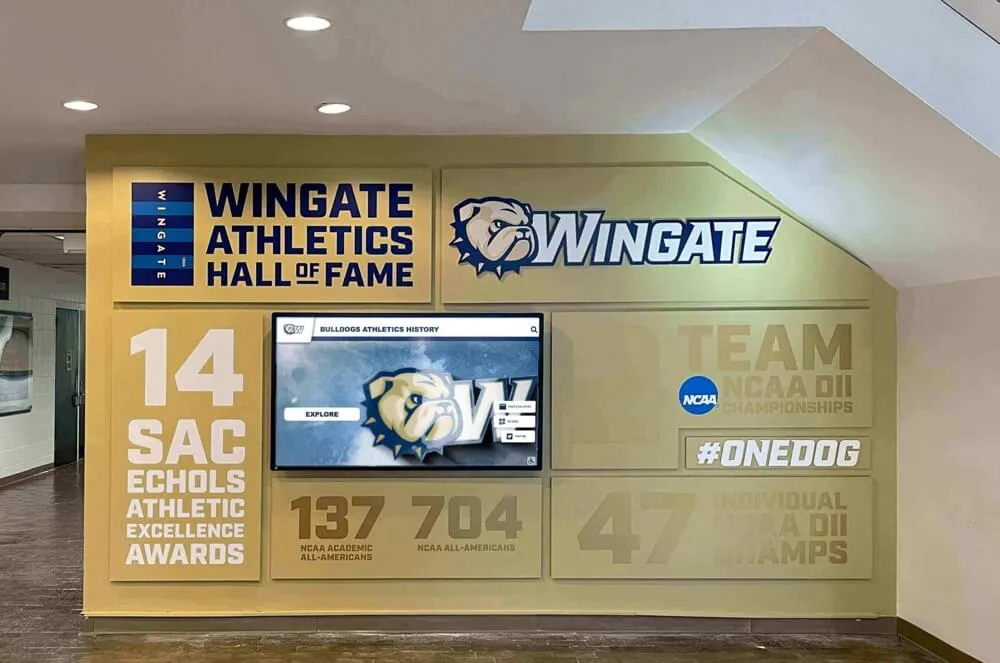
Recognition installations like this draw on safely digitized source photographs — the intake workflow for glass negatives and ambrotypes is what determines whether the original survives the transition to digital access intact and whether the image is captured at full quality
Connecting Collodion Photographs to Athletic Recognition Programs
Intake documentation and digitization planning are the first steps in a longer recognition workflow that connects historic team photographs to the displays and databases where athletic community members encounter them.
Once a collodion photograph has been assessed, digitized, and its provenance verified, the digital file joins a broader collection of recognized athletic achievements: team records, championship titles, individual athlete profiles, and related objects. Tracking all recognized accomplishments consistently — including which championship banners are displayed where, which titles they represent, and across which sports and years — supports a recognition program that is accurate and searchable. Resources for championship banner inventory management offer a framework for maintaining those records systematically alongside photographic materials.
The same intake and handling-record discipline that applies to collodion photographs applies to other historic objects in a school’s athletic collection. Bakelite trophy bases, for example, require their own identification and handling protocol before any cleaning, display, or conservation decision is made — the same conservative, documentation-first approach that governs photographic intake. Guidance on Bakelite trophy base identification and handling records extends that approach to another common historic material found in school athletic archives alongside early photographs.
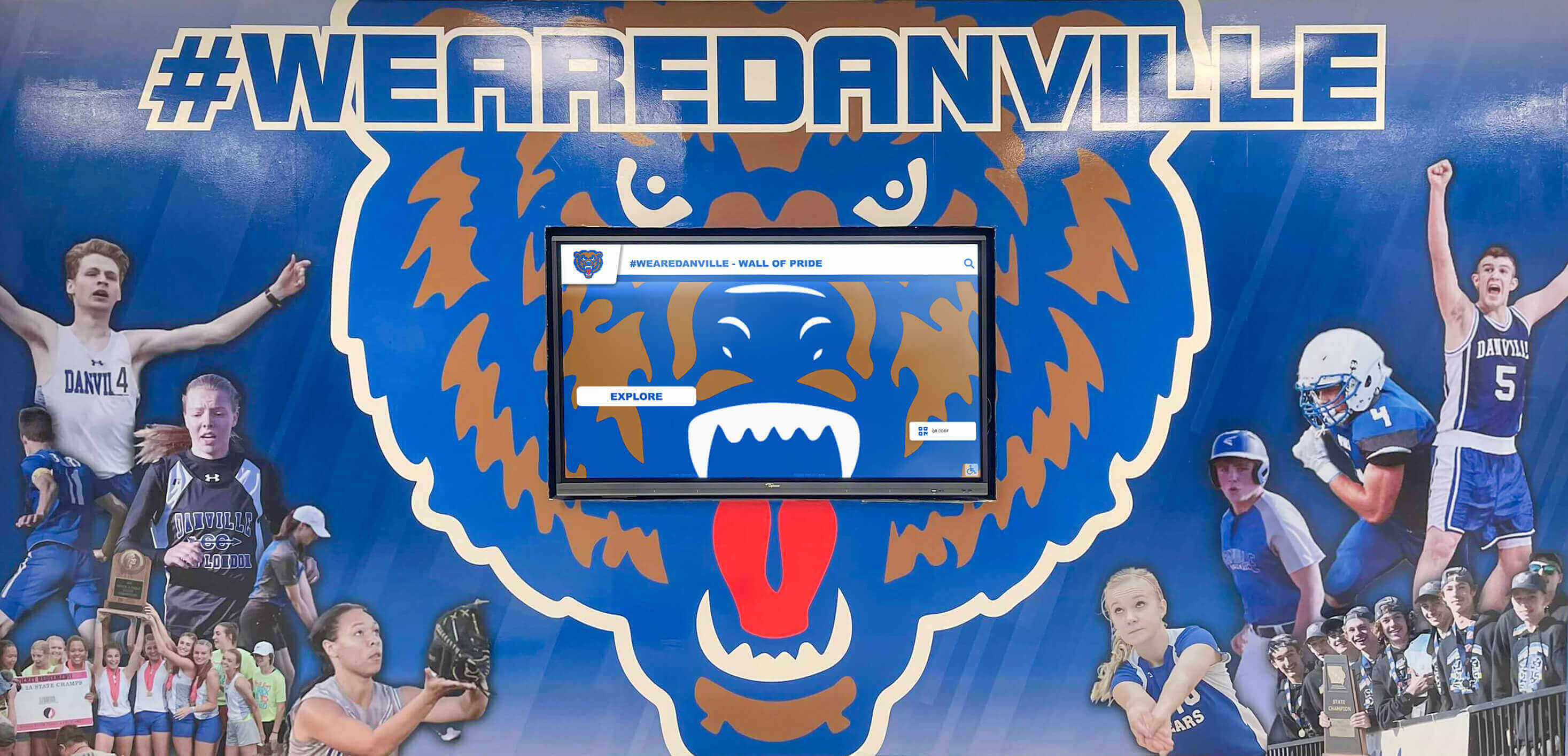
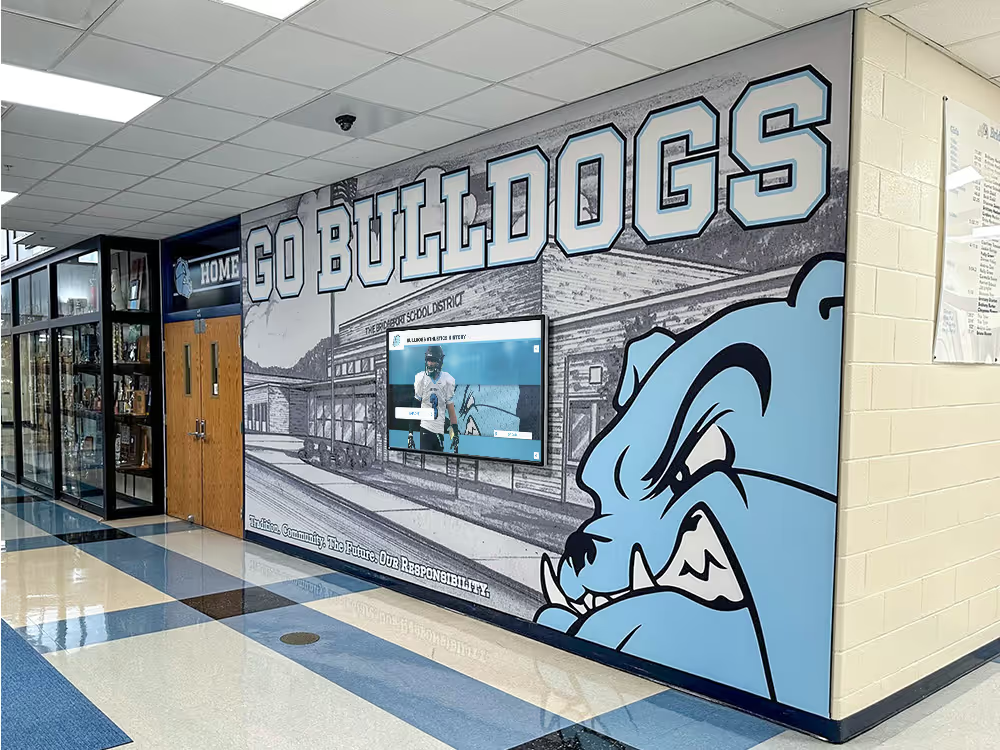
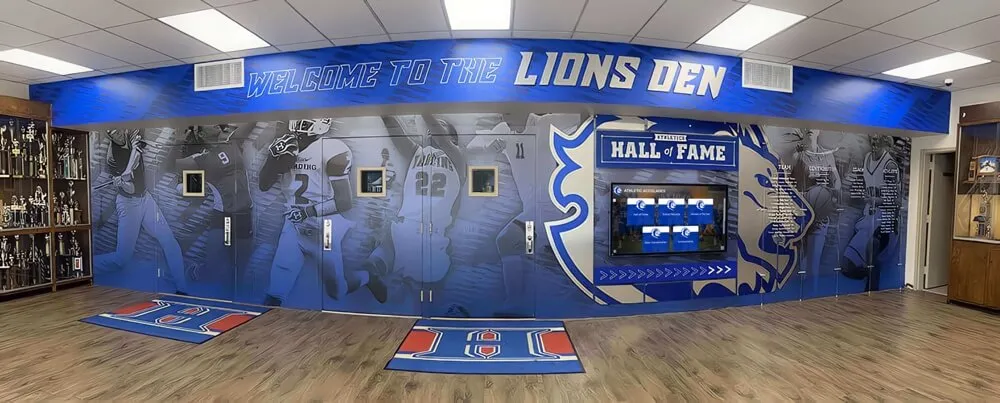
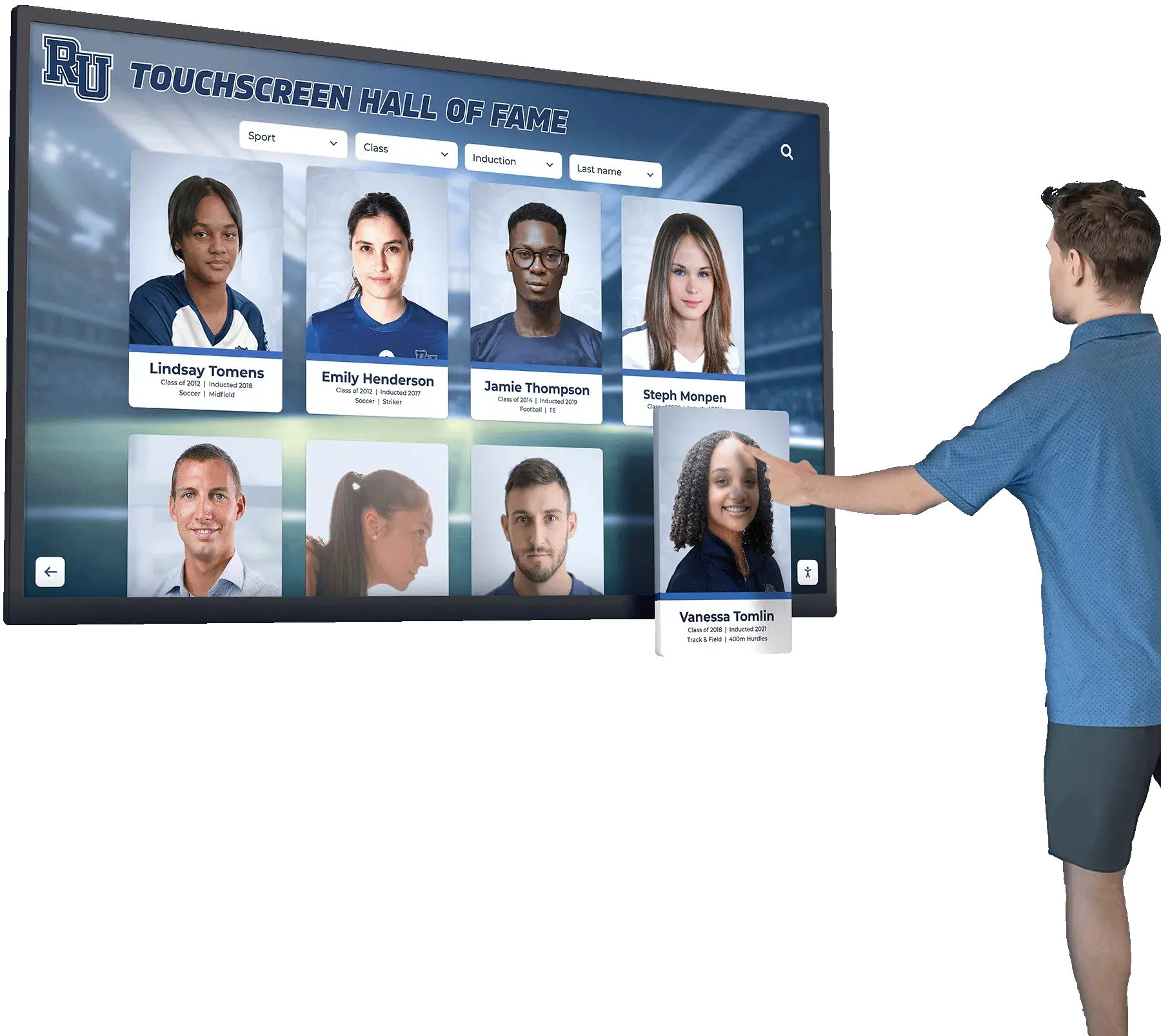
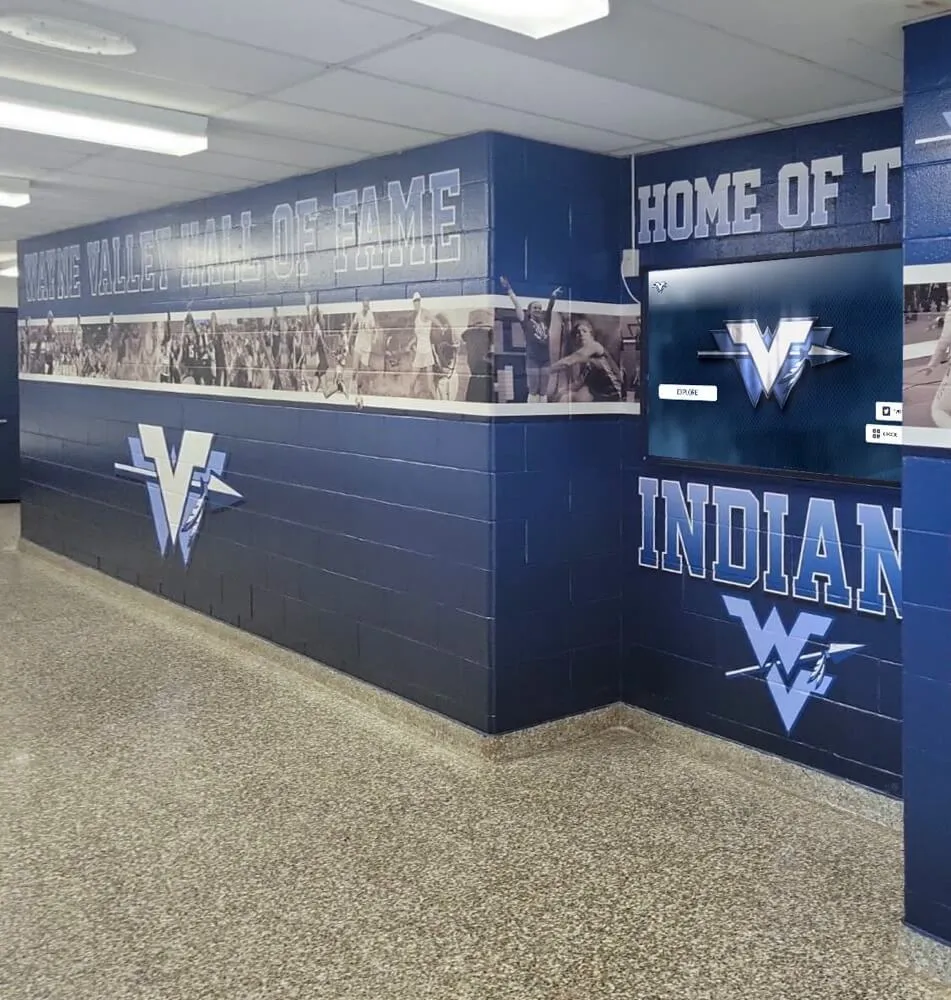
School identity displays combining murals and digital screens draw on photographic collections built up over many decades — collodion photographs from a program's earliest seasons, digitized from correctly assessed originals, can enter that record alongside materials from every era
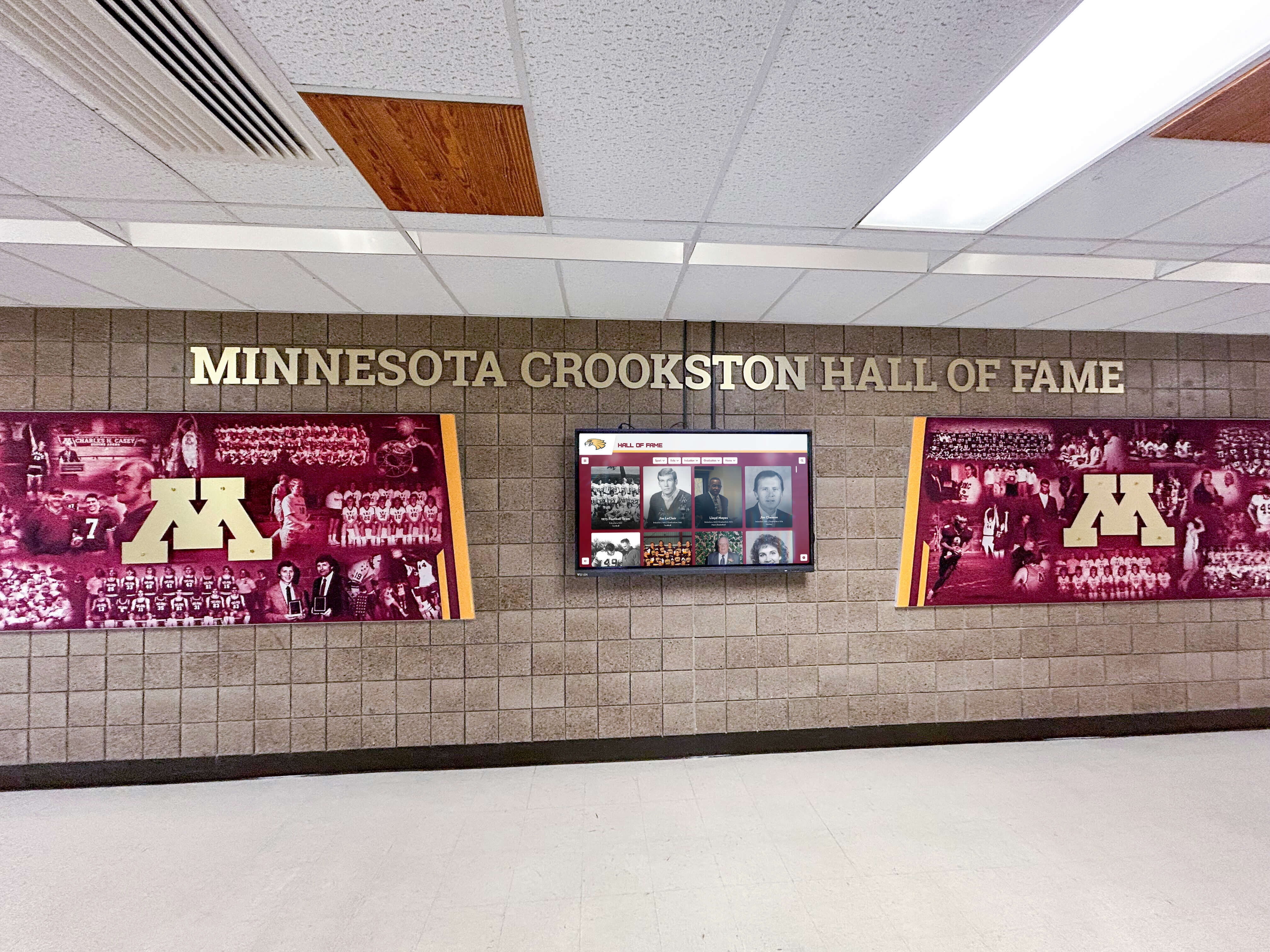
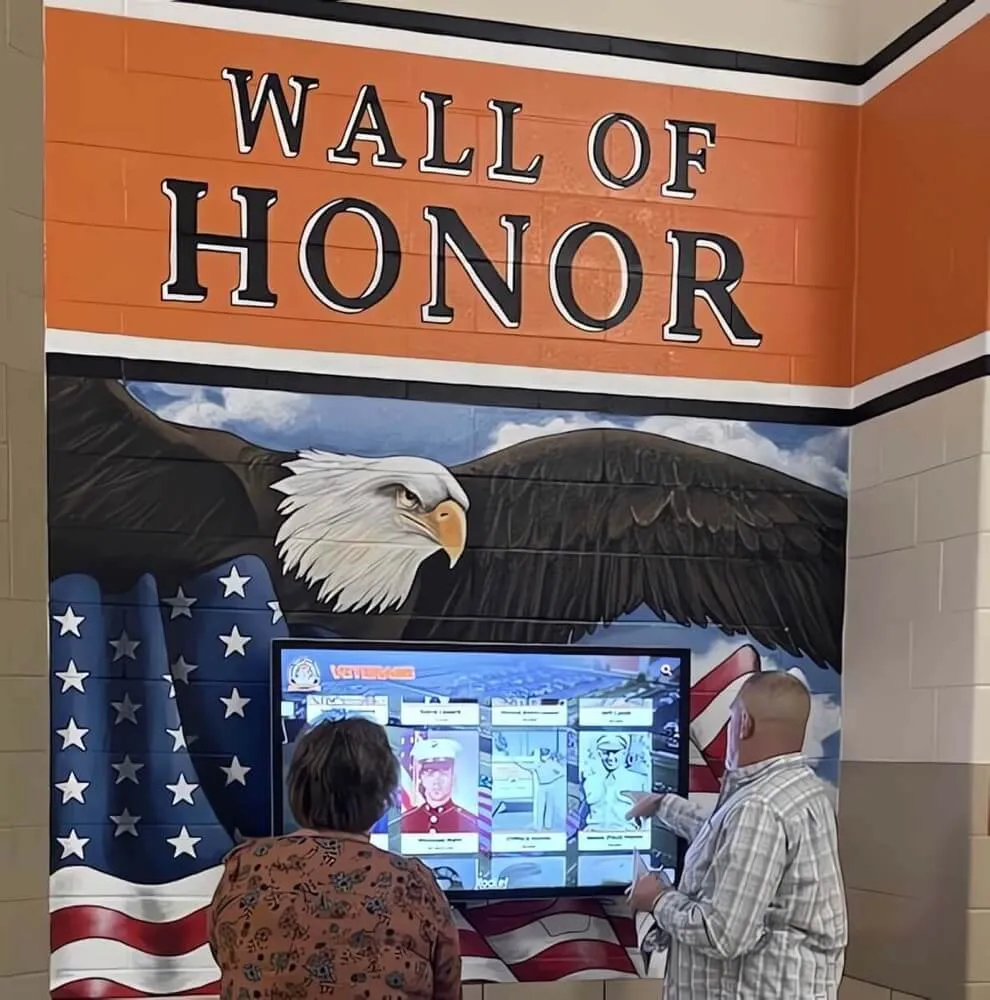
Programs that present athletic history through both physical murals and digital screens depend on source photographs managed correctly from intake through digitization — the accession record created at collodion photograph intake becomes the documented foundation for every downstream use of the image
Frequently Asked Questions
Can I identify a wet-collodion photograph just from its appearance at intake?
Visual examination can produce a provisional identification strong enough to guide initial handling and housing decisions. A glass-support image that reads as a positive in a hinged case with a dark backing is consistent with an ambrotype; a glass-support image that reads as a negative in transmitted light is consistent with a collodion glass negative. However, multiple processes used glass supports, and condition deterioration can alter original appearance. Visual identification guides provisional intake decisions. A conservator’s examination can confirm the process when the identification would change a treatment or handling decision.
What should I do if an ambrotype case arrives with the cover glass broken?
If the cover glass is cracked but still in position and not in contact with the image surface, photograph the case and the broken glass in their current state and route the object to a conservator before any further handling. If broken cover glass is loose inside the case, leave it in position and transport the case without tilting or inversion. Do not attempt to remove, re-position, or secure broken cover glass in a school setting — displaced glass in contact with the image surface requires conservator evaluation.
Do pour lines on a glass negative indicate when it was made?
Pour lines — the coating irregularities from tilting liquid collodion across the glass during plate preparation — are a visual characteristic consistent with the wet-plate collodion process and may support a provisional identification of that process. They are not a reliable indicator of production date and should not be used to assign a year or decade to an undocumented plate. Record pour lines as visual observations in the intake record, note them as a characteristic observed rather than as a dating basis, and rely on inscriptions, labels, or documented provenance for date information.
Should I store glass negatives flat or on edge?
Storage on edge in a divided archival box is the preferred orientation for glass negatives. Flat stacking of plates concentrates the cumulative weight of upper plates on lower ones; a crack or fracture in a lower plate can propagate damage through adjacent materials. Upright edge storage in a divided container supports each plate individually and allows plates to be removed and replaced without disturbing adjacent materials.
How do digital copies from glass negatives and ambrotypes benefit a school’s athletic recognition program?
A high-quality digital copy of a glass negative or ambrotype can be integrated into a recognition database, displayed on lobby screens, and used in digital yearbook and archive materials without requiring the fragile original to be retrieved and handled again after digitization. Original glass materials return to controlled archival storage where they remain stable, while the digital file carries the full visual record of the photograph to every recognition system that presents it. Digital access built from a single careful digitization eliminates the cumulative handling demand on originals that would otherwise be retrieved repeatedly from storage for each display or publication use.
How do I find a conservator who works with photographic glass materials?
The American Institute for Conservation maintains a Find a Conservator directory at culturalheritage.org that allows filtering by specialty including photographic materials. State archives, state historical societies, and regional conservation centers also maintain referral lists for conservators with photographic specializations. Bring intake documentation to the initial conservator contact — photographs of each object’s current condition, provisional identification notes, storage history, and any provenance or inscription information — to help the conservator scope the work before materials are transported.
Schools with glass negatives or ambrotypes from their earliest athletic seasons hold visual records of teams and athletes that often exist in no other form — photographs of founding coaches, early championship squads, and individual players whose names appear on the oldest trophy cases and honor boards. A systematic school athletic archive collodion photograph intake, applied before any scanning equipment is introduced, is what keeps those records available for the recognition programs that present school athletic history rather than at risk from handling approaches not matched to the fragility of glass and collodion.
Ready to connect your safely assessed and digitized historic athletic photographs to a recognition program that makes them visible to athletes, alumni, and your school community?
Request a Rocket Alumni Solutions demo and see how schools are bringing decades of historic team photography into touchscreen hall-of-fame displays, lobby recognition installations, and digital archives that celebrate athletic history across generations.