School history, shared
Athletic Archive Audio Phase-Correlation Check for Historic Recordings
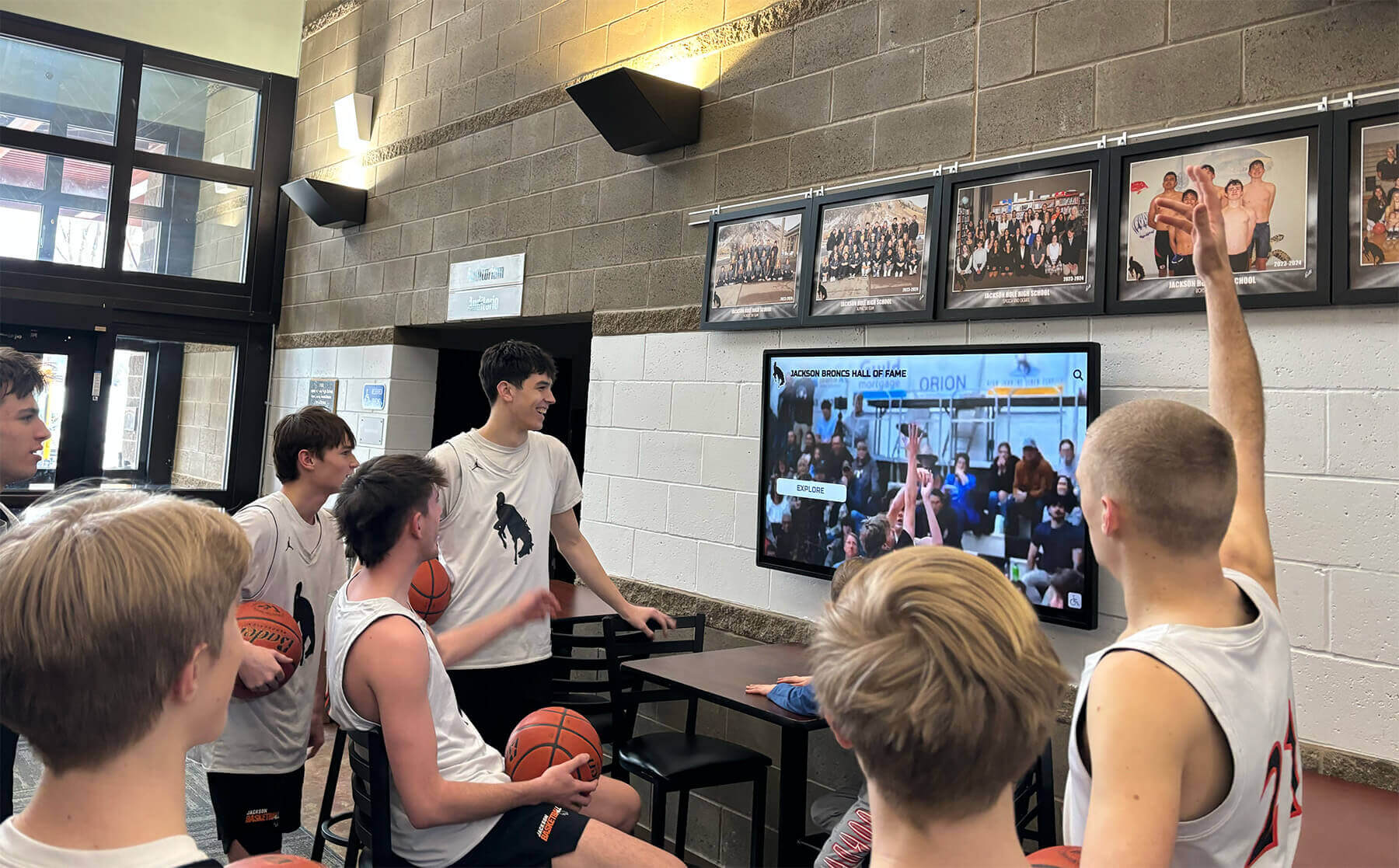
The athletic archive audio phase-correlation check is the process of measuring the phase relationship between audio channels in historic game broadcasts, coach interview recordings, and multi-microphone event captures — detecting whether channels are aligned in phase, partially out of phase, or fully inverted before those recordings are normalized, packaged, or published to a school’s permanent archive or recognition display system. A phase correlation meter assigns a value between +1 and −1 to the stereo relationship of two channels: a reading near +1 indicates that both channels carry nearly identical content (typical of centered mono sources), a reading near 0 indicates independent stereo content with no systematic phase relationship, and a reading near −1 indicates that one channel is largely the mirror inverse of the other — a condition that causes the channels to partially or fully cancel when summed to mono and that produces a hollow, phashy sound quality at every subsequent playback through any system that mixes channels together.
Phase problems in school athletic archives arise from several distinct causes that compound over decades of analog recording. A microphone connected with reversed polarity during a 1983 game broadcast inverts one channel of the VHS recording; when that tape is digitized forty years later, the captured stereo file retains the inversion permanently. A multi-microphone setup where two boundary mics were positioned at different distances from the same announcer source creates a time-offset phase relationship between channels that produces comb-filtering across the frequency spectrum. A reel-to-reel tape recorded in mid-side format for a campus radio broadcast — but never decoded before archiving — stores L+R and L−R rather than left and right, causing downstream systems to read the track as fully out of phase on the correlation meter. Each of these defects survives every format transfer and delivery step that follows unless a phase-correlation check identifies and corrects it before archive normalization.
This guide gives school administrators, athletic directors, AV coordinators, and IT staff a systematic workflow for checking phase correlation in existing recordings, identifying the specific cause of phase problems when they appear, applying targeted corrections at both the hardware and software stages, verifying corrected files against a minimum correlation target, and establishing intake standards that catch the problem on every new acquisition entering the archive.

Recognition displays and lobby screens that replay historic game footage draw their audio quality directly from the archive's source recordings — phase correlation problems that were not corrected at intake produce degraded, phashy sound through every speaker system downstream, including touchscreen kiosks and athletic hall-of-fame installations
What Phase Correlation Measures and Why Athletic Archives Are Vulnerable
A phase correlation meter compares the instantaneous amplitude of two audio channels at each moment in time and reports whether they are moving in the same direction (positive correlation), in opposite directions (negative correlation), or independently (near zero). The measurement is not about loudness or frequency content — it is a specific assessment of the phase relationship between channels, expressed as a single continuous value on the −1 to +1 scale.
Positive correlation (approaching +1): Both channels carry highly similar content. Mono recordings played back in stereo, centered spoken content recorded with a single microphone, and dual-channel recordings where both channels captured the same source will all read near +1. This is normal for historical mono interview recordings where both channels of a stereo capture contain the same signal.
Near-zero correlation (around 0): Both channels carry independent content with no systematic phase relationship. A well-recorded stereo broadcast with a left commentator microphone and a right ambient microphone, or a stereo music bed where genuine channel separation exists, will typically average somewhere in the −0.2 to +0.5 range depending on the program material. Near-zero correlation on a recording that is expected to be mono-centered is an early indicator of a phase problem.
Negative correlation (approaching −1): One channel is largely the phase inverse of the other. At −1, the channels cancel completely when summed to mono — the stereo image collapses to silence in any mono-playback context. A reading consistently below −0.5 on a recording that should contain centered mono content indicates a polarity inversion, a significant time-offset error, or an undecoded mid-side recording. All three require correction before the recording enters the archive.
Why school athletic archives are particularly vulnerable to phase problems:
- Hand-wired patch connections at the point of recording. Game broadcasts in school athletic facilities from the 1960s through the 1990s were frequently connected using mismatched adapters, reverse-wired XLR cables, and consumer-to-professional conversion patches assembled by non-specialist staff. A single reversed pin in a microphone cable inverts the polarity of that channel in every recording made through that connection until someone identifies and corrects the wiring.
- Consumer VHS stereo recording. VHS recorders used for archiving athletic events accepted audio from whatever source was available at the moment — camera outputs, mixer outputs, PA system taps, and direct microphone connections were all used depending on the event and the available equipment. Channel assignment between left and right inputs was inconsistent across seasons and operators, and polarity was rarely verified.
- Multi-microphone event coverage without phase alignment. Press row setups, sideline microphone arrays, and multi-camera audio feeds from athletic events used multiple microphones positioned at varying distances from shared sources. Combining those feeds without time alignment creates comb-filtering phase relationships that read as partially negative correlation across the frequency band.
- Mid-side encoded radio broadcast recordings. Campus radio broadcasts archived directly from the broadcast chain sometimes captured the mid-side encoded signal rather than the decoded stereo. An archived recording in MS format plays back with apparent stereo width when listened to on a standard stereo system, but reads as strongly negative correlation on a meter — because the side channel (L−R) is an inverted mirror of itself.
- Multi-generation format transfers without phase verification. A recording transferred from reel to cassette to VHS and finally digitized accumulates any phase error introduced at each transfer step. A polarity inversion introduced at the second transfer step is present in every subsequent generation and is undetectable without a correlation check on the final digital file.
- Aging tape with asymmetric oxide loss. As magnetic oxide degrades unevenly across the two tracks of a stereo tape, the signal level balance between channels changes. In extreme cases, partial oxide loss on one track reduces its level to the point where the phase relationship between channels shifts measurably, contributing to reduced correlation even without any original recording error.
For most school athletic archives, the recordings most likely to carry phase problems — and most valuable to the programs that display and share them — are the multi-microphone event recordings and the broadcast-chain captures from the decades spanning a program’s historical peak. The phase-correlation check is the step that identifies these problems before they become permanent features of the normalized archive file.
Phase Correlation Risk by Source Format
| Source Format | Era in School Archives | Phase Risk | Primary Symptom | Correction Approach |
|---|---|---|---|---|
| Open-reel 1/4" stereo (2-track) | 1950s–1980s | High | Weak mono image; hollow sound when channels summed; correlation reading below 0 | Check cable polarity and head alignment; apply polarity flip if one channel is inverted |
| Open-reel MS-encoded radio broadcast | 1960s–1980s | Very high | Strong negative correlation reading throughout recording; wide stereo image on monitor but summing destroys signal | MS decode (sum/difference matrix) before archiving |
| Compact cassette (stereo) | 1965–2000s | Moderate | Phase inconsistency in quiet passages; correlation fluctuates below 0 in interview content | Verify cable polarity during playback; apply polarity correction if consistent inversion |
| VHS linear stereo (multi-mic event) | 1984–2000s | High | Comb-filtering coloration; correlation averages near 0 on content that should read near +1 | Time-alignment of channels in software before normalization |
| VHS Hi-Fi stereo (broadcast feed) | 1984–2000s | Moderate | Phase problems introduced at the broadcast source, not the tape format itself; manifests as unstable correlation | Verify at capture; correct any consistent polarity inversion |
| S-VHS linear stereo | 1987–2005 | High | Same as VHS linear; narrower track width increases sensitivity to multi-mic phase errors | Same as VHS linear |
| 3/4" U-matic (two-track) | 1970s–1990s | Moderate | Phase inversion possible from patch-cable polarity errors at the point of recording | Check polarity during playback; correct in software |
| Betacam SP (two audio channels) | 1986–2000s | Low | Professional recording environments; polarity errors less common but not impossible | Verify correlation at capture; correct only if reading is consistently negative |
| MiniDV / DVCAM | 1995–2010 | Low | Digital encoding; phase errors are from original recording conditions, not the format | Verify if multi-mic recording; apply time alignment if needed |
| DAT (two-track) | 1990s–2000s | Low | Same as MiniDV — digital format preserves whatever phase relationship existed at recording | Verify and correct at digitization if original was multi-mic |
The boundary relevant to phase-correlation risk is not analog versus digital — it is multi-microphone versus single-microphone recording. Any recording that combined two or more microphones into a stereo signal carries the risk of time-offset phase problems from microphone positioning, regardless of the format used to store the result. The analog formats in the table above add additional polarity-inversion risk from cable wiring. Both risks are independent and can coexist in a single recording.
For schools planning to integrate corrected audio archives into comprehensive recognition programs that guide program history across academic and athletic achievements, establishing phase correlation minimums as part of the intake checklist places audio quality on the same systematic footing as visual content standards and metadata requirements.
Step 1: Identify Phase Problems Through Monitored Playback
The first step in the athletic archive audio phase-correlation check workflow is distinguishing recordings that require correction from those that do not. Not every tape in the collection will exhibit phase problems. Identifying the affected recordings before committing the full correction workflow to the entire collection reduces total processing time.
Listening indicators that suggest a phase problem:
- A hollow, thin, or “phashy” quality to voice content that should sound natural and centered — particularly noticeable in coach interview recordings and announcer commentary
- A very wide or diffuse stereo image on content that was recorded with a single microphone, with no stable center
- A sense that the audio sounds better through one ear than through both simultaneously, or distinctly worse when listening through a mono speaker
- A comb-filter coloration — a characteristic “swishing” or metallic quality — especially on voice content recorded in reverberant athletic facilities
Meter-based identification:
Load the digital capture of the recording into any DAW or audio editor that displays a phase correlation meter. On a recording where no phase problem exists, the meter should read consistently in the positive range (+0.3 to +1.0) for content that is primarily centered mono, and in the 0 to +0.5 range for genuine stereo content. Readings that consistently average below 0 — particularly those that regularly reach −0.5 or lower — indicate a phase problem that requires investigation.
A goniometer (phase scope or vector display), available in the same DAW tools as the correlation meter, provides a complementary visual check. Healthy stereo or mono content produces a display pattern that extends primarily along the vertical axis (the center or mono axis). Content with a polarity inversion between channels produces a pattern that extends primarily along the horizontal axis — a rotated display that immediately signals that one channel is inverted relative to the other.
Rapid triage approach for large collections:
For an archive with hundreds of tapes, a two-minute monitored playback of the loudest spoken passage in each recording — while watching the correlation meter — provides enough information to classify each recording as passing (no correction needed), suspect (correlation occasionally dips below 0 but recovers), or failing (correlation consistently below 0 or reaching −1). This triage step routes each tape to the appropriate correction tier without committing the full analysis workflow to every item before priority is established.
Step 2: Measure Phase Correlation and Identify the Cause
Once a recording has been flagged as a phase problem during triage, a full measurement pass determines the specific cause and guides the correction approach. The three most common causes in school athletic archives each produce a distinct pattern on the correlation meter.

Athletic recognition displays draw on game broadcasts, coach interviews, and event recordings from decades of archived media — phase correlation problems in source recordings affect every playback through these systems, including kiosk audio, lobby loops, and video highlight reels compiled for alumni events
Pattern 1: Consistent strong negative correlation throughout the recording
A recording that reads at −0.8 to −1.0 throughout its entire duration, with the correlation meter pegged in the negative range during both loud and quiet passages, indicates one of two causes:
- Single-channel polarity inversion: One microphone or one channel of the recording chain was connected with reversed polarity. The signal in that channel is the mirror inverse of what it should be. The fix is a one-step polarity flip on the inverted channel — a lossless correction that can be applied directly in any audio editor.
- Undecoded mid-side recording: A recording captured in MS format stores the sum of left and right (M channel) and the difference of left and right (S channel) on the two tracks. When played back as conventional stereo, the S channel reads as a phase-inverted signal relative to the M channel — producing a strongly negative correlation reading throughout. The fix is MS decoding: sum the two channels to produce left (M+S), and subtract them to produce right (M−S).
Distinguishing between these two causes requires listening to each channel in isolation. A polarity inversion sounds like a normal recording on each channel individually — one channel sounds forward, the other sounds identical but inverted in polarity. An undecoded MS recording sounds different on each channel: the M channel contains centered mono content, and the S channel contains the stereo difference signal — a narrower, more diffuse sound that changes character depending on the stereo width of the original recording.
Pattern 2: Variable negative correlation tied to specific passages
A recording where correlation dips below 0 during some passages but recovers above 0 in others indicates a time-offset phase relationship between channels — the hallmark of a multi-microphone setup where the channels were not time-aligned before recording or during mixing.
The two channels were capturing audio from the same acoustic source, but from different distances. The wave arrives at Microphone A at one moment and at Microphone B a fraction of a millisecond later. When combined, the slight time offset produces constructive and destructive interference across the frequency spectrum — comb filtering — and causes the correlation meter to dip into negative territory at the frequencies where destructive interference is strongest.
The fix is channel time alignment: identify the arrival-time offset between channels by examining the waveform at a percussive transient or loud event captured by both microphones, measure the sample-count offset between the two channels at that moment, and nudge one channel earlier in time by that sample count to align the arrivals. Most professional DAWs provide a sample-accurate channel delay or trim function that performs this correction losslessly.
Pattern 3: Moderate negative correlation in a recording that should be mono
A recording from a single microphone — a cassette recorder placed in front of one coach during a post-game interview, for example — should read near +1.0 throughout its duration if both channels are healthy copies of the same signal. A reading that averages in the 0 to −0.3 range on content that is known to be single-microphone mono indicates that one channel has degraded during recording or playback — either from oxide loss on one track, electronic channel asymmetry in the recording deck, or a previous-generation transfer error.
In this case, the most effective correction is not phase inversion but channel selection: if one channel is clean and the other is degraded, duplicate the clean channel to both outputs before normalization. If both channels are partially degraded, average them — sum both channels and reduce the result by 6 dB — to produce a single averaged mono signal that is cleaner than either channel in isolation. Document the derivation in the processing record.
Step 3: Apply Phase Corrections
With the cause identified, apply the appropriate correction in a non-destructive software environment. Work from the preservation master file; write corrections to a new access copy and leave the master unchanged.
Polarity flip (single-channel inversion):
Every major audio editor — including Audacity (free), REAPER, Adobe Audition, and iZotope RX — provides a polarity inversion function that flips the signal of one channel by 180 degrees. Apply this to the inverted channel, then verify the result by playing the corrected file while monitoring the correlation meter. The reading should shift from the negative range to the positive range after a correct polarity flip. If the reading remains negative after the flip, verify that the correction was applied to the correct channel; if correlation improves but does not reach the positive range, additional time-alignment correction may be needed in combination.
MS decoding:
MS decoding is a matrix operation. Most professional audio editors include a dedicated MS decoder function. In editors without a dedicated tool, create two copies of the two-track recording. Apply a polarity inversion to the S channel (Track 2) on the second copy. Sum Track 1 of the original with Track 1 of the inverted copy to produce left. Sum Track 2 of the original (inverted) with Track 2 of the inverted copy to produce right. The result is a decoded stereo file where left and right channels contain the original left and right content from the recording session.
Channel time alignment:
Identify a sharp transient in the waveform view — a clap, a whistle, or the onset of a loud crowd response — visible in both channels. Zoom to the sample level and measure the sample offset between the two channels at that transient. Nudge the later channel earlier in time by that number of samples using the channel delay or trim function. Re-measure correlation after alignment to verify improvement.
Channel averaging for single-microphone mono recordings with degraded asymmetry:
Sum both channels using the audio editor’s mono mixdown or channel-merge function, then reduce the output level by 6 dB to compensate for the level increase from summation. Apply the result to both output channels of the access copy. This approach is appropriate only for recordings that are confirmed to be single-microphone mono — it would damage genuine stereo content by eliminating all channel difference information.
Step 4: Validate Corrected Files Against Minimum Standards
After applying corrections, measure the corrected access copy against a minimum phase-correlation target before committing it to the archive. A target of +0.3 or higher on content that is expected to be centered or mono is a reasonable minimum for school athletic archives. Content that averages below 0 after full correction should be flagged in the processing record with a note explaining why additional correction was not feasible.

Trophy lounges and recognition spaces that integrate audio from historic broadcasts present the audio at whatever quality level the archive delivers — phase problems that were not corrected before archive ingest reach the visitor's ear unchanged, underscoring the value of a systematic phase-correlation check at intake
Run the corrected file through the full correlation meter while monitoring the highest-level passages (game broadcast peaks, loud crowd segments) and the quietest passages (pre-game interview content, post-game coach remarks). Both categories must meet the minimum target. A recording that passes the loud-passage check but fails on quiet speech may indicate residual time-offset that was not fully corrected — re-examine the alignment.
Verify stereo content — recordings that were genuinely stereo at the point of recording — against a different target. Genuine stereo content should average in the 0 to +0.5 range. Content that reads consistently below 0 on a recording that was known to be a two-microphone broadcast is still a phase problem worth correcting even if the reading is not in the strongly negative range.
Listening validation:
A meter check alone is not sufficient. Listen to the corrected access copy on a reference playback system — ideally a system that includes both stereo and mono monitoring modes. Switch between stereo and mono monitoring while the recording plays. If phase problems were successfully corrected, the mono playback should sound fuller and closer to the stereo playback than the uncorrected version did. A recording that drops dramatically in level or loses significant mid-range content when switched to mono contains residual phase problems that the meter measurement may not have fully reflected.
Step 5: Document and Update Intake Standards
Record the findings and corrections for every recording processed through the phase-correlation check workflow. A minimal processing record for each file should include:
| Processing Field | Content |
|---|---|
| Recording identifier | Accession number, tape label, or archive filename |
| Format and era | Source format, estimated recording date |
| Triage finding | Correlation reading and pattern observed during triage |
| Cause identified | Polarity inversion / time offset / MS encoding / channel asymmetry |
| Correction applied | Tool used, settings applied, output file name |
| Post-correction reading | Average correlation on corrected access copy |
| Validation result | Pass / conditional pass / flag for review |
| Preservation master location | Path to uncorrected digital capture |
| Access copy location | Path to corrected archive file |
Embed the processing record in the corrected file’s metadata where the format supports it — WAV and BWF files accept extended metadata in the BEXT chunk, and most DAWs can write custom metadata fields to these chunks during export. A sidecar text or CSV record alongside the file in the archive directory provides a human-readable backup that remains readable if the file’s embedded metadata is stripped during a future format migration.
Schools that have systematically evaluated their digital recognition infrastructure — including the factors that distinguish vendors during hall-of-fame platform selection — will find that audio quality at the archive level determines whether the historic content a recognition platform is built to display is actually worth displaying. The phase-correlation check is one of several intake steps that ensures the archive’s source material meets the quality standard that downstream recognition systems expect.
Updating intake standards:
Convert the phase-correlation check from a retrospective remediation activity into a standing intake protocol. Every open-reel, cassette, VHS linear, and multi-microphone recording entering the archive for the first time should receive a mandatory phase-correlation screening pass. A minimum correlation target of +0.3 for mono content and 0 to +0.5 for genuine stereo content, documented in the intake standard, gives any staff member performing the check a clear accept/reject threshold without requiring a judgment call on every item.
Connecting Phase-Corrected Audio to Recognition Programs
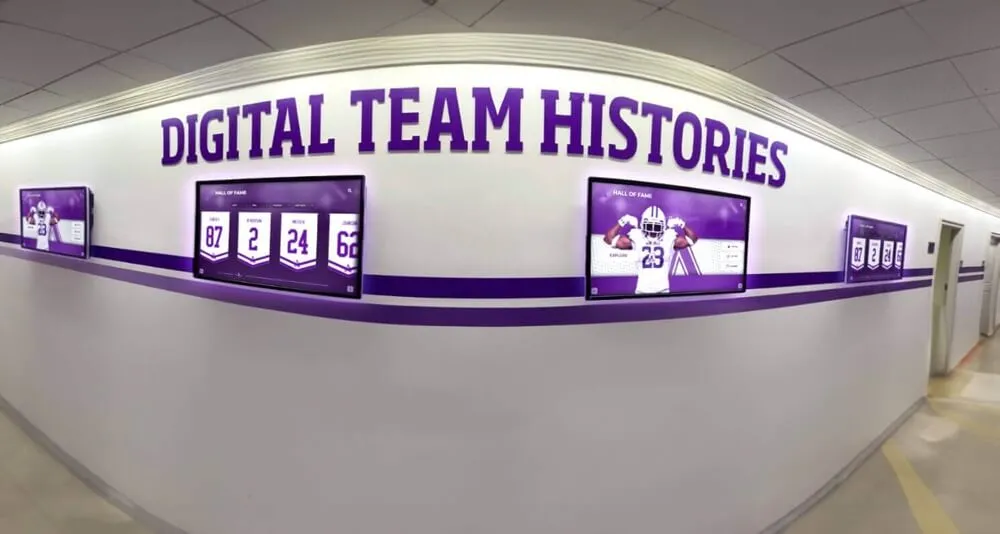
Team history displays and recognition corridors that integrate audio from the athletic archive deliver that audio quality to every visitor — systematic phase-correlation checking at archive intake is the control point that determines whether visitors hear the program's history clearly or through a layer of audio degradation
The full value of the phase-correlation check workflow appears when corrected archive recordings are connected to the recognition systems and school programs that present them to audiences. A coach interview from 1977 that reads at −0.7 correlation in its uncorrected form — thin, phashy, and difficult to follow through a lobby speaker — reads at +0.8 after polarity correction and presents the coach’s remarks with the clarity and presence that makes the content worth listening to. A game broadcast from 1991 with comb-filter coloration removed through channel time alignment provides a clean stereo field for a video highlight reel compiled for a graduating class recognition event.
Programs that connect corrected audio archives to touchscreen recognition displays and athletic hall-of-fame installations need their audio source material to meet the same quality floor as the visual content those systems display. A high-resolution photograph of a 1985 championship team loses some of its impact if the audio from that season’s game broadcasts plays back with a hollow, degraded quality through the display’s speakers. The phase-correlation check is the intake step that eliminates that gap.
Schools building recognition programs that honor multiple generations of students and staff — including memorial recognition programs for deceased faculty and coaches — depend on archive audio quality to give those tributes the weight they deserve. Phase-corrected recordings of a coach’s voice, used in a lobby touchscreen tribute, sound like that coach actually spoke them. Uncorrected recordings sound like the archiving process failed them.
For schools planning athletic recognition events — athletic banquets, hall-of-fame induction ceremonies, back-to-school showcases that introduce incoming students to program history — corrected archive audio functions as a resource that supports those orientation and community-building events with genuine program content rather than generic filler. The phase-correlation check is what transforms an unusable tape into a usable asset.
Schools that use their corrected audio archives alongside broader community recognition programs — including military appreciation recognition displays that honor veteran alumni and staff — find that audio quality consistency across the archive translates directly into display quality consistency across every program that draws from it.
Frequently Asked Questions
Q: Can a polarity inversion be identified without a correlation meter, using only visual inspection of the waveform?
Yes, in many cases. Open the stereo recording in any waveform editor that displays both channels simultaneously. If one channel appears to be the mirror image of the other — where the positive peaks in the left channel correspond to negative peaks in the right channel throughout the recording — a polarity inversion is likely present. The visual check is quick and useful for triage, but a meter-based measurement provides a quantified confirmation and catches partial inversions and time-offset problems that may not be visible in a waveform overview. Use the waveform check for rapid identification and the correlation meter for confirmation before applying any correction.
Q: Does phase-correlation checking apply to recordings that were captured as mono — for example, a single-track cassette interview?
A single-track mono recording has no phase relationship to check between channels. The phase-correlation check is relevant to stereo recordings and to dual-channel recordings where both channels were expected to carry the same or related content. For a recording that was captured to a single track, the relevant intake checks are level normalization, noise floor assessment, and channel consistency verification — confirming that both output channels of the digitized file carry the same content at the same level. Apply the phase check only when two channels are present and the relationship between them matters.
Q: We have corrected a recording’s polarity inversion, but the correlation reading is still somewhat below zero on some passages. Is the correction incomplete, or is this acceptable?
A corrected recording that averages above +0.3 on centered speech content and dips below 0 only during passages of genuine stereo content — crowd ambience that pans, musical elements with stereo width — is within normal parameters after polarity correction. The remaining below-zero readings in those passages reflect actual stereo content in the program, not a residual phase problem. If the below-zero readings occur during passages of single-voice content that should be centered, a residual time-offset may be present in addition to the polarity inversion that was corrected. Apply a channel time-alignment pass after the polarity correction and re-measure.
Q: How does phase correlation differ from the azimuth misalignment and crosstalk problems covered in other athletic archive preservation workflows?
The three problems are distinct in mechanism, detection, and correction. Azimuth misalignment is a head-alignment error that causes high-frequency attenuation without necessarily affecting phase correlation on the meter. Crosstalk is inter-track signal bleed — content from one track leaking into the adjacent track — that adds a second audio source to the primary channel without inverting either channel’s polarity. Phase correlation problems involve the relationship between the two intended channels of a stereo or dual-channel recording — not a third-party leak, but a systematic polarity or timing error between the left and right channels that were meant to work together. All three can coexist in a single recording. The recommended order of correction is: azimuth alignment first (because azimuth error can worsen apparent crosstalk), then crosstalk reduction (because crosstalk adds content that may skew the correlation reading), then phase-correlation check and correction last.
Q: Should we apply phase correction to every recording in a large collection, or only to those that fail the triage check?
Apply the correction workflow only to recordings that fail the triage check or score in the suspect range. Applying polarity corrections to recordings that are already phase-correct has no benefit — the correction is a no-op on recordings where no inversion exists — but it adds processing time and requires a processing record entry for every file, including those that needed no work. The recommended approach is a rapid two-minute triage pass for every recording, committing the full workflow only to those that score below the pass threshold. This prioritizes resources toward the recordings that actually need attention while maintaining a documentation trail that covers the full collection.
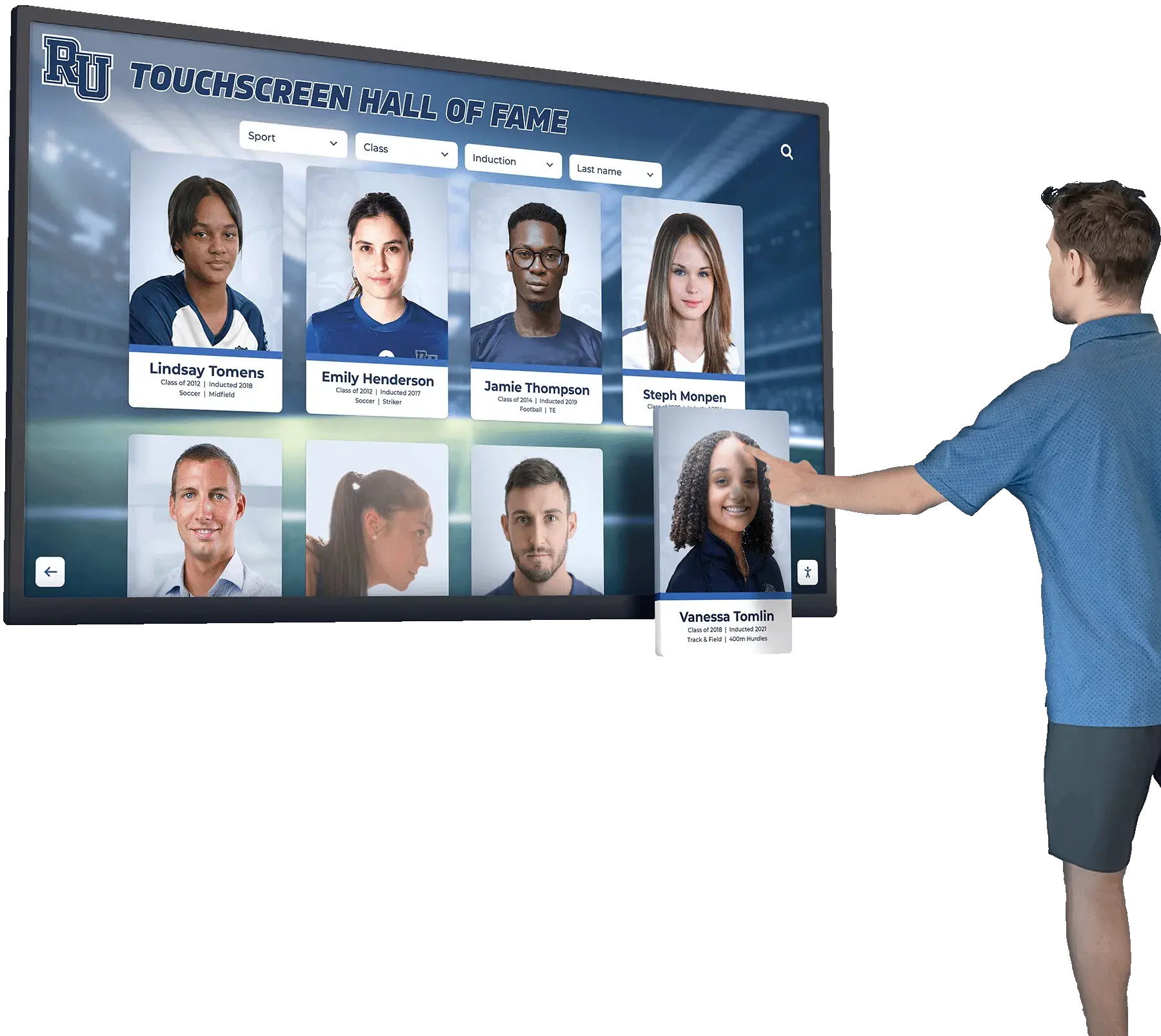
Interactive hall-of-fame touchscreens that present athlete profiles alongside game broadcasts and coach interviews deliver the archive's audio quality to every visitor — a systematic athletic archive audio phase correlation check at intake determines whether that audio supports the recognition experience or competes with it
Building Phase-Correlation Checking Into Your Archive Culture
The athletic archive audio phase-correlation check workflow delivers its greatest value when it becomes a standing intake protocol rather than a reactive measure applied after a display quality problem surfaces. Phase problems that are not caught and corrected at intake become permanent features of the normalized archive file — present in every access copy derived from it, in every export compiled from it, and in every recognition display that presents it to audiences.
The recordings in a school athletic archive that most commonly carry phase problems — multi-microphone event broadcasts, hand-wired VHS captures, and cassette interviews from the decades when most programs defined their identity — are also the recordings most likely to be presented through recognition systems that expose audio quality to every visitor who stops to watch. A phase-corrected game broadcast from a championship season plays through a lobby touchscreen with the clarity that makes visitors stop and listen. An uncorrected recording plays through that same speaker with a hollow, phashy coloration that signals to visitors that something is technically wrong, without telling them what or why.
Programs that have evaluated the broader landscape of recognition technology — including understanding what visual quality checks like color fringing tests reveal about display systems — understand that audio and visual quality standards reinforce each other. A recognition display with a sharp, accurate visual presentation and clean, phase-correct audio from the archive creates a combined impression of care and precision that honors the athletes, coaches, and programs it represents. The phase-correlation check is one of the intake steps that makes that impression possible.
Ready to connect your phase-corrected athletic audio archive to a recognition display that presents your program’s history with the quality it deserves?
Rocket Alumni Solutions designs digital hall-of-fame systems, lobby touchscreen kiosks, and athletic recognition walls for schools — built to present archive-quality audio and video from programs that preserved their history with care.
Request a recognition display demo from Rocket Alumni Solutions →
Ready to see this for your school?
Picture your collection in a custom mockup
Start with your yearbook collection and digitization goals, then request a custom digital mockup for your school.