Athletic archive albumen photograph cracking intake is the pre-digitization assessment process that examines possible historic school team portraits — mounted or unmounted albumen silver prints — for the condition of the albumen image layer, visible cracking and flaking, support and mount integrity, and inscriptions and provenance information, and determines how each print should be handled, documented, and routed before any scanning approach is selected. When a school athletic archive holds team photographs from the late nineteenth or early twentieth century, those prints may be albumen silver prints: images made by coating photographic paper with albumen (egg white) and then sensitizing it with silver salts to produce a glossy, warm-toned surface. The albumen coating that gives these prints their characteristic sheen is brittle. It cracks when relative humidity fluctuates. It can flake away from the paper support if a curled or already-cracked print is pressed flat — a risk that applies to flatbed scanning as well as to physical handling. Digitization cannot recover image-bearing flakes that detach during intake.
This guide gives school athletic directors, recognition-program owners, IT coordinators, and archive staff a practical intake framework for possible historic albumen school team portraits: how to recognize likely albumen prints from visual and physical characteristics, what to record about the support and mount, how to document cracking and flaking condition systematically, how to capture inscriptions and provenance, which handling approaches to avoid, how to plan non-contact digitization appropriate for fragile prints, and when a fragile or uncertain print should be routed to a photographic conservator before any further handling or scanning attempt.
If your athletic archive holds team portraits dating to the 1870s through the first decades of the 1900s — or any mounted photograph with a glossy surface, visible yellowing, and a cardstock or board backing — you may be handling albumen silver prints, the dominant photographic print format of the late nineteenth century and the format in which many of the oldest school athletic team portraits survive. These photographs often record the earliest documented teams in a school’s athletic history: the founding seasons, the first conference champions, the coaches and players whose names appear on the oldest trophy bases and honor boards. Getting them into a digital recognition program without damage starts with careful, conservative intake before any scanning equipment is introduced.
What Albumen Prints Are and Why the Cracking Matters for Athletic Archive Intake
Albumen prints were produced commercially from approximately the 1850s through the early 1900s, with their peak period of use in the 1860s through 1890s — precisely the decades when school athletic programs were being established and team portraiture was becoming common practice. The process involves coating a sheet of paper with a thin layer of albumen (egg white), allowing it to dry, and then sensitizing the coated surface with silver nitrate solution. The image forms in the albumen layer itself, not within the paper fibers, giving albumen prints their distinctive glossy surface and their warm yellow-brown to reddish-brown image tones.
The photographic print guidance published by the Canadian Conservation Institute describes albumen prints as particularly susceptible to cracking and flaking because the albumen binder responds to changes in relative humidity differently from the paper support beneath it. As humidity fluctuates, the albumen layer and the paper expand and contract at different rates, introducing stress that — over many decades of exposure to variable storage conditions — produces the fine network of cracks sometimes described as crazing or alligatoring on the surface of deteriorated albumen prints. The Northeastern Document Conservation Center’s preservation leaflet on photographic types similarly identifies humidity fluctuations as a primary driver of albumen layer cracking and notes that the cracking can progress to active flaking if the condition is not stabilized.
For school athletic archives, the implications of this deterioration mode are direct: a team portrait with visible cracking may have an albumen layer that is stable in its current cracked state, or one that is actively separating from the support. The difference between these two conditions — and whether any handling or scanning approach is safe for an individual print — is not determinable by visual inspection alone. That is why intake documentation of crack condition precedes any decision about how and whether to proceed to digitization.
The cracking matters specifically because:
- Placing a cracked albumen print face-down on a flatbed scanner glass introduces mechanical pressure and contact that can detach flaking areas; the print must not touch a scanning surface
- Pressing a curled print flat — whether with hands, weights, or a pressing board — applies force across the already-stressed albumen layer and can cause flaking along crack lines
- Removing a print from its mount or backing, even a damaged mount, risks mechanical disruption of the image layer and should not be attempted in-house
- Cleaning the surface with any material, including soft brushes, risks dislodging attached flakes that appear stable
The appropriate response to cracking on a possible historic team portrait is documentation, conservative re-housing, and — for any print with active flaking or condition uncertainty — referral to a photographic conservator before any further action.

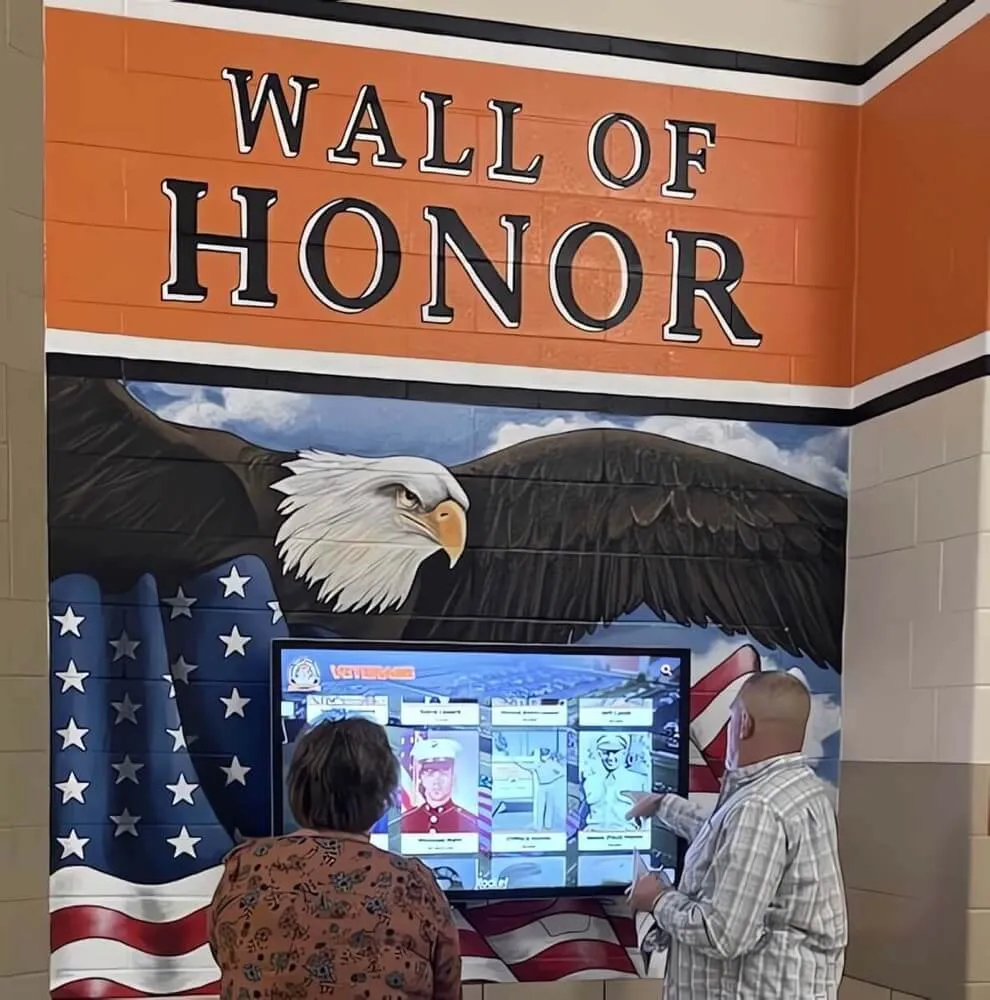
Historic athlete portrait cards in school athletic archives often trace back to albumen silver print formats from the late nineteenth and early twentieth century — condition documentation of cracking and flaking before any digitization attempt is the first step toward preserving those records reliably
Recognizing Possible Albumen Prints in a School Athletic Archive
Not every old team photograph in a school’s archive is an albumen print, and not every photograph that looks old uses the same process. Intake for possible albumen prints begins with recognizing characteristics that suggest the format — a necessary step because the handling precautions appropriate for a fragile albumen print with active flaking are more conservative than those for a gelatin silver or resin-coated print from later decades.
Visual and physical characteristics that suggest an albumen print:
- Glossy, slightly translucent surface: Albumen prints have a characteristic glossy finish produced by the dried egg-white coating. This gloss is distinct from the matte surface of salted paper prints (an earlier process) and from the higher-gloss, more plastic-like surface of gelatin silver prints.
- Warm yellow-brown to reddish-brown image tones: Healthy albumen prints tend toward warm neutral or yellow-brown tones. Deteriorated albumen prints typically show pronounced yellowing or orange-yellow discoloration, particularly in the lighter highlight areas of the image.
- Mounted on card or board: A large proportion of albumen school team portraits survive mounted on card — cabinet card format (approximately 4¼ × 6½ inches), carte de visite format (approximately 2½ × 4 inches), or larger custom mounts. The mount may carry a photographer’s imprint on the back, a school or team inscription, a date, or handwritten names identifying the subjects.
- Fine network of surface cracks: The crazing or alligatoring pattern visible on the glossy surface of deteriorated albumen prints reflects the brittleness of the albumen layer after decades of humidity cycling. Gelatin silver prints from later periods can also crack, but the pattern and visual character differ.
- Approximate date range: If a handwritten inscription, a photographer’s back-stamp, or provenance documentation suggests the photograph dates to before approximately 1910, albumen format is a strong possibility for a mounted, glossy print from that period.
Important limitation: Visual inspection alone cannot definitively identify a photographic process. Print processes from the late nineteenth century sometimes share visual characteristics, and condition deterioration can alter original appearance. If the format matters for conservation decisions — and for a fragile cracked print, it does — a photographic conservator can provide identification through examination methods not available in-house. The goal of visual intake assessment is to identify probable albumen prints that warrant conservative handling and potential specialist referral, not to make an authoritative process determination.
Athletic Archive Albumen Photograph Cracking Intake: A 5-Step Workflow
Step 1: Prepare the Intake Area
Establish a dedicated, clean workspace before any historic team photographs are removed from their current housing. The intake area for possible albumen prints requires conditions that minimize the risks of mechanical disturbance and contamination.
Required at the intake station:
- Clean, dry cotton gloves worn throughout all handling — never handle with bare hands
- A padded, clean, flat work surface (a clean piece of archival blotter or foam board)
- A camera or smartphone capable of close-up photography at a consistent distance
- Illumination that allows surface detail to be seen: a diffuse overhead light source combined with a low-angle (raking) side light to reveal surface texture and crack depth
- A scale reference such as a ruler or archival label to include in documentation photographs
- Archival enclosures: acid-free folders, interleaving tissue, and archival boxes of appropriate size for housing photographs individually after intake
- An intake log or form for recording print-level observations
Exclude from the intake station:
- Any liquid, solvent, water, or cleaning material of any kind
- Any implement that could rub, brush, or apply pressure to the print surface
- Rubber bands, adhesive tape, paper clips, or any material that could contact the print surface
- Heat sources
Handle each print from its edges and support. Never hold an unframed albumen print by the corners or allow it to flex — the albumen layer has no flexibility and will crack at any fold or bend point. Never place an albumen print face-down on any surface.
Step 2: Record the Support, Mount, and Provenance
Before examining the print surface itself, record the physical context: the support and mount, any inscriptions, and any provenance information that accompanies the photograph. This information is often as important for athletic recognition purposes as the image content itself — a handwritten list of names on the mount back, a team name, a season, a photographer’s imprint, or a school seal connects the image to the people and events it documents.
Support and mount documentation:
- Mount type: Is the print mounted on card (cabinet card, carte de visite, or another card format)? On a larger board? Is it unmounted (bare paper support only)?
- Mount condition: Is the mount intact, or is it torn, broken, or missing sections? Is the mount warped or curled? Does the print appear fully adhered to the mount, or are there visible separations at edges or corners?
- Mount dimensions: Record approximate height and width of the mount (not the image area).
- Photographer’s imprint or studio information: Many cabinet card and carte de visite mounts carry a photographer’s imprint on the back — a studio name, city, and sometimes a date range. Record this exactly as it appears; it can help establish when and where the photograph was made.
- Inscriptions: Record any handwritten or printed text on the mount front or back — team name, school name, season or year, individual names identifying subjects, trophy dedications, or any other text. Copy inscriptions verbatim; do not interpret or paraphrase, as exact wording may be important for recognition and archival purposes.
- Provenance information: Record any accompanying documentation — a letter, a donation note, a clipping — that explains where the photograph came from, how long it has been held by the school, or who is depicted.
Do not remove a print from its mount to read or photograph the mount back. If the mount back is obscured because the photograph is framed, document this in the record — attempting to remove a photograph from a frame or mount is a specialist-level intervention.
Step 3: Assess and Document the Print Surface and Image Condition
With the print resting flat and face-up on the padded work surface, examine the surface condition under the diffuse overhead light and then under the low-angle raking light. Raking illumination is particularly useful for revealing crack depth, lifted flake edges, and surface texture not visible under flat overhead light.
Observations to record for the print surface:
- Overall image tone: Is the image tone warm brown, neutral brown, or does the print show pronounced yellowing or orange-yellow discoloration in the highlight areas? Yellowing is characteristic of albumen print deterioration and helps distinguish this format from later processes, but it is not itself a handling hazard.
- Silver mirroring: Is there a bluish-silver metallic sheen visible in the low-density areas of the image — the highlights, sky areas, or lighter background areas? Silver mirroring is a separate deterioration condition from cracking, common in albumen prints, caused by oxidized image silver migrating to the print surface. Note its presence and extent without attempting to characterize it definitively or restore faded image information from its appearance alone.
- Surface crack pattern: Are cracks visible in the albumen layer? Describe the pattern: fine and uniform network crazing, coarser and irregular, or concentrated in specific areas. Note whether cracks appear to penetrate into the image layer or appear superficial.
- Active flaking: Are any areas of the albumen layer visibly lifted from the support — edges curled away from the paper, loose sections attached on one side only, or detached fragments resting on the print surface? This is the most critical condition finding and requires immediate conservative re-housing and specialist referral.
- Loss: Are there areas where the albumen layer has already detached, leaving bare paper visible? Note the location, approximate extent, and whether associated image content appears to be lost.
- Surface contamination: Is there dust, dirt, or particulate material on the print surface? Do not attempt to remove surface contamination; note its presence and location. Cleaning a cracked albumen print with any implement — including a soft brush — risks dislodging attached flakes.
The Northeastern Document Conservation Center’s guidance on photographic types notes that deterioration in albumen prints commonly includes the combination of yellowing, silver mirroring, and cracking — conditions that often occur together and that reflect the print’s cumulative exposure to humidity fluctuation and atmospheric oxidants over its storage history.
Step 4: Classify the Print Condition and Route Accordingly
Based on the surface documentation completed in Step 3, assign a condition classification to each print and route it to the appropriate handling path. The classifications below are proposed school intake criteria for workflow routing purposes — they are not official conservation grading standards and do not substitute for a photographic conservator’s assessment.
| Condition Classification | Observed Characteristics | Handling Guidance | Digitization Path | Conservator Referral |
|---|---|---|---|---|
| Stable — No Cracking | Intact albumen surface; image tones present; no visible crack network; no silver mirroring or mild mirroring at edges only | Handle from edges with cotton gloves; support fully when moving | Overhead camera or careful flatbed; confirm no surface fragility before glass contact | Not required at this time; re-inspect periodically |
| Stable Cracking — No Active Flaking | Crack network visible; all areas appear adherent under raking light; no lifted edges or loose sections; no detached fragments | Handle from edges with cotton gloves; support mount fully; avoid any pressure on print surface | Non-contact overhead camera; do not place on flatbed scanner glass; inform digitization operator of crack condition | Recommended before final digitization decisions; note in condition record |
| Active Flaking — Any Lifted or Loose Area | Visible lifted flake edges, loose attached sections, or detached fragments on print surface | Immediately re-house in rigid archival enclosure face-up with interleaving tissue; do not press flat; do not transport without full support | No digitization until conservator has assessed and stabilized the print | Required before any further handling; do not attempt to re-adhere flakes in-house |
| Loss — Missing Albumen Layer | Bare paper visible in areas where albumen layer has detached; image information absent in those areas | Document location and extent of loss; re-house carefully | No digitization until conservator has assessed | Required; include documentation of loss areas in referral |
| Uncertain Format or Condition | Characteristics do not clearly confirm albumen format; condition does not allow safe classification; significant structural instability observed | Treat as fragile; apply most conservative handling | No digitization until format identified and condition assessed | Required for identification and condition assessment |
Step 5: Re-House and Prepare the Condition Record
After classification, re-house each print in an individual archival enclosure before returning it to storage or routing it to the next workflow step.
Re-housing for stable prints:
- Place the print face-up in an acid-free folder or polyester sleeve of appropriate size
- Interleave with archival tissue if the print will be stored in a folder with others
- Store horizontally in an archival box sized to the mount dimensions; do not allow prints to slide or stack without support
Re-housing for prints with active flaking:
- Place the print face-up in a rigid archival tray or clamshell box so it cannot shift during storage or transport
- Do not place anything on top of the print surface
- Label the enclosure clearly: “FRAGILE — ACTIVE FLAKING — CONSERVATOR REFERRAL REQUIRED — DO NOT PRESS OR PLACE FACE-DOWN”
Condition record fields for each intake print:
- Intake identifier and location reference
- Physical description: mount type, mount dimensions, mount condition
- Inscriptions verbatim and provenance notes
- Probable format assessment: possible albumen print / format uncertain
- Image tone and yellowing: described
- Silver mirroring: present / not observed / uncertain; location and extent if present
- Surface crack pattern: none / fine network / coarser / concentrated; raking-light depth assessment
- Active flaking: none observed / present (location and extent described)
- Loss: none observed / present (location and extent described)
- Surface contamination: none / present (described)
- Condition classification assigned (from Step 4 table)
- Routing decision: proceed to non-contact digitization / conservator referral / re-inspect
- Date of intake and name of staff member completing intake
Evidence and Acceptance Table: Crack Condition Findings
The table below summarizes what different crack-condition observations indicate for intake routing decisions. It is intended as practical intake guidance for school archive staff — not as a diagnostic instrument or a replacement for specialist assessment.
| What You Observe | What It May Indicate | Proposed School Acceptance Criterion | Digitization Approach |
|---|---|---|---|
| No visible cracking under raking light; intact glossy surface | Albumen layer is intact or deterioration has not yet produced visible crack networks | Acceptable for careful handling and conservative digitization with condition noted | Overhead camera or careful flatbed; confirm no surface fragility before contact |
| Fine, uniform network of cracks; all areas appear adherent under raking light | Historic cracking from humidity cycling; layer may be stable in current cracked state | Acceptable for non-contact digitization only; no flatbed glass contact; condition documented | Non-contact overhead camera; note crack pattern in scan record |
| Coarser, irregular cracks; deeper apparent penetration under raking light | More advanced cracking; stability cannot be confirmed visually | Route to conservator consultation before digitization; document thoroughly | Defer digitization until conservator has assessed |
| Any lifted flake edge visible under raking light | Active flaking in progress; mechanical disturbance of handling or scanning may detach further areas | Not acceptable for any digitization without prior conservator stabilization | No digitization; conservator referral required |
| Detached fragments on print surface | Active flaking; image material at immediate risk | Not acceptable for any digitization; emergency re-housing; conservator referral | No digitization; conservator referral urgently required |
| Bare paper visible where albumen layer has detached | Image information already lost in those areas; remaining layer may be at risk | Conservator assessment required; document loss areas precisely | No digitization until assessed |
| Yellowing or orange-yellow discoloration without cracking | Image fading, characteristic of albumen deterioration; not a direct handling hazard | Document condition; proceed with conservative handling and non-contact digitization | Non-contact digitization; note fading in scan record; do not attempt to correct or restore faded information from appearance alone |
| Silver mirroring — blue-silver sheen in low-density areas | Oxidized image silver at surface; distinct from cracking; a deterioration finding | Document; proceed with conservative handling if no active flaking; include in condition record | Non-contact digitization; note mirroring in scan record |
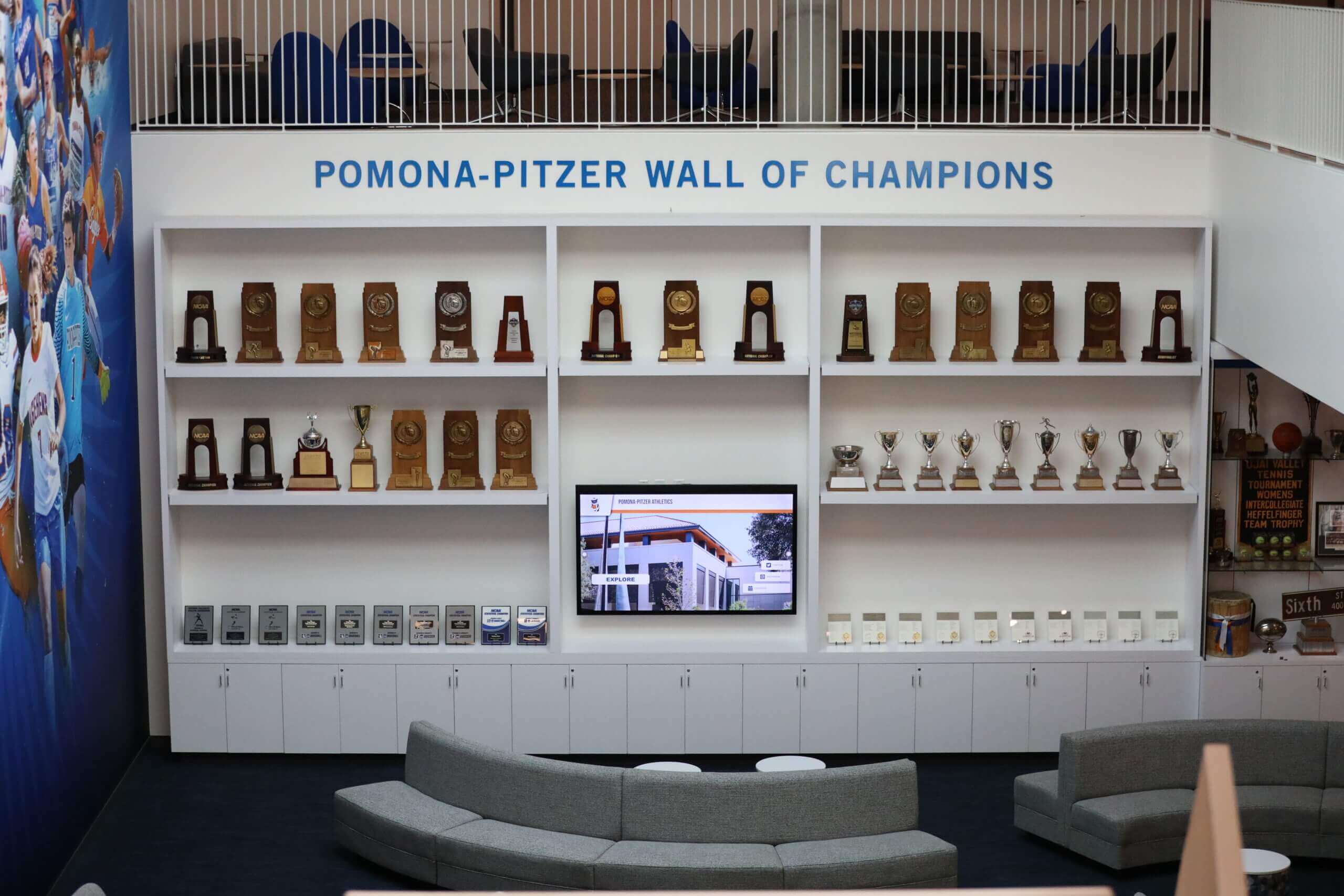
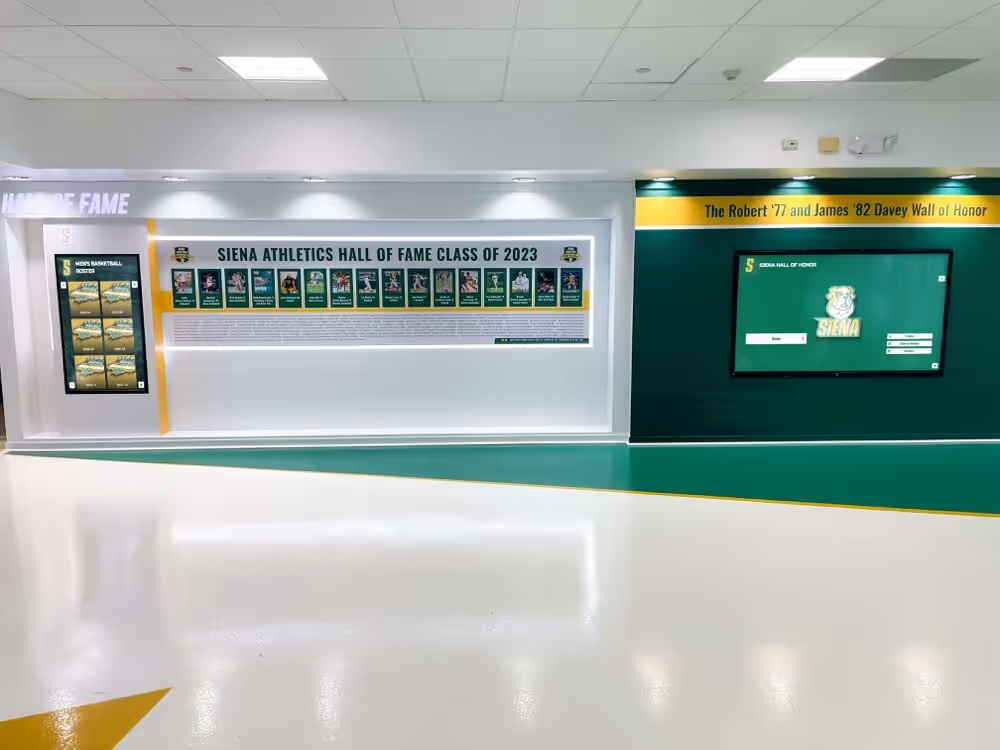
Athletic recognition installations that present decades of team history depend on source materials reliably recovered through careful digitization — albumen photograph cracking intake before scanning ensures that fragile prints are identified, documented, and handled appropriately before their images enter the digital archive
Planning Non-Contact Digitization for Cracked Albumen Prints
For school athletic archive albumen prints classified as stable for digitization after the intake workflow above, the selection of a digitization approach must reflect the fragility of the albumen layer. Standard flatbed scanner workflows — placing the print face-down on glass — are not appropriate for any albumen print with a visible crack network.
Non-contact digitization approaches for fragile prints:
The primary alternative to flatbed scanning is overhead camera capture: the print rests face-up on a stable, evenly illuminated surface, and a camera mounted directly above captures the image without any contact with the print surface. This approach eliminates the mechanical pressure and contact of flatbed scanning and allows the print to be monitored visually during capture. Some scanning services operate overhead or repro-stand systems specifically for fragile and non-flat originals.
When contracting digitization services for albumen school team portraits:
- Specify the condition classification of each print and require that flatbed scanning not be used for any print with visible crack networks or condition uncertainty
- Provide the intake condition record for each print to the scanning operator
- Confirm that the operator will not attempt to flatten, press, or re-position a print during scanning
- Request that prints with active flaking be flagged to a supervisor before any handling in the scanning facility, and that those prints be returned unscanned rather than damaged
Lighting considerations:
Raking light during digitization highlights crack texture in a way that emphasizes physical condition rather than image content. For documentary purposes, the school may want two capture passes for highly cracked prints: one under even diffuse light (for image content) and one under raking light (for condition documentation). Both images belong in the condition record.
The Canadian Conservation Institute’s guidance on black-and-white photographic print care identifies stable, moderate relative humidity and cool storage temperatures as the primary environmental factors controlling the rate of albumen layer deterioration — addressing the cause of cracking rather than treating its effects. Schools planning to store team portraits long-term while digitization is in progress benefit from understanding how humidity control applies to school award materials storage — the same humidity principles that protect physical trophies and jerseys in display cases also govern the stability of albumen prints held in adjacent storage areas.
Connecting Albumen Photograph Intake to Athletic Recognition Programs
The practical goal of albumen photograph cracking intake — and of the digitization workflow it informs — is a digital archive of school team portraits that is complete, accurately documented, and usable for recognition programs: the hall-of-fame displays that present founding teams by name and year, the digital yearbooks that surface historic athlete portraits alongside their contemporary counterparts, the trophy room presentations that include the earliest seasons in a school’s athletic history alongside recent championships.
For recognition programs built around specific athlete identities — the name on a jersey, the face in a team portrait, the year of a conference championship — the historic team photograph is often the earliest surviving visual record connecting a specific person to a specific achievement. An albumen print showing a school’s first athletic team from the 1890s is not merely a historical curiosity; it is the primary source for the names, faces, and context that belong in a digital hall of fame or an athletic anniversary display.
Schools that have successfully moved their historic team portrait archives into digital recognition programs share a common starting point: conservative, documented intake that established which prints could be digitized immediately, which required conservator assessment first, and which contained inscriptions and provenance information that enriched the digital record beyond the image alone.
The transition to a digital trophy case and digital hall of fame represents a shift in how schools present their athletic history — and the quality of that digital presentation depends directly on the quality of the underlying digitized archive. A historic team portrait whose cracked albumen layer was documented at intake, whose inscription names were recorded verbatim, and whose digitization was conducted without physical contact with the fragile surface, contributes a complete and reliable record. A portrait whose cracking was undocumented and whose scan was conducted on a flatbed that pressed the surface flat may contribute a damaged image and a condition problem that occurred during a process that was supposed to preserve it.

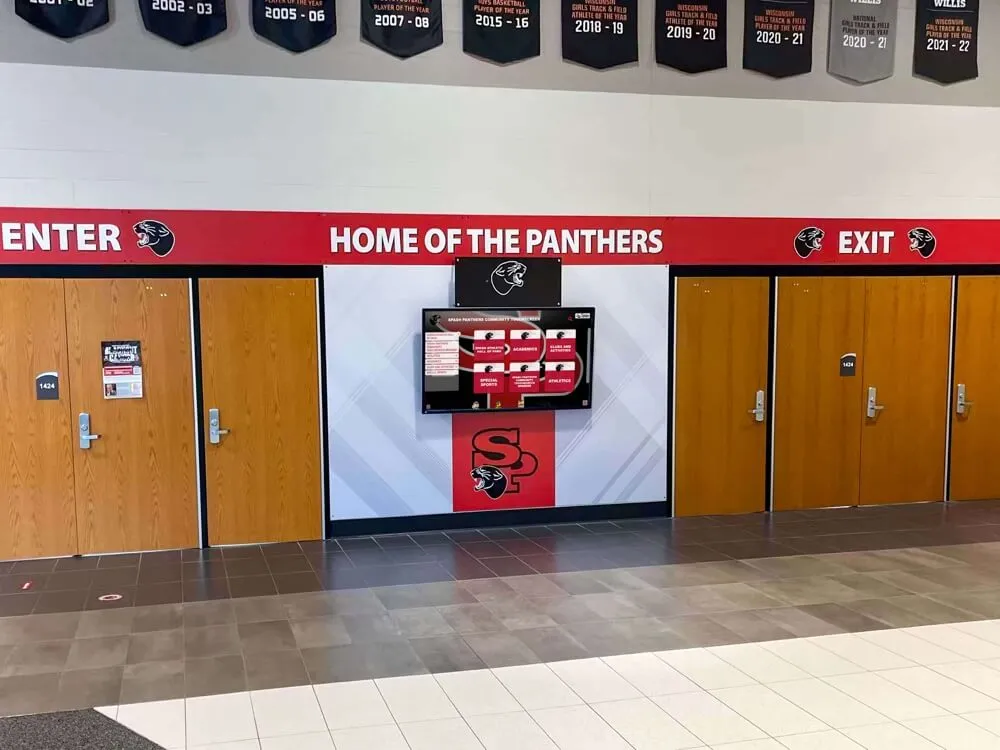
Hall-of-fame touchscreen displays that surface athlete profiles and historic team records across any year or sport depend on a digitized archive built from well-documented source materials — albumen photograph cracking intake is what ensures that the earliest and most fragile prints enter the digital archive with their images intact and their condition understood
When historic team portrait subjects — athletes from a school’s earliest documented seasons — are recognized through a formal hall-of-fame induction, having documented provenance and inscription records from the original print makes those announcements accurate and substantive. Announcements of new inductees and their digital profiles are more meaningful when they connect to primary source documentation: the year inscribed on the mount, the team name on the photographer’s imprint, the handwritten list of names on the card back.
Who This Intake Workflow Serves
| Role | Primary Concern | How Albumen Photograph Cracking Intake Helps |
|---|---|---|
| Athletic Director | Completeness and accuracy of the school’s earliest athletic history record | Identifies which historic team portraits can be digitized immediately and which carry fragile condition requiring conservator referral before the image enters the digital archive |
| Recognition Program Owner | Display-ready, accurate content for hall-of-fame and athlete recognition programs | Ensures that historic team portrait images and their associated inscriptions — names, years, team identities — are captured from documented, intact prints, not from prints damaged during an undocumented digitization attempt |
| IT / Data Staff | Efficient digitization workflow without unexpected image quality failures | Provides a condition-classified print inventory that sequences digitization priorities and specifies the handling approach required for each print before scanning resources are committed |
| Librarian / Archivist | Collection-level condition documentation and long-term preservation planning | Produces a print-level condition record that supports both immediate digitization decisions and long-term collection care planning |
| Facilities Staff | Safe handling of historic physical materials | Establishes clear handling protocols that identify which prints require specialist involvement, eliminating uncertainty about whether in-house staff should attempt to flatten, clean, or re-mount fragile prints |
| School Administrator | Institutional record completeness and documented preservation practice | Documents that the school assessed historic team portrait condition systematically before digitizing, and that fragile or cracked prints were routed appropriately |
Athletic directors and recognition program owners who want to understand how their digitized portrait archive connects to a broader recognition infrastructure will find useful context in the range of hall of fame tools for athletics, donors, arts, and history programs — understanding what display and engagement options exist for a well-documented digital archive informs how the digitization project is scoped from the start.
For athletic award programs that draw on historic portrait archives as part of determining award eligibility and display, the criteria used to evaluate and recognize athletic achievement become directly relevant to intake decisions — knowing how athletic awards rubrics assess leadership, sportsmanship, and statistical achievement helps identify which historic team portraits contain the most significant records for a given program.
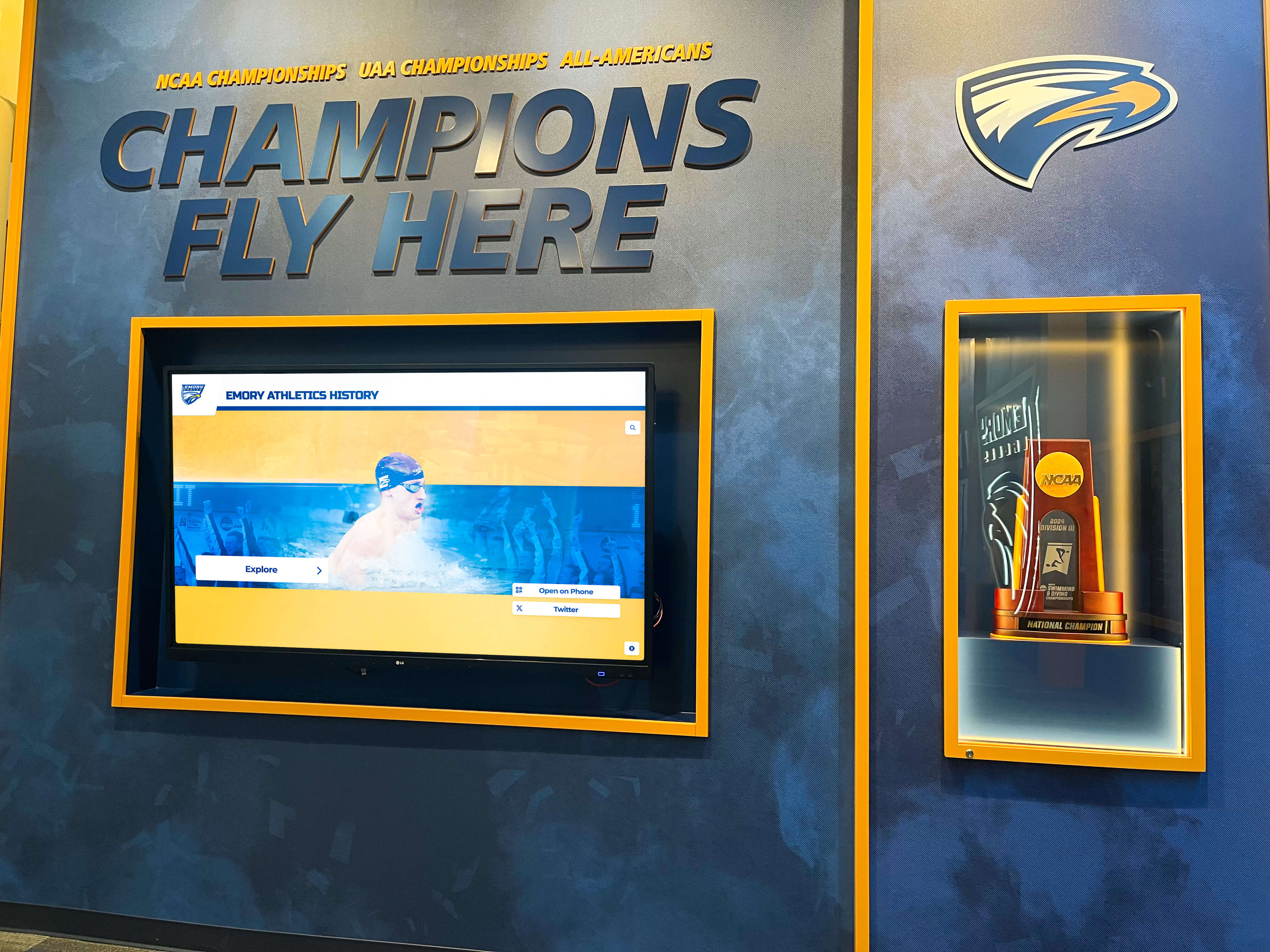
Athletics champions walls and trophy displays depend on primary source documentation that includes historic team portraits — when those portraits are albumen prints, pre-digitization cracking intake determines which can be safely scanned, which need conservator assessment, and which carry inscription and provenance information that enriches the digital record
Frequently Asked Questions
How do I tell an albumen print from a gelatin silver print in a school athletic archive?
The two most useful visual distinctions are surface character and image tone. Albumen prints tend to have a warm, slightly uneven gloss produced by the dried egg-white coating, and their image tones are characteristically warm yellow-brown to reddish-brown — particularly in deteriorated highlight areas. Gelatin silver prints, which became dominant from the 1880s–1890s onward and are far more common in archives from the twentieth century, tend to have cooler gray-black image tones and a more uniform surface appearance. Network crazing of the surface layer occurs in both processes but is particularly characteristic of albumen. If you cannot confidently identify the format, treat the print as fragile and route it to a photographic conservator for identification before proceeding.
Can I gently clean the surface of a cracked albumen team portrait to improve scan quality?
No. Cleaning a cracked albumen print — with any implement, including a very soft brush, a cotton swab, or a blower — risks dislodging flakes that appear stable. The albumen layer in a cracked print has lost its flexibility; crack edges and the areas immediately adjacent to them are the most vulnerable. Surface contamination documented at intake should be noted in the condition record, but physical removal from a cracked print is a conservator-level intervention, not an in-house intake step.
The team portrait has names written on the back of the mount, but the mount is attached to a frame. Should I remove the print from the frame to photograph the inscriptions?
No. Removing a photograph from a frame introduces mechanical risk — the act of separating a mount from a frame can flex the mount and disturb the image layer adhered to it. Photograph what is visible of the mount back through the frame opening if possible, and document that additional inscriptions may be present but inaccessible without disassembly. Removing the mount from the frame and the print from the mount are both specialist-level interventions. Note this limitation in the condition record and flag it for the conservator if the print is referred.
If a print has active flaking, is there any scenario where it can still proceed to digitization?
Not without a conservator’s assessment first. Flaking that is visible under raking light — meaning the albumen layer has lifted from the paper support at any location — indicates that the bond between the layer and the support has failed at that point. Any mechanical disturbance, including picking up the print, placing it for scanning, or transporting it to a scanning facility, could detach that area permanently. If a conservator assesses the print and determines that consolidation or stabilization makes digitization safe, they will advise the appropriate approach. That determination belongs to the conservator, not to in-house intake staff.
Should old team photographs thought to be albumen prints be removed from their original mounts before scanning?
No. Unmounting is a specialist-level intervention that should not be attempted in-house. The mount often carries inscriptions, photographer imprints, and provenance information on its back that is part of the archival record; unmounting without proper documentation risks losing that information permanently. More critically, the adhesive bond between an albumen print and its mount may be the only thing keeping a deteriorated image layer in contact with the paper support — attempting to separate them can cause irreversible image loss. Scanning the mounted print in non-contact mode preserves both the image and its physical context and is the appropriate approach for in-house or contracted digitization.
Albumen photograph cracking intake converts an unknown-risk collection of historic school team portraits into a documented, classified set of records where every print has a known condition grade, a complete inscription and provenance record, and a confirmed routing path — before any scanning equipment approaches the fragile albumen surface, and before any image-bearing flake is lost to a digitization process that was supposed to preserve it.
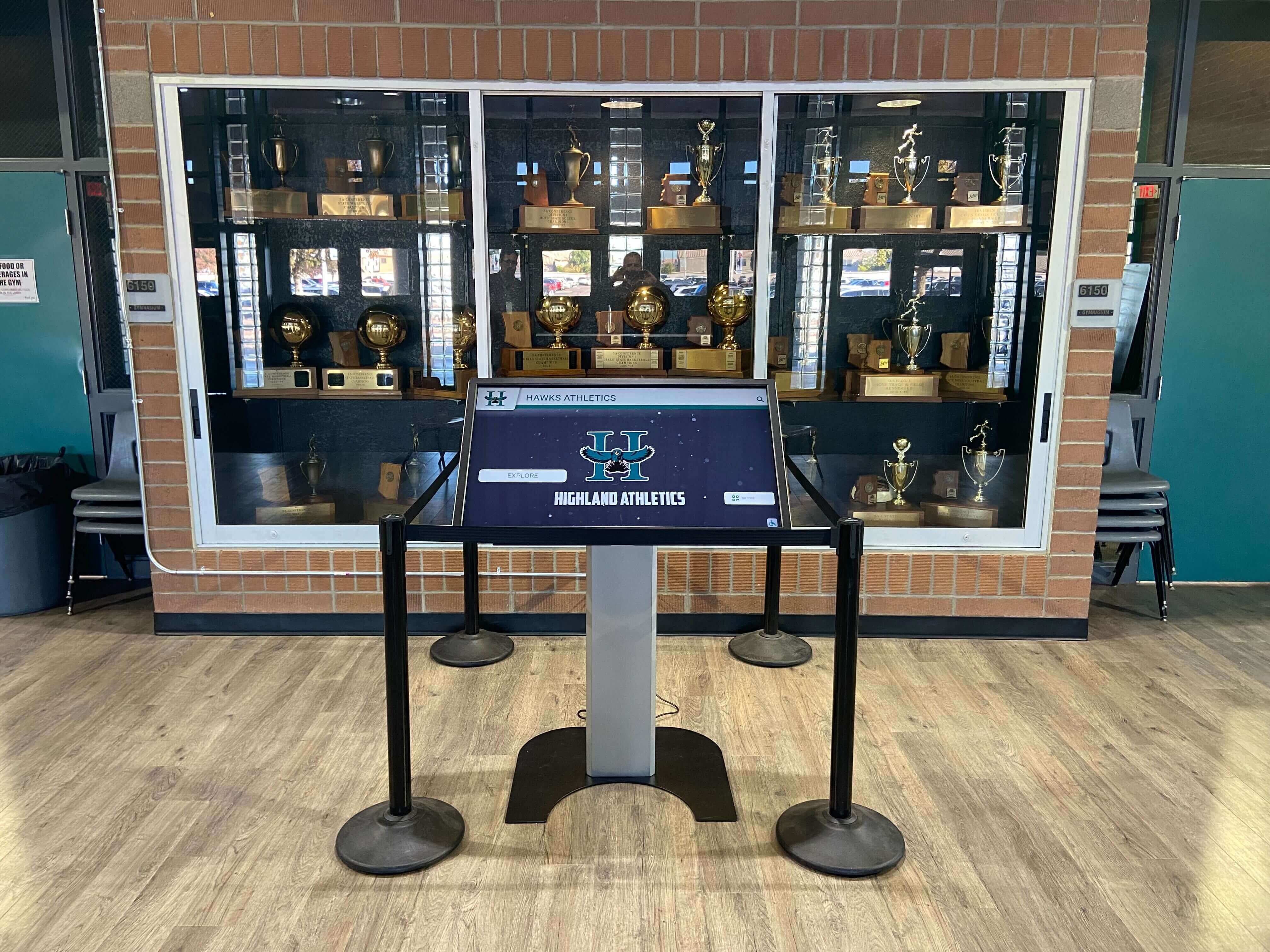
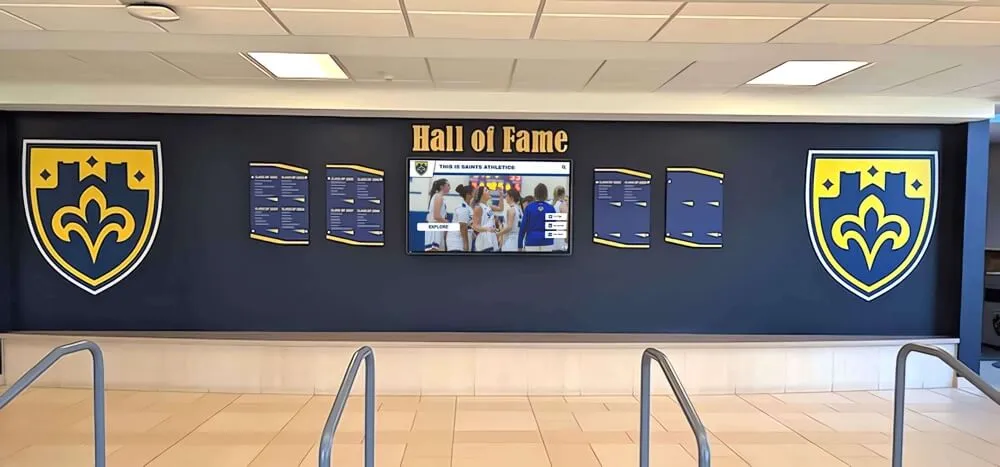
Touchscreen hall-of-fame kiosks in school trophy cases can surface historic team portraits from any era — the accuracy and completeness of those digital records depends on careful albumen photograph intake that documents cracking, preserves inscriptions, and routes fragile prints to appropriate care before any scanning begins
Ready to connect your documented, digitized historic team portrait archive to an athletic recognition program that makes school history visible to athletes, alumni, and your community?
Request a Rocket Alumni Solutions demo and see how schools are turning carefully digitized historic athletic archives — team portraits, award records, and championship documentation — into searchable hall-of-fame displays, digital yearbook programs, and touchscreen recognition installations that bring decades of athletic history to life.