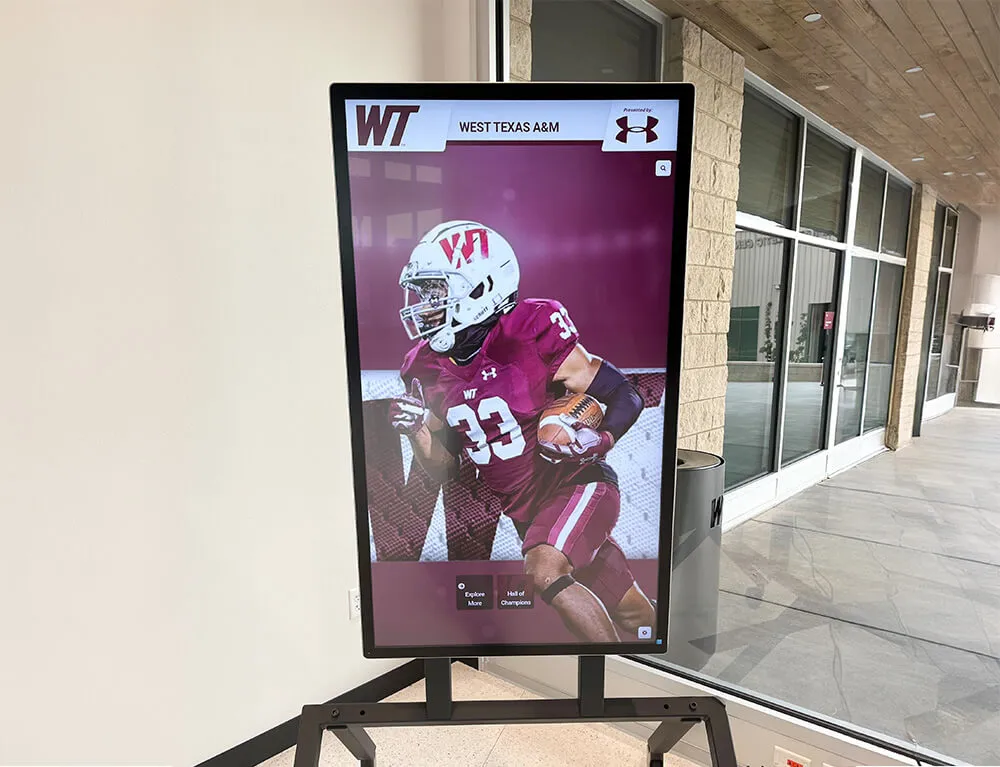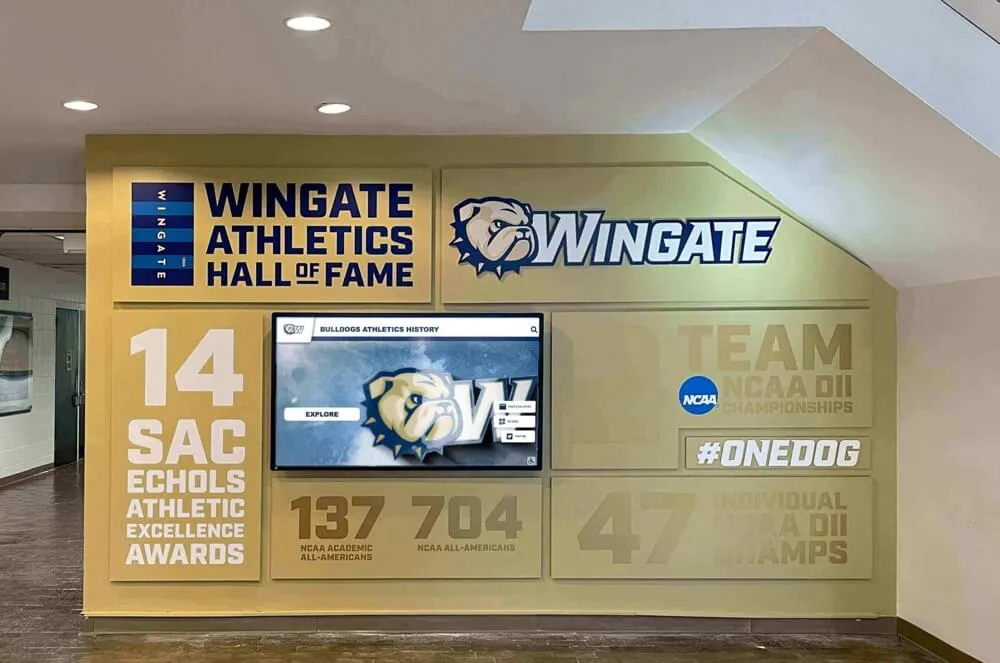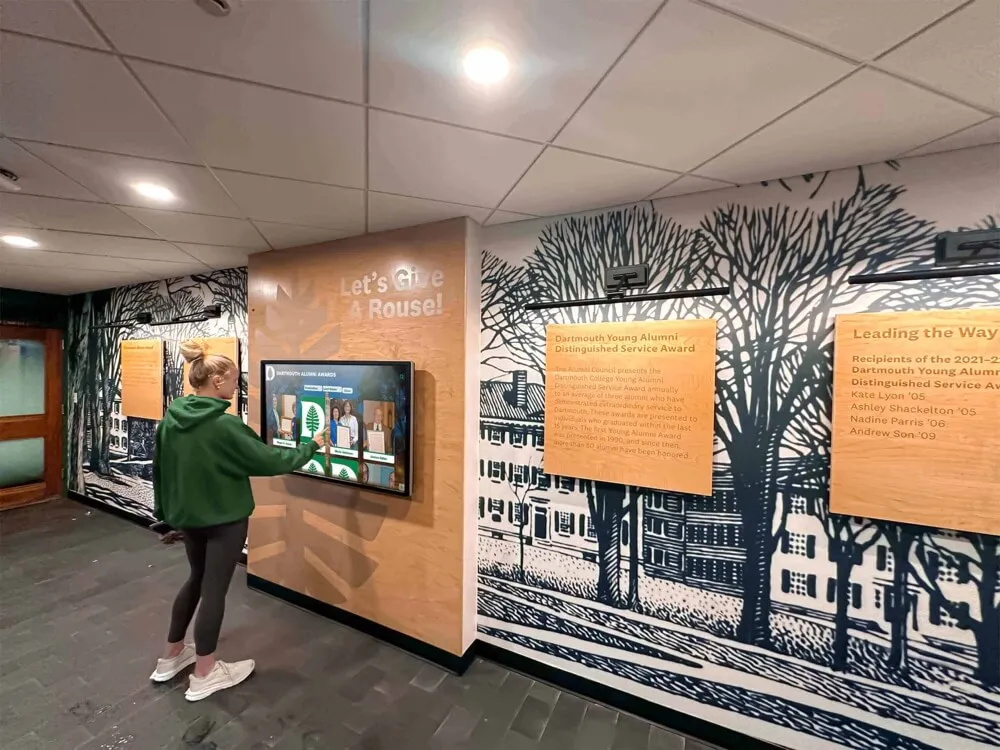
An alumni reunion is one of the most powerful events a school can host—a gathering where decades of shared experience, friendship, and institutional pride converge in a single weekend. When planned thoughtfully, reunions do far more than fill a banquet hall with familiar faces: they document and celebrate the living history of your institution, deepen alumni loyalty across graduating generations, and create the kind of emotional connection that motivates graduates to give back, mentor students, and advocate for the school long after the reunion ends.
Yet too many reunions feel like afterthoughts—a buffet dinner, a few old photos on a poster board, and little else to show for months of planning. The difference between a forgettable gathering and one that alumni talk about for years comes down to intentional storytelling, meaningful recognition, and experiences that connect each graduate to the broader arc of institutional history.
This comprehensive guide walks through every phase of alumni reunion planning: building your committee, setting a timeline, choosing themes that honor multiple generations, documenting school history in compelling formats, designing recognition experiences, and using modern digital tools to display the depth and richness of your school’s story. Whether you’re organizing a 10-year class reunion or a multi-decade all-alumni homecoming weekend, the strategies here will help you create an event that graduates truly remember.
Alumni reunions accomplish goals that no other institutional event can replicate. They surface stories that would otherwise be lost to time, reconnect graduates who have drifted apart, and demonstrate in concrete terms how much the institution values its community across all generations. Schools that invest in excellent reunion programming report stronger donor relationships, more active alumni volunteer networks, and deeper institutional loyalty that compounds over time.

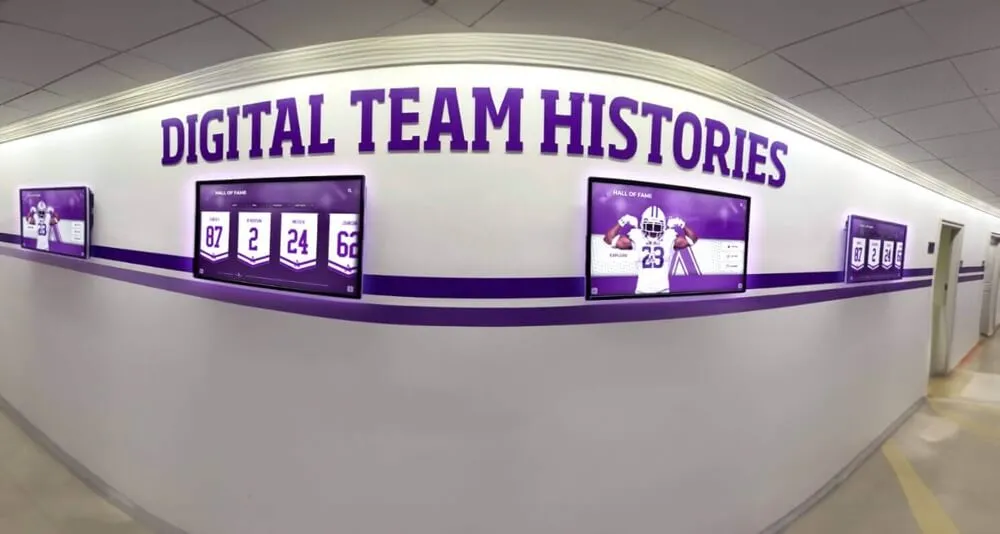
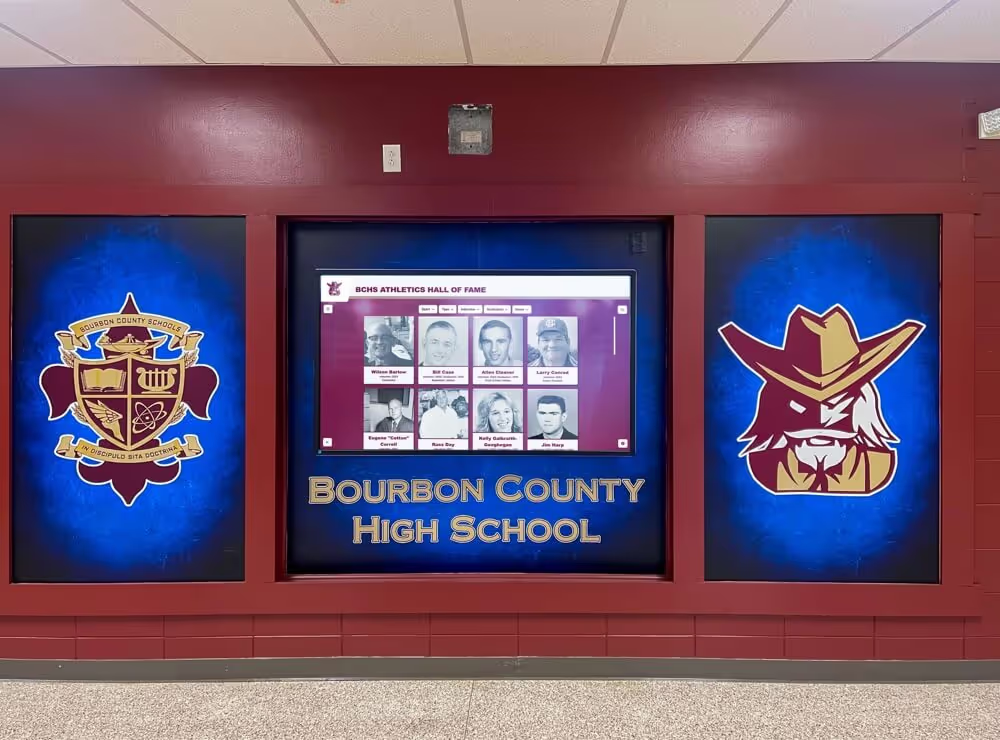
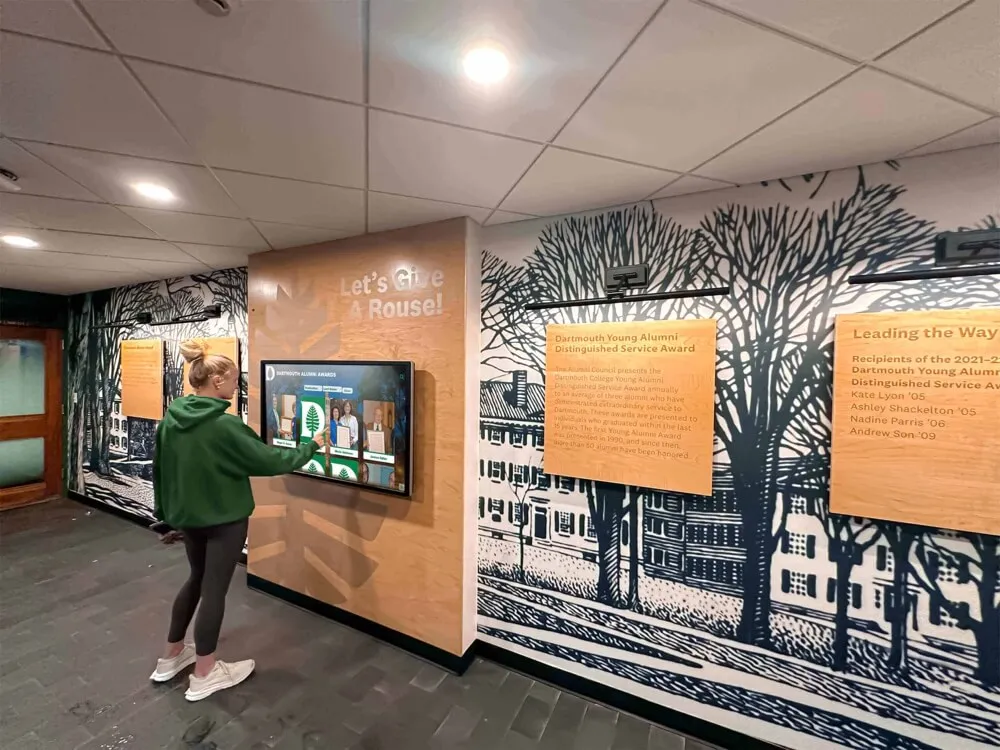
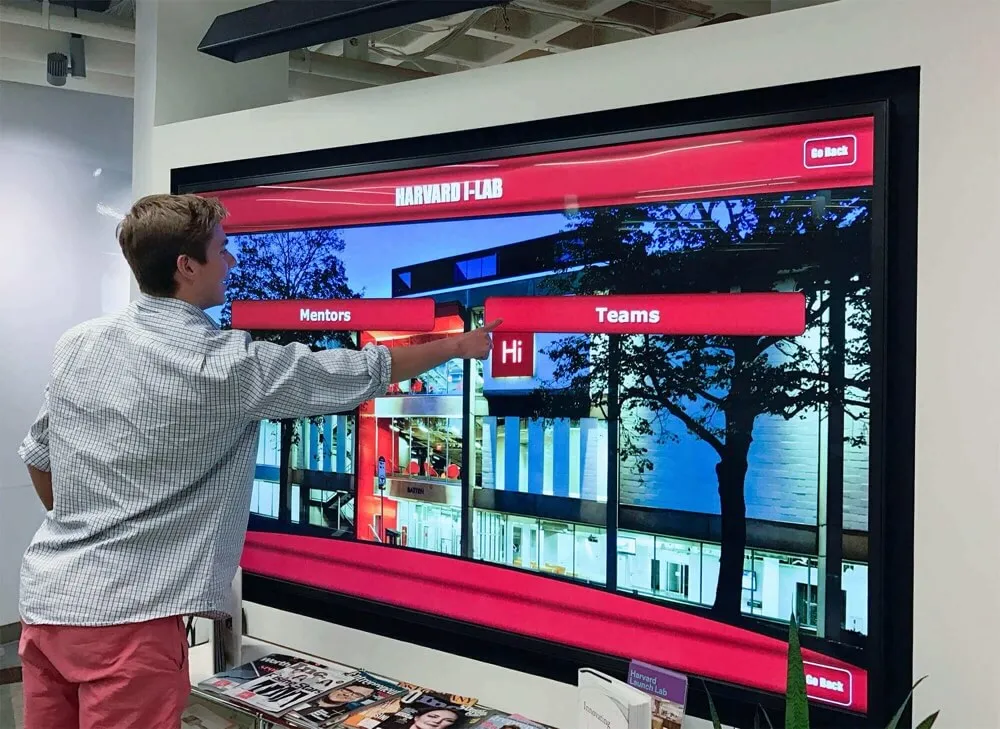
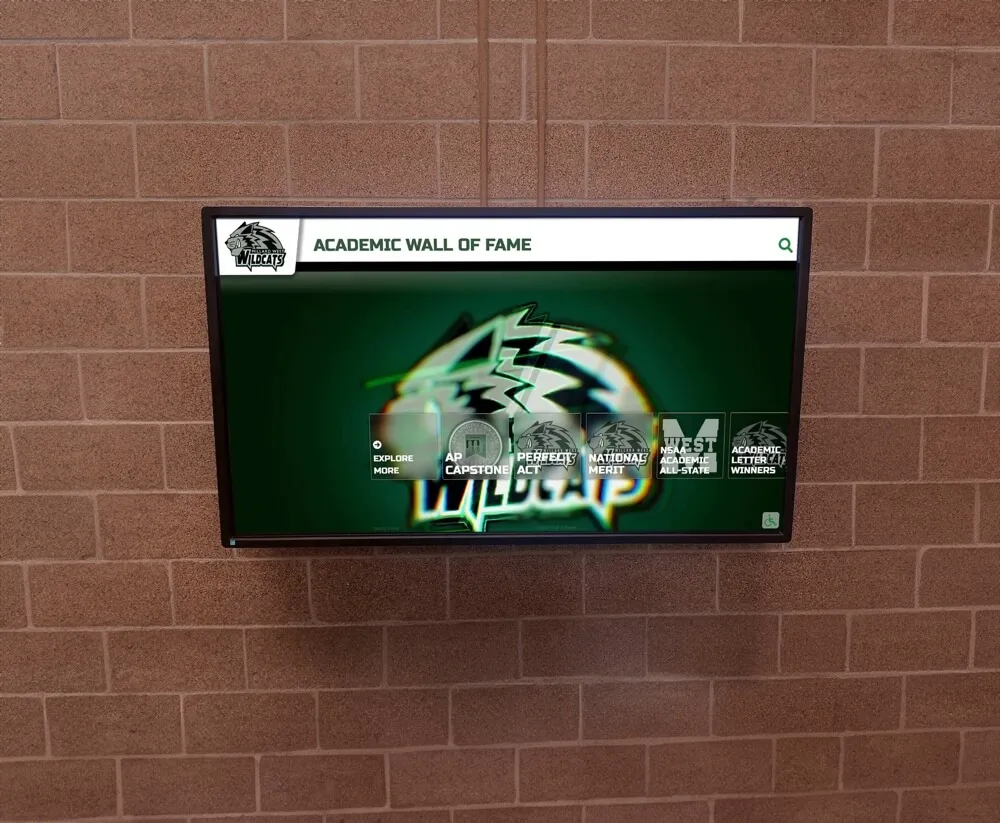
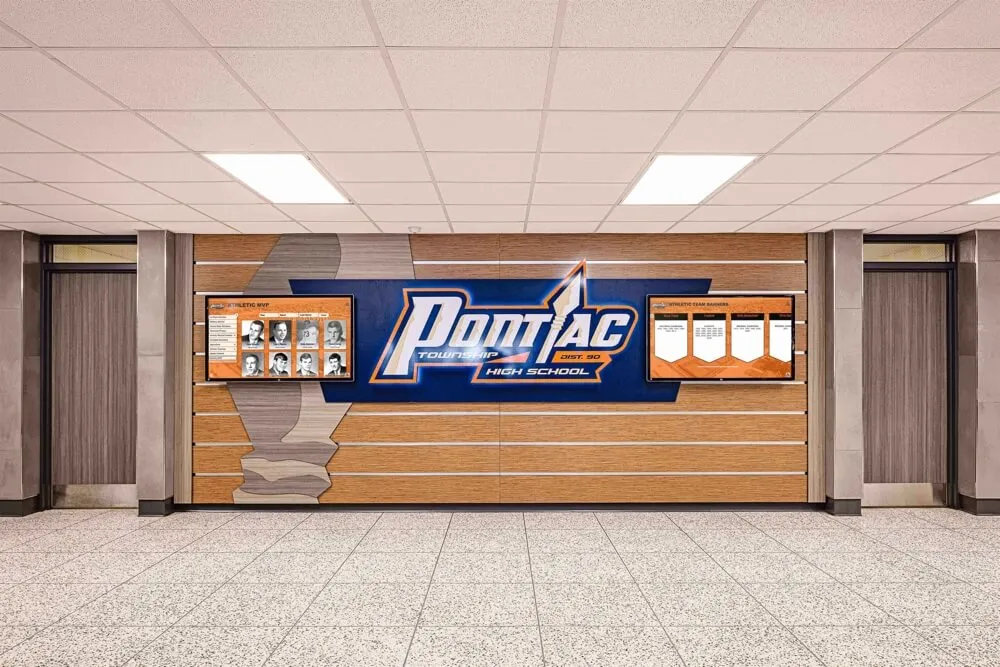
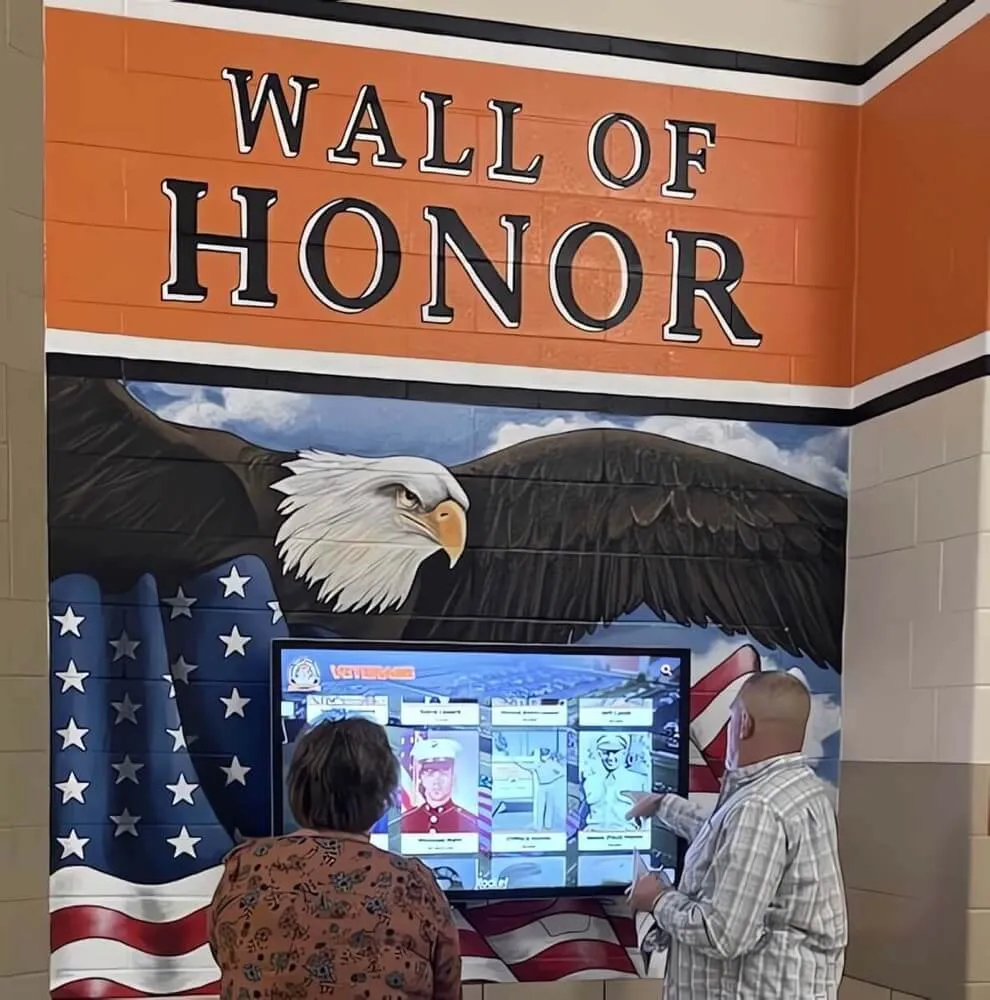
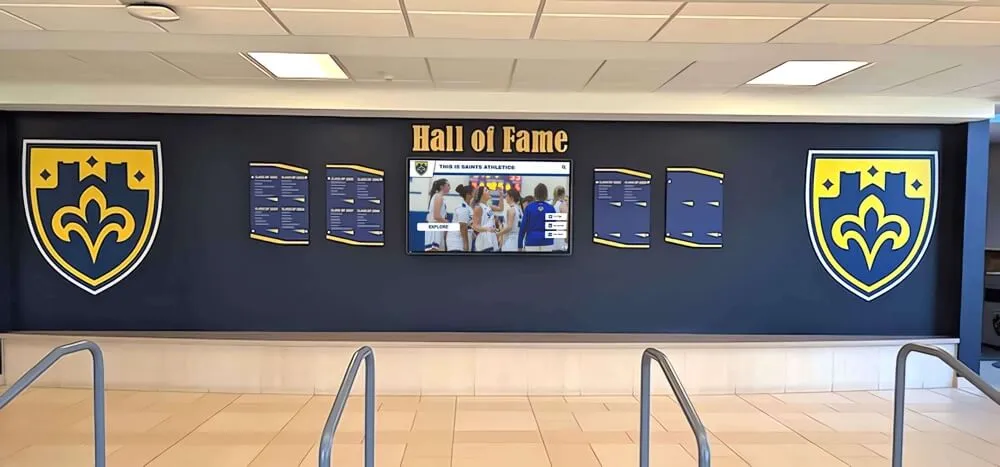
Interactive recognition displays create natural gathering points during reunions, sparking conversations about shared memories and decades of institutional history
Building Your Alumni Reunion Planning Foundation
Successful reunion planning begins with the right infrastructure—before choosing a caterer or selecting a theme.
Forming an Effective Reunion Committee
Your committee structure determines everything that follows. Aim for a core planning team of six to ten people representing a mix of expertise and perspectives.
Key committee roles to fill:
Reunion Chair - Owns the vision, manages the committee, and serves as primary liaison with school administration. Choose someone with organizational experience and genuine enthusiasm for alumni connection.
Communications Lead - Manages outreach, social media, email campaigns, and all messaging to prospective attendees. This role requires someone comfortable with digital marketing and alumni database tools.
Programming Director - Designs the schedule of events, coordinates speakers, and ensures activities serve diverse alumni interests across age groups and class years.
Venue and Logistics Coordinator - Handles catering, AV equipment, transportation, accommodations partnerships, and day-of operations.
History and Documentation Chair - Collects yearbooks, photographs, records, and alumni stories in advance of the event. This is one of the most undervalued roles in reunion planning—and one that produces content guests reference throughout the event and long after.
Sponsorship and Fundraising Lead - Manages relationships with potential corporate sponsors, class gift campaigns, and reunion-linked fundraising initiatives.
Digital and Technology Coordinator - Oversees the event website, online registration, digital display content, and any virtual participation components.
For multi-generational all-alumni events, recruit at least one committee member from each decade of graduates to ensure programming resonates with everyone from recent graduates to 50-year alumni.
Setting Your Planning Timeline
Reunion planning timelines vary based on event scale, but most successful reunions follow a structured sequence regardless of size. For a major all-alumni weekend, allow 12 to 18 months of planning lead time. Class-specific reunions for 100 to 300 attendees can be executed in 6 to 9 months with a focused committee.
18 months out: Secure venue, set dates, form committee, begin yearbook and photo archive collection
12 months out: Launch save-the-date communications, begin alumni database cleanup, start sponsorship outreach, finalize programming vision
9 months out: Open registration, issue formal invitations, begin history documentation project, draft digital display content
6 months out: Confirm speakers and entertainment, finalize catering, collect alumni stories and submitted photos
3 months out: Finalize attendance counts, complete display content, confirm AV and technology vendors, distribute event schedule
1 month out: Send final reminders, finalize seating and logistics, test all technology and display systems
Day of: Arrive early, brief volunteers, verify all displays and technology function correctly
Choosing a Theme That Honors Every Generation
The most memorable reunions operate around a cohesive theme that creates visual identity, guides programming decisions, and gives alumni a shared frame for celebrating institutional history.
Theme Approaches That Work Across Generations
Decades Celebration - Organize the event around each decade of graduates, creating dedicated areas, table groupings, or programming moments celebrating the distinctive character of different eras. This structure works beautifully for all-alumni events where 1970s graduates share the room with 2010s graduates—each era gets its moment while everyone participates in the larger celebration.
“Then and Now” - Structure the entire experience as a journey through institutional evolution—comparing campus buildings, athletic achievements, academic programs, and community character from different eras. Photo displays juxtaposing historical and contemporary images of the same locations create powerful emotional engagement.
Hall of Generations - Honor the breadth of alumni achievement across all class years, making visible the scope of what graduates have accomplished professionally, athletically, academically, and in community service. This theme naturally integrates hall of fame recognition displays, alumni spotlights, and legacy tributes.
Homecoming Redux - Recreate the energy of homecoming week from specific eras, allowing alumni to experience traditions that defined their school years. This theme works especially well when the institution has strong athletic traditions, performing arts histories, or signature annual events that graduates remember vividly.
Legacy and Future - Frame the reunion as a bridge between institutional past and future, celebrating what alumni built while demonstrating how their contributions continue to benefit current students. This theme integrates naturally with scholarship announcements, building dedications, and fundraising initiatives.
Whichever theme you choose, build your visual identity, decoration design, printed materials, and digital display content around it consistently. Thematic coherence makes reunions feel intentional and honoring rather than improvised.
Documenting School History Before the Reunion
The history documentation phase—often neglected until too late—is what separates good reunions from truly exceptional ones. The goal is to surface, organize, and present the institution’s story in formats that move alumni emotionally and help them see their own chapters within the larger narrative.
Building Your Historical Archive
Begin the collection process at least 12 months before the event. The most valuable source materials include:
Yearbooks - Digitize physical yearbooks spanning the institution’s history, with particular attention to years represented by reunion attendees. Interactive yearbook displays allow guests to browse multiple decades from a single touch interface, creating powerful self-guided exploration experiences during the event.
Athletic Records and Championship History - Gather championship banners, state qualifier lists, record boards, and team photographs from every sport across every era. This content forms the backbone of athletic recognition displays and hall of fame programming.
Academic Achievement Records - Honor rolls, valedictorians, National Merit Scholars, academic award recipients, and distinguished alumni in academic fields deserve dedicated documentation and display.
Performing Arts and Club Archives - Photographs, programs, and achievement records from theater productions, marching band competitions, debate tournaments, journalism programs, and student government capture dimensions of school life beyond athletics.
Faculty and Staff Histories - Long-serving teachers, coaches, and administrators often connect multiple generations of alumni. Dedicating display space to faculty histories generates surprising emotional responses from guests who discover shared connections across graduating years.
Physical Campus Evolution - Collect photographs documenting how buildings, facilities, athletic venues, and campus landscape have evolved. Before-and-after visual timelines create compelling conversation pieces that help all generations orient their own memories within institutional history.
The process of capturing your school’s complete history requires systematic outreach—contacting long-serving staff, reaching out to alumni who may have personal archives, searching institutional storage, and working with local historical societies or libraries that may have materials your school lacks.
Crowdsourcing Alumni Memories and Photographs
Your alumni community is itself a vast archive. Six to nine months before the reunion, launch a formal memory collection campaign:
Digital photo submission portal - Create a simple online form where alumni can upload personal photographs with basic metadata (year taken, people pictured, occasion). Even low-resolution personal photos from important moments add richness unavailable from institutional archives.
Story submission invitations - Request written memories—a few paragraphs describing a defining moment, a teacher who made a difference, a game they remember vividly, or a friendship that began on campus. These stories become material for printed programs, display panels, and event programming.
Video memory project - Invite alumni to submit short video clips sharing memories or messages to classmates. Compile these into a highlight reel shown during the event and distributed digitally afterward.
Oral history interviews - For your longest-tenured alumni and emeritus faculty, conduct recorded interviews capturing institutional memories that exist nowhere else. These recordings represent irreplaceable institutional history.
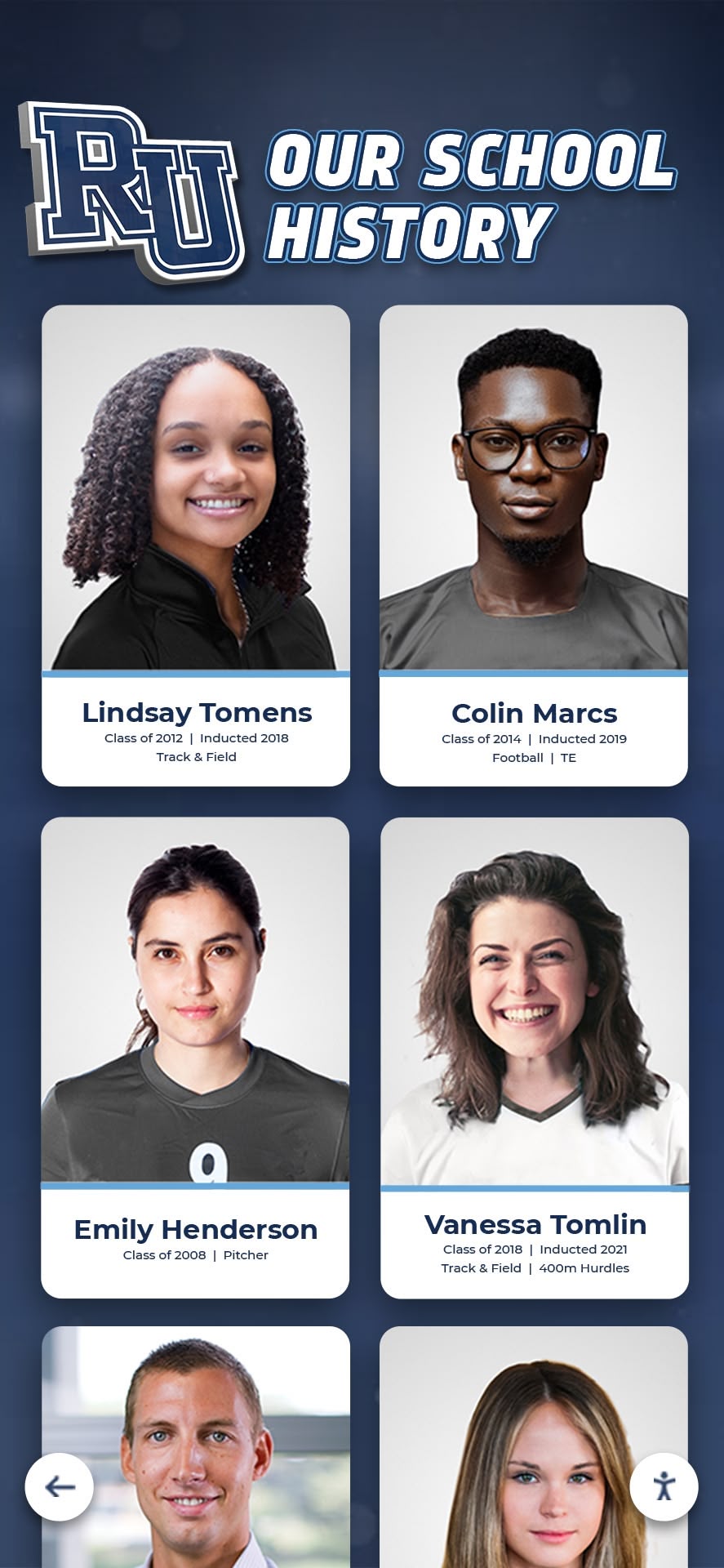
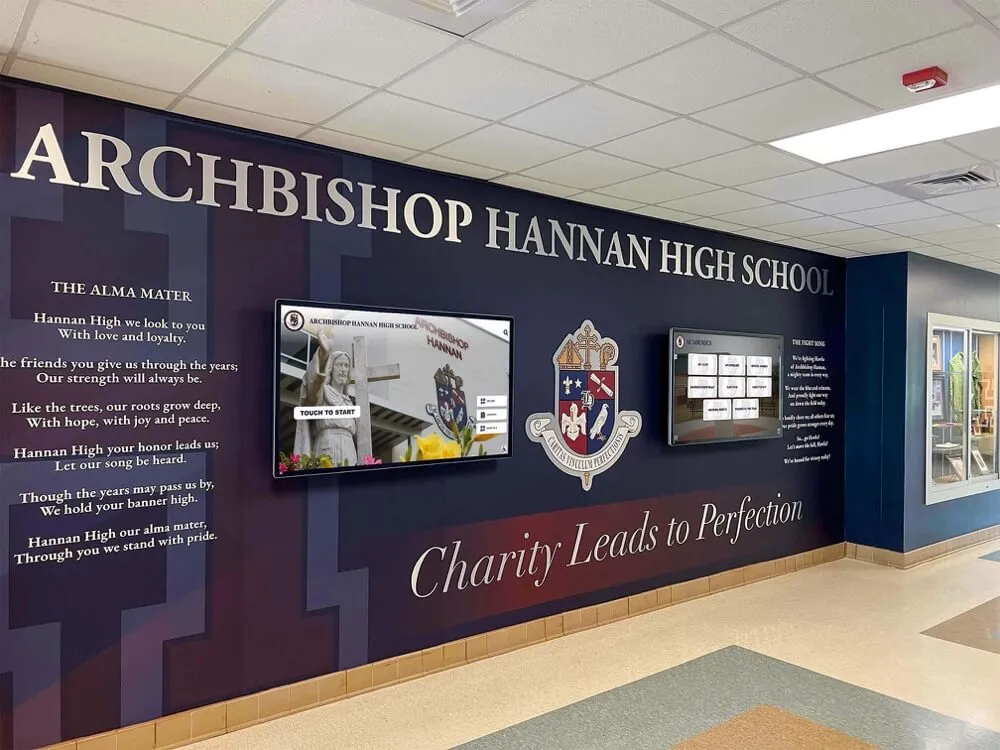
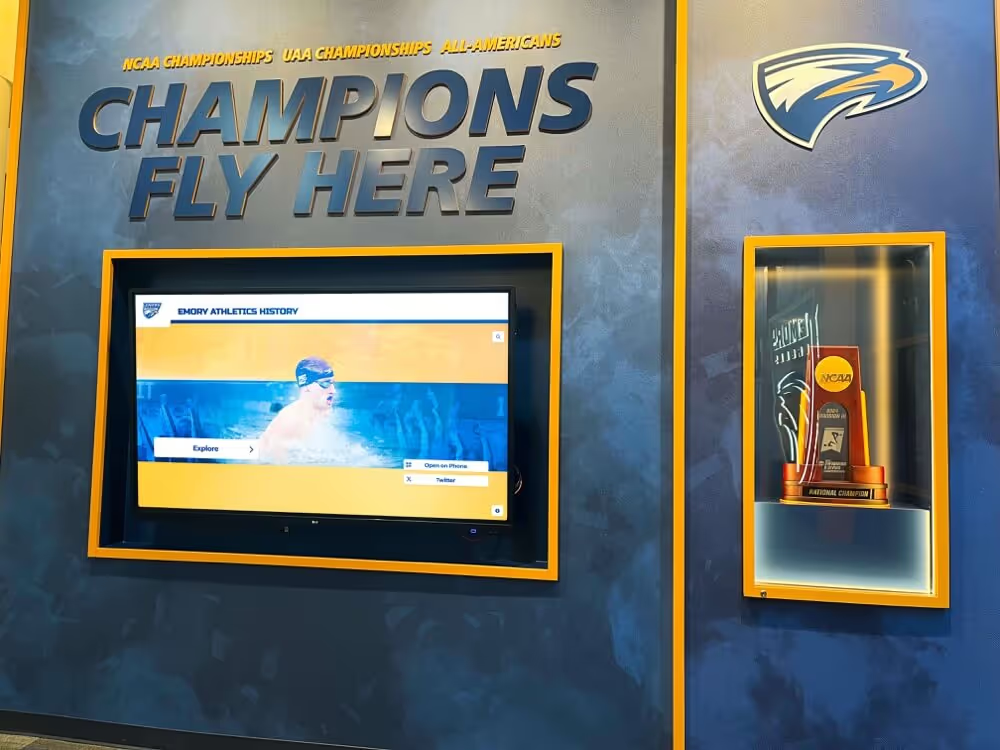
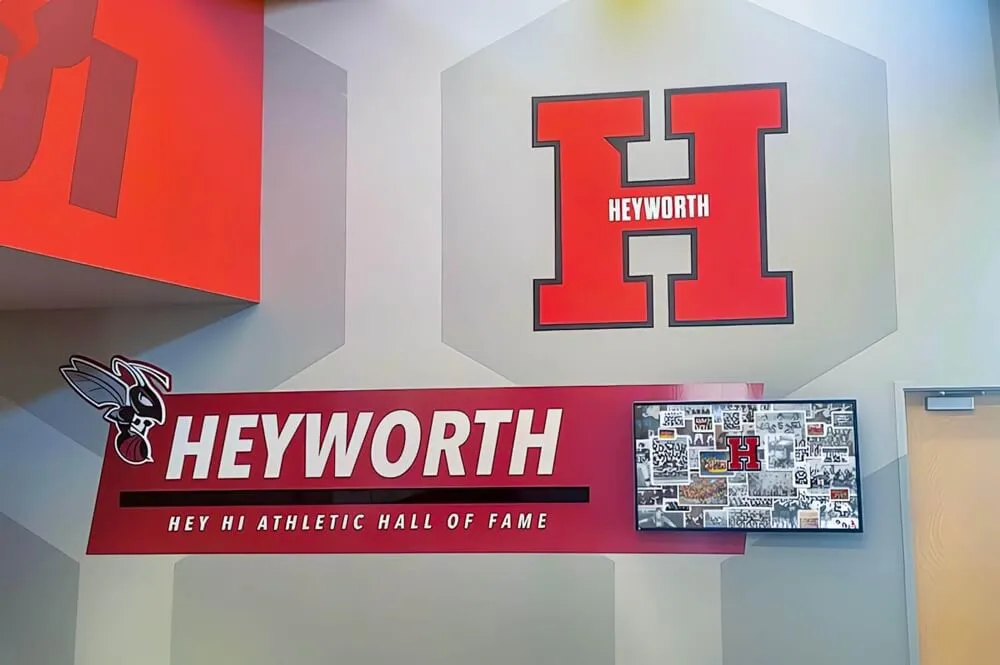
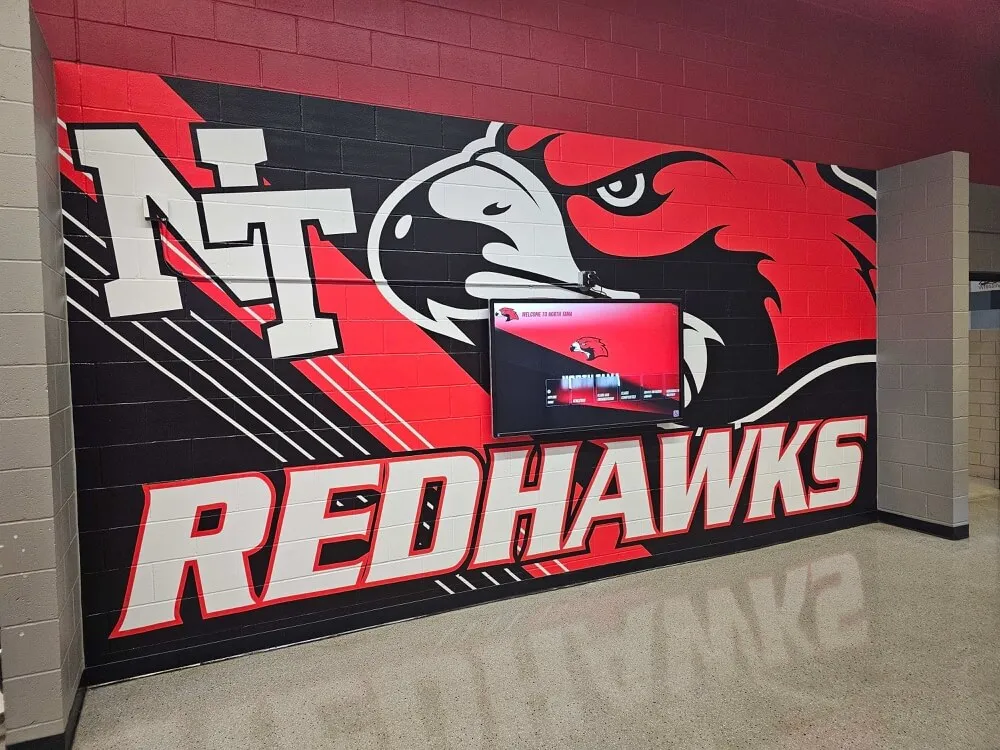
Organized historical displays featuring alumni portraits across graduating classes help guests navigate institutional history and connect personal memories to the broader school story
Designing Reunion Programming That Engages Every Alumni Segment
Programming strategy determines whether your reunion feels alive and dynamic or flat and generic. The best reunion schedules layer multiple types of experiences serving different alumni interests, energy levels, and nostalgia triggers.
Multi-Day Weekend Structure
For major all-alumni events, a Friday-through-Sunday structure allows gradual energy building and multiple engagement formats:
Friday Evening: Informal Welcome
- Casual welcome reception with appetizers and drinks
- “Find Your Decade” social mixing (table groupings or color-coded name tags by graduation era)
- Early-bird historical exhibit preview
- Young alumni gathering for recent graduates (typically within 10 years)
Saturday: Core Programming
- Campus tours showcasing facility evolution for alumni who haven’t visited recently
- Class-specific breakout sessions allowing intimate reconnection within graduation years
- Athletic competition or recreation (alumni vs. varsity game, golf tournament, 5K run)
- Featured programming tied to reunion theme (panel discussions, alumni speakers, historical presentations)
- Formal dinner or banquet featuring awards, recognition moments, and entertainment
- Hall of fame induction ceremony if applicable
- Memory slideshow and institutional history presentation
- Dancing, entertainment, or casual evening social
Sunday: Family-Friendly Farewell
- Brunch or lunch with family-inclusive programming
- Campus experience for children and younger family members
- Final networking opportunity for professional connection
- Memorial tribute for deceased classmates and faculty
Class-Specific Reunion Programming
For milestone class reunions (5, 10, 20, 25, 50 years), programming can be more tightly curated around shared memories:
Opening reception with yearbook display - Set out physical yearbooks from the class year plus a searchable digital archive. Watching adults in their 30s, 50s, or 70s browse old yearbook photos generates immediate energy and connection.
“Where Are They Now” showcase - Collect career and life updates from classmates in advance, compile into a printed booklet and digital display, and feature brief updates during the program. Alumni spotlights celebrating graduate achievements are among the highest-rated elements of class reunion surveys.
Memorial moment - Reserve a portion of the program for honoring classmates who have passed away since graduation. This should be handled with dignity and care—not rushed or minimized.
Class gift announcement - If the class has organized a reunion gift to the institution, unveil it during the Saturday dinner program. Scholarship establishments, facility naming opportunities, or equipment gifts allow alumni to leave a tangible legacy.
Class photo - An updated class photo in a recognizable campus location, compared alongside the original graduation photo, creates shareable content and a lasting keepsake.
For high school reunion ideas covering themes, activities, and venues in more detail, explore dedicated reunion planning resources that address the unique character of secondary school alumni events.
Memorial and Tribute Programming
Every alumni reunion should thoughtfully acknowledge graduates, faculty, and staff who have passed away since the last gathering. How you handle these moments shapes how alumni experience the depth and sincerity of the institution’s care for its community.
In Memoriam display - A dedicated display panel or digital screen listing names of deceased alumni organized by graduation year, often accompanied by photographs when available and family permission granted.
Memorial candle lighting - Simple rituals during the formal program create collective acknowledgment and space for grief within celebration.
Named memorial gifts - When families consent, announce scholarships or recognition initiatives named in honor of deceased alumni, transforming loss into lasting legacy.
Living tribute messages - Invite family members of deceased alumni to submit messages or attend, creating connections between generations of institutional community.
Displaying School History: From Poster Boards to Digital Walls
The physical environment of your reunion communicates institutional values before a single speech is delivered. Schools that invest in thoughtful historical displays transform their venues into immersive experiences where alumni explore rather than merely attend.
Traditional Display Approaches
Traditional display methods remain valuable when executed with care:
Chronological photo timelines - Large-format timeline displays running along hallway or venue walls organize institutional history visually, allowing alumni to walk through decades. When photographs are high quality and captioned accurately, these displays become focal points where guests spend 20 to 30 minutes exploring.
Class composite displays - Framed or digitized composite photographs organized by graduation year honor each class individually. Displaying decades of composites side by side demonstrates the continuity of institutional community across generations.
Trophy and memorabilia cases - Physical artifacts—championship trophies, retired jerseys, historic equipment, handwritten letters from notable alumni—add tactile dimension to historical displays. The key is curation: too many objects without clear organization overwhelm guests; a well-curated selection of meaningful artifacts creates focused engagement.
Printed memory books - Professionally printed programs incorporating historical photographs, alumni updates, and institutional milestones serve as both event guide and lasting keepsake. Alumni who attend reunions often keep these materials for decades.
Digital Display Systems That Transform Reunions
Modern digital display technology creates reunion experiences impossible with traditional methods alone. Interactive touchscreen systems allow a single installation to surface thousands of alumni profiles, photographs, records, and historical moments in a self-guided format that guests control.
Interactive touchscreen kiosks - Touch-enabled screens allow alumni to search by name, graduation year, sport, activity, or achievement category. A graduate from 1975 can find their own profile alongside classmates, then navigate to championship records from their athletic era, then explore how the school’s programs evolved after they graduated. Digital hall of fame display systems create this kind of multi-directional exploration that linear poster displays cannot replicate.
Digital yearbook browsers - Large-format displays allow guests to browse multiple decades of yearbooks with simple swipe or tap navigation. This format is particularly powerful when physical yearbook copies are fragile, incomplete, or too few to circulate freely.
Legacy wall installations - Permanent or semi-permanent digital legacy displays can be installed in high-traffic campus locations—lobbies, gymnasiums, athletic facilities—serving both reunion guests and ongoing campus communities. Designing school recognition walls that inspire across decades requires thinking beyond the single event toward permanent institutional storytelling infrastructure.
Live photo sharing screens - Dedicated displays cycling through social media photos tagged with the reunion hashtag encourage real-time documentation and create shared digital memory of the event itself.
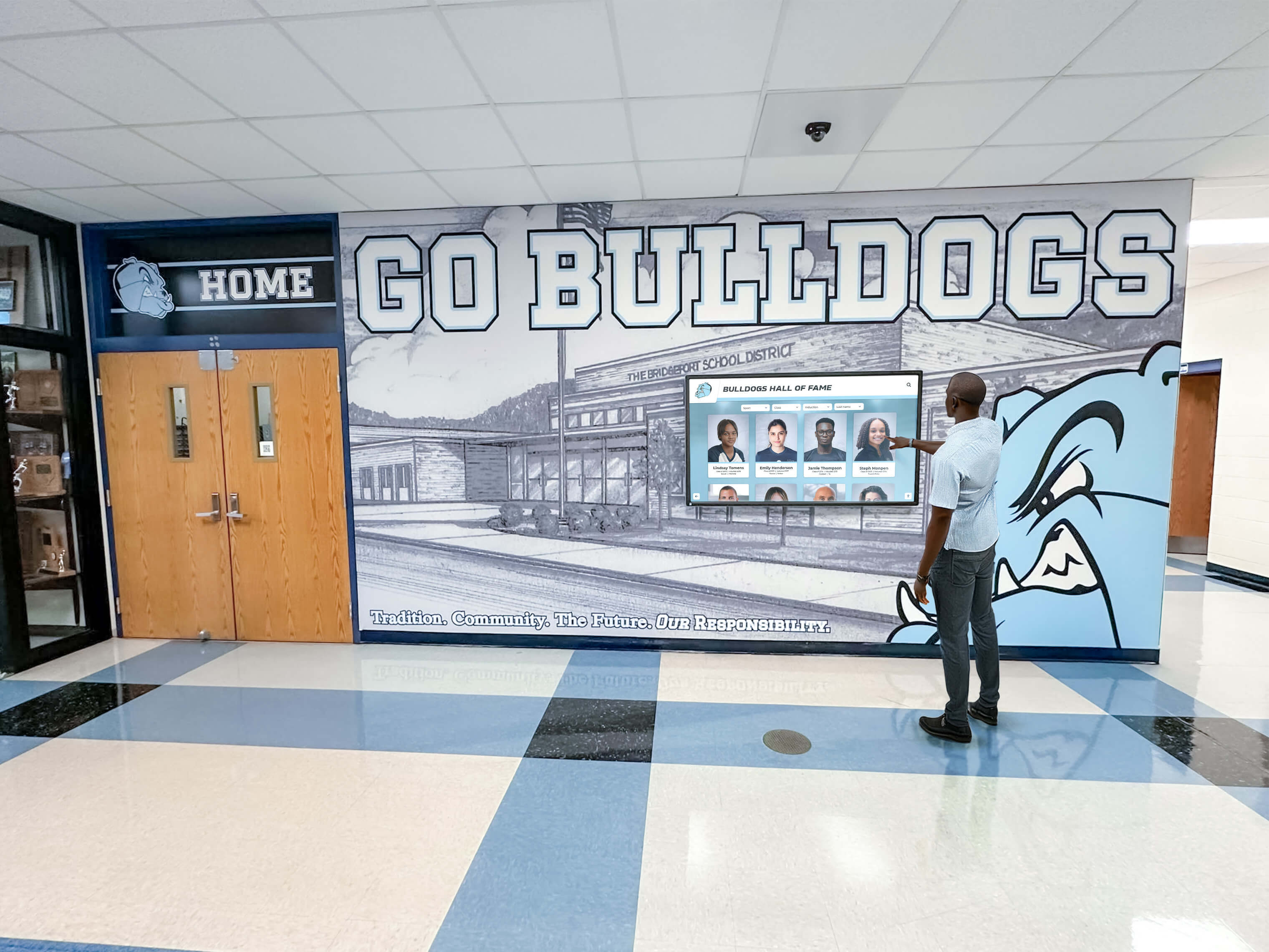
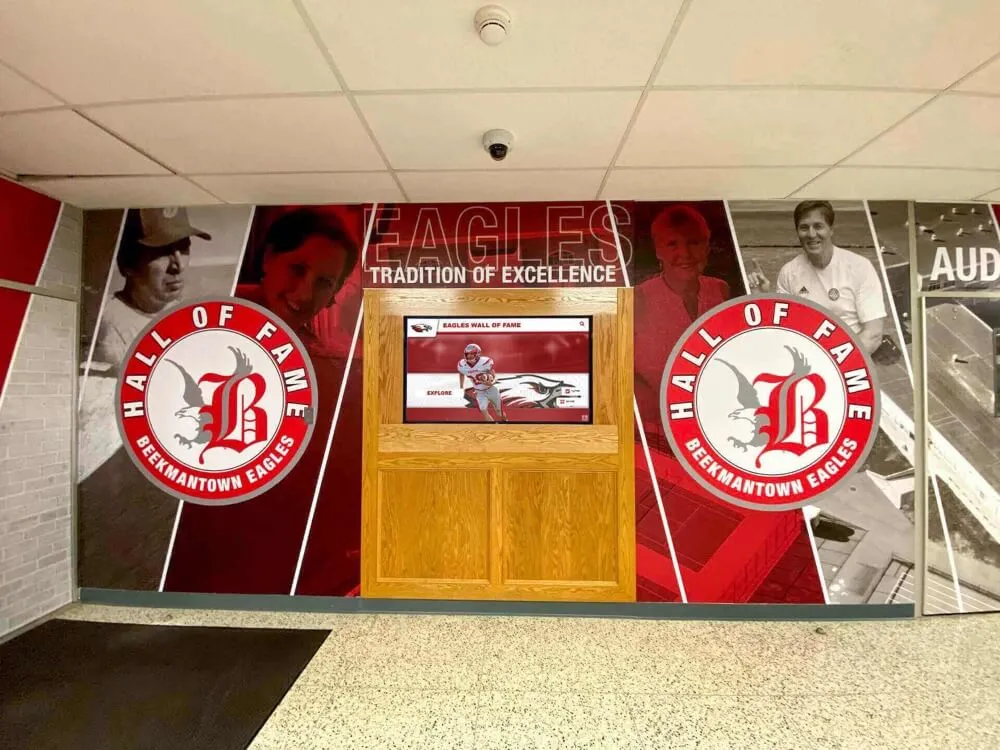
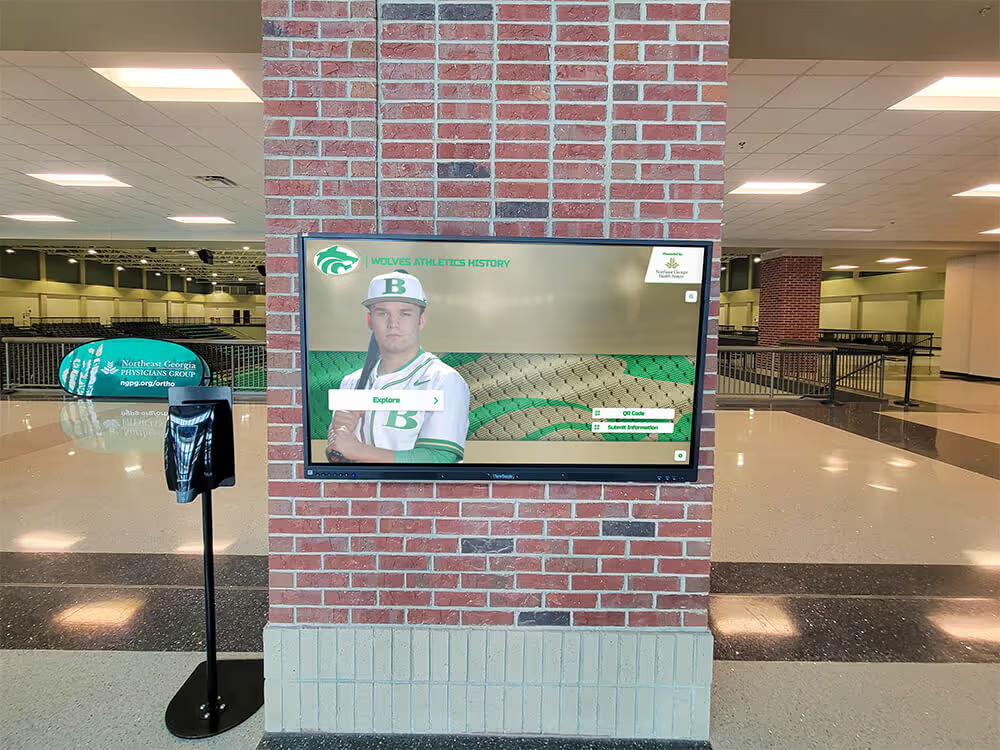
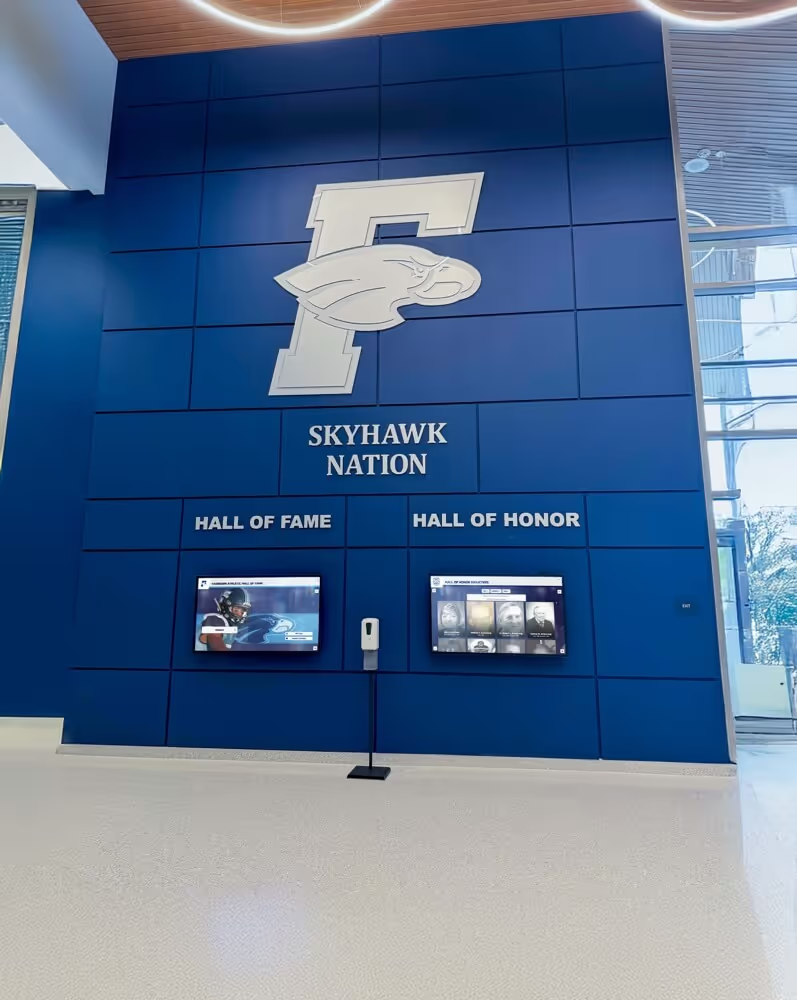
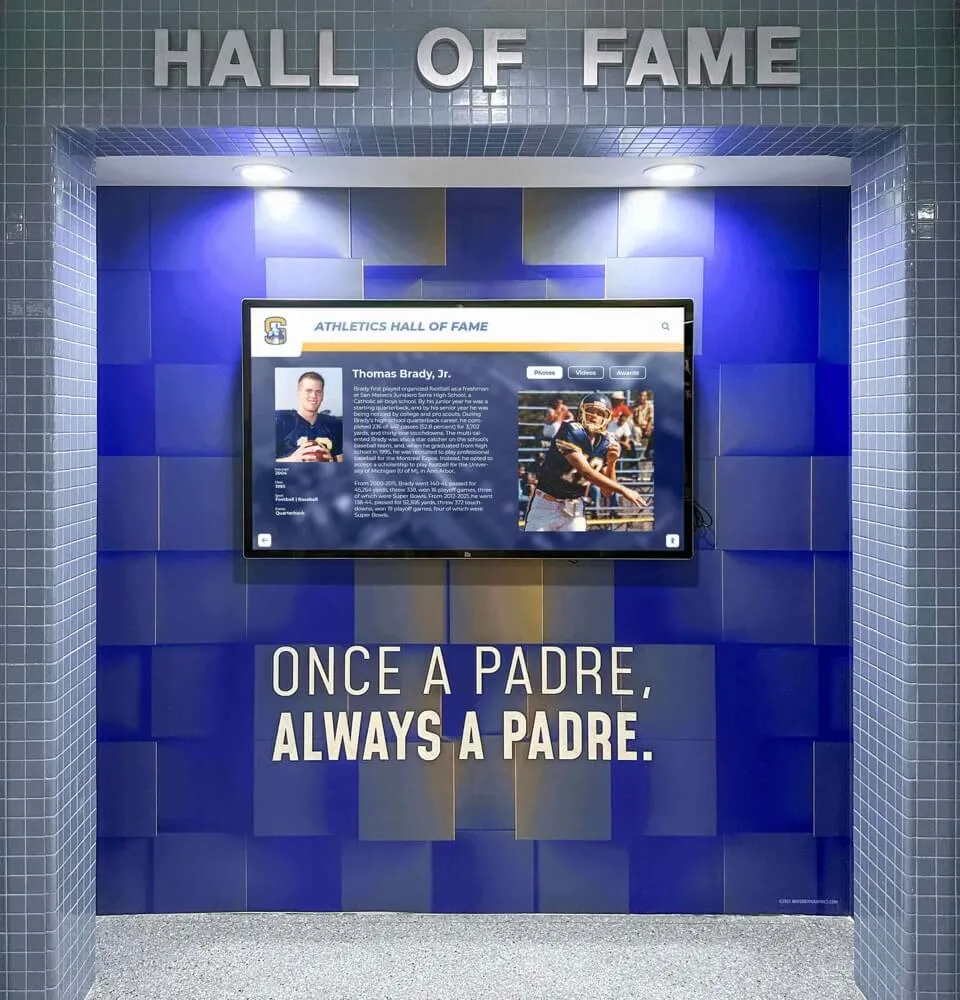
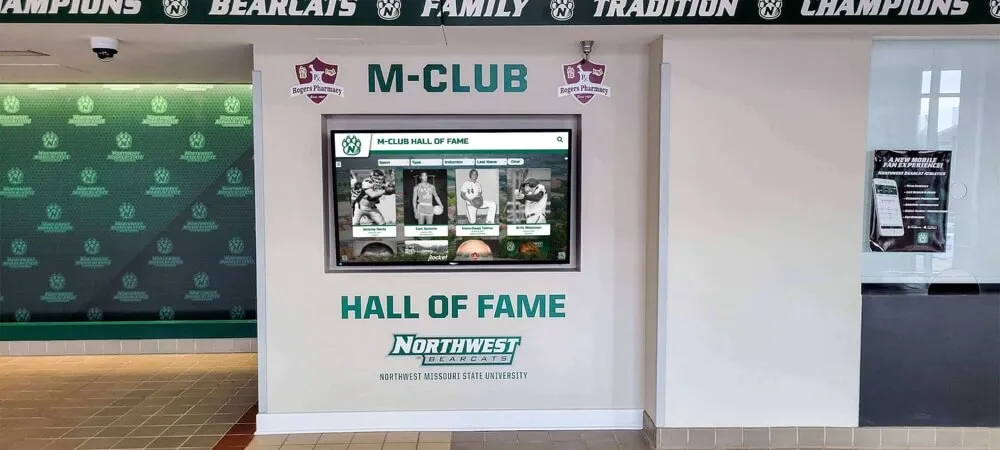
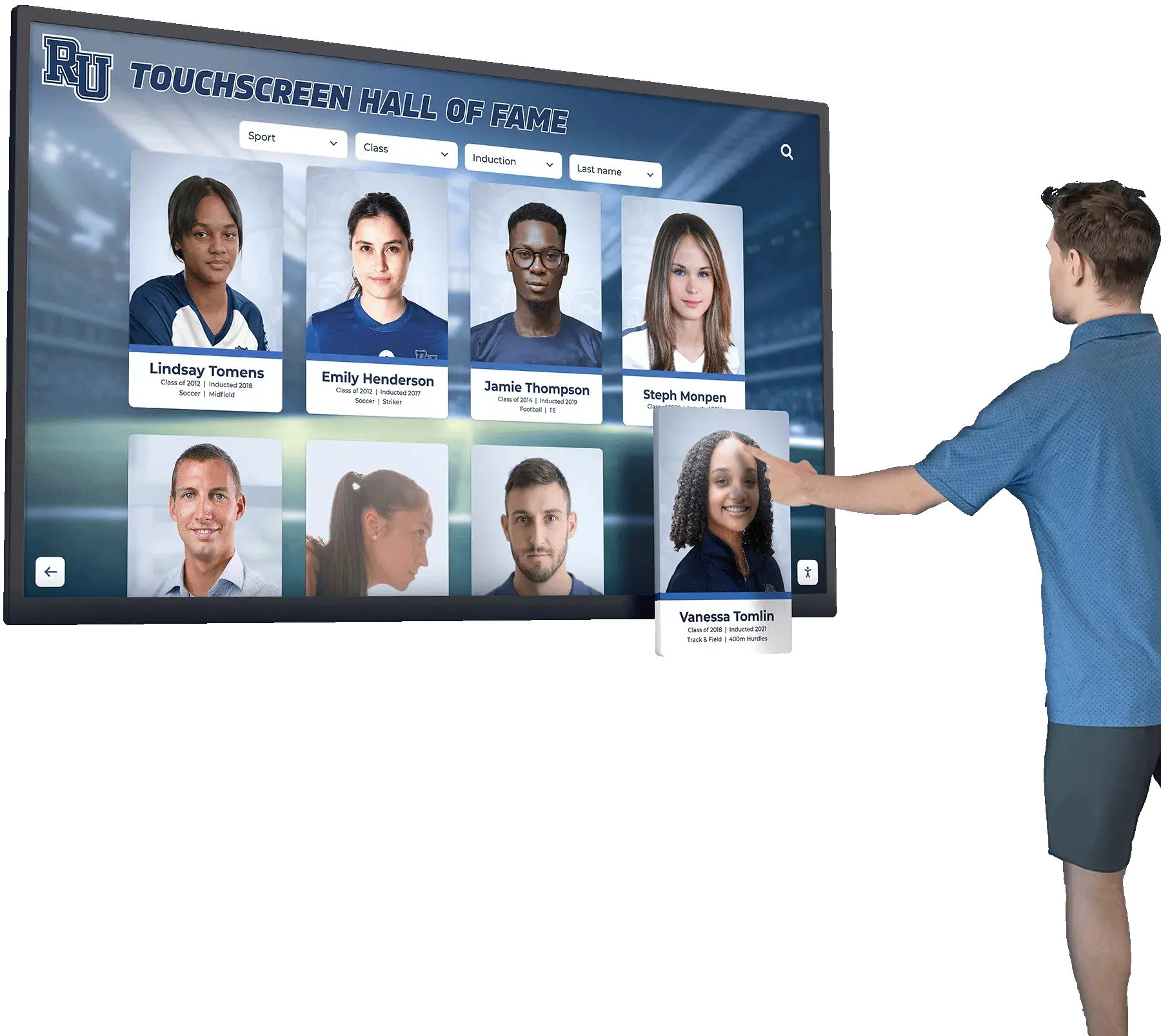
Interactive digital hall of fame systems allow alumni to explore decades of institutional history, search for classmates and teammates, and discover achievements across every era
Alumni Recognition at Reunions: Honoring Generations of Achievement
Recognition programming is among the highest-return elements of any alumni reunion. When graduates feel genuinely honored—not just acknowledged—they deepen their institutional connection and become more active community members long after the reunion ends.
Hall of Fame Induction as Reunion Centerpiece
Many schools successfully time hall of fame inductions to coincide with reunion weekends, creating a natural anchor for all-alumni gatherings. The induction ceremony becomes the headline event around which other programming is organized.
Who to induct: Athletic hall of fame nominations typically focus on graduates who achieved distinction in varsity competition—state qualifiers, record holders, championship contributors, and athletes who went on to collegiate or professional careers. Broader institutional halls of fame can recognize academic achievement, arts distinction, community service, professional accomplishment, and contributions to the institution itself.
Ceremony design: Hall of fame ceremonies work best when each inductee is introduced with a brief video tribute, followed by remarks from a nominatora or family member, and a presentation moment that families can photograph. The ceremony should feel meaningful and unhurried rather than processed quickly.
Permanent recognition: Ensure each inductee’s recognition extends beyond the ceremony through a permanent physical display—a digital hall of fame wall, framed composite, named scholarship, or another lasting tribute that remains visible to current students, future alumni, and institutional community members who visit campus year-round.
For institutions with donor stewardship programs, reunion weekends offer natural opportunities to honor significant donors with dedicated recognition. Individual donor stewardship programs that integrate recognition displays create visible, lasting tributes motivating continued philanthropic engagement.
Distinguished Alumni Awards
Beyond hall of fame inductions, reunion-specific award categories allow institutions to recognize graduates across diverse fields:
Distinguished Alumni Award - Career achievement and professional distinction in any field
Service Above Self Award - Exceptional community service, nonprofit leadership, or public service contributions
Young Alumna/Alumnus of the Year - Outstanding achievement from recent graduates (typically within 10-15 years of graduation)
Legacy Award - Families with multiple generations of graduates, honoring multi-generational institutional connection
Mentor of the Year - Alumni who have contributed significantly to mentoring current students or younger graduates
Alumni Volunteer Award - Recognition for sustained institutional volunteerism—committee service, admissions ambassadorship, career coaching, or other forms of direct contribution
Award nominations should open at least three to four months before the reunion, with a committee review process ensuring decisions feel considered rather than arbitrary. Announced winners deserve advance notification so they can prepare remarks and family members can plan to attend.
Generational Recognition Across Class Years
All-alumni events require recognition strategies honoring multiple generations simultaneously. Structuring recognition around class years—rather than individual achievements only—ensures every attending decade feels celebrated:
Milestone anniversary recognition - Special acknowledgment for classes celebrating 10, 25, 50, or 60+ year reunions. The 50-year class in particular deserves elevated visibility, often including reserved seating, dedicated programming moments, and personalized institutional tributes.
Class giving recognition - If class reunion committees have organized fundraising campaigns, public acknowledgment of class giving totals and purposes (scholarship establishment, facility naming, endowment contributions) celebrates collective generational impact.
Class history presentations - Brief five-minute spotlights on specific graduation years—what was happening in the world, what distinguished that class’s athletic or academic record, who from that class went on to notable achievement—help all attending alumni situate each other within institutional history.
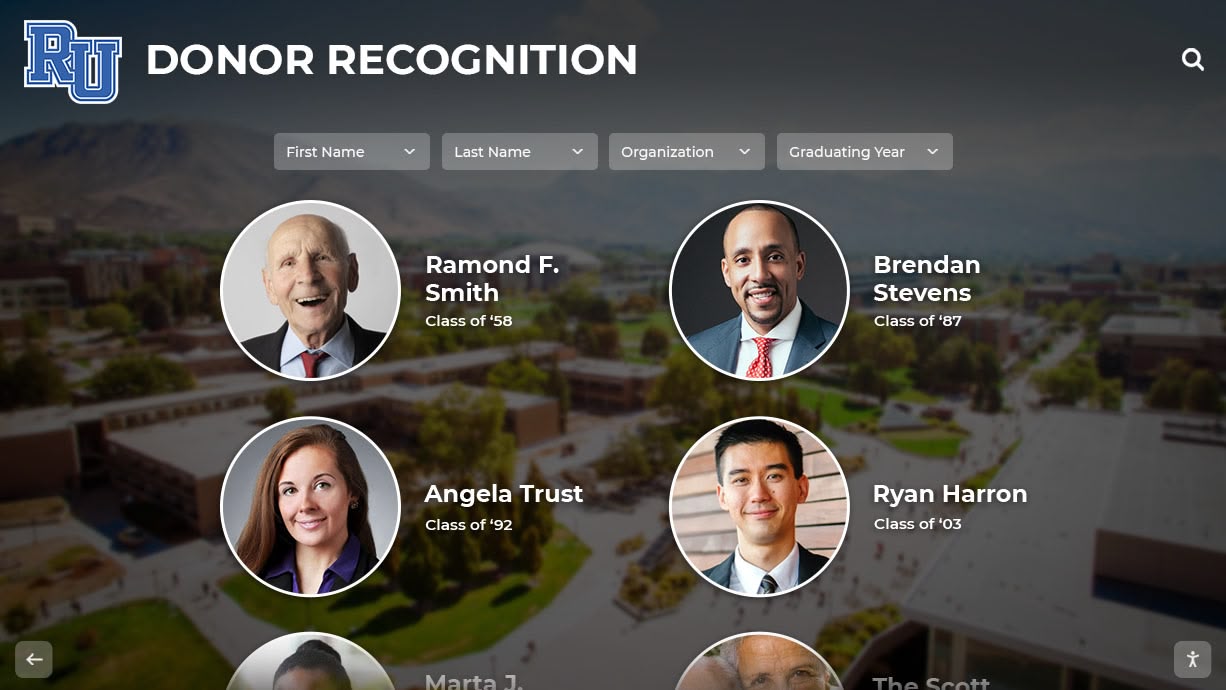
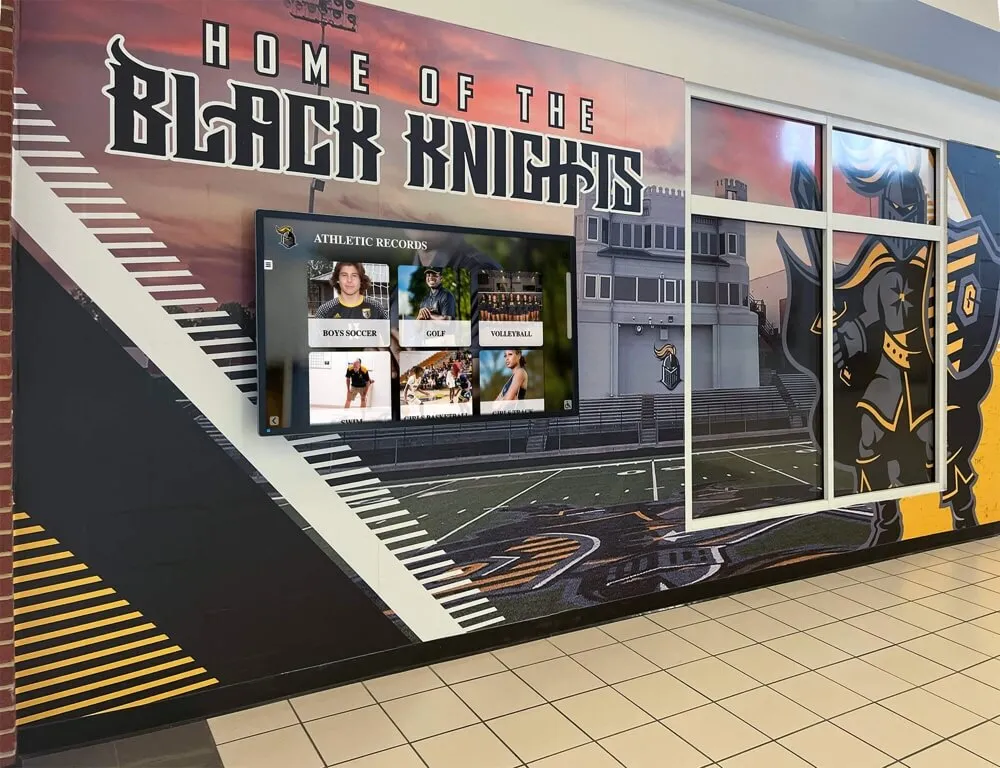
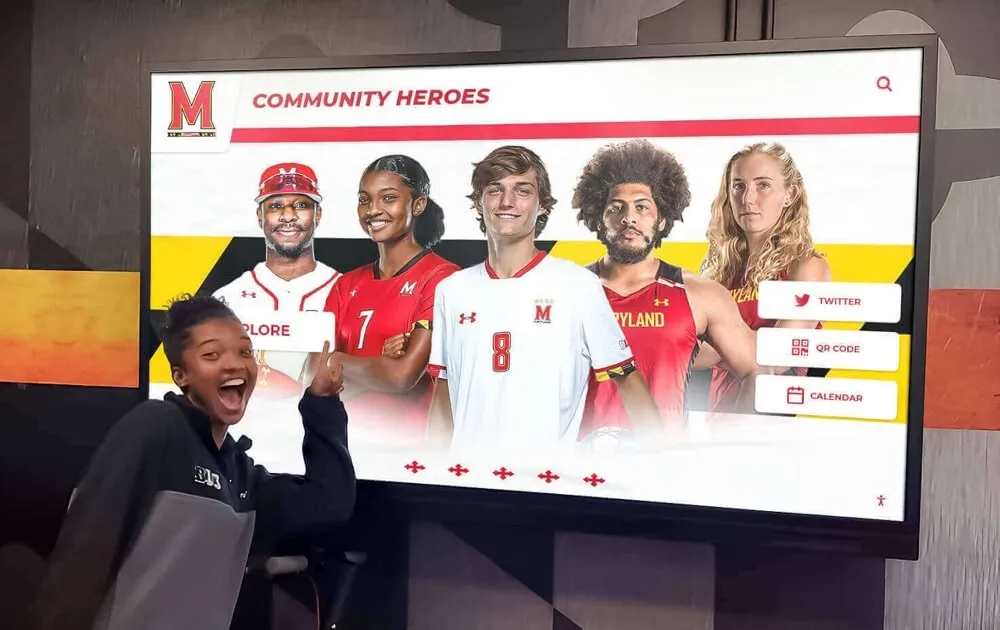
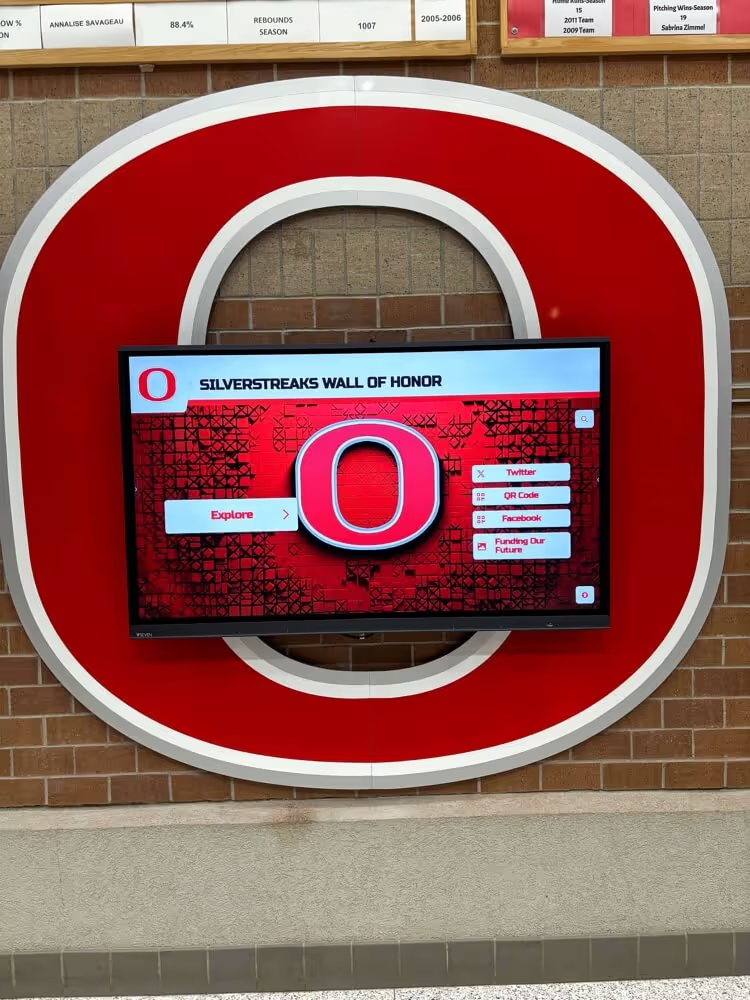
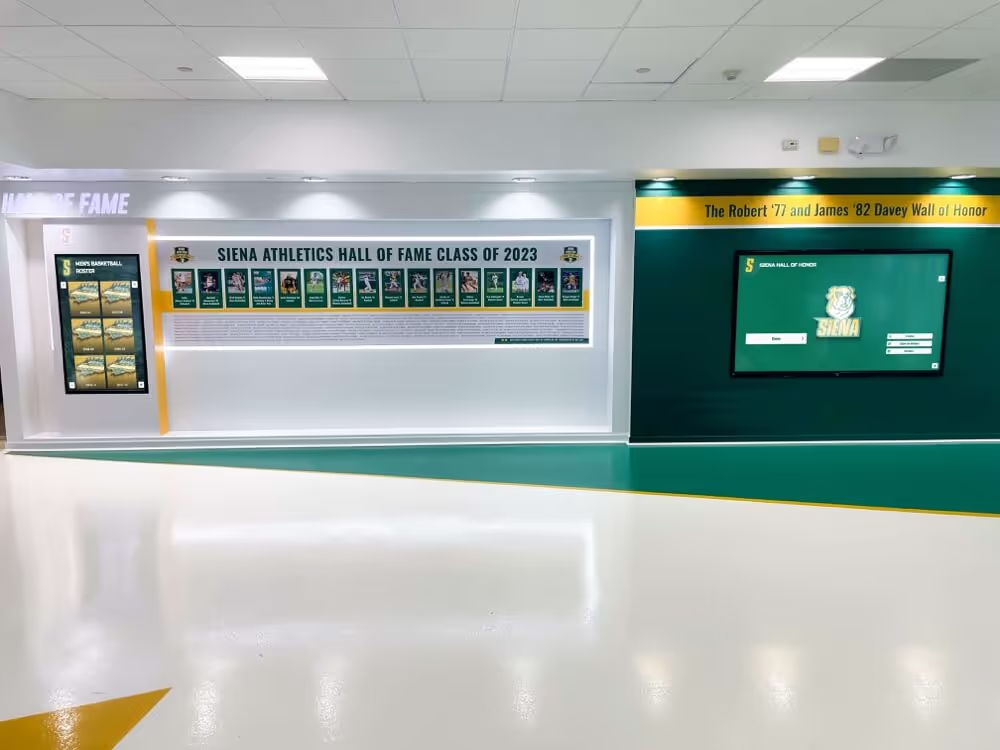
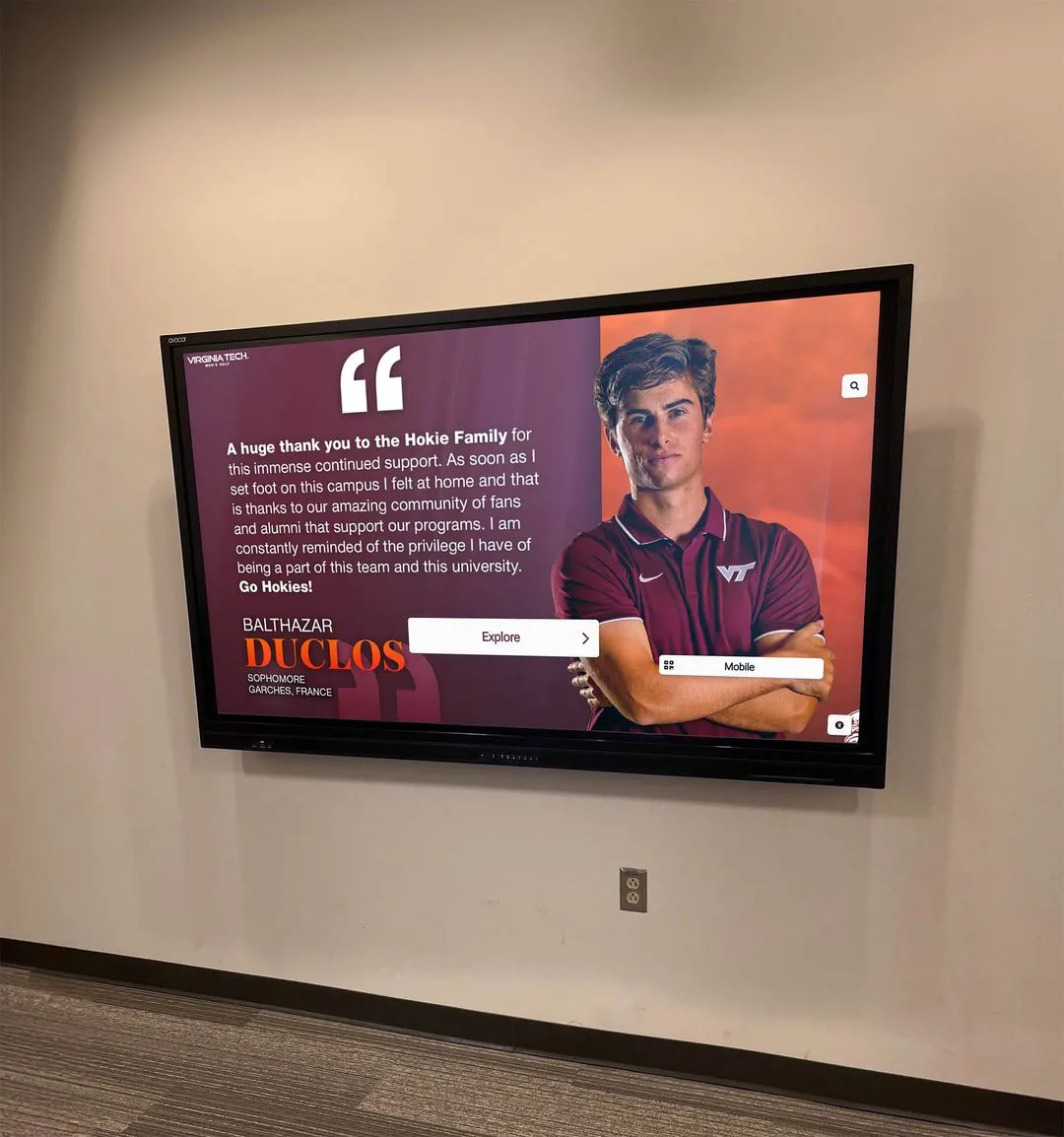
Visible recognition of alumni achievement across generations reinforces that the institution values every graduate's contributions, motivating sustained engagement and philanthropic support
Reunion Communications: Reaching and Activating Your Alumni Base
Even the best-planned reunion fails if alumni don’t hear about it, register, or understand why attending matters. Communications strategy deserves the same investment as event programming.
Database Cleanup and Alumni Tracking
Your alumni database is the foundation of all reunion outreach. Before launching communications, conduct a systematic review:
Address verification - Cross-reference existing records with postal forwarding data, LinkedIn profiles, and other public sources to update contact information for alumni who have moved since graduation.
Email validation - Remove or flag bounced email addresses and identify alumni with outdated employer email addresses who likely require updated personal contacts.
Gap identification - Identify graduating classes with particularly low contact rates and target supplementary outreach—social media searches, personal network outreach from committee members of those classes, or online group posts.
Opt-in confirmation - Ensure you have appropriate permission to contact alumni under applicable privacy regulations, and make opt-out easy and immediately honored.
Multi-Channel Outreach Strategy
Reaching alumni across diverse age ranges and communication preferences requires a multi-channel approach rather than reliance on any single method:
Save-the-dates - Physical mailed save-the-dates sent 9 to 12 months in advance generate significantly higher response rates than digital-only outreach, particularly for older alumni segments. The physical artifact demonstrates institutional investment and seriousness.
Email campaigns - Regular email touchpoints (monthly for the final six months) with varying content—event program announcements, registration reminders, historical photos from relevant class years, speaker previews—maintain awareness without feeling repetitive.
Social media - Create reunion-specific social media presence on platforms where your alumni segments are most active. Facebook groups work well for high school alumni across all ages; LinkedIn for professional networking components; Instagram for visual content and younger alumni.
Class representative outreach - Recruit one or two class representatives per graduation year to personally reach out to classmates. Personal peer-to-peer invitations generate substantially higher registration conversion than institutional outreach alone.
Phone outreach - For milestone classes (25-year, 50-year reunions), personal phone calls from class representatives or committee members to underrepresented classmates significantly increase attendance.
For comprehensive class reunion planning tips that maximize attendance and alumni participation, additional resources provide communication templates and outreach sequencing frameworks tailored to different alumni populations.
Registration and Pricing Strategy
Registration design affects both attendance and the financial sustainability of the event:
Tiered pricing - Offer early-bird pricing to incentivize advance commitment, standard pricing for the main registration window, and potentially reduced pricing for recent graduates (0-5 years) who may have lower disposable income.
Package options - Create multiple attendance packages (single dinner ticket, full weekend package, family package) accommodating different interests and budgets.
Scholarship opportunities - Consider creating a modest fund to subsidize attendance for alumni who would otherwise be unable to afford participation. Community members who helped build the institution’s history deserve the opportunity to celebrate it.
Clear cancellation policy - Publish a fair, clear refund policy addressing cancellations at various points before the event to reduce registration hesitation.
Using Yearbooks as the Heart of Reunion Storytelling
Yearbooks are the most emotionally resonant historical artifacts most schools possess. They capture individual students in the context of their era—their faces, their activities, their fashion, their events—in ways that no other archive matches.
Yearbook-Centered Activities
Yearbook browsing stations - Set up tables with physical yearbooks organized by decade, plus staff or volunteers available to help guests navigate and identify people in old photographs. These stations are among the most reliably popular elements of any reunion program.
Signature exchanges - Distribute replica or reprinted pages from specific class years and encourage attendees to sign each other’s pages, recreating the yearbook-signing tradition that most graduates remember fondly.
Photo contest - Invite alumni to submit personal photographs taken during their school years. Award prizes for categories like “Most Nostalgic,” “Best Group Photo,” or “Most Changed Campus View.” Winning photos displayed during the event create pride in community documentation.
Yearbook quote readings - For small-group breakout sessions, reading aloud the senior quotes or superlatives from a given class year generates laughter and shared memory. This low-tech programming element requires minimal preparation and consistently delights participants.
Digital yearbook archive launch - If your institution is digitizing its yearbook collection for online access, the alumni reunion is an ideal occasion to announce and demonstrate the new archive, positioning it as a gift to the entire alumni community.
Integrating Yearbooks with Digital Displays
Modern display technology allows yearbooks to transcend their physical limitations. Rather than limiting yearbook access to guests crowded around a single physical copy, digital interfaces allow simultaneous browsing by multiple visitors:
Touch-enabled yearbook displays let alumni swipe through pages the way they might scroll through digital photo albums—intuitive, fast, and accessible without risking damage to fragile original materials. When linked to searchable alumni databases, digital yearbook browsers allow guests to navigate directly from a yearbook photograph to an alumni profile with career and contact information, bridging historical memory with present-day connection.
Reunion Fundraising: Connecting Celebration to Institutional Support
Alumni reunions create natural fundraising opportunities when approached with care and genuine alignment between donor interests and institutional needs.
Class Gift Campaigns
The class gift tradition—organizing a reunion class around a specific collective contribution—remains one of the most effective reunion-linked fundraising approaches. Successful class gift campaigns share common characteristics:
Specific, compelling purpose - Rather than directing gifts to a general fund, identify a concrete initiative that resonates with the graduating class’s identity. A class that won a state championship might endow a scholarship for student athletes. A class graduating during a major facility construction might name a room or space. Specificity converts interest into commitment.
Broad participation over maximum dollars - Many institutions set class gift goals around participation rate rather than total amount, celebrating when 40%, 60%, or 80% of a class makes a gift of any size. High participation rates are often more meaningful to institutional fundraisers and more motivating to class members than dollar total alone.
Lead gift strategy - Identify two to three class members who will make leadership gifts early, then publicize their participation as momentum builders for the broader campaign. Peer social proof drives reunion giving decisions powerfully.
Challenge gifts - A classmate who offers to match all gifts up to a certain amount within a defined window creates urgency and amplifies the impact of every contribution.
Donor Recognition at Reunion Events
For institutions with active donor walls or recognition programs, reunion weekends are appropriate moments to honor significant contributors:
Physical donor wall dedication - If completing a physical or digital donor wall installation during the reunion year, unveil it during the reunion weekend with donors present to witness the permanent recognition of their contributions.
Named scholarship announcements - Announce new scholarship establishments during the dinner program, inviting donor family members to speak briefly about their motivation. These moments consistently generate the most powerful emotional responses of any reunion program element.
Giving society recognition - Publicly acknowledge members of cumulative giving societies (alumni who have given $25,000, $50,000, $100,000+ over their lifetimes) during the formal program, helping all attending alumni understand the scope of graduate philanthropic commitment.
Post-Reunion: Preserving Memories and Sustaining Momentum
What happens after the reunion determines whether its energy translates into sustained alumni engagement or fades within weeks.
Memory Documentation and Distribution
Professional photography - Hire a professional photographer to document key moments, display installations, award ceremonies, and candid interactions. High-quality photos sent to attendees within two to three weeks extend the positive energy of the event and create shareable content.
Video compilation - Edit event footage, submitted memory videos, and interviews into a 10 to 15 minute highlight film distributed digitally to all attendees and available on your alumni website.
Digital memory collection - Launch a post-event photo sharing hub where attendees upload personal photographs, creating a community-built archive supplementing professional documentation.
Thank you communications - Personal thank you notes to committee members, sponsors, award recipients, and featured speakers demonstrate institutional gratitude and reinforce relationships that generate future engagement.
Converting Reunion Energy into Ongoing Engagement
Alumni who attend reunions are demonstrably more engaged than those who don’t—but that engagement requires cultivation to sustain:
Immediate follow-up email - Within one week of the event, send a warm recap email to all attendees including links to photographs, announcements of class gift totals, and information about ongoing alumni programming.
Committee thank you and debrief - Conduct a committee debrief within two weeks while memories are fresh, capturing lessons learned, attendance data, survey feedback, and suggestions for future reunions.
Next reunion save-the-date - For milestone class reunions, announce the next reunion date before the current one concludes. Commitment made in the glow of a successful reunion converts to future attendance more reliably than outreach from a cold start.
Year-round touchpoints - Identify alumni who demonstrated strong engagement or leadership interest at the reunion as candidates for ongoing volunteer roles—hall of fame nominating committees, mentorship programs, admissions ambassador networks, or next reunion planning committees.
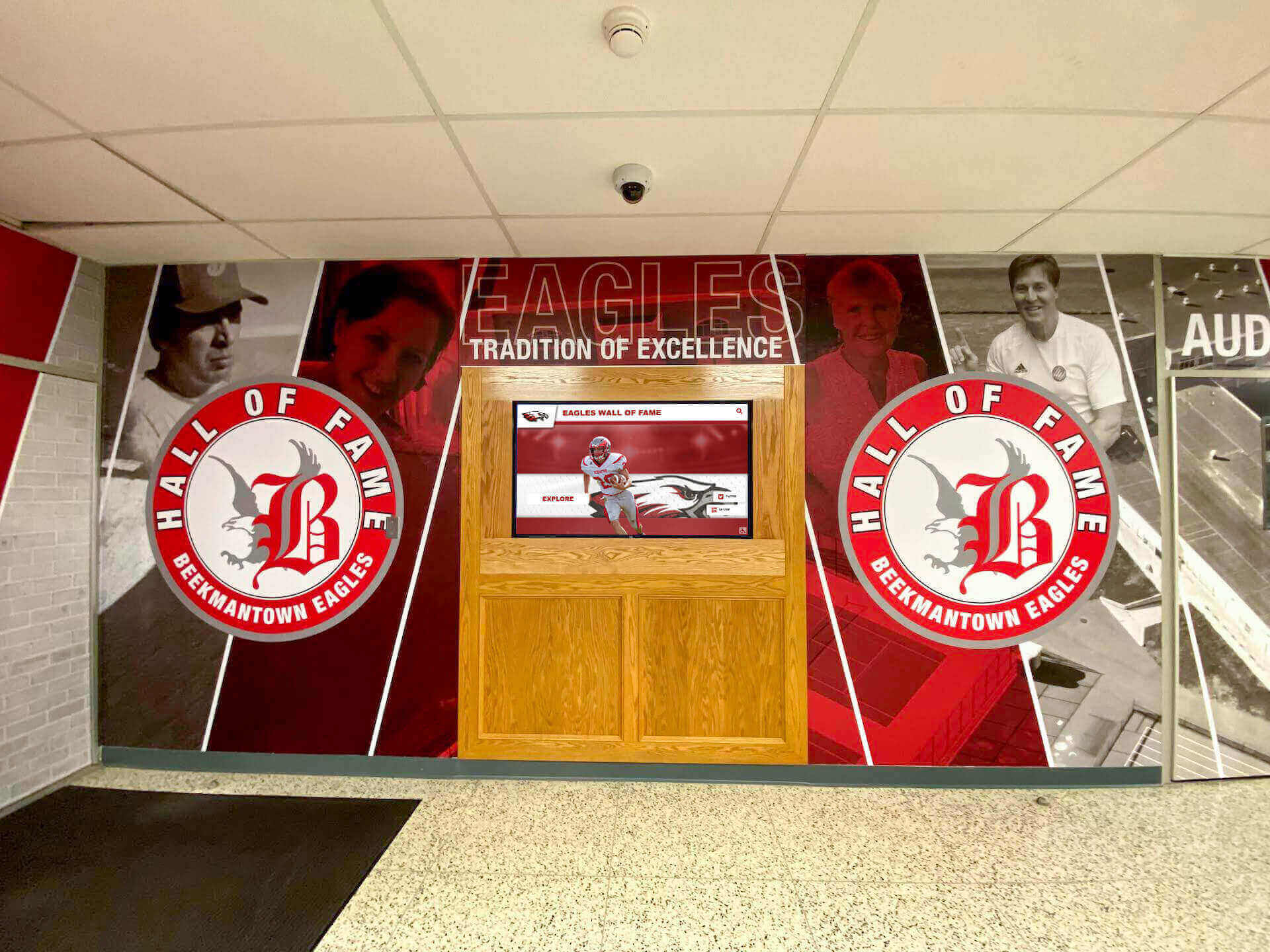
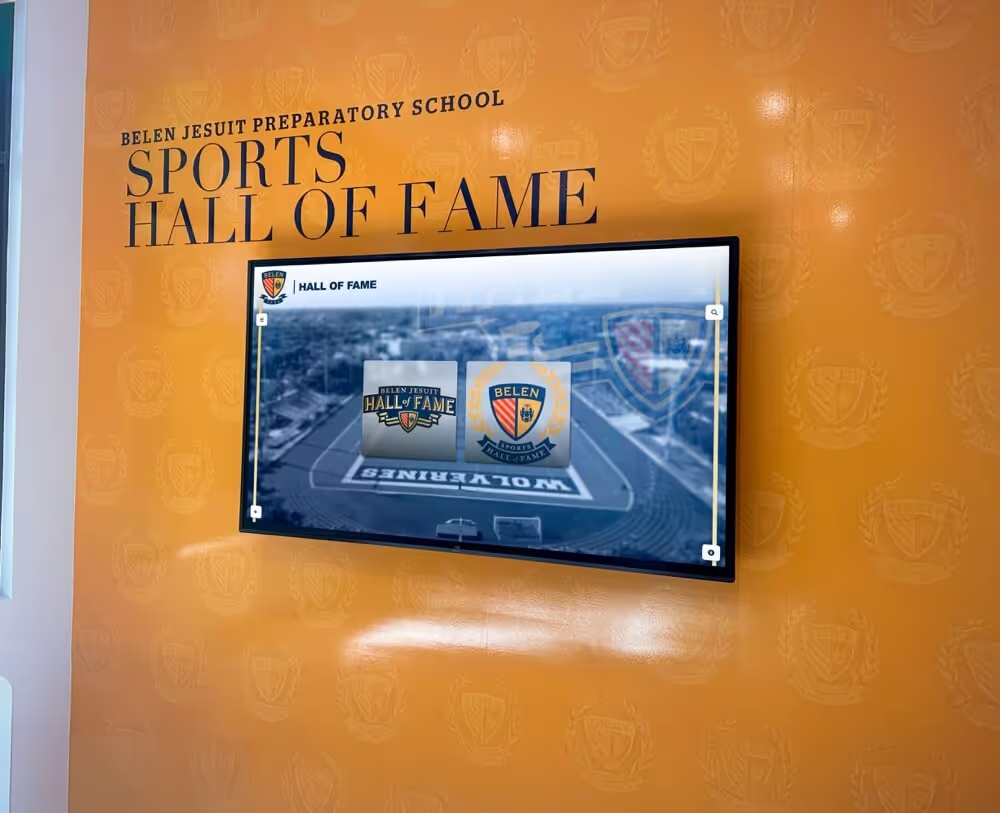
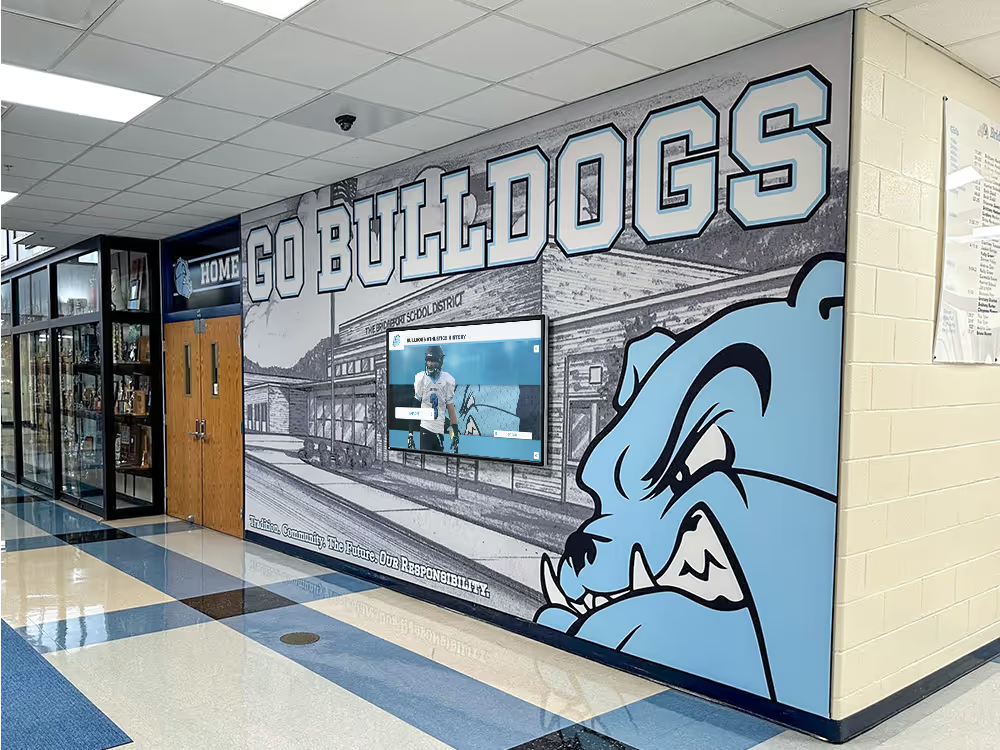
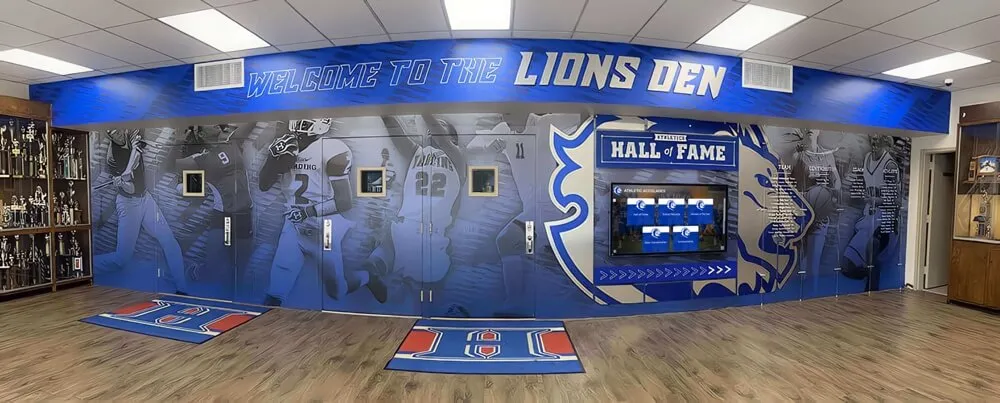
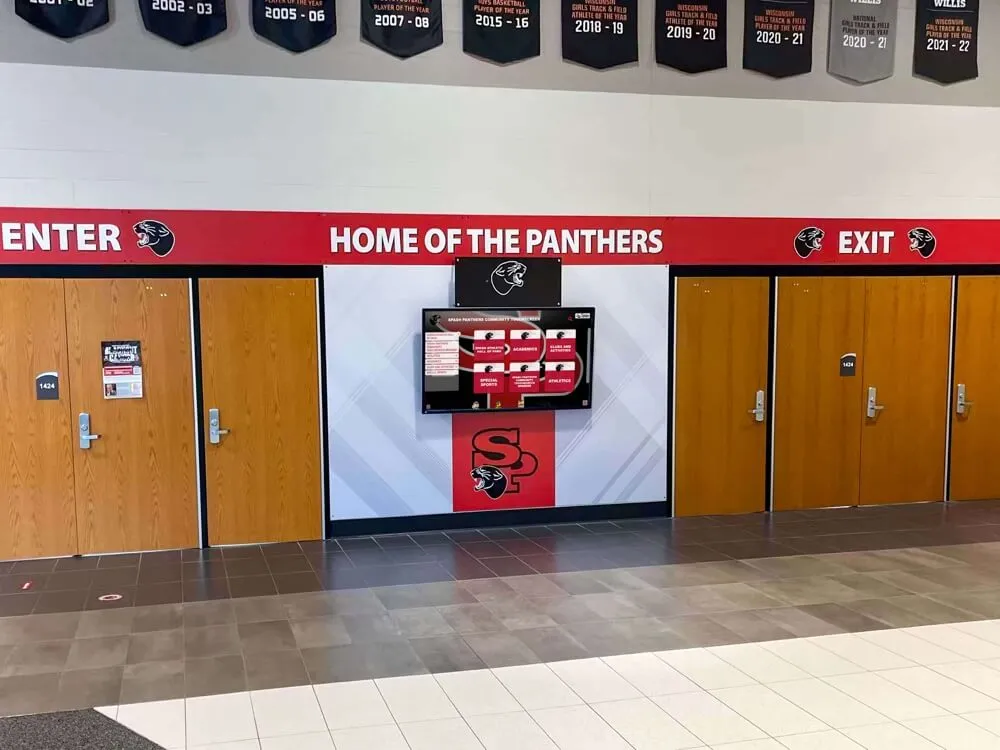
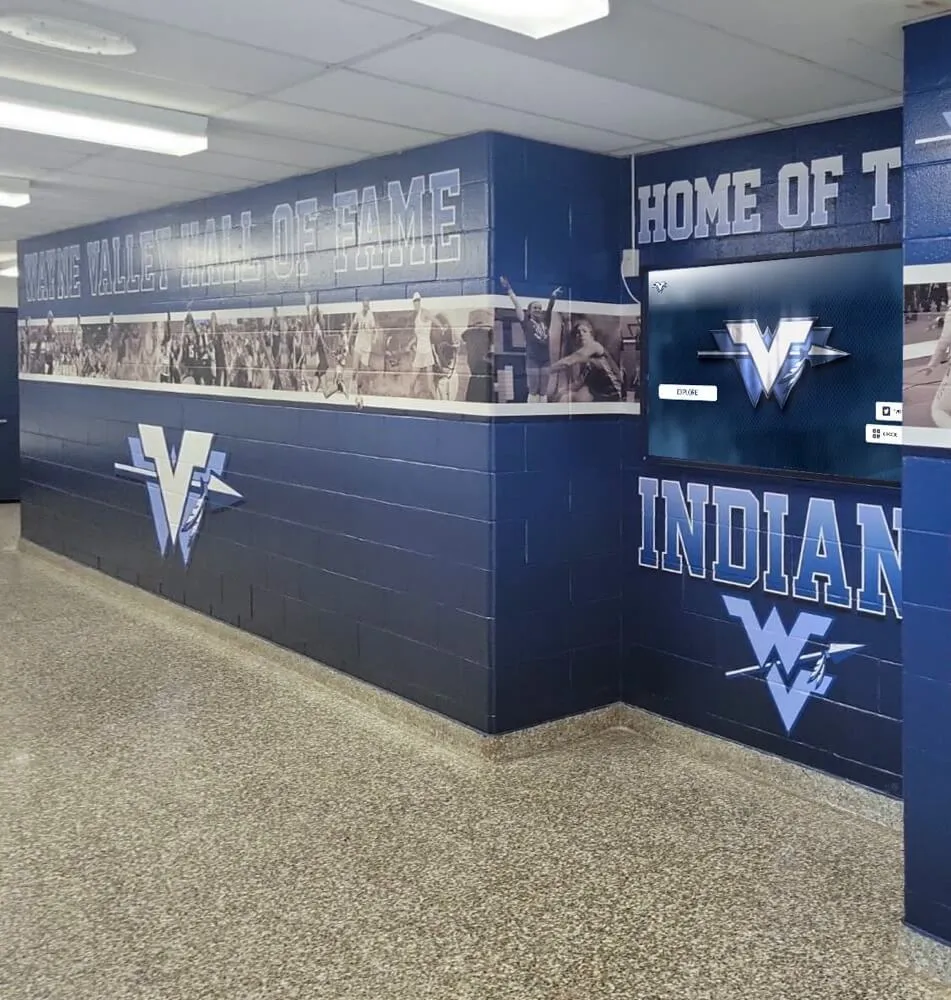
Permanent hall of fame installations in high-traffic campus locations create ongoing recognition infrastructure that serves both reunion guests and everyday campus community members year-round
Permanent Displays: Extending Reunion Impact Beyond a Single Weekend
The most forward-thinking schools use reunion planning as an opportunity to invest in permanent recognition infrastructure—installations that honor alumni history every day, not just during reunion weekends.
Why Permanent Recognition Outperforms Event-Only Displays
Temporary banners and portable displays serve their purpose during the reunion itself, but they pack up and disappear afterward. Permanent installations in high-visibility campus locations—athletic facility lobbies, main school entrances, gymnasium walls, athletic hallways—continue delivering value:
Year-round alumni recognition - When graduates visit campus for any reason—attending a child’s game, dropping off younger siblings, visiting a favorite teacher—permanent displays honor them visibly every time.
Current student inspiration - Daily exposure to the achievements of alumni across generations motivates current students by making institutional history tangible rather than abstract.
Prospective student and family impressions - During campus tours and admission events, prominent recognition displays demonstrate institutional pride and the value placed on graduate achievement—differentiating your school from institutions with bare hallways.
Ongoing fundraising leverage - Named display elements, permanent hall of fame inductee plaques, and donor recognition walls generate sustained philanthropic motivation because donors see their recognition in place on every campus visit.
Living documentation - Unlike event-only displays assembled for a weekend, permanent digital installations can be updated continuously as new achievements occur, records are broken, and additional alumni receive recognition.
Digital Display Solutions for Lasting Recognition
Modern digital display platforms allow schools to create rich, updatable recognition environments without the physical limitations of static trophy cases and engraved plaques.
Digital hall of fame displays combining donor walls with sponsor recognition allow institutions to display comprehensive recognition content—athletic records, academic achievements, donor tributes, historical yearbook images—through a single elegant interface that can be updated remotely without costly physical reprinting.
These installations make sense as reunion-year investments because:
- Committee members can use the platform to load historical content assembled during reunion planning, immediately leveraging months of archival work
- Reunion attendees become the first audience for permanent display content, creating shared ownership of the recognition infrastructure
- The installation serves ongoing campus recognition needs long after the reunion
- Digital platforms make updating recognition content as new alumni achieve distinction straightforward rather than requiring display replacement
Athletic facility improvements including digital displays frequently appear in post-reunion capital campaign priorities as alumni who attended reunions connect campus improvements to institutional pride.
Solutions like Rocket Alumni Solutions provide turnkey touchscreen wall systems specifically designed for educational institutions—combining large-format interactive displays with content management platforms that allow alumni staff to update profiles, add achievement records, and surface yearbook content without technical expertise. Schools using these systems report that reunion attendees spend significantly more time exploring the displays than they expected, generating conversation and connection that extends throughout the event.
Building a Recognition Ecosystem
The most impactful schools don’t think of recognition as a single display—they build layered ecosystems where physical campus installations, digital platforms, online alumni directories, and event programming reinforce each other:
Physical touchscreen installations in lobbies and hallways serve campus visitors and students daily while creating focal points for reunion gatherings
Online alumni recognition portals extend visibility to alumni who can’t visit campus physically, allowing graduates and their families to access recognition content from anywhere
Social media amplification uses recognition moments—hall of fame inductions, alumni spotlights, anniversary milestones—as shareable content building ongoing community across digital platforms
Reunion-timed updates ensure the recognition ecosystem is refreshed and expanded with each major alumni gathering, creating incentive for graduates to engage annually rather than only during milestone years
Celebrating school spirit and community tradition extends naturally from reunion programming when institutions invest in ongoing recognition infrastructure rather than treating alumni celebration as a periodic event.
Alumni Reunion Checklist: Key Steps by Phase
Use this checklist to track your planning progress across the major phases:
Foundation Phase (12-18 months out)
- Form reunion committee with defined roles
- Secure venue and confirm dates
- Begin yearbook and photo archive digitization
- Start alumni database review and cleanup
- Establish reunion budget and fundraising targets
Planning Phase (6-12 months out)
- Launch save-the-date communications
- Open alumni story and photo submissions
- Begin hall of fame nomination process if applicable
- Finalize programming schedule and speakers
- Confirm technology and digital display vendors
- Launch class gift campaign conversations
Execution Phase (1-6 months out)
- Open registration
- Finalize catering and logistics
- Complete digital display content loading
- Confirm sponsor relationships and recognition
- Distribute event schedule to registrants
- Brief all committee members and volunteers
Post-Event Phase (within 30 days)
- Send thank you communications to all participants
- Distribute event photographs
- Conduct committee debrief
- Announce next reunion timeline
- Identify alumni for ongoing engagement roles
- Update permanent recognition displays with reunion content
Conclusion: Building Reunions That Honor Every Generation
Alumni reunions succeed when they respect what graduates actually bring back to campus: the desire to be remembered, to reconnect with community, to see their own stories reflected in the larger institutional narrative, and to know that their years within these walls mattered.
The mechanics of reunion planning—timelines, catering, registration systems, budget management—are learnable and manageable. The harder work is creating the conditions for genuine emotional connection: surfaces the right stories, honoring the right people, building displays that make institutional history palpable, and demonstrating that every generation of graduates is part of a continuous community that extends across decades.
Schools that invest seriously in documentation, recognition, and permanent display infrastructure discover that reunions become self-reinforcing. Alumni who attend well-executed events return more reliably to future gatherings, volunteer more actively in the intervening years, and contribute more philanthropically over the course of their relationships with the institution. The reunion itself is the catalyst—but the sustained engagement it generates is the real return on investment.
Wherever your institution is in its reunion planning journey, start where you are. Digitize one decade of yearbooks. Install one recognition display. Create one alumni spotlight program. The cumulative effect of consistent investment in honoring your graduates builds something no single event could accomplish alone: a living, visible record of everyone who has been part of your school’s story, available to inspire every future generation.
Ready to bring your school’s history to life for reunion guests and beyond?
Rocket Alumni Solutions helps schools and universities create interactive touchscreen displays that showcase decades of alumni achievement, yearbook archives, athletic records, and institutional history—installations that serve reunion weekends and ongoing campus recognition every day of the year. Schedule a consultation to see how a digital recognition system can become the centerpiece of your next alumni reunion.