Alumni homecoming is one of the most emotionally powerful weekends on any school calendar—the moment when graduates from every era return to the place that shaped them, walk familiar hallways, and reconnect with the community that made them who they are. But what does alumni homecoming actually mean, and why do schools invest so much in making it memorable?
At its core, alumni homecoming meaning centers on reconnection: reconnecting graduates to their shared past, reconnecting alumni to the institution’s present, and reconnecting different generations of the same community to one another. It’s a tradition as old as American higher education, now practiced across high schools, universities, and independent schools nationwide—and the best homecoming weekends have one thing in common: they tell the institution’s story through powerful, visible displays of history.
This guide unpacks the full meaning of alumni homecoming, explains how schools structure homecoming weekends across grade levels and graduation generations, and explores how yearbook archives and digital recognition displays have become the centerpiece of modern homecoming celebrations. Whether you’re a yearbook adviser, an alumni director, or a school administrator planning your next homecoming weekend, you’ll find practical frameworks here for creating an experience graduates talk about for decades.
Alumni homecoming weekends succeed or fail based on how well they answer a single question returning graduates ask the moment they arrive: Does this place still remember me? Schools that answer yes—through visible, accessible displays of alumni history—create homecoming experiences that deepen loyalty, strengthen giving, and motivate graduates to remain part of the community long after the game clock runs out.

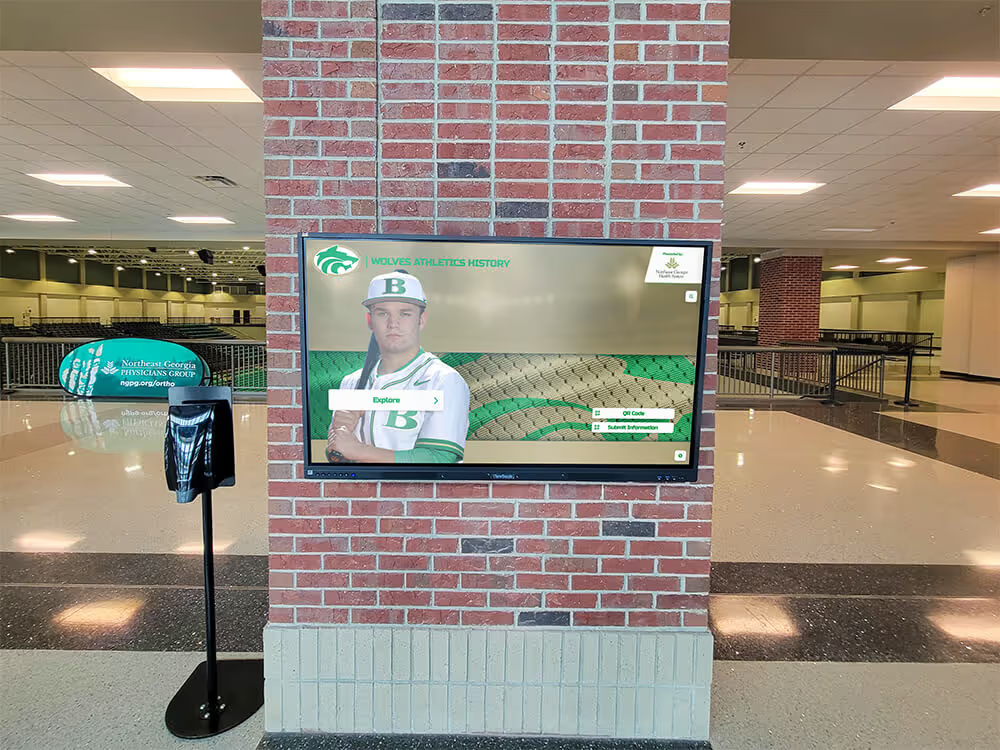
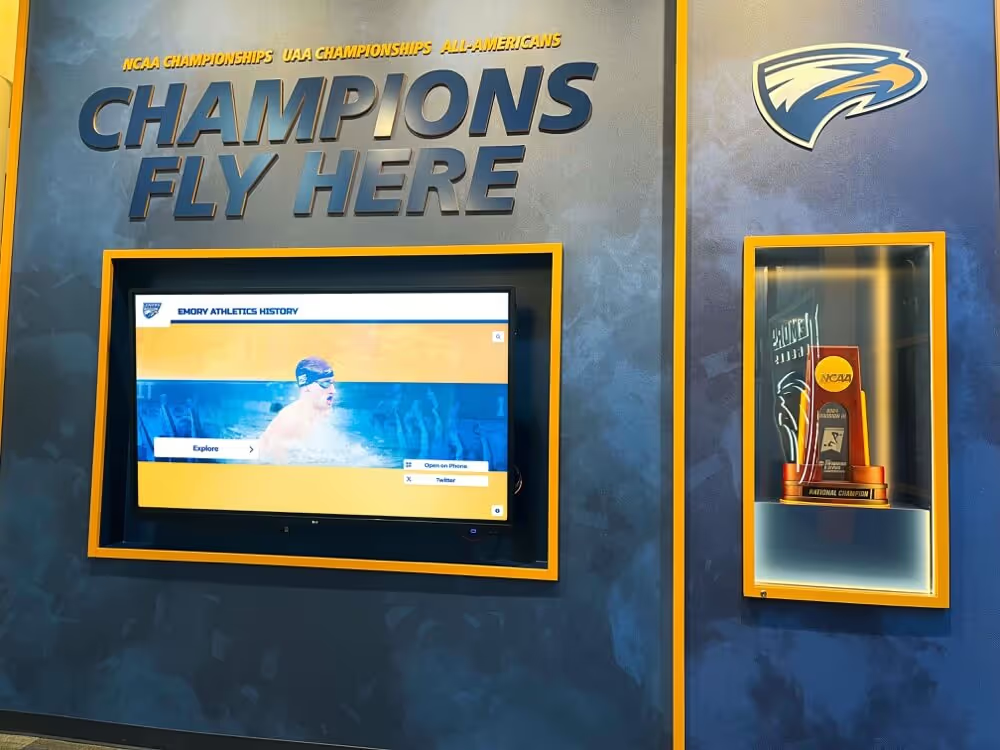
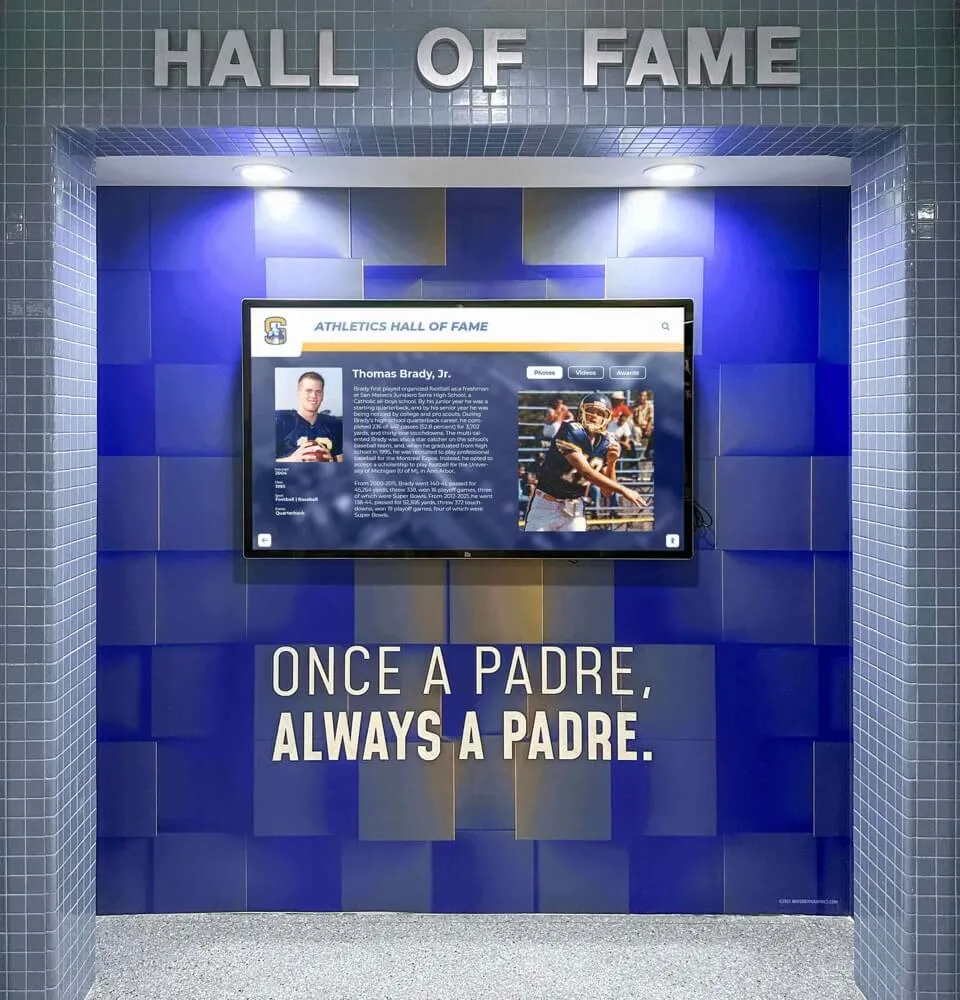
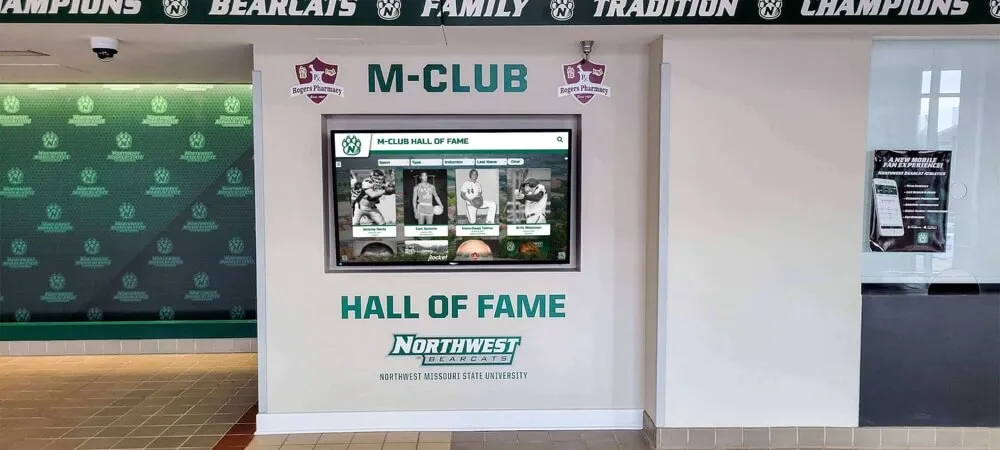
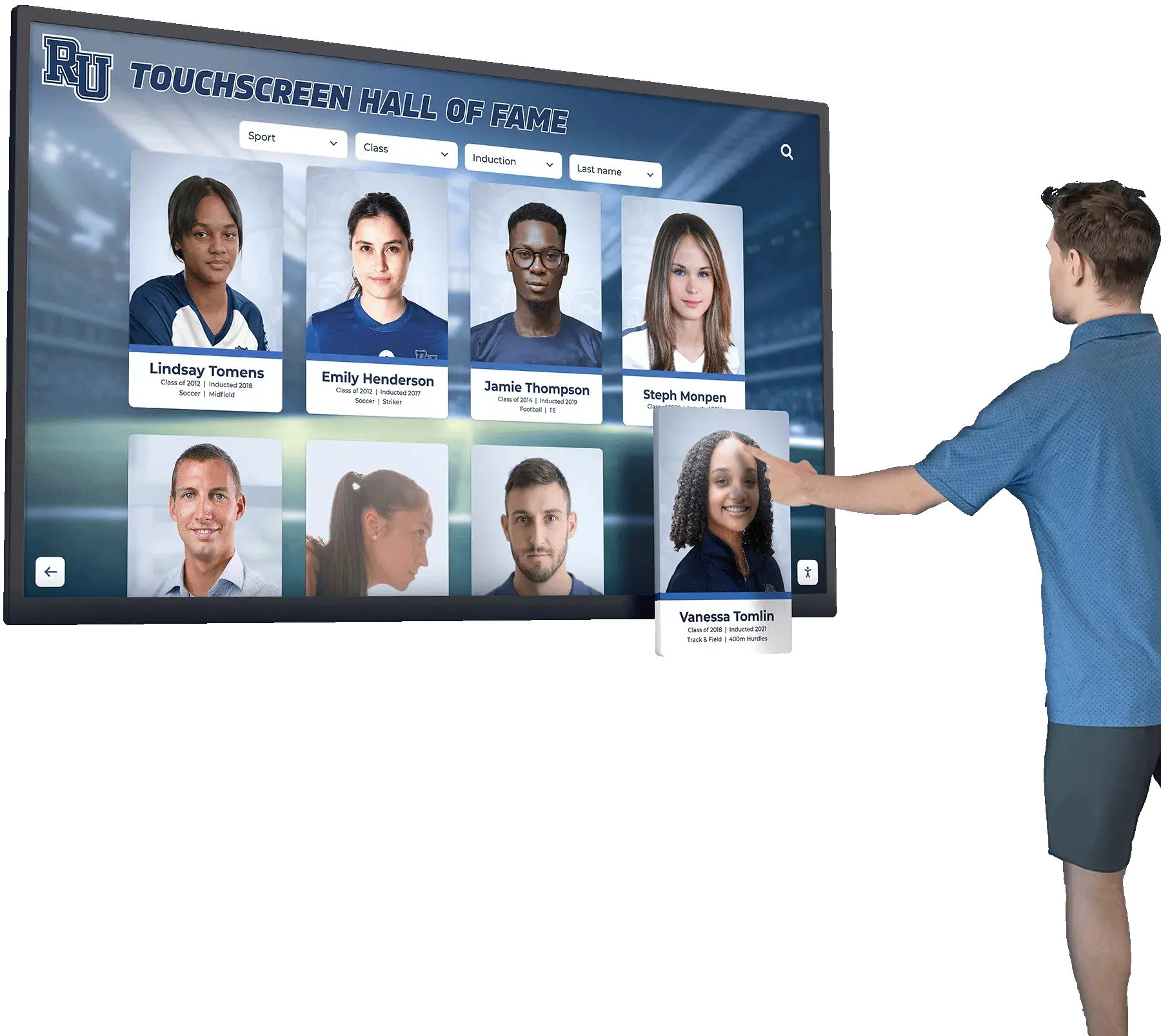
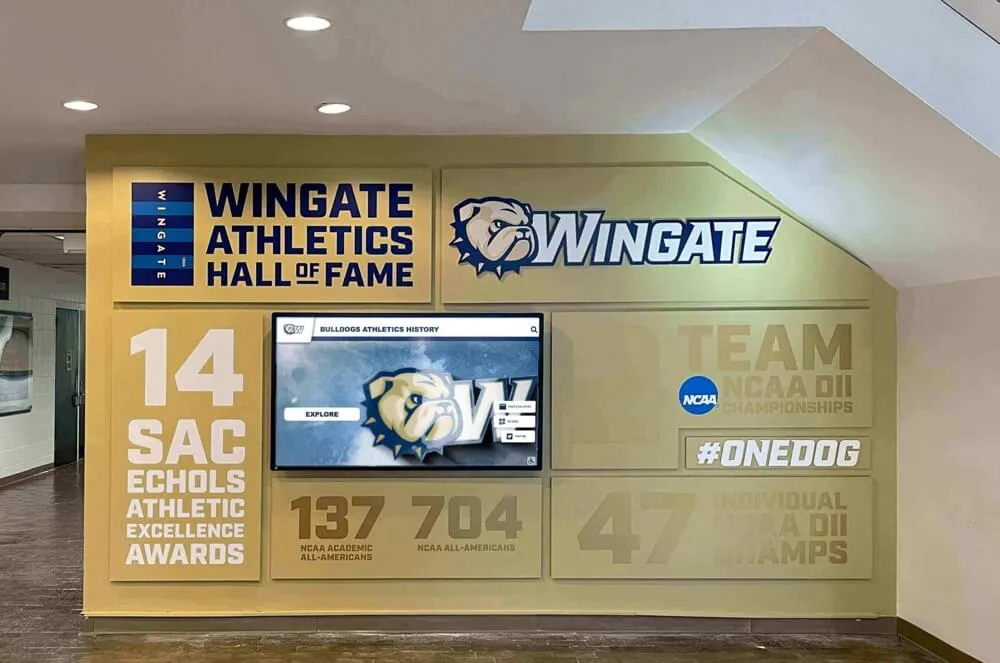
Interactive hall of fame displays in campus lobbies create immediate emotional connection for returning graduates, sparking memories and conversations the moment alumni walk through the door
What Alumni Homecoming Means: The Definition and Its Roots
The term “homecoming” itself tells the story. It describes the act of returning home—and for graduates who spent formative years at a school, that institution is genuinely a second home, a place of belonging, identity, and memory.
The Historical Origins of Homecoming
Homecoming as a formal institutional tradition traces its roots to American universities in the early twentieth century. The University of Missouri and University of Illinois both claim significant early homecoming celebrations around 1910–1911, with large-scale alumni return events organized around football games. The tradition spread rapidly through collegiate athletics: schools discovered that alumni who returned for homecoming donated more, volunteered more, and advocated more actively on behalf of their institutions.
High schools adopted the tradition through the mid-twentieth century, adapting the collegiate model to local community contexts. The autumn timing—anchored to football season and the natural rhythm of the academic calendar—created a reliable annual occasion for alumni to return before winter, giving the tradition a seasonal resonance that has sustained it for over a century.
Alumni Homecoming Meaning in Contemporary Schools
Today, the meaning of alumni homecoming encompasses several distinct dimensions that go well beyond a single athletic event:
Institutional belonging — Homecoming affirms that graduates remain part of the school community regardless of when they graduated. A 1974 alumna attending homecoming and a member of the class of 2019 are both welcomed as essential members of the same family.
Historical continuity — Homecoming makes institutional history tangible. When alumni walk hallways lined with championship banners, yearbook displays, and hall of fame recognition, they experience their own eras as part of a longer, richer story.
Generational connection — Alumni homecoming creates rare opportunities for graduates from different decades to meet, share perspectives, and recognize the threads of community that persist across eras. The coach who inspired a 1995 graduate and the coach who inspired a 2015 graduate may be different people—but the values they transmitted are recognizably continuous.
Emotional renewal — For many alumni, homecoming is simply the most emotionally resonant day of their year: a chance to feel young again, to honor friendships that began in these hallways, and to remember the people they were when the world was still opening up.
Philanthropic motivation — Institutions that understand alumni homecoming meaning invest heavily in recognition programming because research consistently shows that alumni who feel genuinely honored are significantly more likely to support their schools financially. The connection between belonging and giving is not subtle.
What Homecoming Weekend Typically Includes
While every institution shapes its homecoming to reflect its own traditions and culture, most homecoming weekends share a recognizable structure of events across the Friday-through-Sunday frame.
Friday: Welcome and Reconnection
Friday evening events focus on informal arrival and initial reconnection. Common elements include:
- Welcome receptions in athletic facilities, campus lobbies, or alumni spaces where returning graduates can mingle across graduation years
- Display previews giving early arrivals time to explore historical exhibits before the crowds of Saturday
- Class-specific hospitality for milestone anniversary classes (10-year, 25-year, 50-year reunions)
- Young alumni gatherings creating dedicated space for recent graduates who may not yet know older alumni well
Friday serves as the emotional warm-up—the moment where the transition from everyday life to homecoming consciousness happens. Schools that invest in Friday programming report substantially higher Saturday event attendance because arriving alumni are already emotionally engaged.
Saturday: The Heart of Homecoming
Saturday carries the most programming weight. Typical elements include:
- Campus tours for alumni who haven’t visited recently, showcasing facility improvements and highlighting how familiar spaces have evolved
- Athletic competition anchored by the homecoming football game (at high schools and many colleges) or sport-specific events at schools with different athletic traditions
- Hall of fame induction ceremonies timed to coincide with homecoming, creating a natural program anchor
- Homecoming court coronation honoring current students’ tradition
- Alumni recognition programming spotlighting graduates across decades for professional achievement, service, and institutional contributions
- Yearbook browsing stations and historical exhibits where graduates can revisit their own eras and discover what happened before and after their time
- Formal dinner or banquet featuring awards presentations, institutional updates, and class gift announcements
The Saturday schedule at well-organized homecoming weekends gives alumni reasons to stay on campus for six to eight hours, creating extended opportunities for the spontaneous conversations and reconnections that generate lasting emotional impact.
Sunday: Farewell and Future
Sunday programming, often brunch-oriented, bridges celebration and commitment:
- Family programming welcoming the spouses, children, and grandchildren of alumni
- Memorial tributes honoring graduates and faculty members who have passed away since the last gathering
- Announcement of next year’s homecoming while the positive energy of the current weekend is still present
- Volunteer recruitment for alumni who demonstrated engagement interest and could become ongoing community contributors
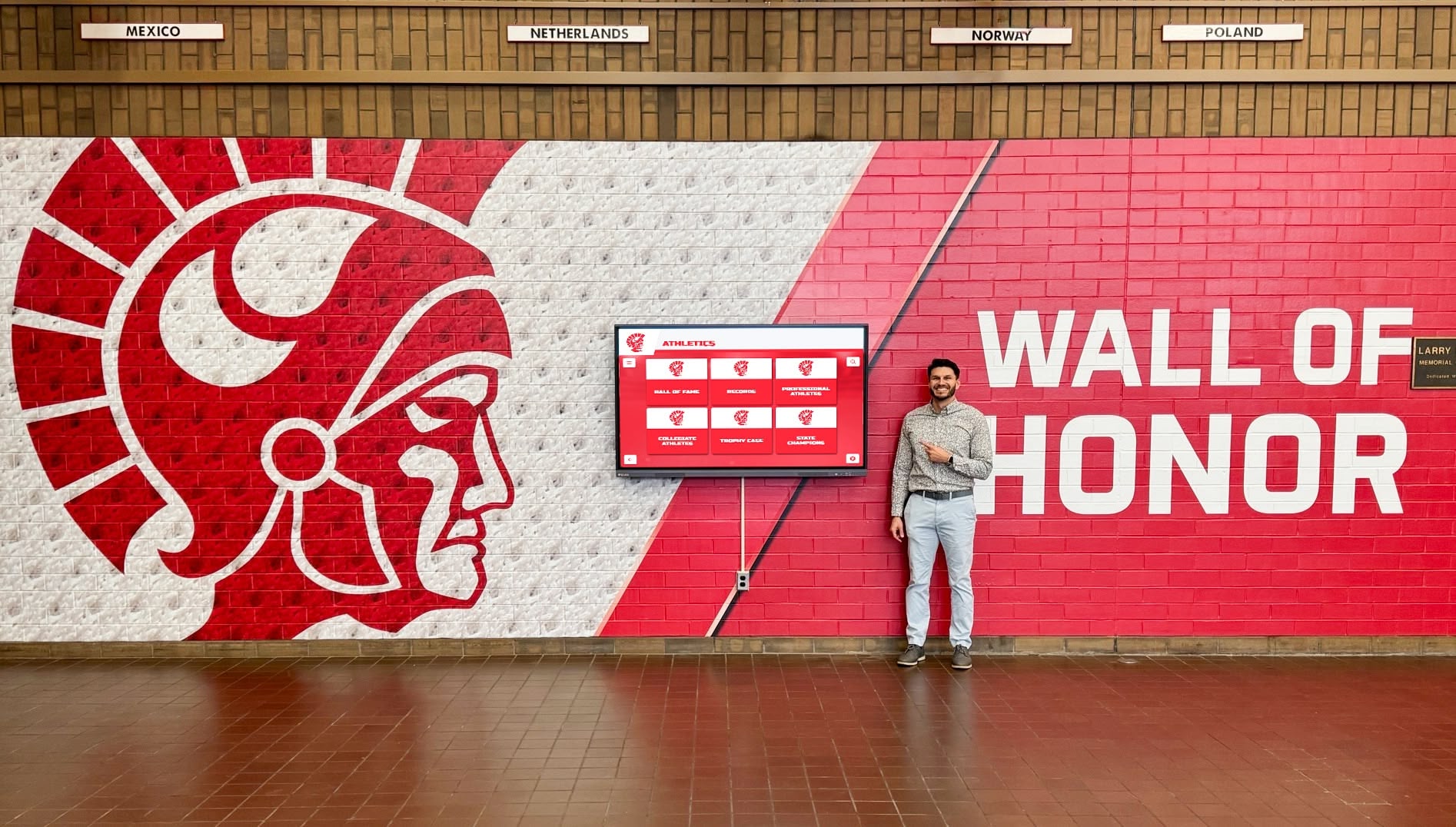
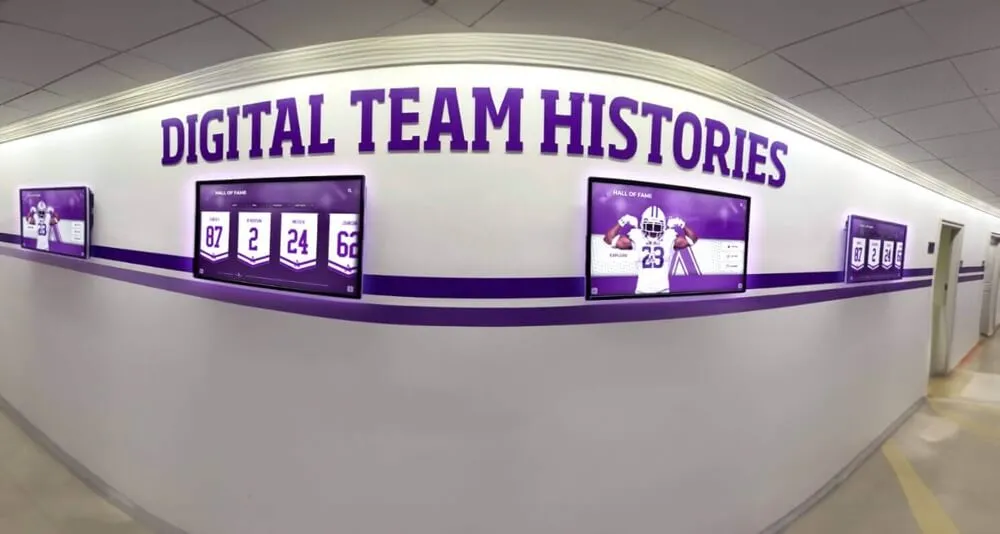
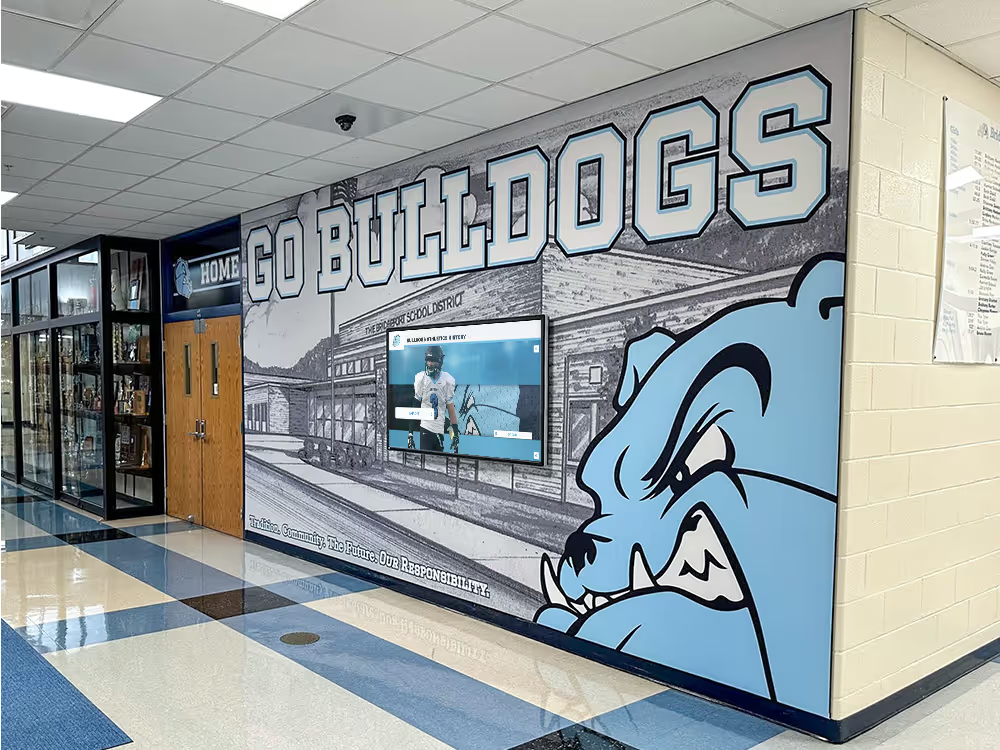
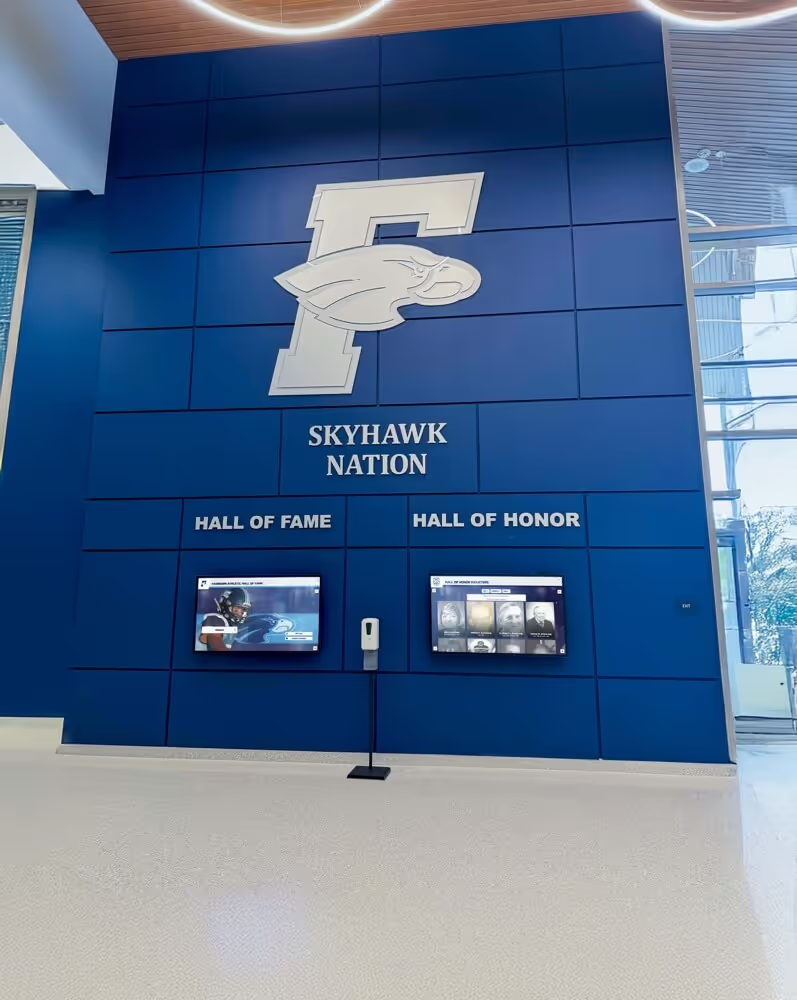
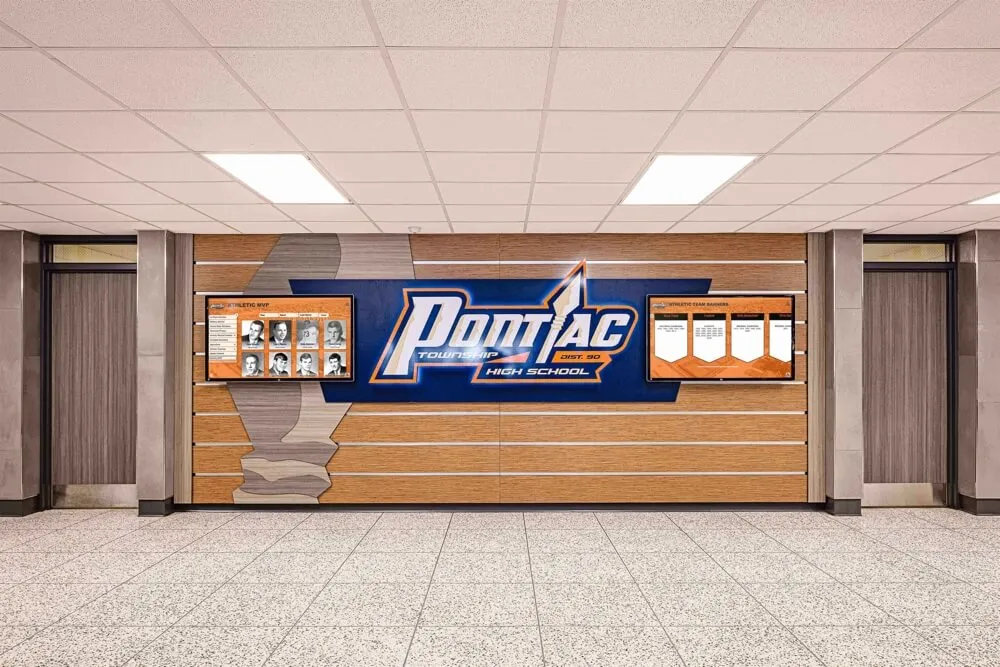
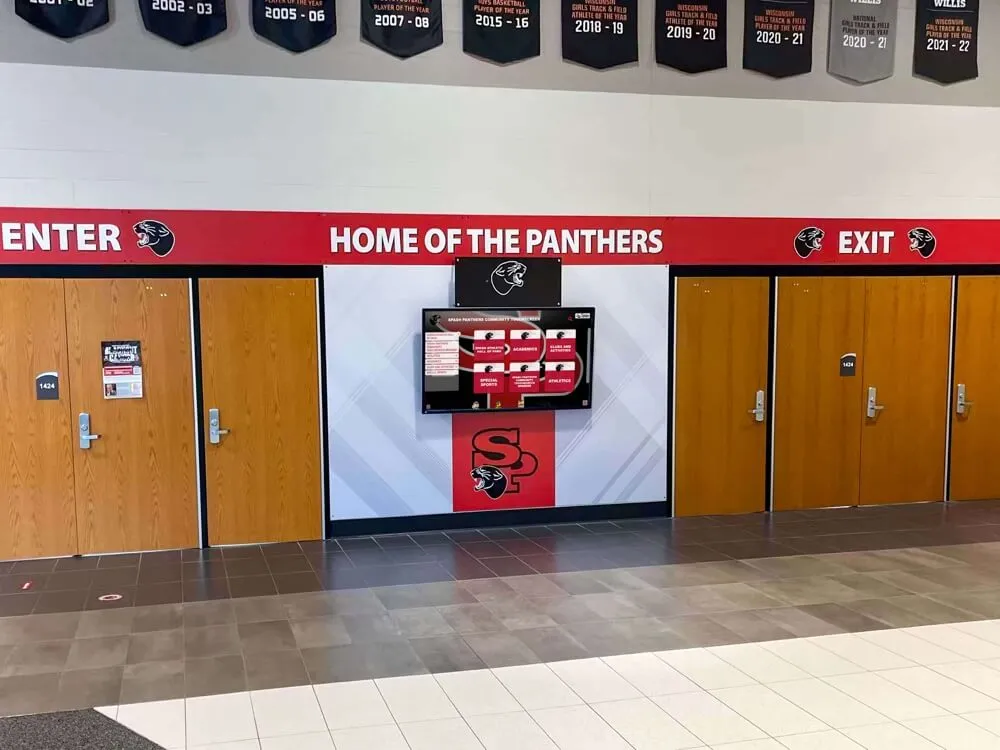
Permanent recognition displays installed in high-traffic hallways create natural gathering points during homecoming, drawing alumni toward their own era's achievements and connecting them to history before and after their time
Why Yearbooks Are Central to Alumni Homecoming Meaning
Among all the historical artifacts a school possesses, yearbooks occupy a unique position: they are the only documents that capture every student, every year, in the context of their moment. A championship trophy records an outcome; a yearbook records the human beings who were present.
What Yearbooks Contain That Nothing Else Does
Yearbooks document school life in ways that formal institutional records cannot:
Individual student presence — Every student who attended during a given year appears in the yearbook, whether they were varsity athletes, honor students, drama leads, or quietly present in the background. The yearbook is the one place where every person’s face and name are recorded together.
Social and cultural context — Yearbooks capture fashion, slang, popular culture references, and the visual aesthetic of specific eras in ways that instantly transport alumni back to their own time. A 1987 graduate browsing that year’s yearbook doesn’t just remember facts—they feel 1987.
Activities and events — Club pages, sports sections, and activity coverage document the breadth of school life in ways that athletic record boards or academic honor rolls cannot. The debate team, the theater production, the student newspaper, the homecoming parade—yearbooks show all of it.
Relationships — Handwritten messages in physical yearbooks capture something no digital archive can replicate: the actual words friends wrote to each other at the end of a year, in their own handwriting, about the experiences they shared.
Institutional evolution — A school’s yearbook collection, spanning decades, documents how the institution itself has changed: new buildings, different uniforms, evolved traditions, changing student body demographics, technological shifts visible in how activities and events were photographed and presented.
The Role of Yearbooks in Homecoming Programming
Schools that center yearbook archives in their homecoming programming consistently report higher alumni engagement than those that treat yearbooks as background furniture. Specific yearbook-centered programming elements that work:
Yearbook browsing stations — Physical yearbooks arranged chronologically, staffed by volunteers who can help alumni identify people in photographs and answer questions about historical context. These stations become among the most visited areas of any homecoming event; alumni cluster around them for 20 to 40 minutes at a stretch.
“Find Yourself” challenges — Interactive games where alumni search for specific yearbook photos, find classmates, or identify faculty from historical images. These low-tech activities generate surprising engagement across age groups.
Decade displays — Curated exhibits drawing from yearbooks of each decade, presented alongside contextual information about what was happening in the world during those years. Alumni from every era find their section and experience the pleasure of seeing their time honored alongside others.
Digital yearbook browsers — Interactive touchscreen displays allowing alumni to browse yearbook pages without risking damage to fragile originals, with the added capability of serving multiple visitors simultaneously from a single installation. The historic yearbook digitization process for schools transforms physical collections into searchable digital archives that serve both homecoming guests and ongoing campus communities.
Yearbook quote readings — During structured programming moments, reading senior quotes from specific class years aloud generates immediate laughter, shared recognition, and emotional warmth. This zero-cost programming element requires only a willing reader and a willing audience.
How Schools Display Yearbooks and Historical Archives During Homecoming
The physical presentation of historical content shapes alumni emotional experience profoundly. A school that stacks yearbooks on a folding table communicates something very different from one that creates curated, well-lit, thematically organized displays.
Traditional Display Methods
Traditional approaches remain effective when executed with care:
Chronological timeline walls — Large-format photo and document displays organized along hallway or venue walls, walking alumni through institutional history decade by decade. When paired with yearbook photographs, these timelines allow guests to locate their own era within the school’s larger story.
Framed composite displays — Class composite photographs organized by graduation year and displayed together create powerful visual evidence of institutional continuity. Seeing 40 years of composite photographs on a single wall transforms abstract history into visible, human reality.
Trophy and memorabilia cases — Physical artifacts—championship trophies, retired jerseys, letters of recognition, significant awards—add tactile dimension to historical displays. The key is thoughtful curation: a few meaningful objects with clear context outperform a crowded case with no interpretive framework.
Printed memory books — Professionally produced programs incorporating yearbook photographs, historical milestones, alumni updates, and institutional statistics serve as both event guides and lasting keepsakes that alumni carry home and revisit for years.
The challenge with traditional displays is scale: physical yearbooks are finite, fragile, and can only be in one place at a time. A homecoming event with several hundred attendees creates bottlenecks at popular display stations and limits how many alumni can meaningfully engage with historical content simultaneously.
Digital Display Technologies Transforming Homecoming
Modern display technology solves the scale problem traditional displays cannot address. Schools investing in digital recognition infrastructure for homecoming report dramatically higher historical engagement and longer dwell times at display stations.
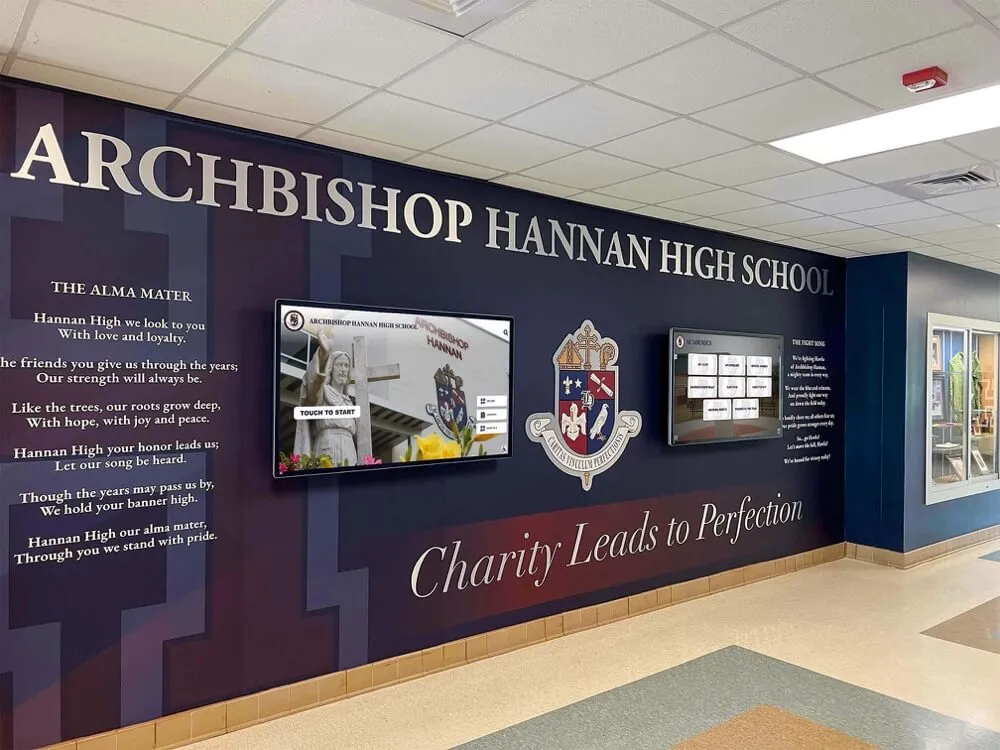
Interactive touchscreen kiosks — Touch-enabled displays allow individual alumni to navigate directly to their graduation year, search for classmates by name, browse championship records from their athletic era, and explore yearbook content at their own pace. A single installation can serve dozens of visitors sequentially, with each experience personalized to the alumna or alumnus using it. Modernizing a traditional high school hall of fame with interactive touchscreen capability transforms static recognition into an exploration experience alumni genuinely seek out.
Digital yearbook browsers — Large-format displays presenting yearbook pages in a swipe-and-tap interface allow simultaneous browsing by multiple visitors, eliminate damage risk to original materials, and can integrate search functionality that lets alumni navigate directly to specific people or events rather than paging through entire volumes.
Multi-screen hallway installations — Networked display systems that present coordinated content across multiple screens in high-traffic hallways create immersive environments where alumni experience institutional history simply by walking through the building. Digital banner recognition celebrating school championship achievements can rotate alongside yearbook images and alumni profiles, creating rich visual landscapes throughout homecoming weekend.
Web-accessible alumni archives — Digital platforms that extend homecoming engagement online allow alumni who cannot attend in person to browse the same historical content, participate in recognition programming, and connect with classmates through the event’s digital footprint.
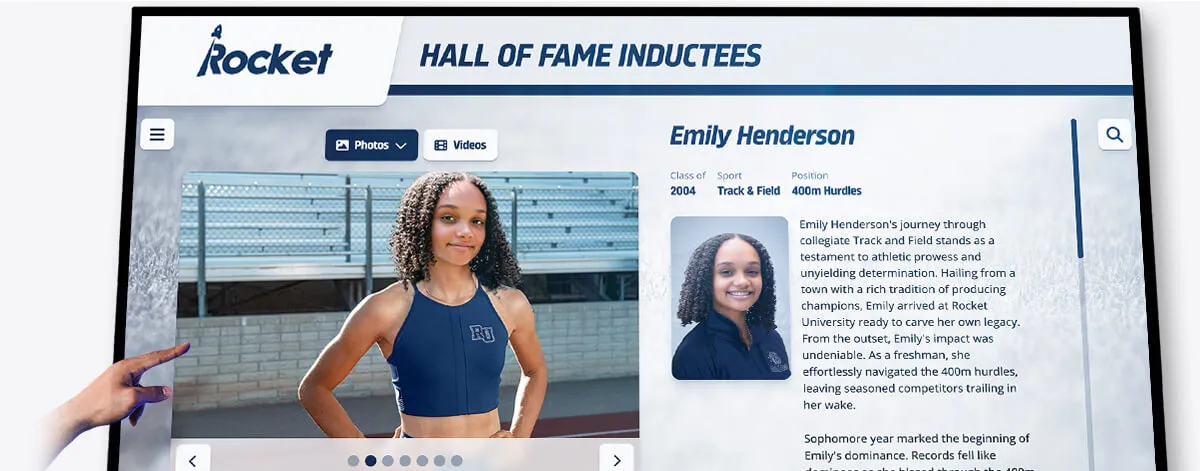
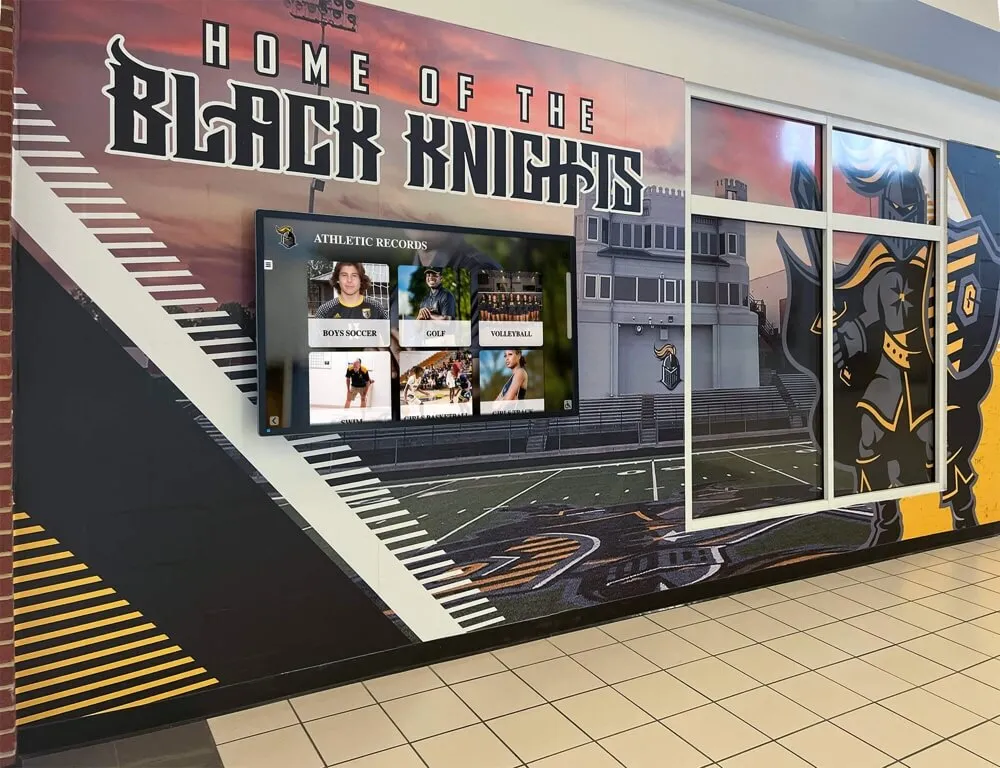
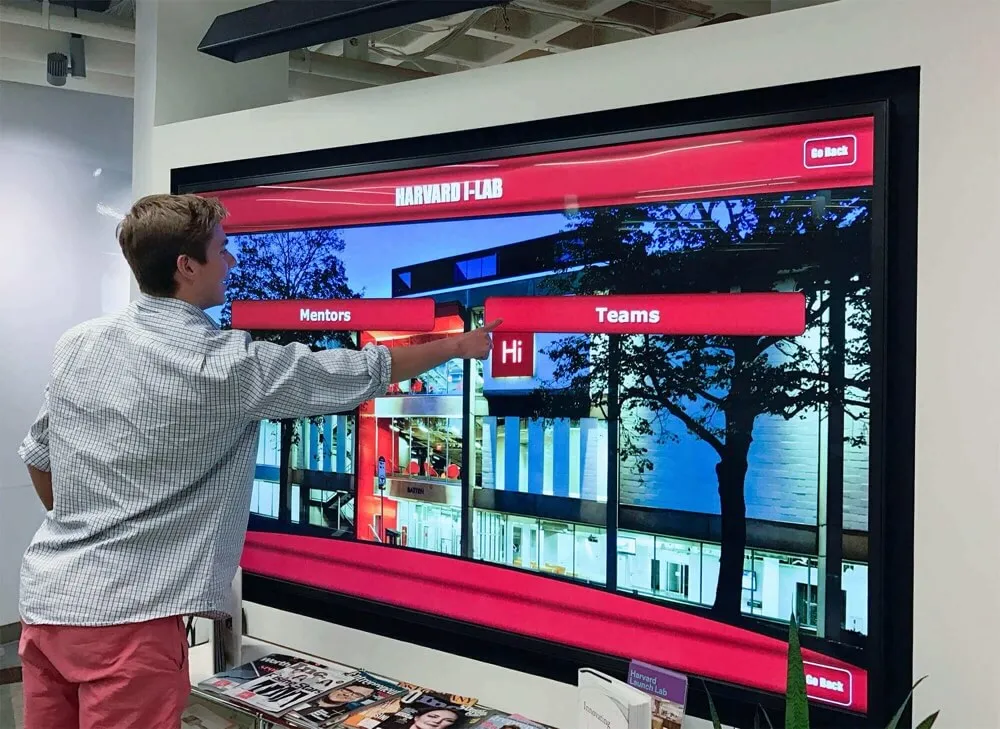
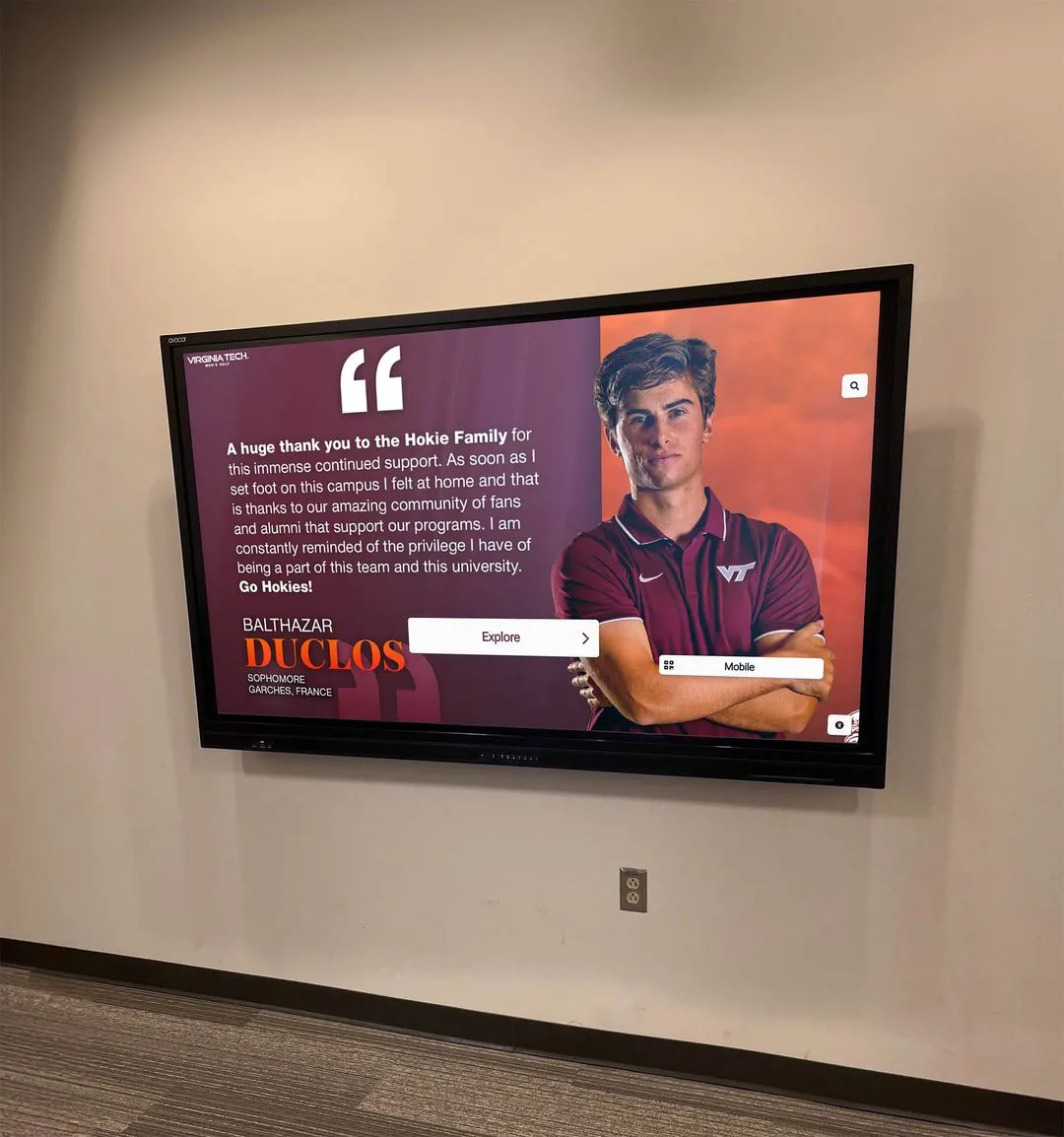
Interactive touchscreen displays presenting rich alumni profiles—complete with achievement records, yearbook photos, and biographical details—give homecoming visitors a self-guided exploration experience that traditional static displays cannot match
Recognition Programming That Honors Every Alumni Era
Yearbook displays create context; recognition programming creates celebration. The most impactful homecoming weekends combine both—using historical archives as the foundation for recognizing specific alumni whose achievements deserve formal acknowledgment.
Hall of Fame Inductions Timed to Homecoming
Many schools strategically time hall of fame inductions to coincide with homecoming weekends, creating a ceremony that anchors the larger event. This alignment benefits both programs: homecoming provides a ready-made audience for the induction ceremony, and the induction ceremony provides homecoming with a headline moment that motivates attendance.
Effective hall of fame induction ceremonies during homecoming share common characteristics:
- Advance nominee announcement giving inductees, their families, and classmates time to plan attendance
- Personal tribute videos for each inductee, drawing on yearbook photographs, athletic records, and alumni-submitted memories
- Family involvement in the presentation moment, allowing spouses, children, and parents to share in the recognition
- Permanent display integration connecting the ceremony to ongoing physical recognition in campus spaces
Tracking down school sports records and historical achievements before homecoming allows schools to present accurate, comprehensive achievement histories that make hall of fame recognition feel authoritative and meaningful.
Alumni Spotlights Across Graduation Years
Beyond formal hall of fame programming, homecoming provides opportunities for broader alumni recognition through:
“Where Are They Now” showcases — Digital or printed displays featuring career and life updates from graduates across class years. These showcases satisfy the curiosity alumni arrive with—they want to know what happened to the people who surrounded them during their school years—and they create natural conversation starters throughout the weekend.
Class-specific achievement recognition — Brief spotlight moments during Saturday programming celebrating the distinctive accomplishments of each milestone anniversary class. The class celebrating its 50th reunion deserves recognition proportional to the journey their members have made; the class celebrating its 10th reunion is still establishing itself and benefits from encouragement as much as celebration.
Faculty and staff tributes — Long-serving teachers, coaches, and administrators often represent the clearest through-line connecting generations of alumni. Recognizing beloved faculty creates cross-generational emotional responses that few other programming elements can match.
Building a comprehensive semester and year highlights recognition program allows schools to generate a steady stream of alumni recognition content year-round, with homecoming serving as the annual capstone moment when this content is displayed most prominently.
Donor and Philanthropic Recognition
Homecoming weekends are appropriate settings for honoring significant institutional supporters among the alumni community. Schools with active donor recognition programs can:
- Unveil new donor recognition installations during homecoming, with contributing alumni present to witness their permanent recognition
- Announce named scholarship recipients, connecting donors to the students their generosity supports
- Recognize cumulative giving milestones, celebrating alumni whose lifetime contributions have reached significant thresholds
Historical photo archives for schools frequently surface unexpected connections between current donor recognition and historical institutional moments—images that make philanthropic tribute feel continuous with the school’s story rather than separate from it.
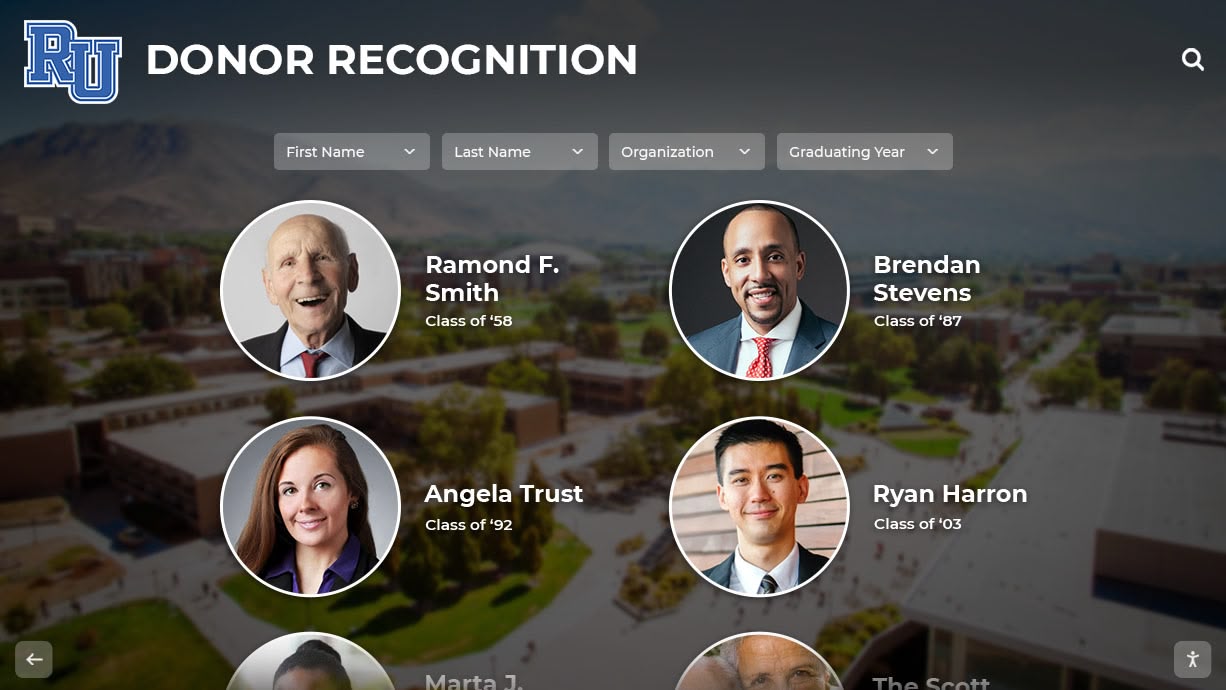
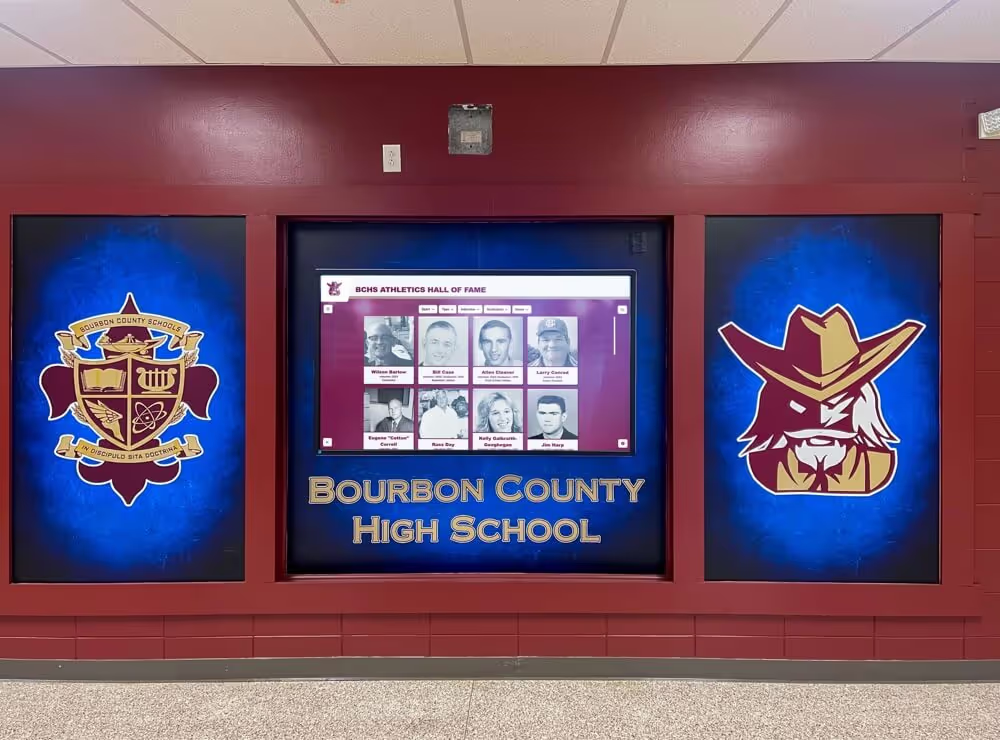
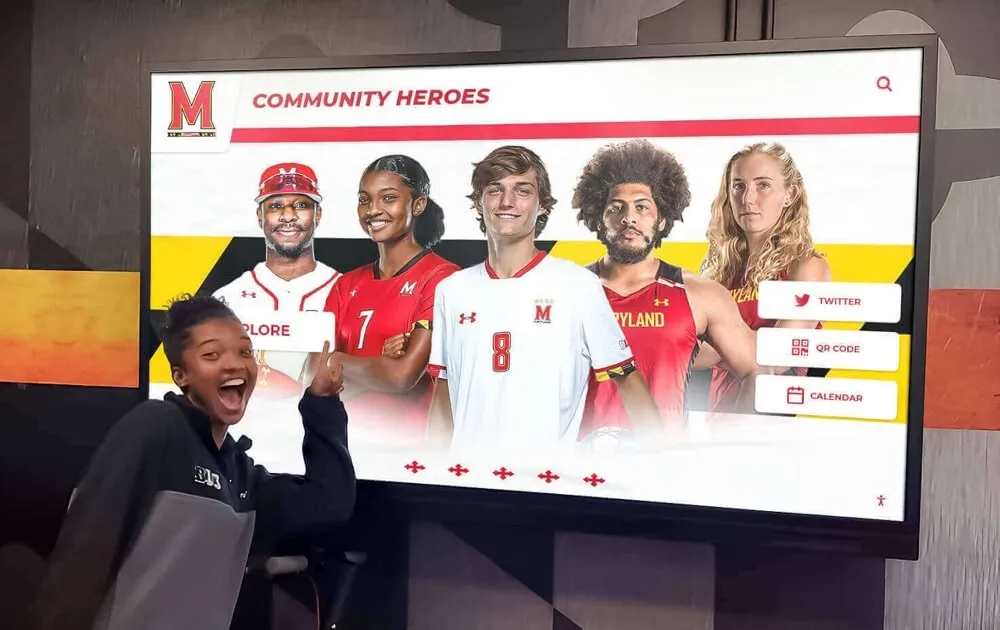
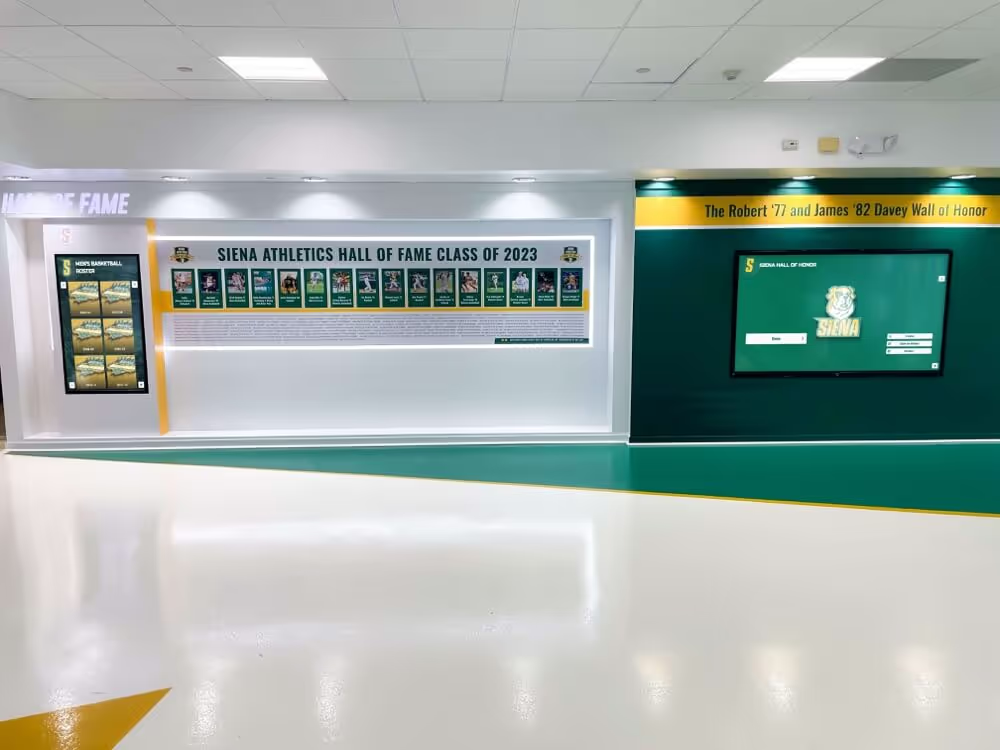
Prominent alumni recognition displays that incorporate portrait photography create visible, lasting tributes that connect returning graduates to institutional appreciation every time they visit campus
Setting Up Yearbook Displays for Homecoming: A Practical Framework
Schools beginning to invest in yearbook display programming for homecoming benefit from a phased approach that builds capability over multiple years rather than attempting a comprehensive transformation in a single planning cycle.
Phase 1: Inventory and Digitization
Before any display can be created, the archive must exist. Begin by:
Cataloging all available yearbooks — Identify which years are available in institutional storage, in what condition, and in what quantities. Many schools discover they have multiple copies of some years and no copies of others.
Digitizing highest-priority years — Start with years represented by milestone anniversary classes at the upcoming homecoming (25-year, 50-year graduates) and expand outward as resources allow. Comprehensive yearbook digitization guides for schools walk through scanning standards, metadata management, and preservation protocols that protect originals while creating accessible digital copies.
Crowdsourcing from alumni archives — Many graduates kept their own yearbooks. A pre-homecoming outreach campaign asking alumni to share digital scans of personal copies can fill gaps in institutional collections while creating community engagement even before the event itself.
Phase 2: Display Design and Content Organization
With digitized content in hand, display planning can proceed:
Determine display formats — Match display methods to available budget, space, and technology. Physical browsing stations require minimal investment; interactive digital displays require greater upfront cost but deliver substantially richer visitor experiences and serve the institution year-round.
Create interpretive context — Raw yearbook images are meaningful to alumni who lived through them; contextual framing makes them meaningful to everyone. Brief text panels explaining what was happening at the school and in the world during each era enhance browsing experiences significantly.
Organize for self-guided navigation — Whether using physical displays or digital interfaces, organize content so visitors can find their own era quickly without staff assistance. Clear decade labels, alphabetical name search, and class-year browsing are the minimum navigation standards for homecoming displays.
Plan for high-traffic flow — Position the most popular display elements (recent decades, athletic achievement records) in areas with sufficient space for groups to gather without blocking circulation. Trophy case capacity planning guides address the physical space challenges that display planning frequently encounters.
Phase 3: Interactive and Digital Enhancements
Schools ready to invest in permanent digital infrastructure can transform homecoming display quality dramatically:
Interactive touchscreen installations — One-touchscreen solutions that run recognition, yearbook, and trophy case experiences simultaneously eliminate the need for separate display systems for each content type, creating unified alumni exploration platforms that serve homecoming guests and ongoing campus visitors year-round.
Web portal integration — Digital platforms extending campus display content to online access allow alumni to engage with institutional history before arriving for homecoming (building anticipation and emotional investment) and after leaving (sustaining connection and continuing engagement).
Content management systems — Platforms that allow alumni staff to update yearbook content, add new profiles, and incorporate annual achievements without technical expertise ensure that display content remains current and comprehensive across years.
Digital Displays as the New Heart of Alumni Homecoming
The meaning of alumni homecoming hasn’t changed—graduates return to feel recognized, reconnected, and remembered. What has changed is the technological capability schools have to fulfill that meaning more completely than ever before.
Traditional homecoming displays could show alumni a fraction of their institutional history, constrained by physical space, fragile originals, and the limits of static presentation. Modern digital display systems can show everything: every yearbook page, every athletic record, every graduate who was ever recognized—all navigable, searchable, and displayable in formats that feel intuitive and engaging rather than archival and inaccessible.
Interactive directory and recognition systems that combine alumni profiles, yearbook images, achievement records, and contact information create exactly the kind of exploration experience that homecoming guests want: the ability to look up anyone who ever attended, discover what happened to them, and feel the breadth of the community they were once part of.
What Schools Report After Implementing Digital Homecoming Displays
Institutions that have invested in interactive digital display systems for homecoming consistently report the same outcomes:
- Extended engagement time — Alumni spend significantly more time in display areas when content is interactive and personally navigable than when it is static and general
- Multi-generational connection — Digital systems that present content from every era naturally attract alumni from all graduation years, creating cross-generational conversations that selective traditional displays cannot generate
- Post-event engagement — Web-accessible archives extend homecoming engagement for weeks after the event, as alumni share links, identify people in historical photographs, and continue browsing content they didn’t finish during the event itself
- Donor motivation — Visible, prominent recognition of alumni achievement—particularly in permanent campus installations—correlates with increased philanthropic engagement from alumni who feel their contributions to the institution are genuinely honored
Solutions like Rocket Alumni Solutions provide turnkey touchscreen wall systems designed specifically for educational institutions, combining large-format interactive displays with content management platforms that allow alumni staff to incorporate yearbook archives, update recognition profiles, and surface decades of institutional history through a single elegant interface—no technical expertise required.
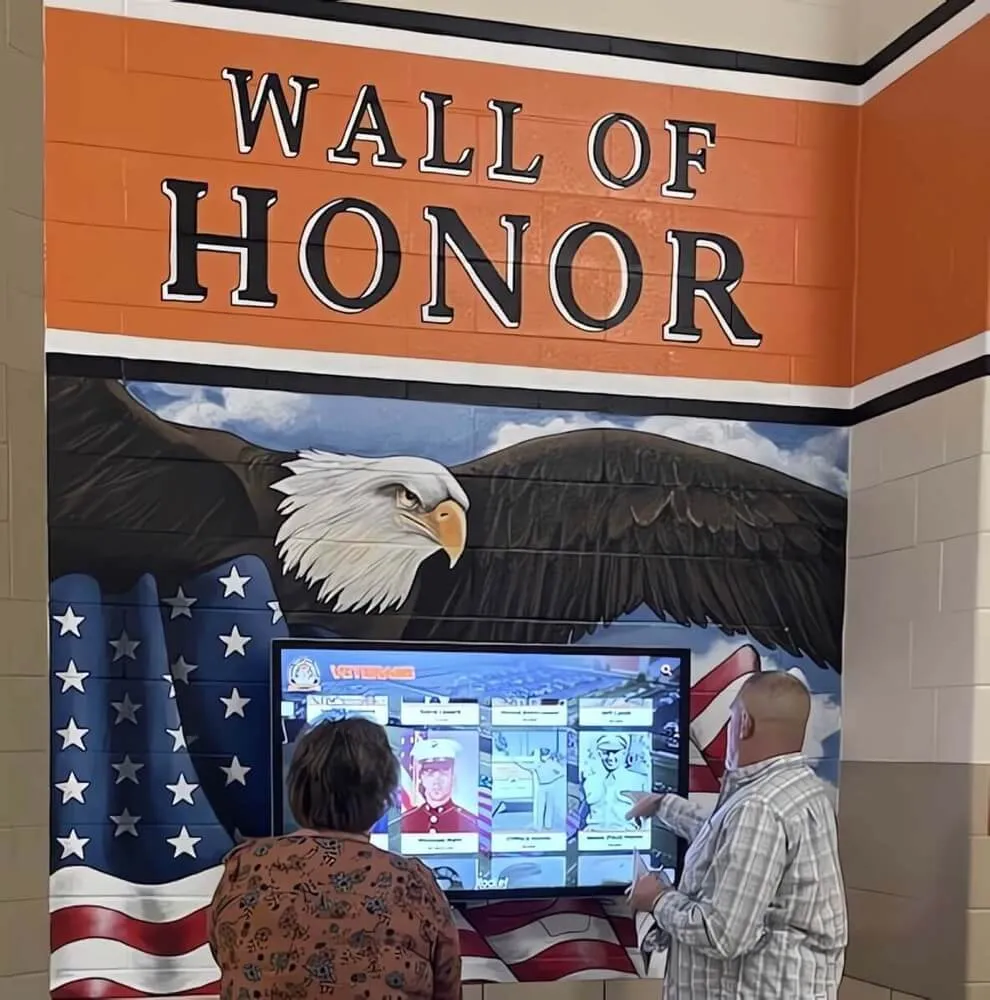
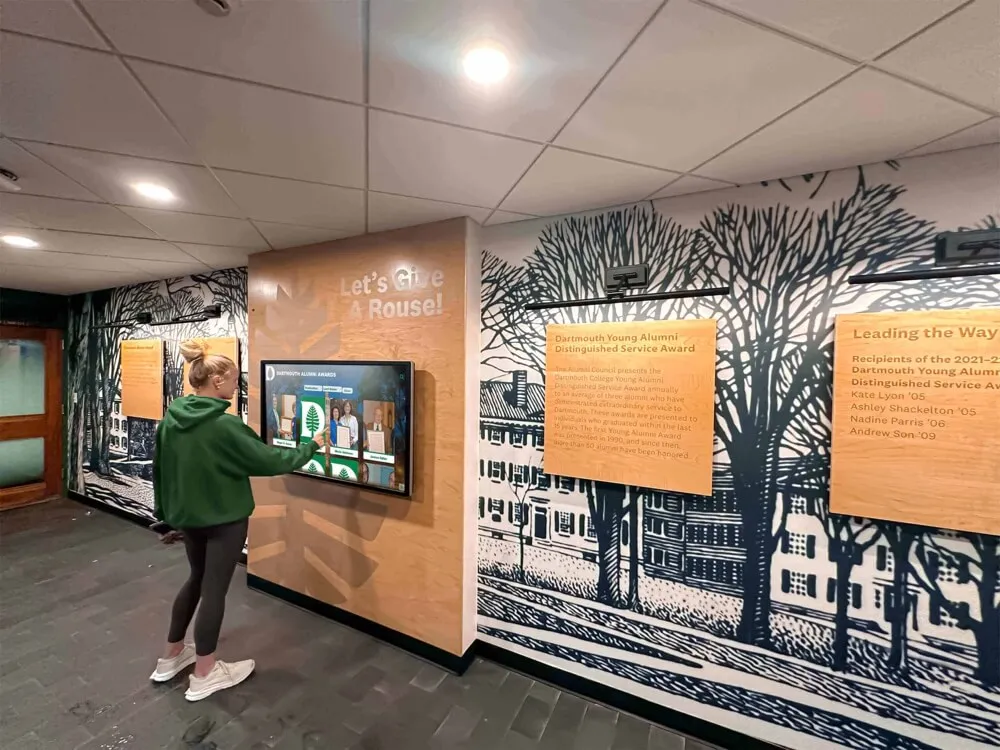
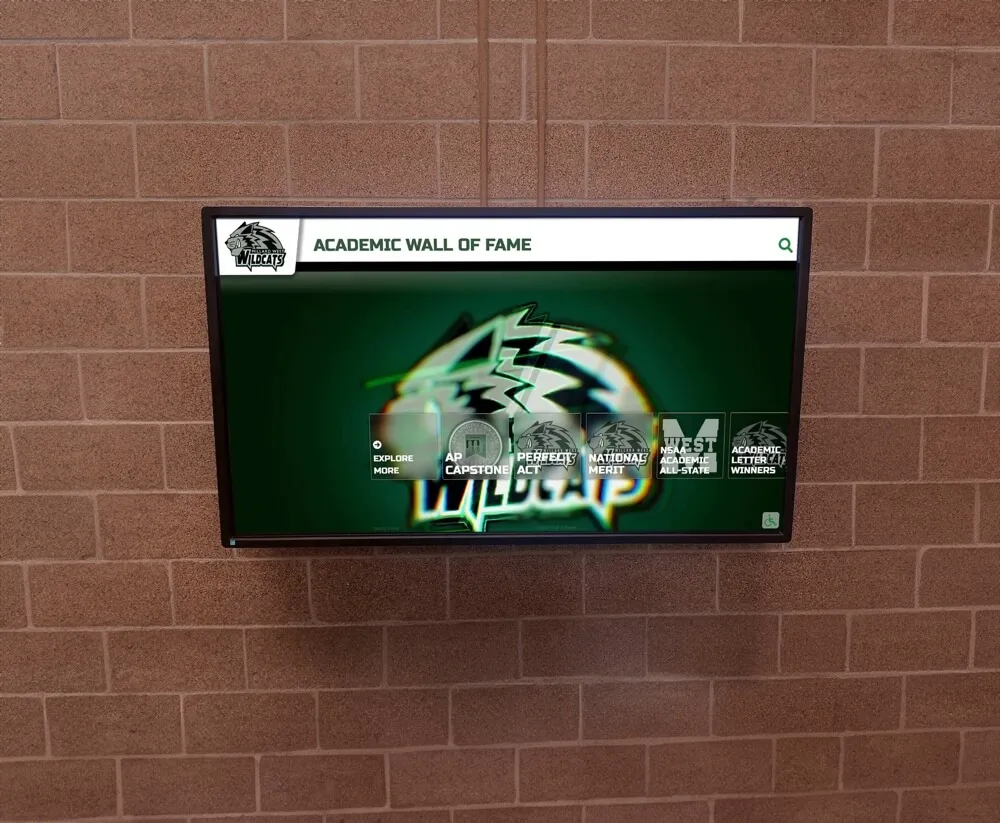
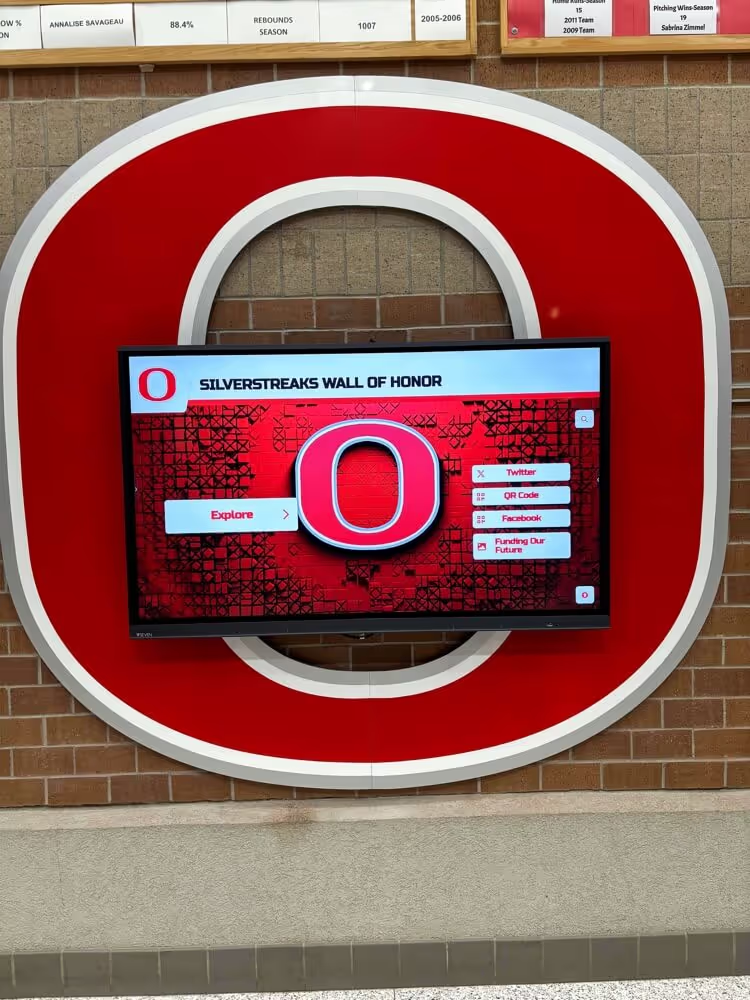
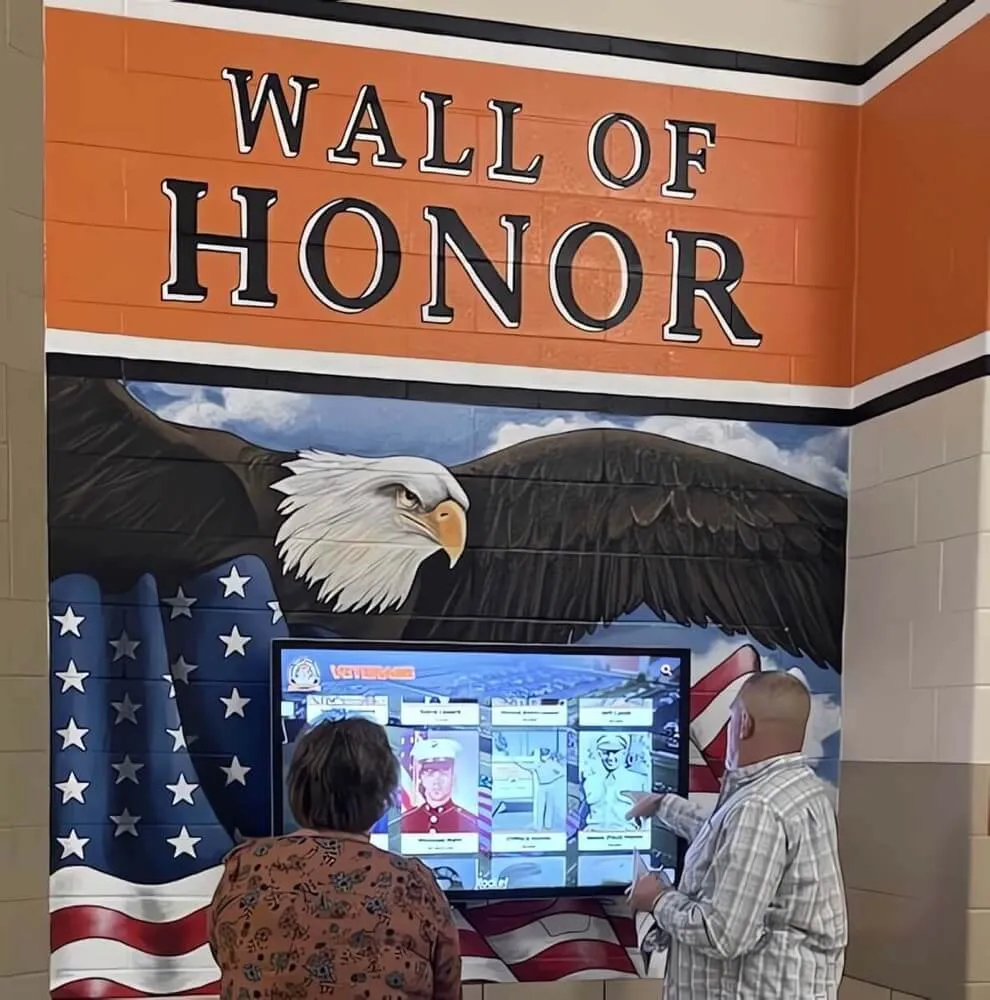
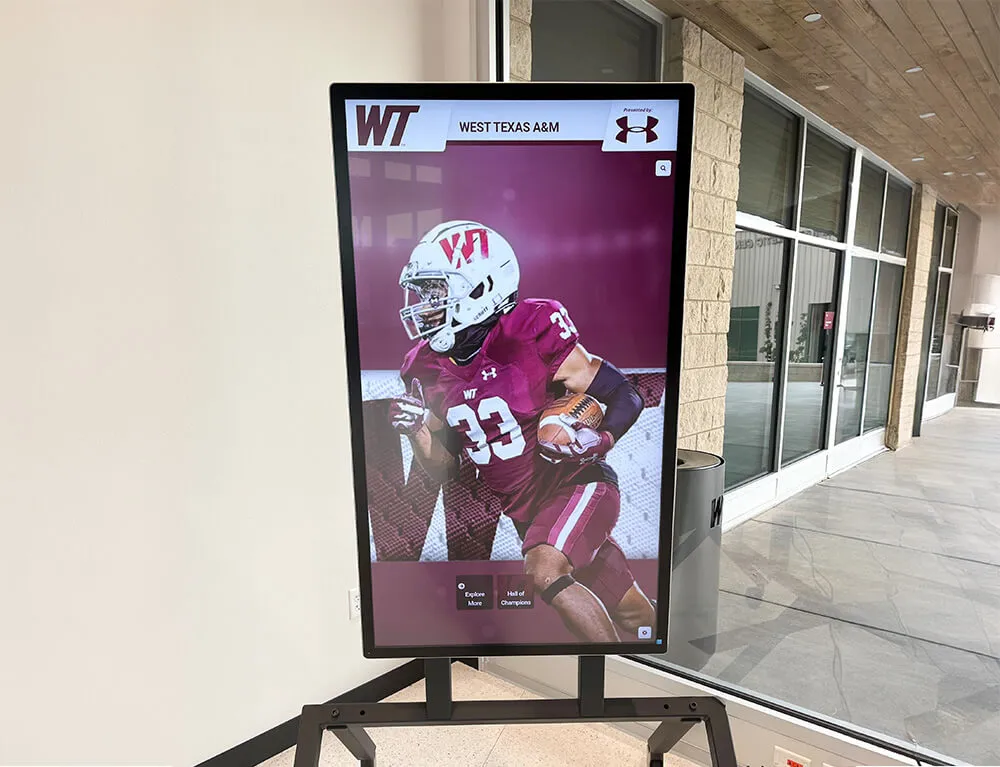
Interactive wall of honor installations create engaging, self-directed exploration experiences that serve homecoming guests while becoming permanent recognition infrastructure for everyday campus visitors
Beyond the Weekend: Making Homecoming Impact Last
The most forward-thinking schools treat homecoming not as a standalone event but as the annual peak of a year-round alumni recognition strategy. The infrastructure built for homecoming—digitized yearbooks, organized historical archives, digital display systems—serves the institution every day, not just one weekend per year.
Permanent Recognition Infrastructure
Permanent digital installations in campus lobbies, athletic facilities, and main hallways honor alumni continuously:
Current students benefit every time they walk past recognition displays documenting the achievements of graduates who came before them. Institutional history becomes tangible inspiration rather than abstract legacy.
Prospective students and families visiting during admission season encounter evidence of how the school values its graduates—differentiation that matters in competitive enrollment environments.
Faculty and staff see their colleagues honored alongside alumni they helped develop, reinforcing that the institution takes recognition seriously.
Alumni who visit at any point during the year—for a child’s game, a faculty visit, an admission tour—find their own recognition in place every time, not only during homecoming weekend.
Class president and leadership recognition digital displays integrated into permanent campus installations make student government, academic, and activity leadership permanently visible alongside athletic achievement—broadening what the institution publicly values.
Building a Year-Round Alumni Recognition Calendar
Schools that sustain homecoming energy across the academic year create deeper alumni connections than those that treat homecoming as the only significant alumni engagement moment:
Fall homecoming — The flagship event, anchoring athletic season and creating the primary annual alumni return
Winter recognition — Athletic season milestones, academic achievement recognition, and semester highlights programming keep alumni connected during the months between homecoming and spring graduation
Spring graduation — Senior recognition programming and alumni return for graduation ceremonies create a natural second major reconnection moment, often including hall of fame announcements for the following homecoming
Summer archive work — Yearbook digitization, profile updates, and display content preparation during quieter months ensures homecoming programming reflects a fully current institutional archive
High school graduate display programming that bridges current seniors into the alumni recognition ecosystem—establishing their profiles before they graduate—creates immediate connection to the institution’s recognition infrastructure from the first day of alumni status.
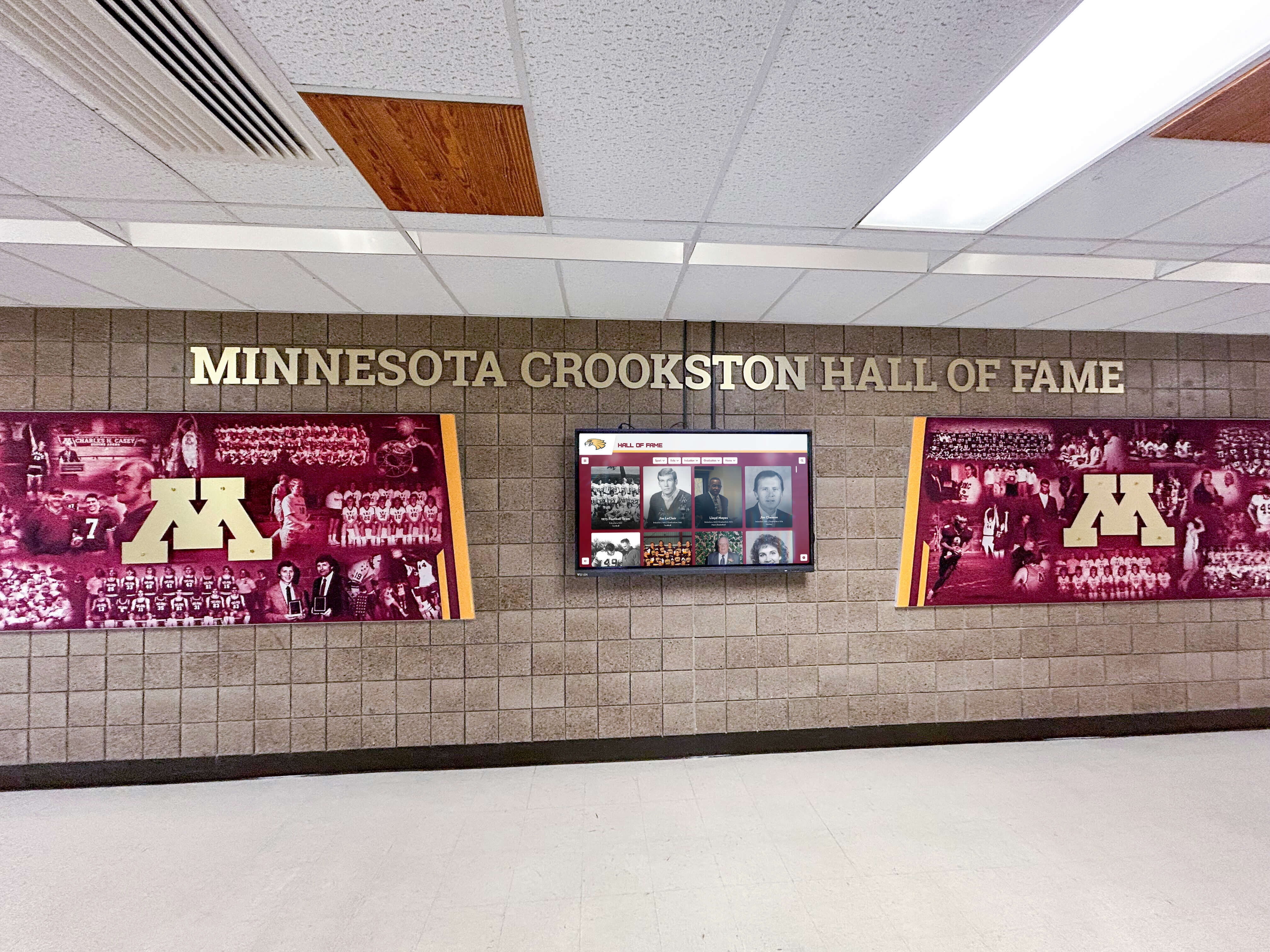
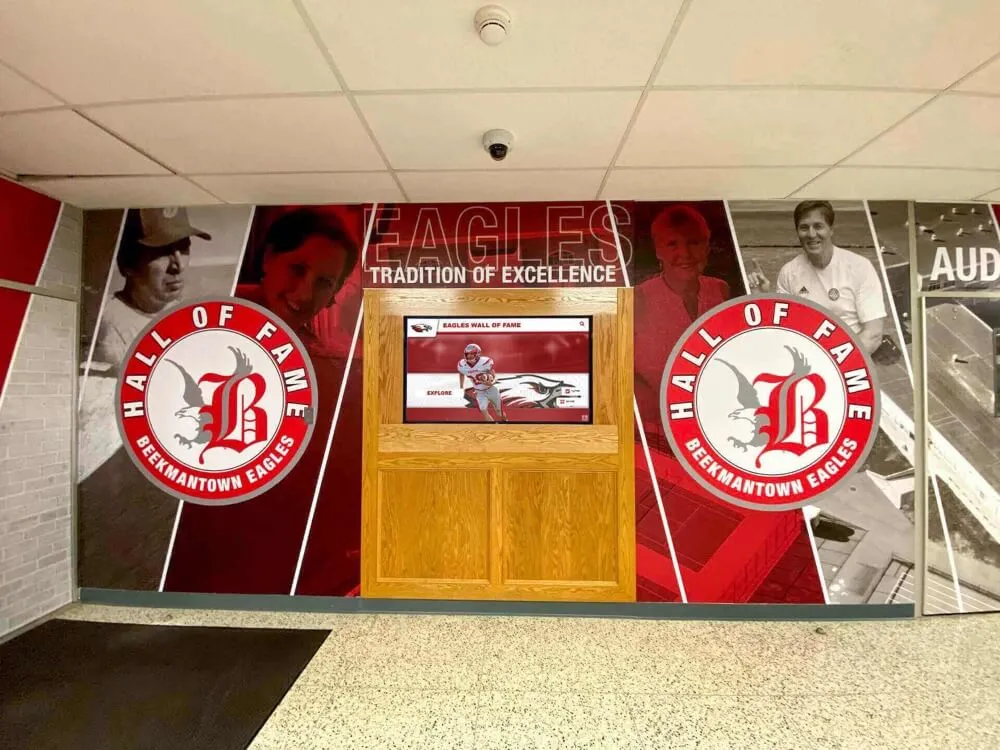
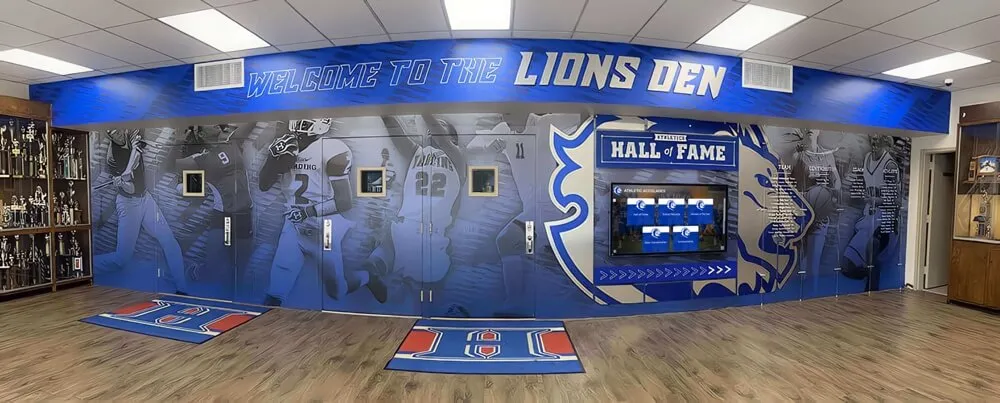
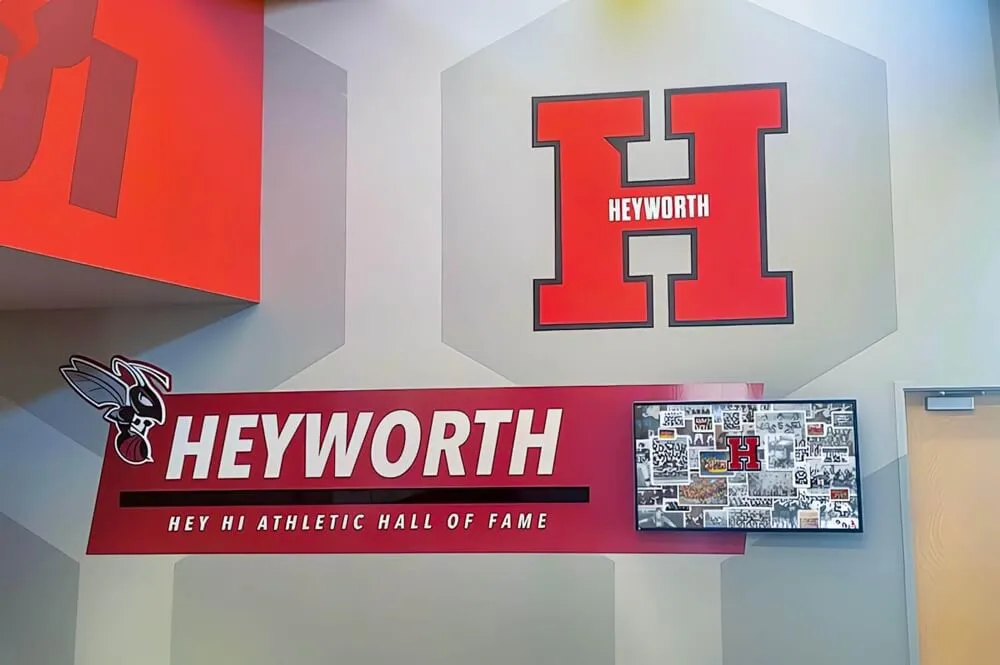
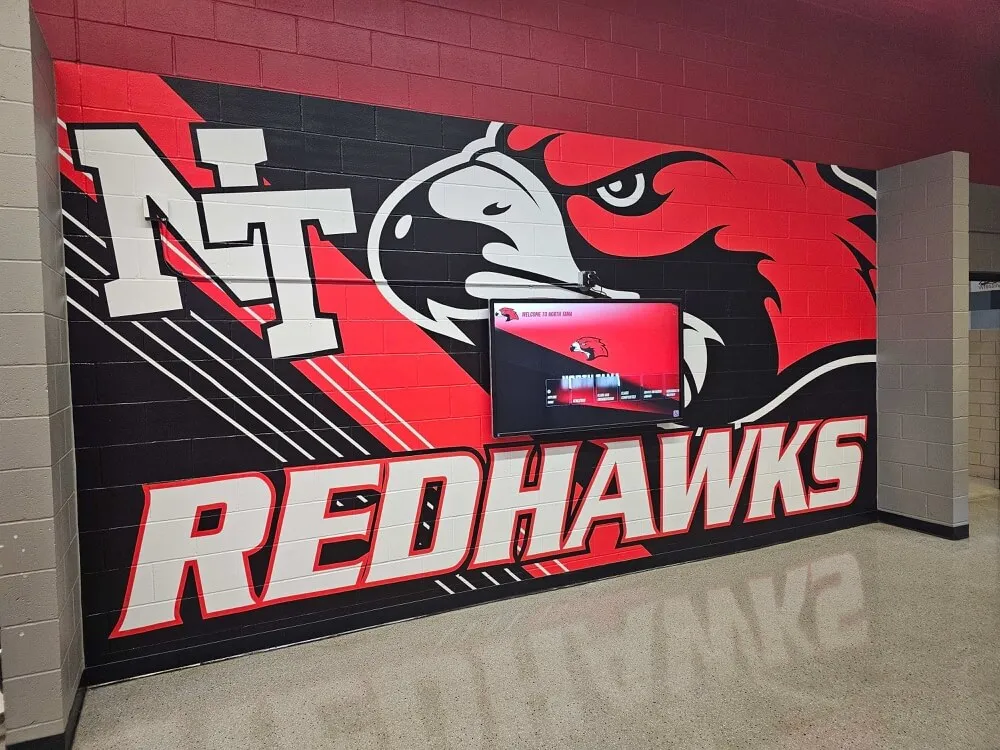
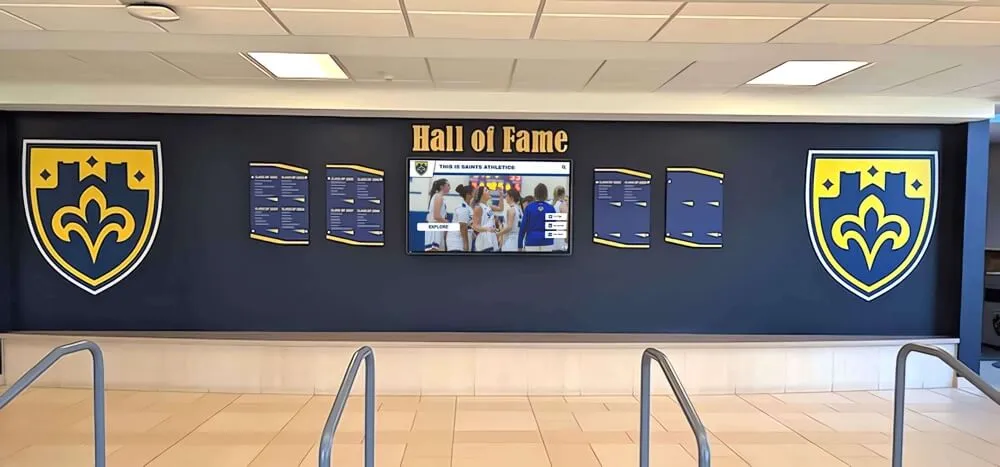
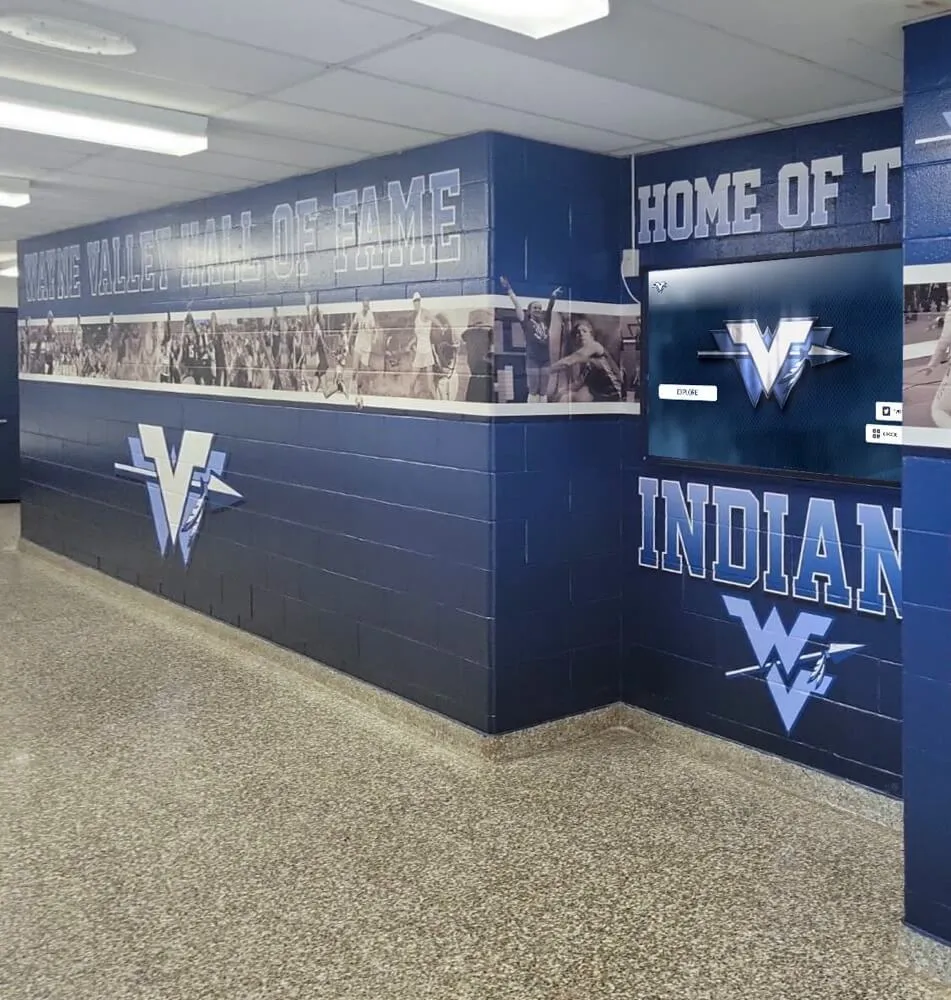
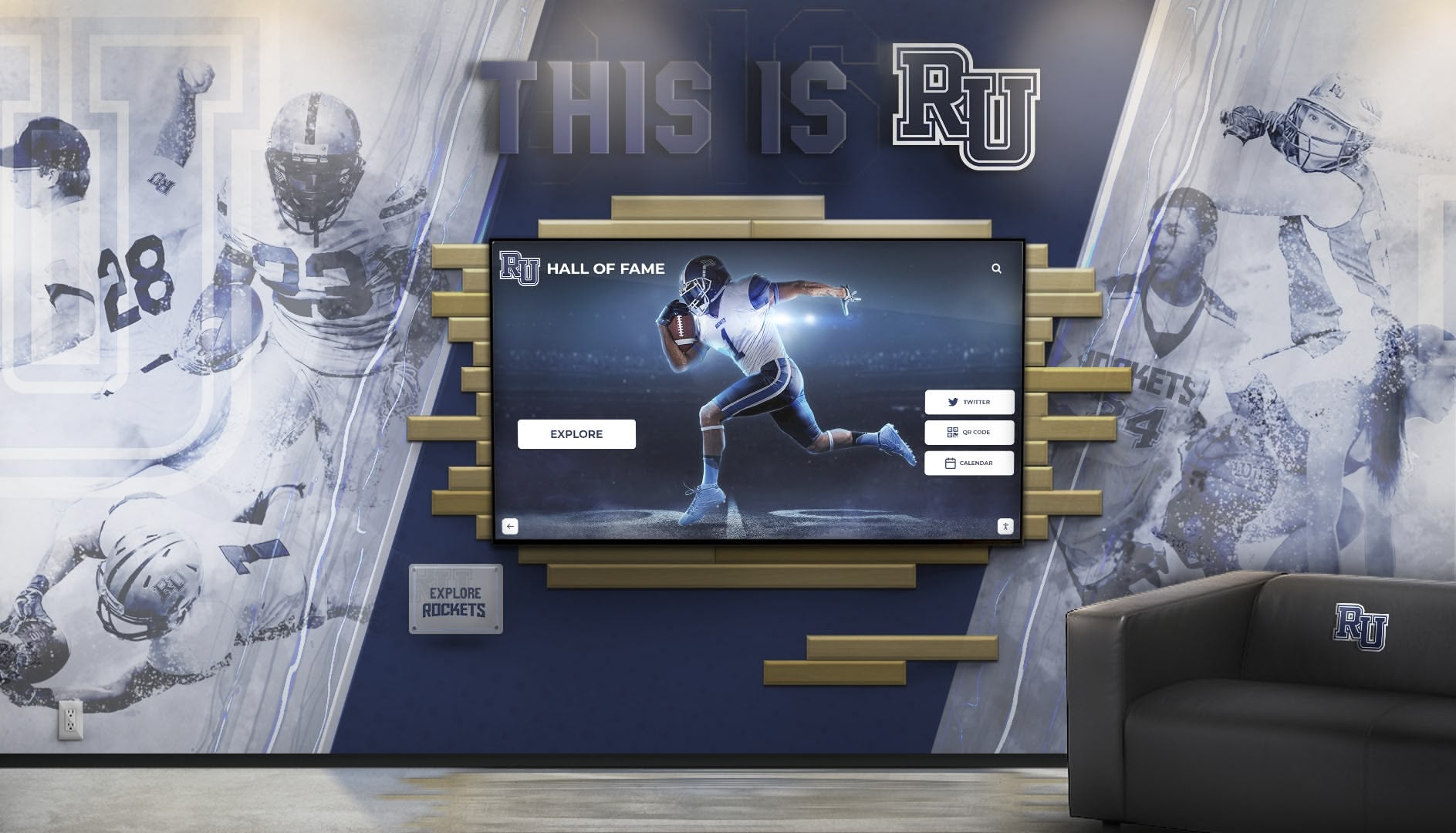
Campus hall of fame installations combining institutional murals with digital recognition screens serve both the emotional resonance of physical tradition and the navigability of modern digital systems—ideal for homecoming and everyday campus recognition
Alumni Homecoming Planning Checklist
Use this framework to guide your homecoming display and recognition planning across the year:
12+ months before homecoming
- Audit institutional yearbook collection—identify gaps and prioritize digitization
- Confirm hall of fame nomination process and timeline
- Review previous homecoming display feedback and identify improvements
- Assess current display infrastructure and identify upgrade opportunities
6–12 months before
- Begin yearbook digitization for milestone anniversary class years
- Open hall of fame nominations to the school community
- Draft digital display content and alumni profile updates
- Plan display station layouts for key homecoming venues
3–6 months before
- Complete yearbook digitization for priority years
- Finalize hall of fame inductee list and begin ceremony planning
- Install or test digital display systems
- Begin alumni outreach campaign including yearbook archive previews
1–3 months before
- Load completed yearbook content into digital display systems
- Prepare interpretive context panels for historical exhibits
- Train volunteers on display station support and navigation assistance
- Confirm all physical display materials are produced and positioned
Post-homecoming
- Collect alumni feedback on display and recognition programming
- Update permanent displays with homecoming recognition additions
- Publish digitized yearbook content in online alumni portal
- Begin planning cycle for following year’s homecoming
Frequently Asked Questions About Alumni Homecoming Meaning
What is the difference between homecoming and an alumni reunion?
Homecoming is a recurring annual tradition—typically tied to an athletic event and scheduled at the same time each year—that invites all alumni to return simultaneously. A reunion is typically a milestone-specific event organized around a particular graduation year or class, often held separately from homecoming. Many schools run both: a homecoming weekend open to all alumni annually, and class-specific reunions organized around 10-, 25-, and 50-year anniversaries that may or may not coincide with homecoming.
How important are yearbook displays to a successful homecoming?
Yearbook displays consistently rank among the highest-rated elements of alumni homecoming surveys. Graduates who haven’t visited campus in decades often arrive most eager to find their own yearbook photographs and see who from their class is represented. Schools that invest in accessible, well-organized yearbook displays—whether physical browsing stations or interactive digital archives—report substantially higher satisfaction scores from alumni homecoming guests.
Do digital display systems work for smaller schools with limited budgets?
Yes. Interactive digital display platforms scale to fit institutions of many sizes and budget levels. Smaller schools benefit from digital systems precisely because they allow comprehensive historical content—many decades of yearbooks, hundreds of alumni profiles, athletic records across sports—to be presented through a single installation rather than requiring physical space proportional to the depth of history being displayed. The upfront investment in a digital system often delivers better cost-per-engagement than years of printing, framing, and maintaining physical display materials.
How can schools get alumni to contribute to yearbook archives?
The most effective approach combines institutional outreach with peer-to-peer communication. Email campaigns to alumni with digitized yearbook page previews, social media posts featuring historical photographs, and requests circulated through class representative networks all generate yearbook-related alumni engagement. Framing contributions as preservation of shared heritage—rather than donation to the institution—tends to generate stronger response, particularly from alumni who kept personal copies of their yearbooks and are glad to contribute scanned images that fill gaps in institutional collections.
Conclusion: Alumni Homecoming Meaning Starts with Recognition
Alumni homecoming meaning, at its deepest level, is about recognition—the recognition that graduates who gave their energy, enthusiasm, and years to an institution are still seen, still remembered, still valued. Homecoming is the moment when schools make that recognition visible and tangible.
Yearbook archives and digital displays are not decorative elements of homecoming programming—they are its emotional core. They are the evidence graduates seek when they walk back through the door: evidence that their years at this institution were documented, preserved, and considered worth celebrating. When that evidence is accessible, organized, and presented with care, returning alumni feel what every homecoming is meant to create: the sense that they are genuinely home.
Schools that build strong homecoming recognition infrastructure—digitizing their yearbook collections, investing in interactive display systems, creating year-round recognition programming that peaks at homecoming—are not just planning better events. They are building deeper alumni relationships that compound in loyalty, volunteer engagement, and philanthropic support across decades.
The technology available today makes comprehensive yearbook display programming achievable for institutions of every size and resource level. The only requirement is the commitment to making sure that every alumna and alumnus who walks through the door for homecoming finds the clear, visible answer to the question they came to ask: Yes. We remember you. We always have.
Ready to make alumni homecoming recognition unforgettable?
Rocket Alumni Solutions helps schools and universities create interactive touchscreen displays that bring yearbook archives, alumni profiles, athletic records, and decades of institutional history to life—installations that serve homecoming weekends and honor graduates every day of the year. Schedule a consultation to see how a digital recognition system can become the centerpiece of your next alumni homecoming.